
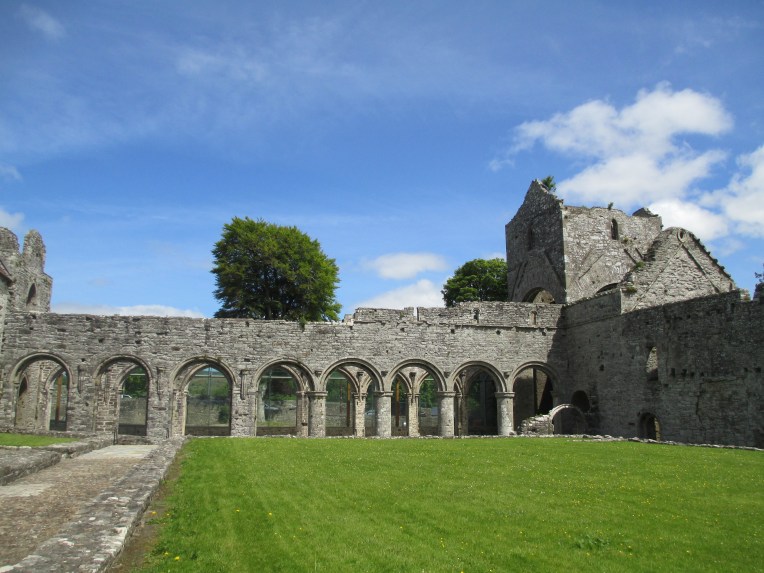
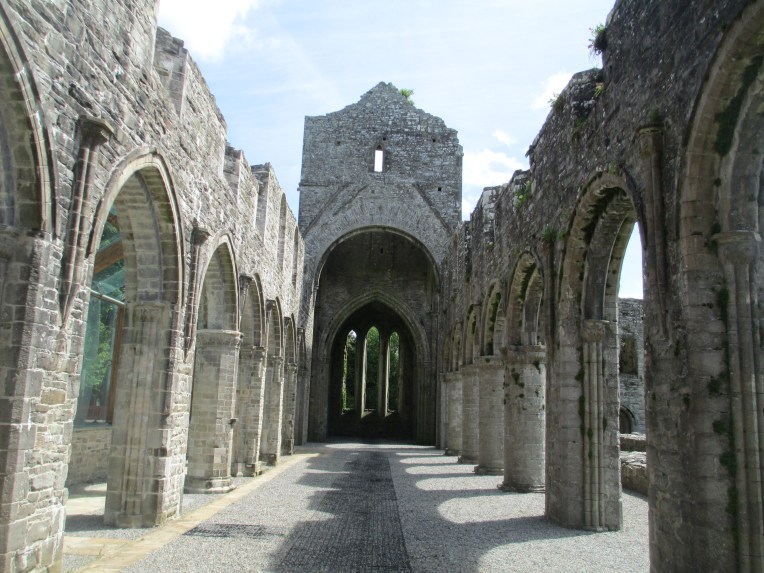
 Boyle Abbey in County Roscommon, Ireland was founded in 1161 with monks arriving from Mellifont Abbey another Cistercian abbey. It is unknown who actually founded the abbey, but the MacDermot family were early patrons.
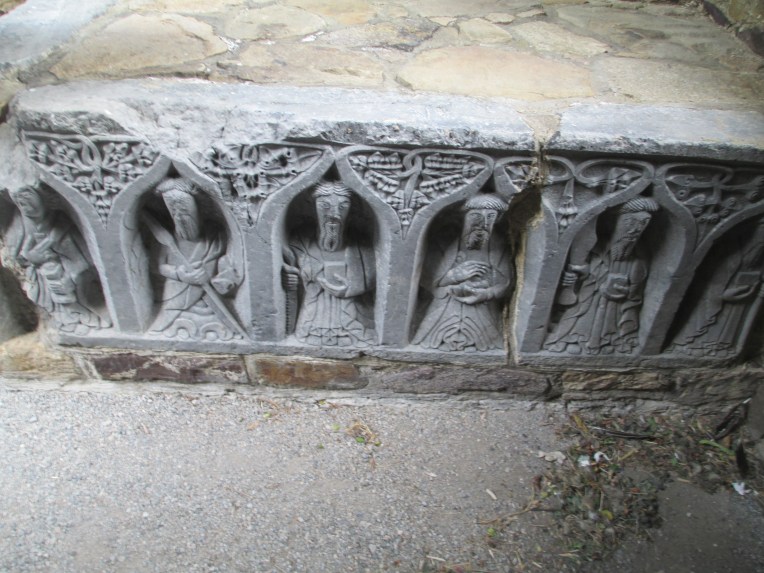
The complex follows the standard Cistercian lay out, but carving work that has survived especially in the church is truly remarkable. The church was consecrated in 1218 but there was a pause in construction and you can see the difference in the style of architecture. The nave was probably completed between 1215 and 1220 but the overall building time for the church was roughly 60 years. The carvings on the capitals in the church are largely of School of the West style. They’re unusual both because of their quality and because Cistercian monasteries of the time tended to be simple and austere. You can see some of the carvings in the photo above.
In 1202 Anglo-Norman baron William de Burgh in alliance with the King of Connacht sacked the abbey for three days. They broke and burnt everything and this is probably what delayed the completion of the construction of the abbey church.
The abbey was raided again in 1235 by English forces, but this time at least compensation was paid.
Along with Jerpoint Abbey Boyle was part of the Conspiracy of Mellifont in 1227, a power struggle between the Irish and Anglo-Norman Cistercian abbeys. Along with all the other Irish abbeys the abbot of Boyle was deposed. In Boyle’s case it was put directly under the control of Clairvaux in France, one of the original Cistercian monasteries.
Boyle was dissolved in the Dissolution of the Monasteries in 1584. This is significantly later than most of the monasteries and is largely due to Boyle’s remoteness and Abbot Glaisne O’Culleanain’s refusal to renounce Rome. He was eventually executed in Dublin for his lack of renunciation. Boyle was leased to William Usher from 1589 until 1599 and then until the 18th century it was under military occupation.
References:
Site visit 2015
OPW Boyle Abbey booklet
The photos are all mine.
 Heynes abbey or Heynes church: It was built in the first half of the 13th century and was originally supported by intricate columns with flowers on them.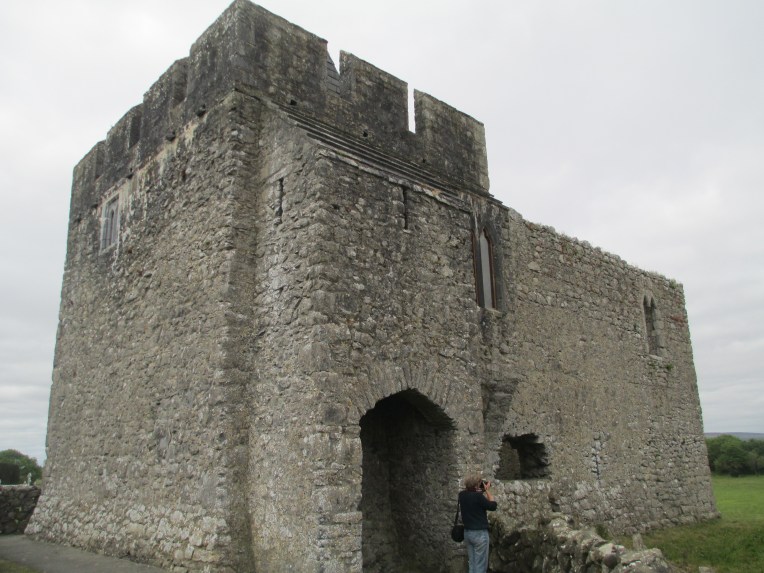

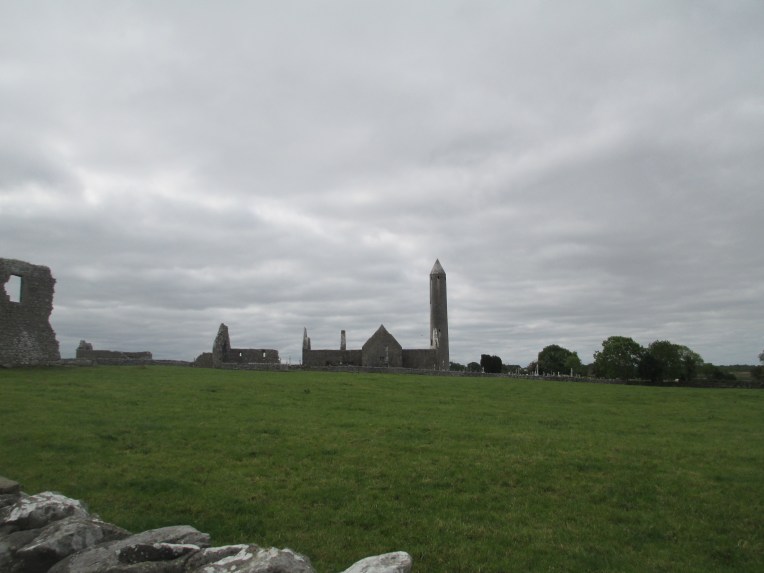 Our Lady’s church: A small 13th century church which might have been built with stone from an earlier church. You can see it second from the left in the above photo, I sadly don’t have a closer photo.


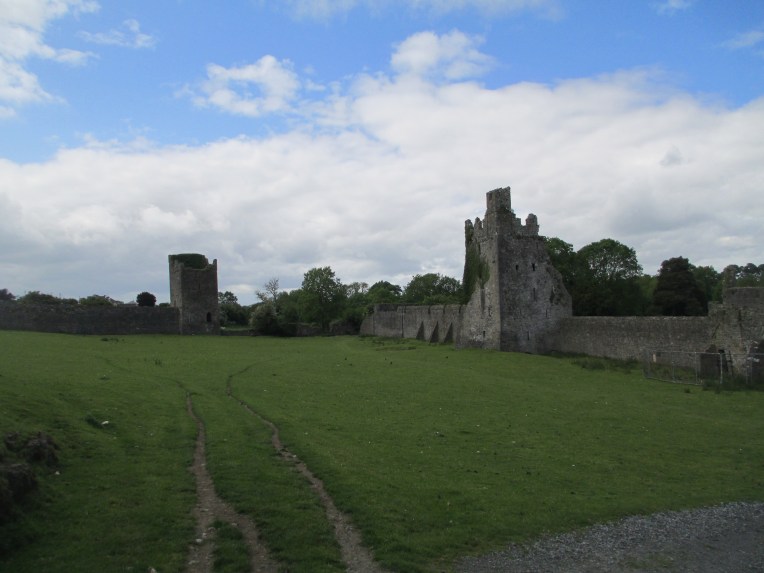

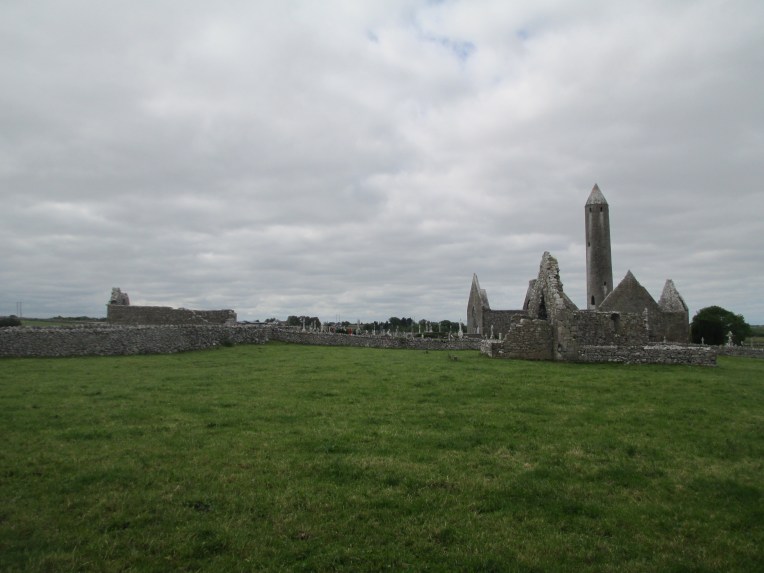
 The first Norman church at Kells was founded by Geoffrey FitzRobert de Marisco in 1183. Ten years later he invited the Augustinian canons from Bodmin in Cornwall to come to Kells, and the priory was established. He also built a Norman style town beside it. It is worth noting that this is not the Kells that the Book of Kells comes from, that’s in County Meath and you can see pictures and some information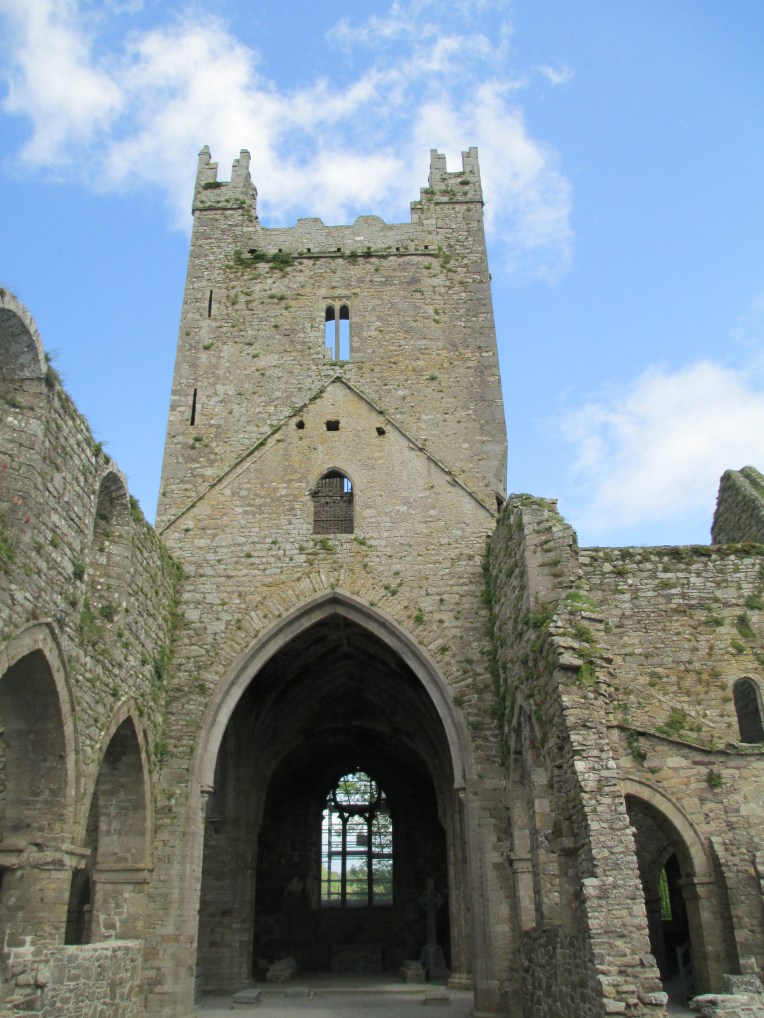

 Jerpoint Abbey in County Kilkenny Ireland was founded in c. 1160 probably by Donal MacGillpatrick King of Ossory. However in 1180 it was taken over by Cistercians monks from Baltinglass Abbey in County Wicklow.
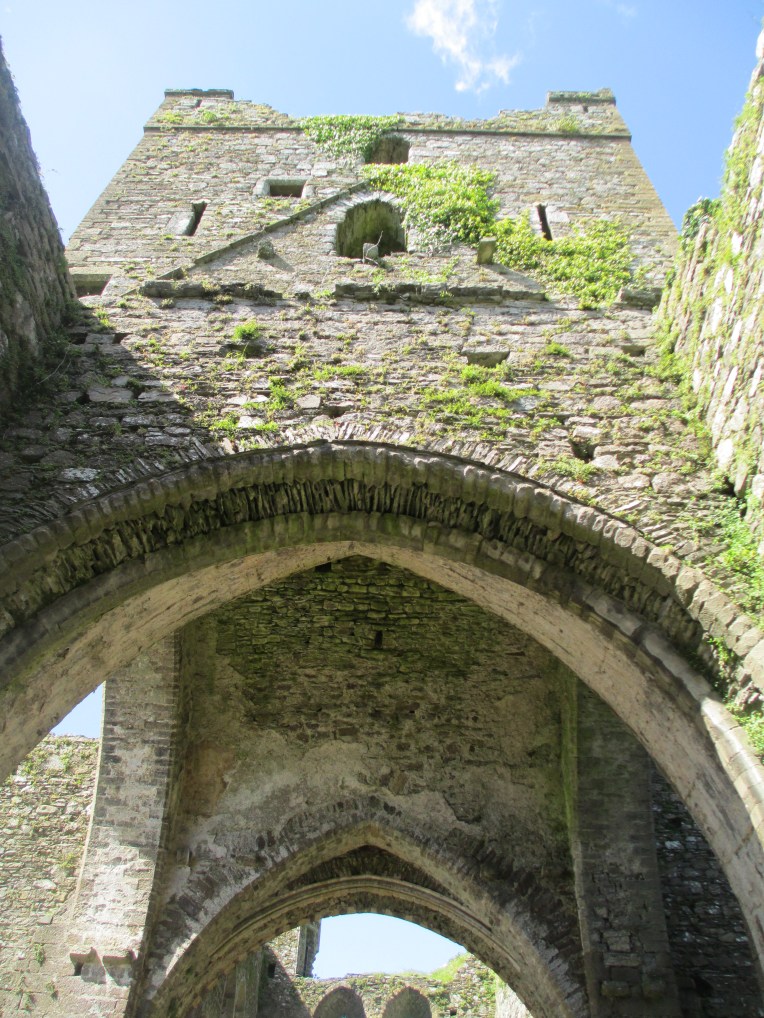
 Dunbrody Abbey in Wexford Ireland was founded at the instruction of Richard Strongbow in 1170 by Hevre de Montmorency who was his uncle. Montmorency made the grant of land for Dunbrody to the monks of Bildewas in Shropshire on the condition that they should establish a Cistercian monastery on them and that there should be sanctuary in the abbey for any malefactors.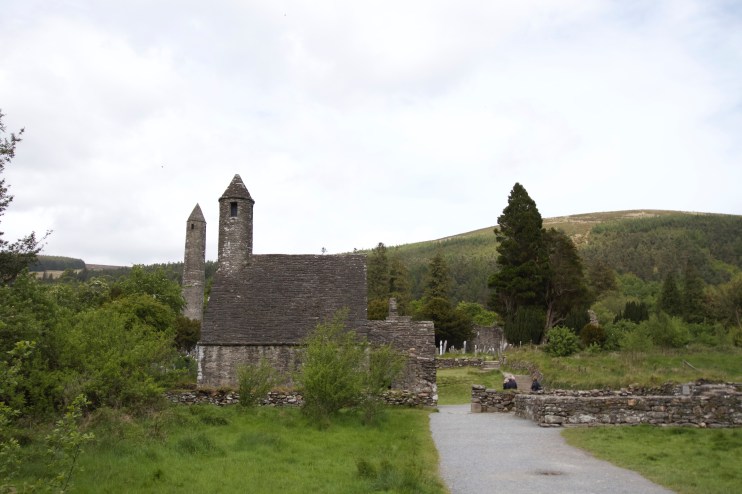

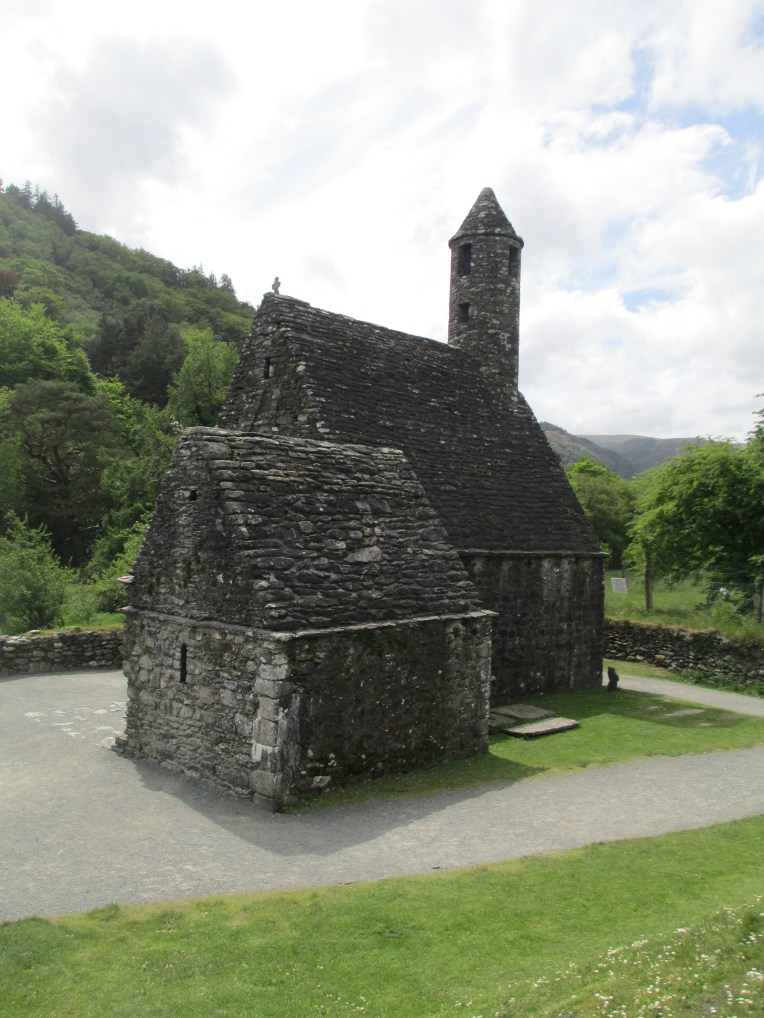
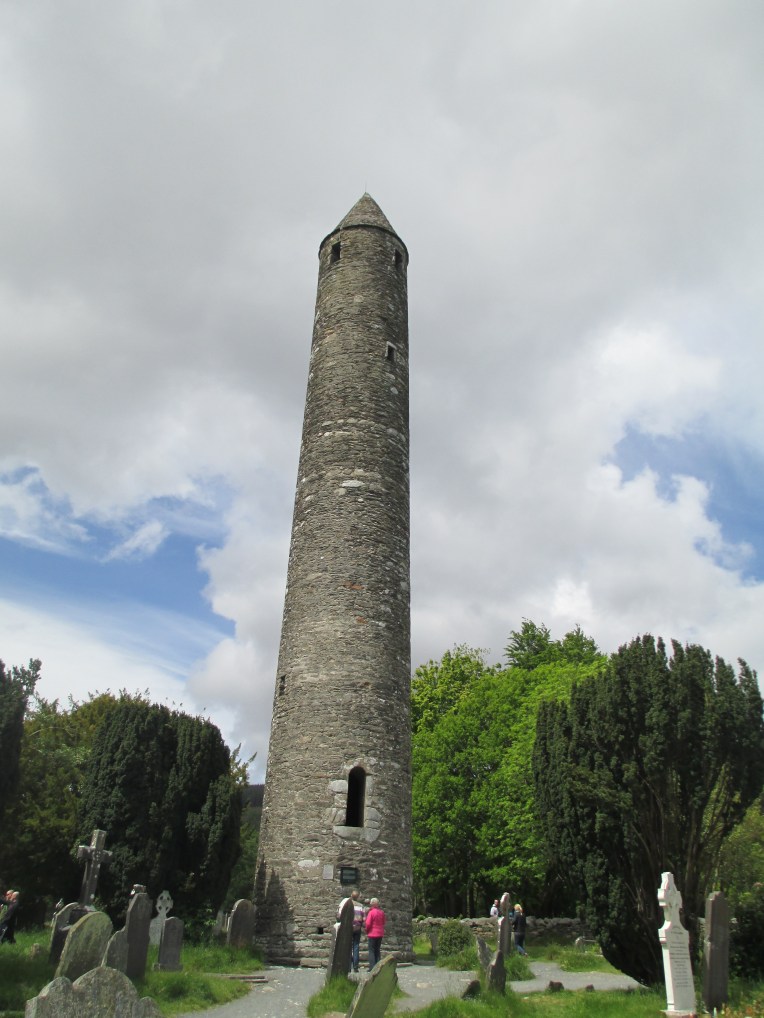

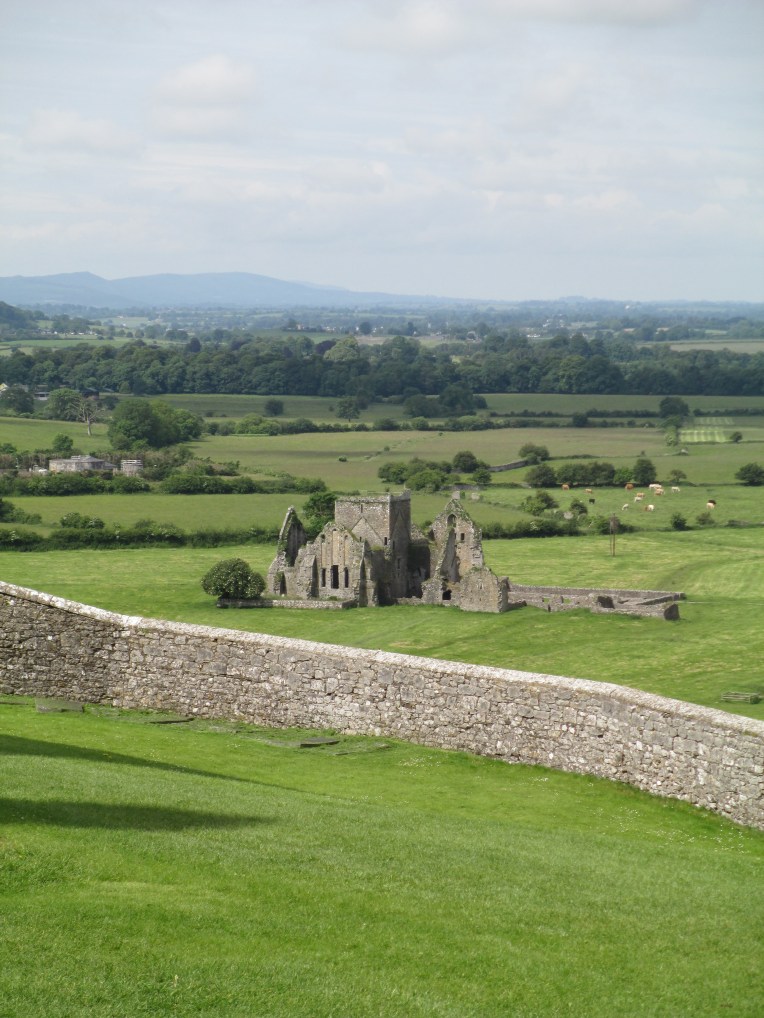

 Hore Abbey in County Tipperary Ireland is often overshadowed by the awe inspiringly spectacular


 I have written about Strata Florida and its amazing medieval tiles before. The link to the blog post can be found here
 Historical Ragbag