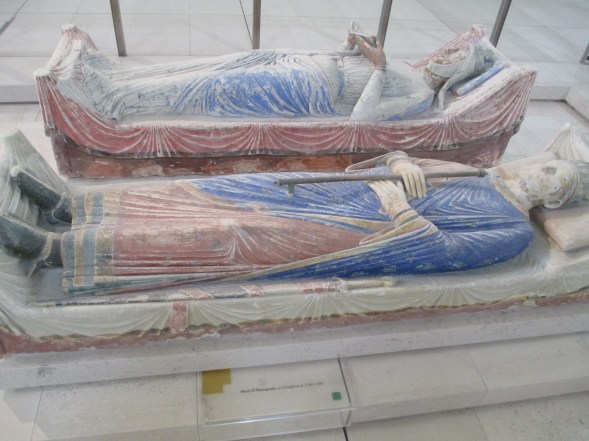
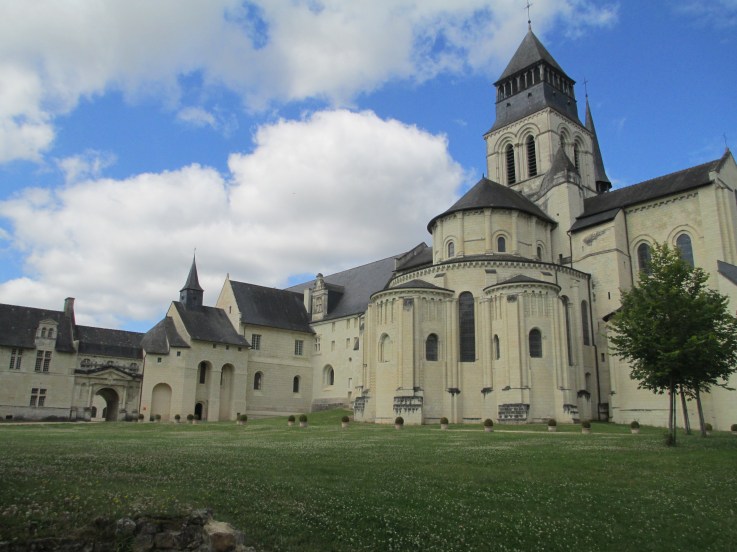
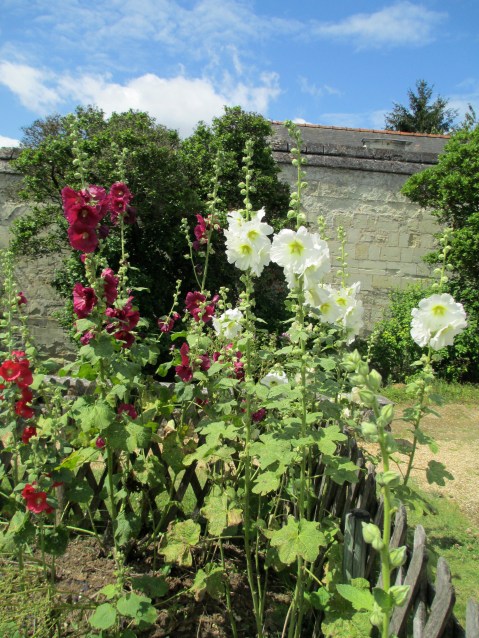
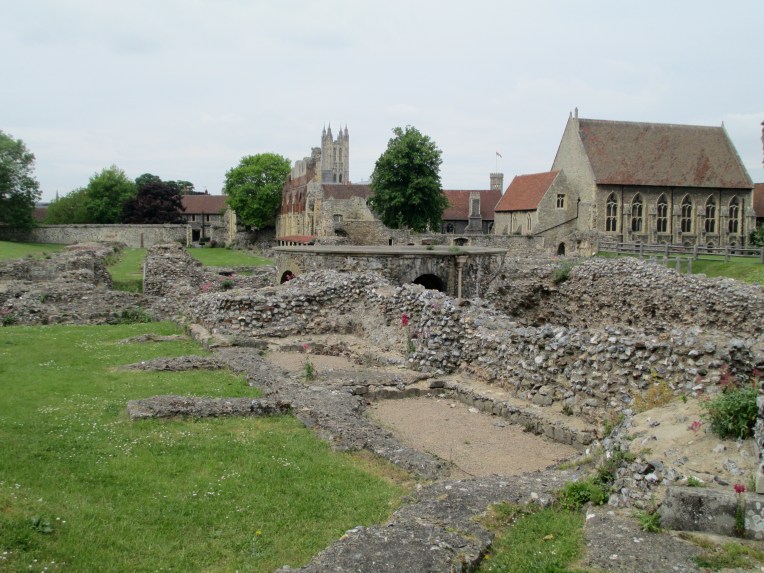
Advent Calendar of Medieval Religious Institutions: December 3rd: St Augustine’s Canterbury

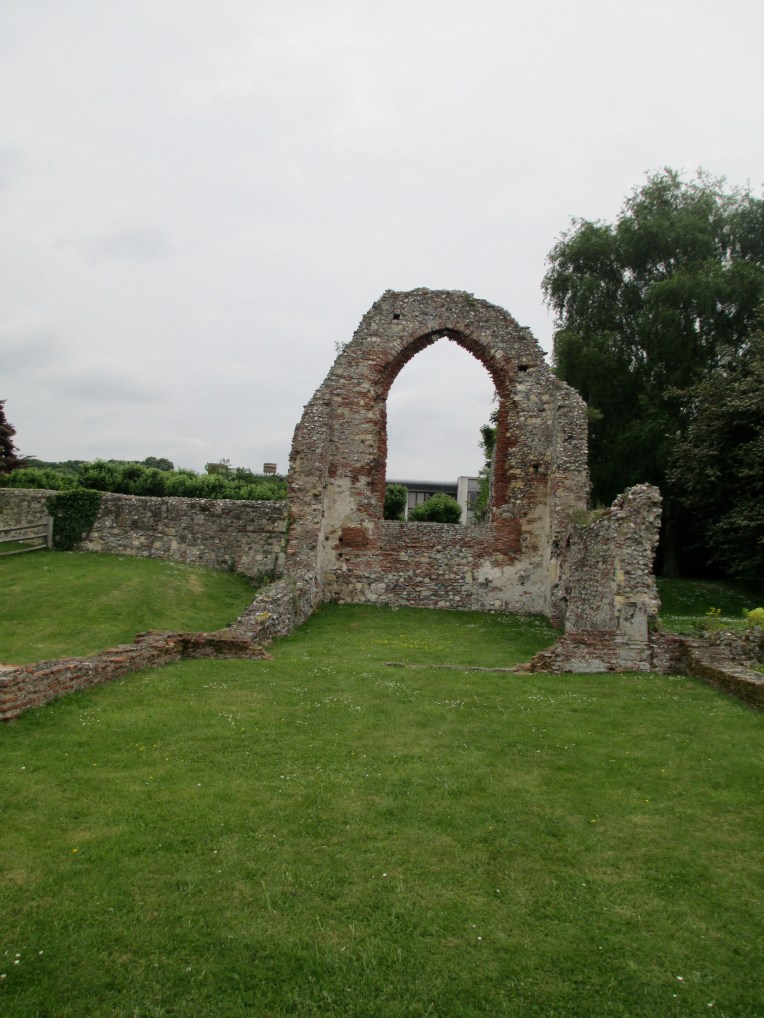
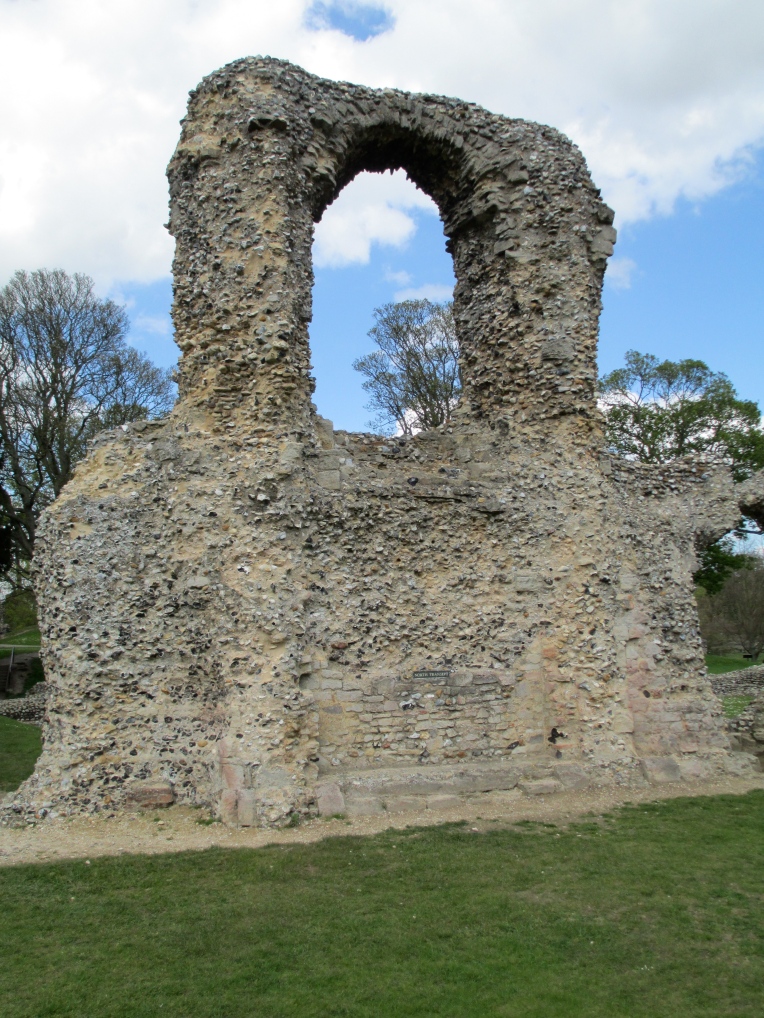
Augustine's3Augustine's1Agustine's2

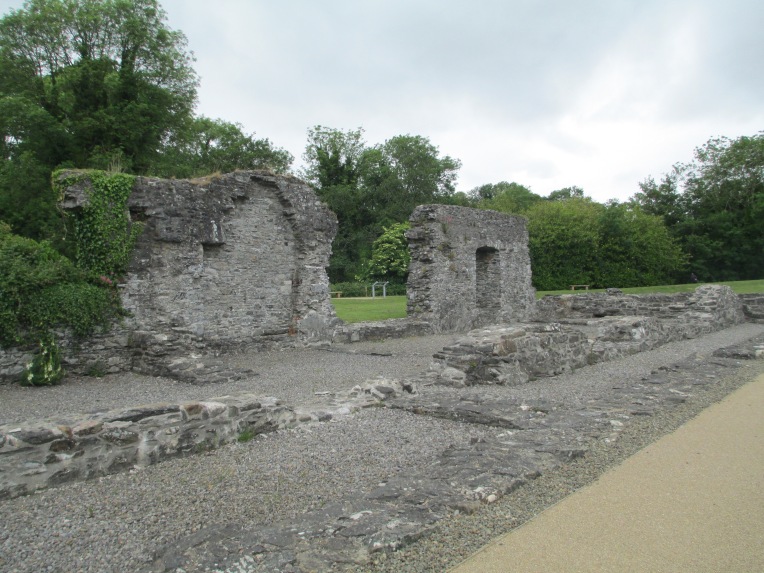
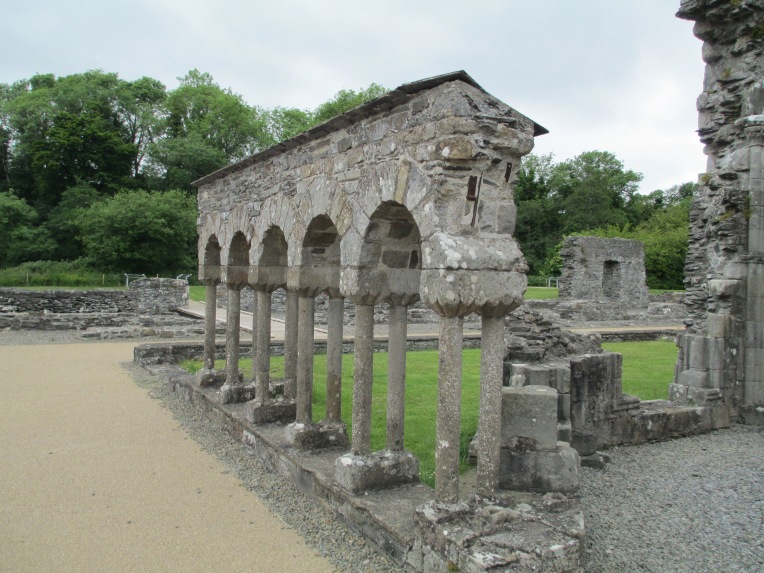
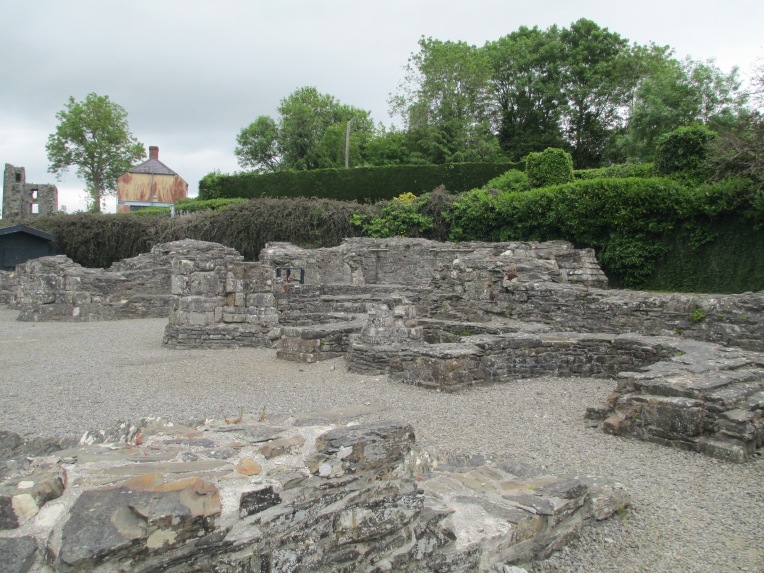
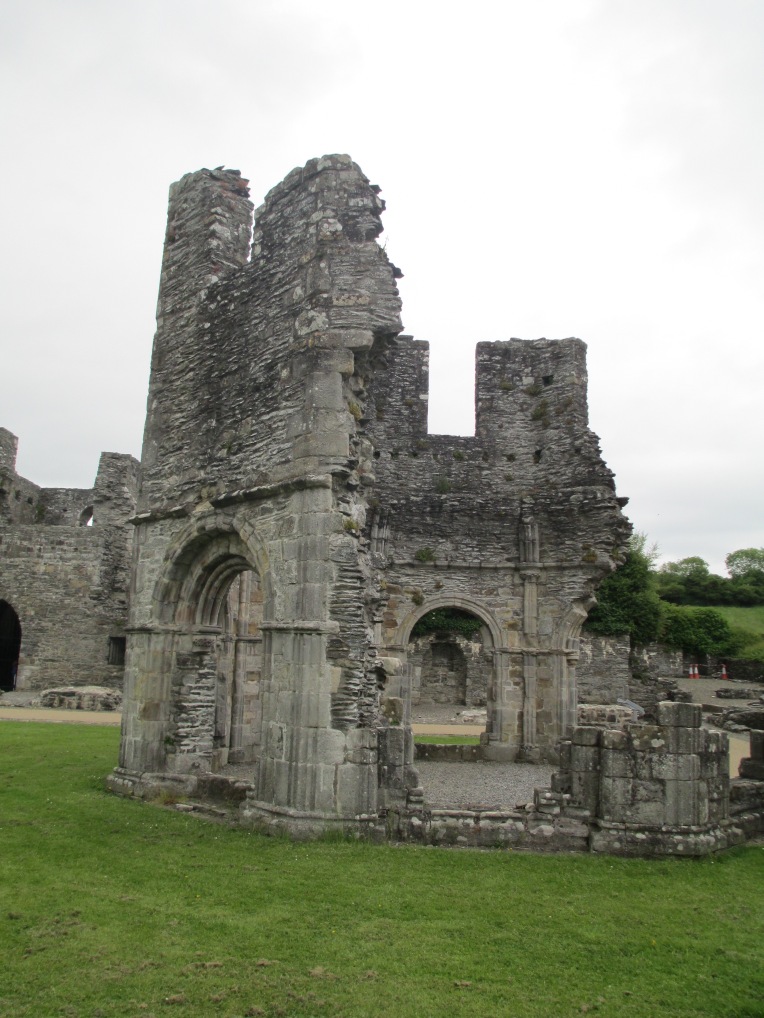
St Augustine’s was founded in roughly 598 by St Augustine, making it one of the oldest monastic sites in the country.

Augustine was sent by Pope Gregory the Great in the late 500s to restore Christianity to Southern England. Christianity had waned in England with the departure of the Romans. In the late 500s England was divided into a number of small kingdoms and Augustine set out with the aim of converting the royal families, deciding that they could then persuade their subjects.

He started in Kent because the king,  Ethelbert, was one of the most powerful in the region and his wife, Bertha, was already a Christian.  Augustine was successful and Ethelbert converted.

The Abbey was built after Ethelbert’s conversion and it served both as accommodation for the monks that Augustine imported and as a burial place for the kings. It was built outside the Roman and later medieval walls of the town of Canterbury. It also became the burial place for the early Archbishops of Canterbury.

After the Norman conquest the abbey became a standard, though powerful,  Benedictine monastery. It remained so until 1538 when it was suppressed as part of the Dissolution of the Monasteries. After it was dissolved it was used as a royal palace by Henry VIII and as a resting stop on the journey between London and the ports in the South East. It was used as a brewery for a time in the 1700s and 1800s and by the late 1800s a missionary school had been established. Today some of the site is still occupied by King’s School. The abbey is often overshadowed by it spectacular neighbour Canterbury Cathedral, but as the site of the re-establishment of Christianity in England and as one of the most powerful monasteries of the time it is in many ways more important.


References: Site visit 2012

English Heritage book: 9781850746690

The photos are all mine.

Advent Calendar of Medieval Religious Institutions December 2nd: Bury St Edmunds

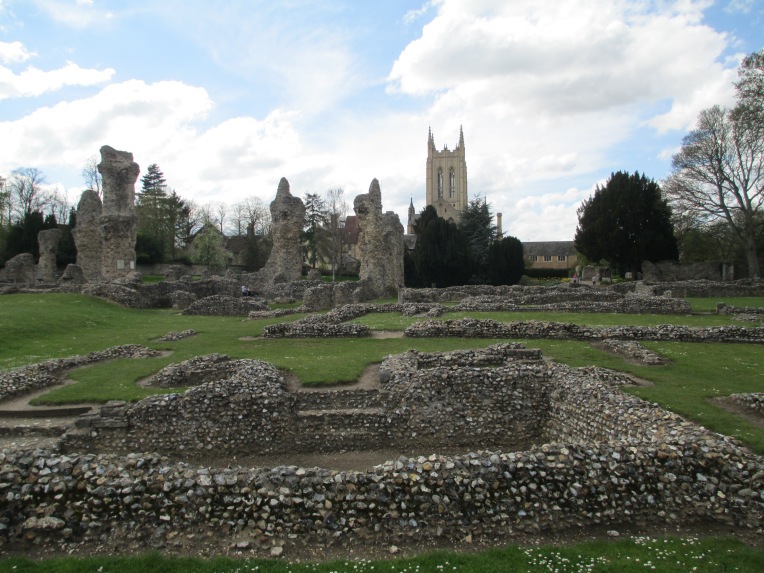
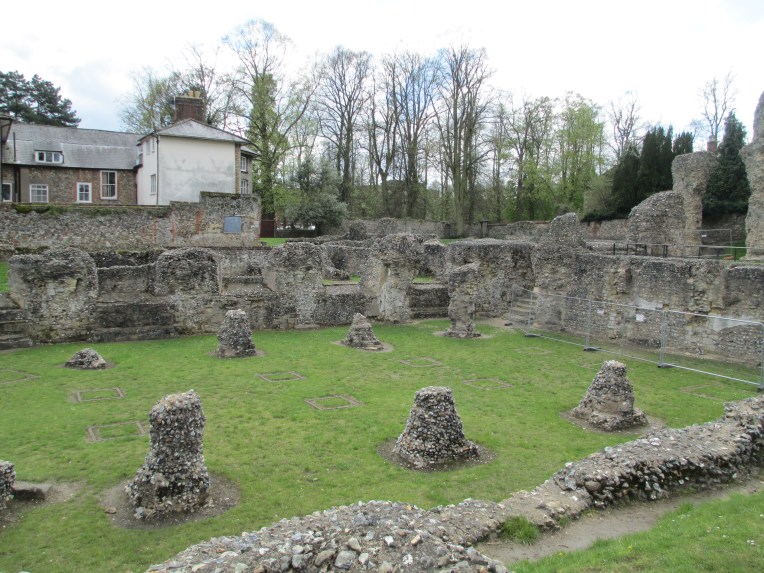
burybury st 3bury st 5Bury St Edmunds is one of my favourite abbeys. It was the first abbey I ever saw and the ruins that remain are less romantically dishevelled than many of the other religious institutions you’ll see on this list. There is an epicness to the ruins which is hard to convey in photographs.

As Bury St Edmunds is one of my favourites I have written about it before in detail so here’s the link to the original post

https://historicalragbag.com/2014/10/07/bury-st-edmunds/

Advent Calendar of Medieval Religious Institutions December 1: Rievaulx Abbey

The last two years I have run an advent calendar over December. In 2015 it was medieval quotes, in 2016 it was medieval castles, this year I am doing medieval religious institutions (abbeys, monasteries, convents, priories etc not churches or cathedrals). This means that each day from the 1st of December to the 25th of December I will put up a short post on a medieval religious institution with photos. These will be British, Irish and French and from a variety of religious orders. Some of the places I will have written about before in more detail and some I will write about later in more detail.

I am beginning with Rievaulx Abbey

Rievaulx 1Rievaulx2Rievaulx3

Rievaulx is a Cistercian abbey in North Yorkshire in England. It was the first Cistercian monastery in the north of England. As this is first Cistercian monastery listed I’m going to briefly explain what the Cistercian Order was.

The Cistercian Order was founded in 1098 in Citeaux in what is now France. While its foundation is complex, essentially it was a reaction against the perceived corruption and extravagance of the older Benedictine monasteries like Cluny. The aim of the Cistercian Order was to return to the original ideals of St Benedict and to live a very simple life. Cistercian abbeys were usually isolated and self sufficient, though the lay brothers did the work on the farms because the monks were cloistered. They lived simply and ascetically, closely following the rule, away from the gold, excesses and luxuries often seen in the bigger older monasteries.

By 1153 over 350 houses had been established across Europe, including Rievaulx. This was at least partly due to the work of the man who is probably the best known Cistercian of his period; Bernard of Clairvaux.

Bernard is not one of my favourite historical figures, largely due to his puritanical opposition to Eleanor of Aquitaine when she was Queen of France. He was, however important. He joined the Cistercian Order as a novice in 1113 and by 1115 was the founding abbot of one of the early daughter houses in Clairvaux. He preached the 2nd crusade, was a councillor to Louis VII and had an immense amount of influence. He died in 1153 and was canonised  by 1174.

Riveaulx was founded in 1132 by Bernard to drive the colonisation of Northern England by the Cistercian order. The original buildings would have been wooden, but William, the first abbot, began building in stone by the late 1130s. By the 1160s it was one of the most powerful abbeys in Britain. The abbey was at its height under Abbot Aeldred (1147-67) who was later canonised. Aeldred came to Rievaulx in 1134 and was elected abbot in 1147. Under Aelred Rievaulx was home to a community of 140 choir monks and 500 lay brothers and servants. It also expanded extensively including the building of the spectacular church in the late 1140s

Riveaulx was part of the dissolution of the monasteries under Henry VIII. It was dissolved in 1538, though by this time it had shrunk to a community of just 23. It was sold to Thomas 1st Earl of Rutland. Rutland had the buildings dismantled, especially the lead roofs and the bells which he reserved for the king. Luckily Rutland’s steward from nearby Helmsley Castle kept detailed records of everything that was dismantled.

Rievaulx made very picturesque ruins and was a favourite of the romantic painters. It is certainly still hauntingly beautiful today.


References

Site visit 2012

English Heritage Rievaulx booklet

https://historicalragbag.com/2017/05/22/mellifont-abbey/ (for the part about the Cistercians)

http://www.english-heritage.org.uk/visit/places/rievaulx-abbey/history-and-stories/history/


Mellifont Abbey

Mellifont Abbey in County Louth is one of the most interesting if inconspicuous (at first glance) abbeys in Ireland.

IMG_4578 (1)

It was founded by St. Malachy, with a group of Irish and French monks in 1142. It was the first Cistercian monastery in Ireland.

The Cistercian Order was founded in 1098 in Citeaux in what is now France. While its foundation is complex, essentially it was a reaction against the perceived corruption and extravagance of the older Benedictine monasteries like Cluny. The aim of the Cistercian Order was to return to the original ideals of St Benedict and to live a very simple life. Cistercian abbeys were usually isolated and self sufficient, though the lay brothers did the work on the farms because the monks were cloistered. They lived simply and ascetically, closely following the rule, away from the gold, excesses and luxuries often seen in the bigger older monasteries. They also deliberately founded daughter houses. By 1153 over 350 houses had been established across Europe, including Mellifont. This was at least partly due to the work of the man who is probably the best known Cistercian of his period; Bernard of Clairvaux.

Bernard is not one of my favourite historical figures, largely due to his puritanical opposition to Eleanor of Aquitaine when she was Queen of France. He was, however important. He joined the Cistercian Order as a novice in 1113 and by 1115 was the founding abbot of one of the early daughter houses in Clairvaux. He preached the 2nd crusade, was a councillor to Louis VII and had an immense amount of influence. He died in 1153 and was canonised  by 1174.

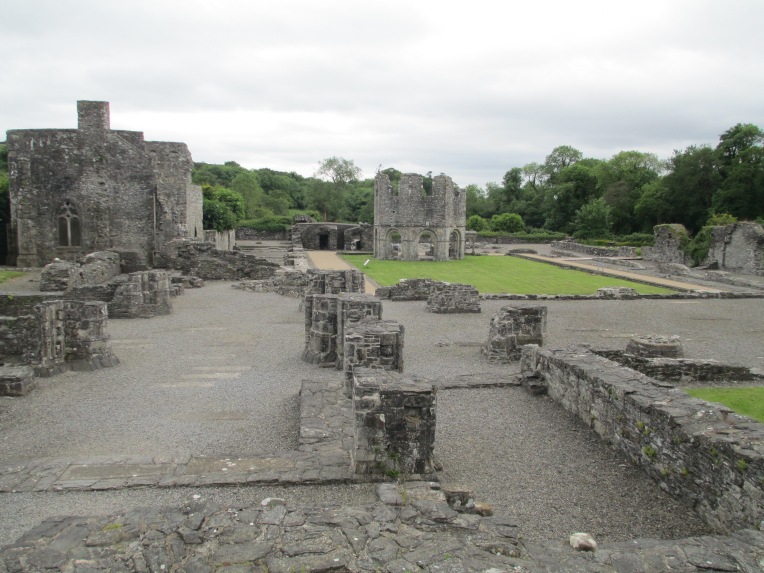
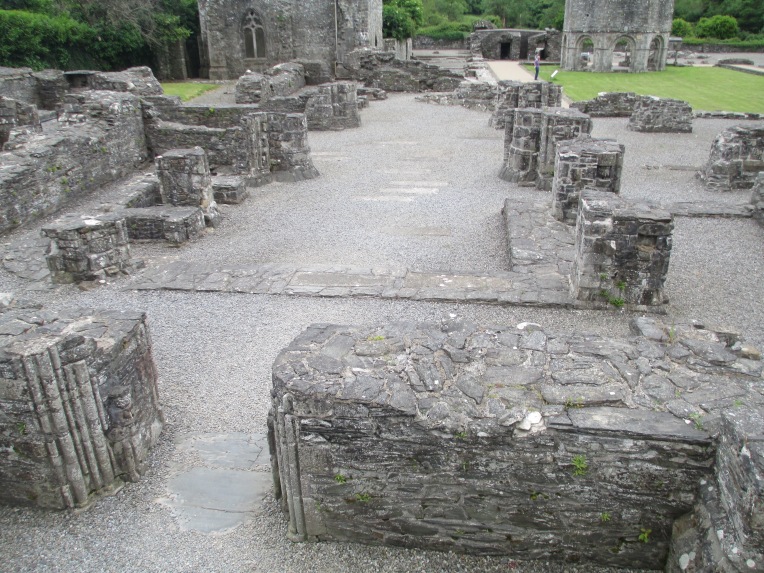
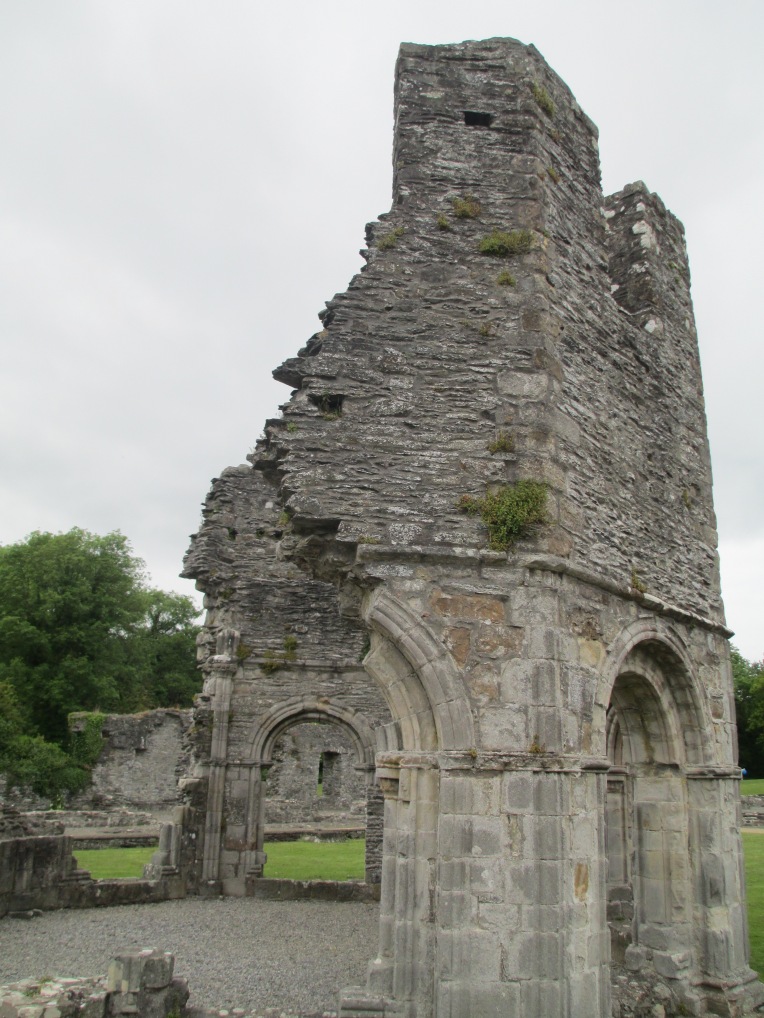
It was Bernard’s friend St Malachy who founded Mellifont Abbey. He was granted the land by Donnchadh Ua Cerbhaill, King of Airghialla. It was founded with roughly 300 monks and 300 conventuals. The church in the abbey was consecrated in 1157. The remains of part of the transept can be seen below.

IMG_4582

The foundation was part of a general re-evaluation of christianity in Ireland. There were several Synods leading up to Mellifont’s foundation in 1142. Furthermore the Cistercians were only one of a number of continental orders that arrived in Ireland at around the same time.

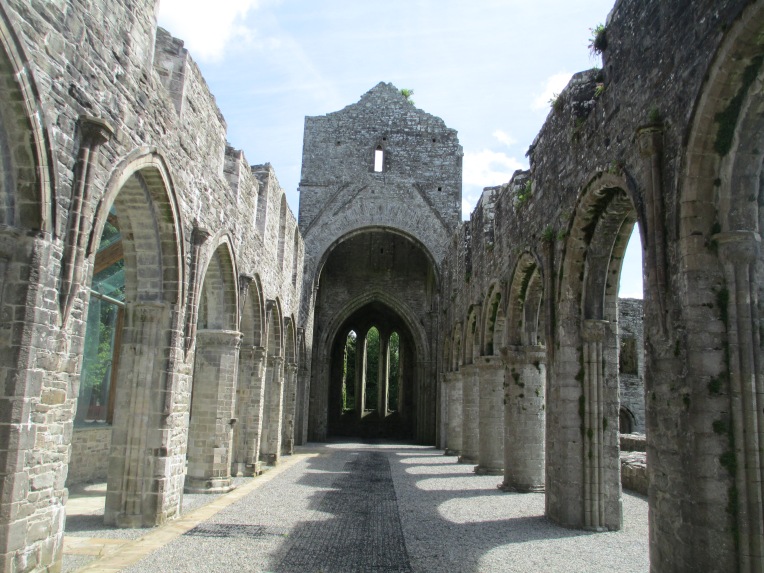
Mellifont might have been the first Cistercian abbey in Ireland, but it certainly wasn’t the last. It was the mother house for at least 8 daughter houses by 1153, including Boyle Abbey which was founded in 1148. The church of which can be seen below.

IMG_3704

The Cistercian Order spread quickly, partly because of Ireland’s landscape, which worked well for the Cistercian model of isolated self-sufficiency. The abbeys were also supported by the incoming Norman-French/ English nobility who came to Ireland in c.1170. Many of the Cistercian abbeys can be found in parts of Ireland that were  under Norman control by 1200. An example is Tintern Abbey which was founded by William Marshal.

Marshal came to visit his lands in Ireland that came to him by right of his wife Isabel de Clare in 1200-1201. They were caught in a terrible storm crossing the Irish Sea and Marshal vowed to God that if they survived he would found an abbey. The ship didn’t sink and Marshal kept his word. As thanks to God for their survival he founded Tintern Abbey, which  stands on Hook Head Peninsula. It’s known as Tintern of the Vow as well as Tintern Parva, meaning small Tintern in Latin. It can be seen below.
tintern parva

IMG_1983

It is a daughter house of Tintern Abbey in Wales, which also stood on Marshal land. It can be seen below.

IMG_2483

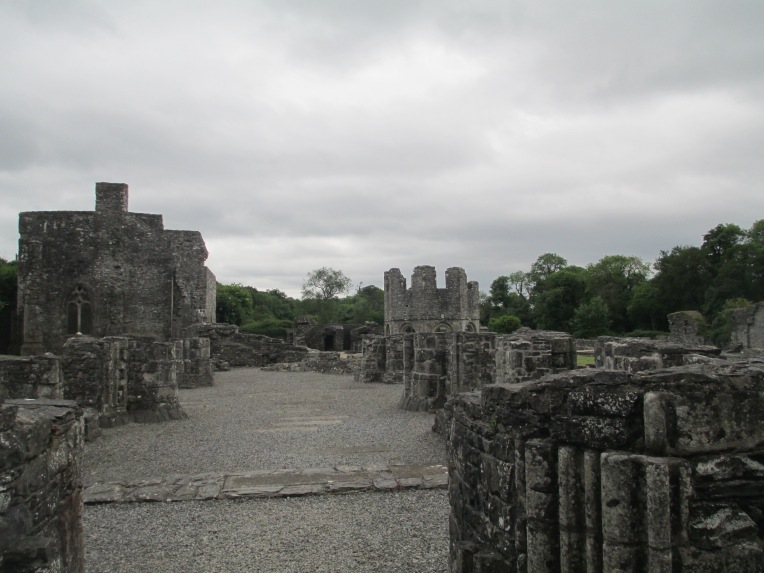
As you can see from the photos of other surviving Cistercian abbeys there is comparatively little left at Mellifont. IMG_4577IMG_4569IMG_4567IMG_4571It, like many other abbeys, was a victim of the Dissolution of the Monasteries in the 16th century. Following the Dissolution the buildings came to Sir Edward Moore who converted them into a fortified residence. It played a role in several Irish wars and during the Battle of the Boyne in 1690 King William based his headquarters there. It fell into disrepair in the early 18th century and eventually ended up in the hands of the state in the 1880s.

Despite that lack of large buildings remaining there are some fascinating surviving features. The one most people notice is the lavabo which dates to the beginning of the 13th century and would have been where the monks washed before entering the refectory. You can see it in the photos below. It is an unusual survival partly because it was octagonal.

IMG_4568IMG_4566Additionally much of the intricate stone work has survived and can be found preserved in the visitors centre. Examples can be seen below.

My favourite survivals however are the medieval tiles. I’ve written about medieval tiles before and that can be found here. 

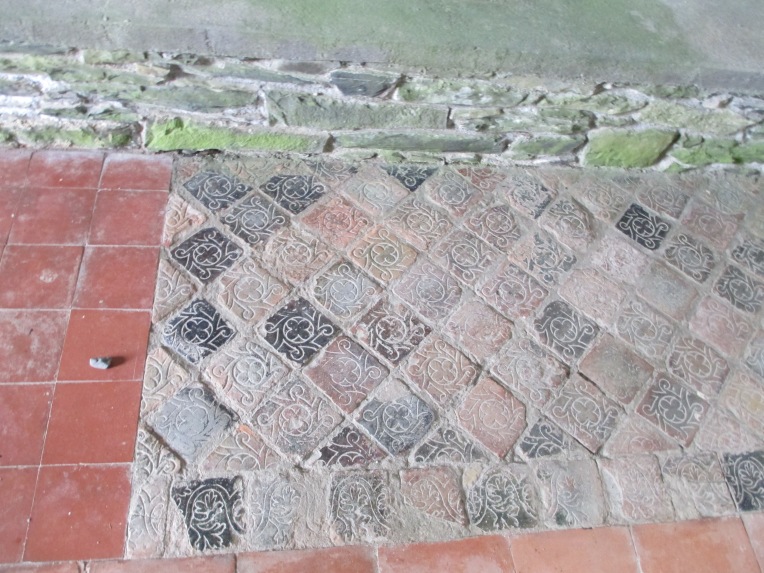
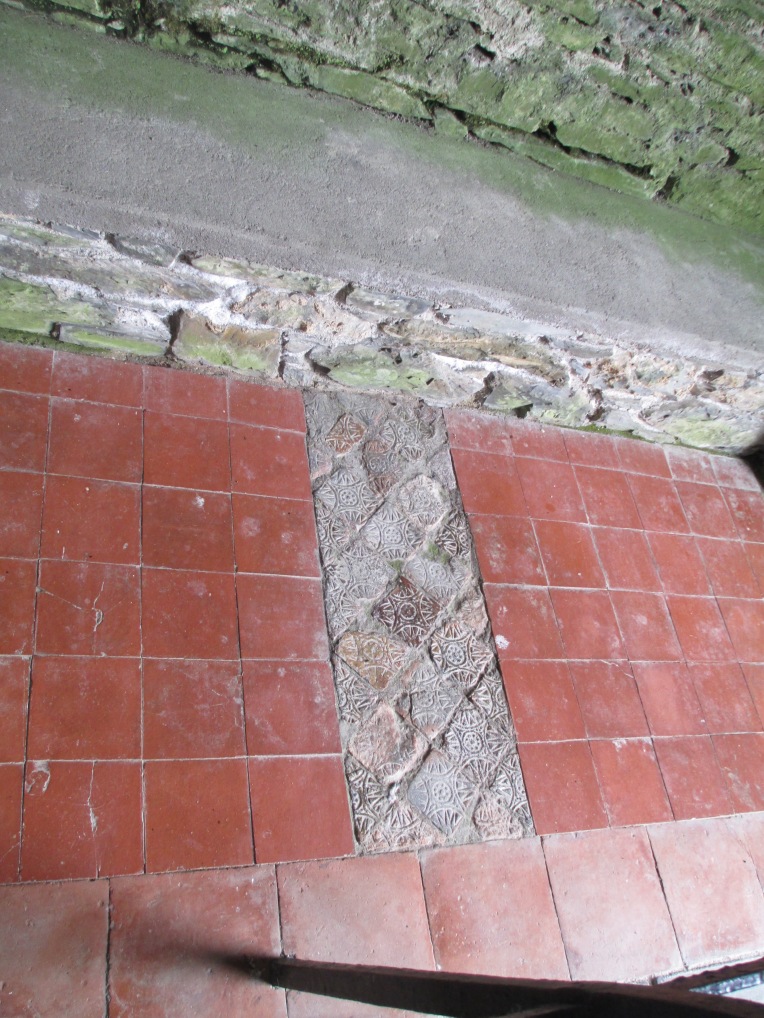
The tiles at Mellifont aren’t in the original positions and they are kept in formation in a closed off area because they were damaged by vandalism. They were most likely first introduced to Mellifont sometime after 1230. Roughly 25 differnet  patterns adorn the tiles. They all represent common medieval tile design, none are unique to Mellifont. You can see examples of surviving tiles below. IMG_4557IMG_4560

IMG_4561

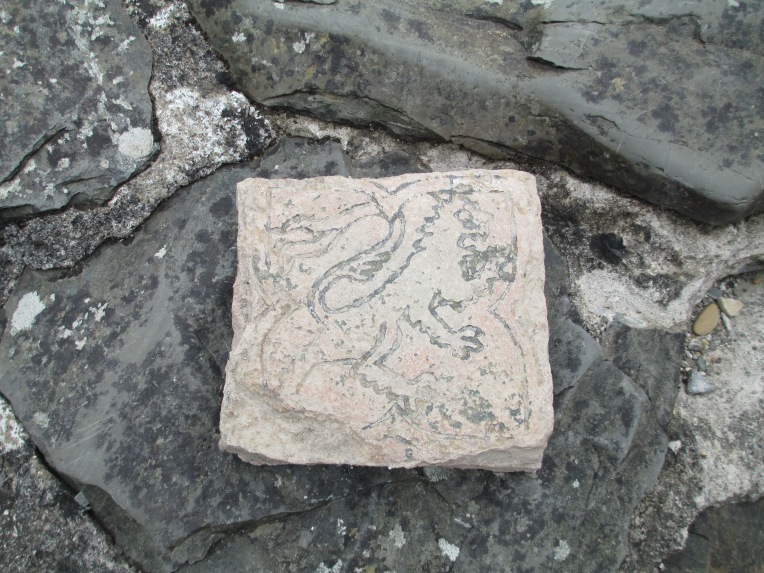
I was also lucky enough to be able to have a look at some of the individual tiles which are in storage, including a really lovely lion rampant tile (see below). The tiles are surprisingly heavy and are earthenware with a lead glaze. They were fired in batches in a kiln. Mellifont would have bought them in, not made them on site

IMG_4564Most of these tiles were discovered during an excavation in the 1950s.

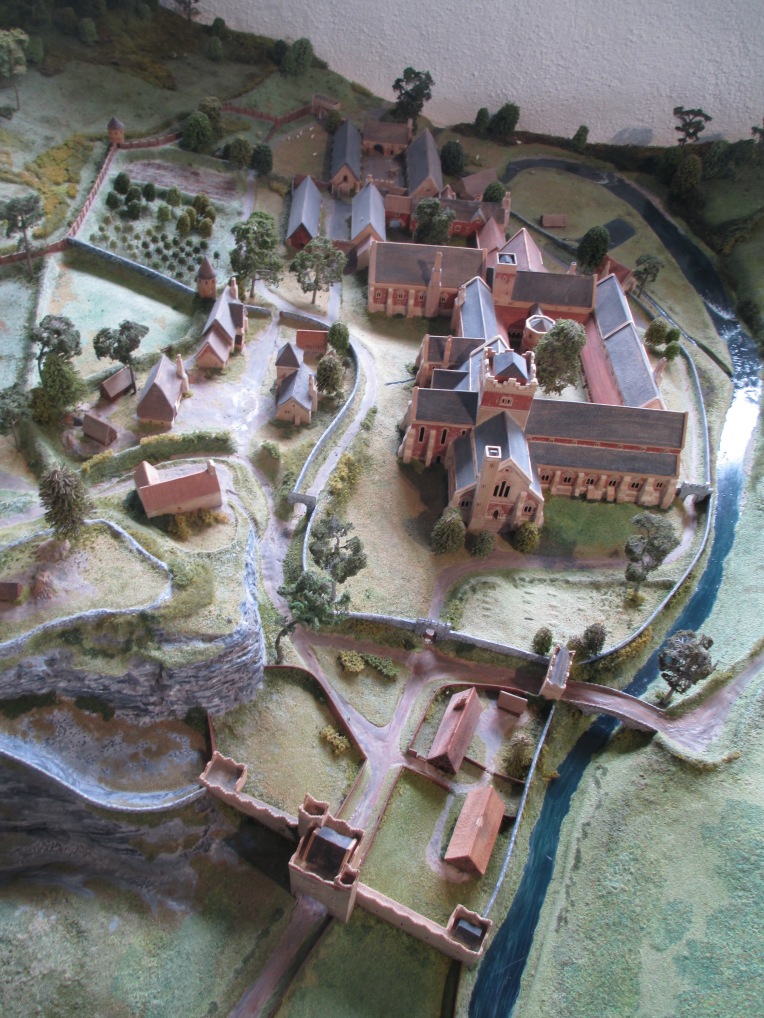
The overall evolution of Mellifont Abbey architecturally was key to religious architectural development in Ireland generally. It would have possessed some of the most dramatic and beautiful church buildings in Ireland. By 1540 Mellifont held estates that extended to 50 000 acres making the abbot one of the wealthiest landlords in the country. It was remodelled on several occasions and it is likely that other religious buildings across Ireland would have been based on its design. The photo below is a model which shows how the abbey itself might have looked at the height of its powers.

IMG_4502

Mellifont benefited from the support of many noble families including local Irish nobility, especially in its early years before the Norman conquest. For example Dervogilla, who was the wife of O’Rourke of Breffini, gave a gold chalice for the altar and furnishing for nine other altars as a gift for the consecration of the church in 1157. Only a little before this gift Dervogilla had, unwittingly, become one of the key sources in the Norman invasion of ireland.

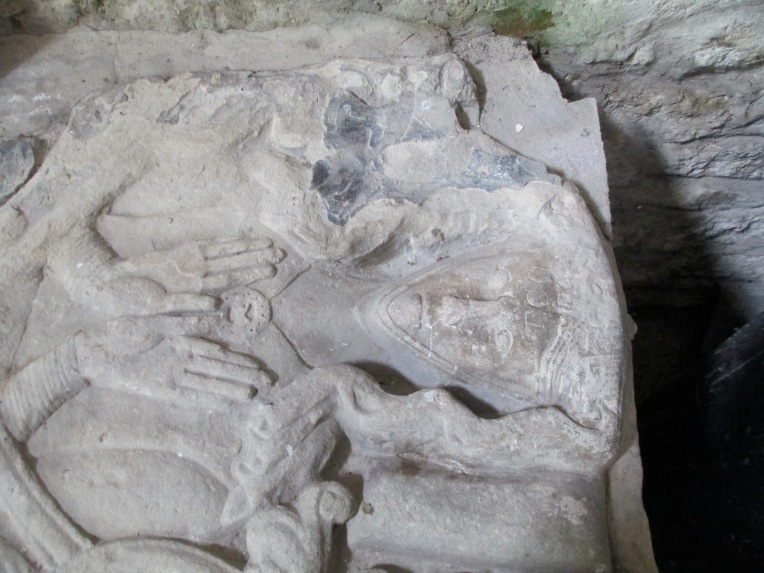
Diarmait Mac Murchada was King of Leinster. He was involved with the other kings of Ireland in various disputes and battles. In 1152 during yet another conflict he carried off Dervogilla, who was the wife of his old enemy O’Rourke, and her cattle. Depending what source you believe she may have been consenting as her husband was a bit of a tyrant. This abduction was a personal insult to O’Rourke and he held a grudge. Although O’Rourke managed to reclaim Dervogilla, a little over a year later, he never forgave or forgot Diarmait. His grudge helped to lead to Diarmait’s loss of his kingdom in 1166 and his subsequent request for help from Henry II, which brought the Norman/French to Ireland in 1169. The never left again.

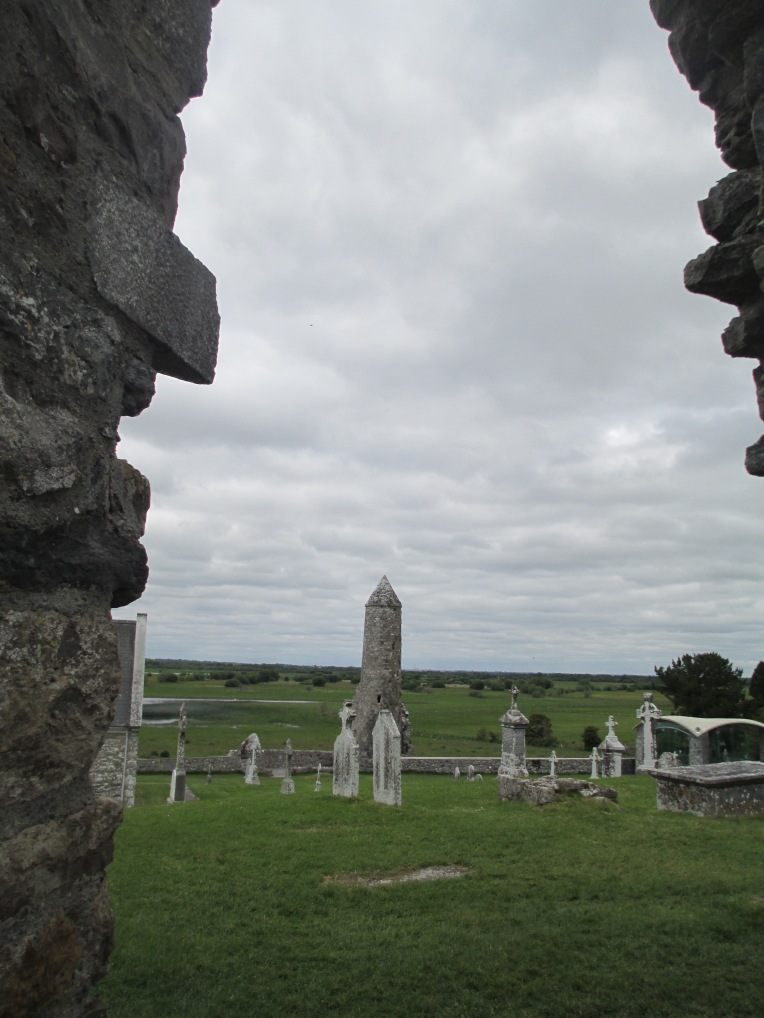
Dervogilla may have stayed with her husband after being reclaimed, but as well as Mellifont she had the Church of the Nuns at Clonmacnoise built. You can see some of Clonmacnoise in the photo below.

IMG_3598Dervogilla retired in 1186 to Mellifont and she died there. It is possible that she was buried in the wall of the church and legend has it that she was buried the wrong way round because she was a “fallen woman”.

Mellifont Abbey was at the core of faith in Ireland from its foundation in 1142 until its dissolution in the 16th century. It shaped the way religion was enacted in the country and it shaped the development of many other religious houses. For what now, especially in comparison to other sites, seems to be a small and inconspicuous grouping of walls and buildings it is of national historical importance.

References:

Site visit to Mellifont, Boyle, Clonmacnoise in 2015. Site visit to Tintern Pava in 2012 and 2015. Site visit to Tintern 2012.

Mellifont Abbey OPW guide-book.

Ireland Under The Normans 1169-1333 by Goddard Henry Orpen. ISBN: 9781851827152

Proceedings of the Royal Irish Academy 1980: Mellifont Abbey: A Study of Its Architectural History by Stalley. pg 264  http://www.jstor.org.ezproxy.slv.vic.gov.au/stable/25506059

Proceedings of the Royal Irish Academy :Excavations at Mellifont Abbey, Co. Louth: Liam de Paor, J. Hunt, H. J. Plenderleith and Michael Dolley pg 110. http://www.jstor.org.ezproxy.slv.vic.gov.au/stable/25505154http://www.jstor.org.ezproxy.slv.vic.gov.au/stable/25505154

A Monastic Landscape: The Cistercians in medieval Ireland. Dr. Breda Lynch. ISBN. 9781453561003

Special thanks to Lindsay from OPW at the site who answered all my questions and showed me the tiles.

The photos are all mine.

Who am I? Medieval edition

Simple rules:

  1. There are four clues
  2. To see the next clue scroll down
  3. If you guess on the first clue you get four points, second clue three points etc.
  4. The fourth clue is always pictorial
  5. Some are harder than others and there is no particular order. Each question is weighted the same
  6. There are ten questions.
  7. The answer is after the final pictorial clue
  8. If you see the next clue you don’t get the point.


1.

a) Married twice


b) A patron of Fontevraud


c) A great heiress and Duchess in her own right


d)eofa

Answer: Eleanor of Aquitaine


2.

a) Born to the daughter of the Earl of Salisbury


b) Once won a pike


c) Regent of England.


d) IMG_3421

Answer: William Marshal


3. 

a) Died in Rouen


b) Ordered what is known as an early census


c) Was a bastard in many senses of the word.


d) Bayeux Tapestry 7JPGAnswer: William I


4. 

a)  Known as a great writer and thinker of the early medieval period


b) Had a son called Astrolabe


c) Was castrated for his great passion for one of his students (it’s a little more complicated, but that’s the gist)


d)IMG_7444

Answer: Abelard 


5.  

a) The illegitimate daughter of a king of England


b) Married to a foreign Prince


c) Helped broker a peace between her husband a Prince of Wales and her father King John


d)joanna close

Answer: Joan of Wales


6. 

a) An Irish lord


b) Buried in Ferns


c) The reason the Normans came to Ireland


d) Diarmut grave

Answer: Diarmait mac murchada


7.

a) The second oldest son of a King.


b) Died in 1183


c) Known as reckless and crowned in his father’s life time.


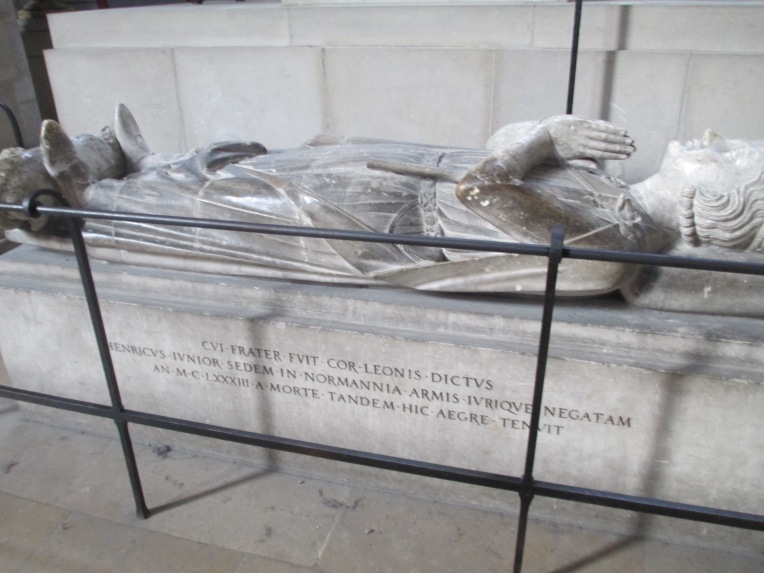
d)IMG_7222Answer: Henry the Young King


8.


a) A medieval writer who liked to travel


b) Descended from Nest, a well known Welsh princess.


c) Known for his descriptions of Wales and Ireland


d)IMG_5579Answer: Gerald of Wales


9.

a) 12th child


b) Knight of the Garter


c) Arguably the last Plantagenet.


d)IMG_5855

Answer: Richard III


10.

a) Married at a very young age


b) Daughter of Alice de Courtenay


c) Remarried when her husband died and her children with her second husband reaped great benefits at the court of Henry III


d)Richard IAnswer: Isabel of Angouleme


So how did you do?

1-10: Not too bad, maybe read a little more

11-20: Absolutely getting there, excellent effort

21-30:  Brilliant, you really know your medieval figures!

31-40: Are you sure you didn’t check the next clue? No? Didn’t just have a pile of lucky guesses? No? Well then, exceptional effort!!


Medieval Quote Advent Calendar 6th of December

A description of Abbot Samson of Bury St Edmunds

“ABBOT SAMSON was below the average height, almost bald; his face was neither round nor oblong ; his nose was prominent and his lips thick; his eyes were clear and his glance penetrating; his hearing was excellent; his eyebrows arched, and frequently shaved; and a little cold soon made him hoarse. On the day of his election he was forty­ seven, and had been a monk for seventeen years. In his ruddy beard there were a few grey hairs, and still fewer in his black and curling hair. But in the course of the first fourteen years after his election all his hair became white as snow.

He was an exceedingly temperate man ; he possessed great energy and a strong constitution, and was fond both of riding and walking, until old age prevailed upon him and moderated his ardour in these respects. When he heard the news of the capture of the cross and the fall of Jerusalem, he began to wear under garments made of horse hair, and a horse­ hair shirt, and gave up the use of flesh and meat. None the less, he willed that flesh should be placed before him as he sat at table, that the alms might be increased. He ate sweet milk, honey, and similar sweet things, far more readily than any other food.

He hated liars, drunkards, and talkative persons; for virtue ever loves itself and spurns that which is contrary to it. He blamed those who grumbled about their meat and drink, and especially monks who so grumbled, and personally kept to the same manners which he had observed when he was a cloistered monk. Moreover, he had this virtue in himself that he never desired to change the dish which was placed before him. When I was a novice, I wished to prove whether this was really true, and as I happened to serve in the refectory, I thought to place before him food which would have offended any other man, in a very dirty and broken dish. But when he saw this, he was as it were blind to it. Then, as there was some delay, I repented of what I had done, and straightway seized the dish, changed the food and dish for better, and carried it to him. He, however, was angry at the change, and disturbed.

He was an eloquent man, speaking both French and Latin, but rather careful of the good sense of that which he had to say than of the style of his words. He could read books written in English very well, and was wont to preach to the people in English, but in the dialect of Norfolk where he was born and bred. It was for this reason that he ordered a pulpit to be placed in the church, for the sake of those who heard him and for purposes of ornament.”


From the Chronicle of the Abbey of St Edmund’s http://www.fordham.edu/halsall/basis/jocelin.asp

An Easy to Evil Medieval British Quiz.

The way this quiz works.

It’s pretty simple. You see the question with a photo underneath and underneath the photo you’ll find the answer. There’s twenty five questions so keep track of how many you get right and how many you get wrong and see how you do at the end. There’s also a poll at the end so you can see how you compare to everyone else if you’re interested.

As the title suggests, it starts off easy and gets much more complicated. There are five sections: Easy, Medium, Hard, Difficult and Evil.

Enjoy.

Easy

1. What year was the Magna Carta sealed?

IMG_3377

Answer: 1215.

Photo: Part of Runnymede the water meadow where Magna Carta was signed.

2. What year was the Battle of Hastings?

Bayeux Tapestry 35

Answer: 1066

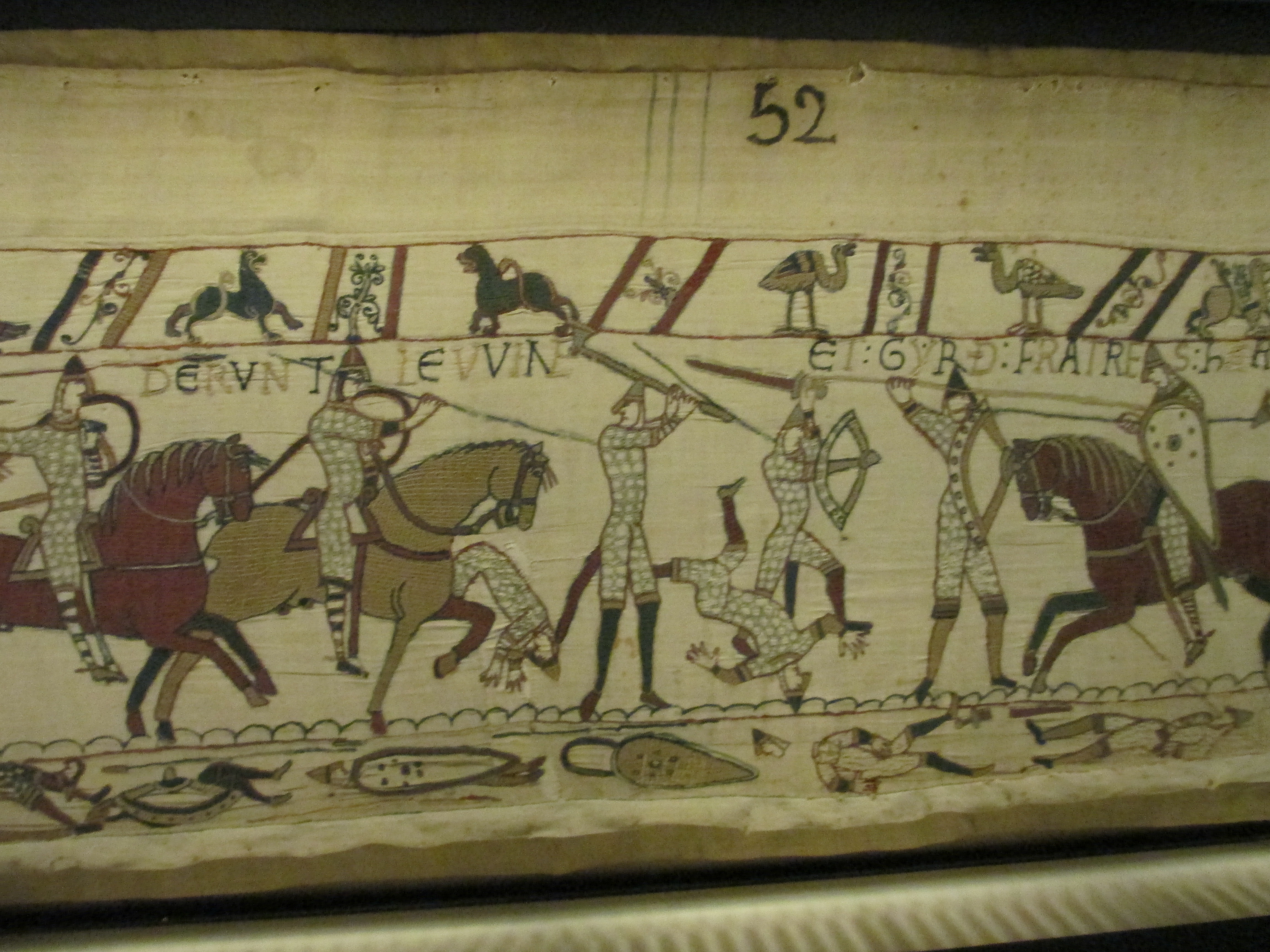
Photo: The Battle of Hasting in the Bayeux Tapestry.

3. Henry II fought with which Archbishop of Canterbury?

henry close

Answer: Thomas Becket.

Photo: Henry II at Fontevraud Abbey.

4.  Eleanor of Aquitaine was the mother of which Kings of England?

eofa

Answer: Richard I and John I. You get a bonus point if you said Henry the Young King as well.

Photo: Eleanor of Aquitaine Fontevraud Abbey.

5. William the Conquerer commissioned which survey in 1086?

IMG_6144

Answer: Domesday Book

Photo: A recreation of the Domesday Book from in the National Archives.

Medium

 6. Which crusade did Richard the Lionheart fight in?

Richard I

Answer: Third Crusade

Photo: Richard the Lionheart and Isabel of Angouleme. 

7. King John married his daughter Joan to which Welsh Prince?

llew coffin 1

Answer: Llywelyn Fawr or Llywelyn ap Iorwerth. Either is correct

And I wouldn’t be deducting points if you spelt either wrong.

Photo: Llywelyn’s coffin.

8. William Marshal married which heiress, the daughter of Richard Strongbow?

IMG_3419

Answer: Isabel de Clare.

Photo: William Marshal’s effigy.

9. King John lost his baggage train in which inlet?

IMG_0401

Answer: The Wash

Photo: Part of The Wash as it looks now.

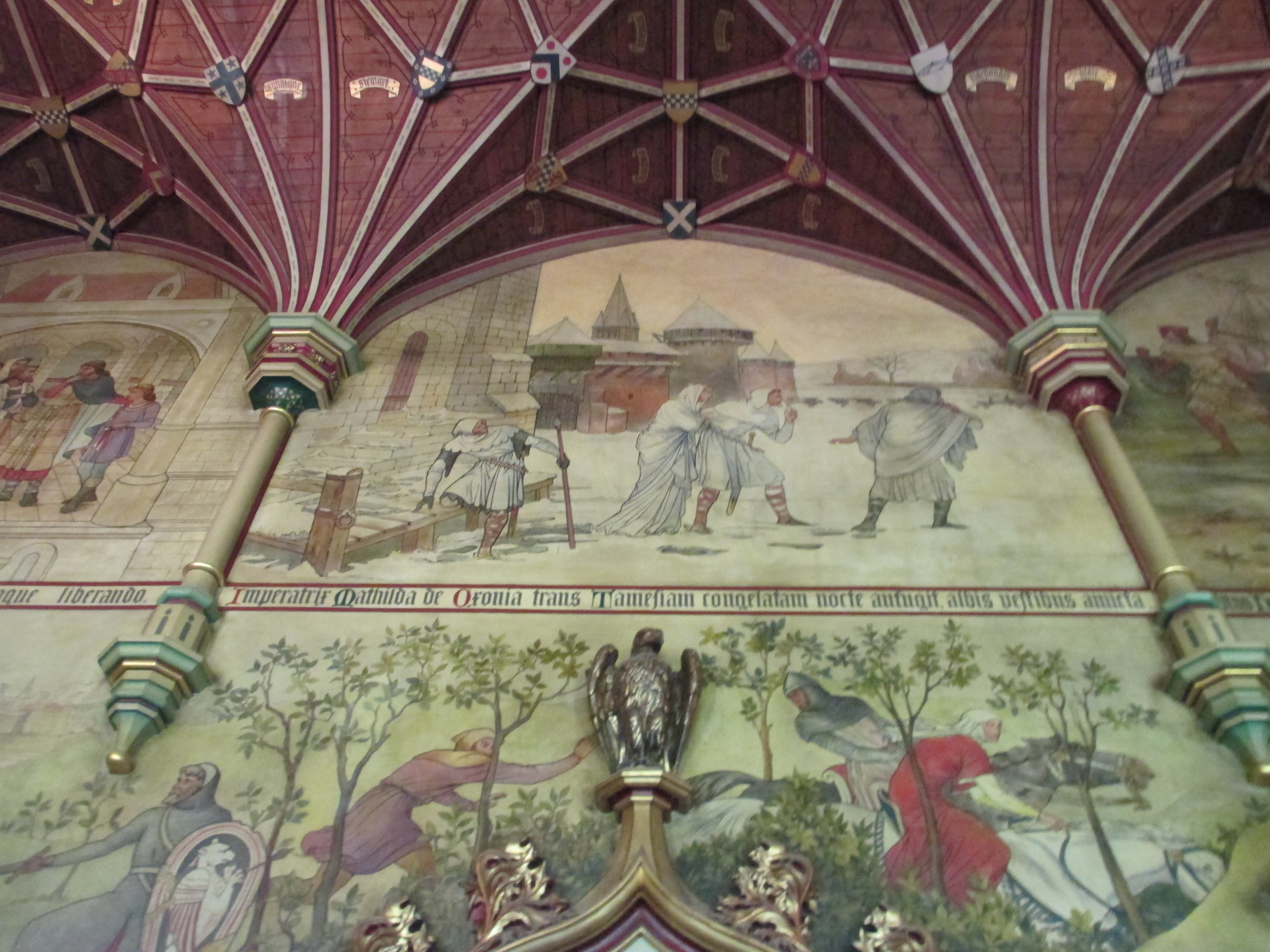
10. Empress Maud purportedly escaped through King Stephen’s army and the snow from which Castle?

IMG_5026

Answer: Oxford Castle.

Photo: 1800s drawing from Cardiff Castle of the escape.

Hard

11. William the Conquerer is buried in which town?

IMG_7063

Answer: Caen.

Photo: William the Conquerer’s tomb.

12. Which King was born in Winchester Castle?

IMG_4161

Answer: Henry III.

Photo: Great Hall of Winchester Castle.

13. How did the Anglo-Saxon Chronicle famously describe the Period of Anarchy 1136-1154?

IMG_7239

Answer: It was a time “that Christ and His saints slept.”

Michael Swanton, (ed) & trans, The Anglo-Saxon Chronicle, London: Phoenix Press, 2000, p. 265. You get the point if you got a variant of this, there’s different translations.

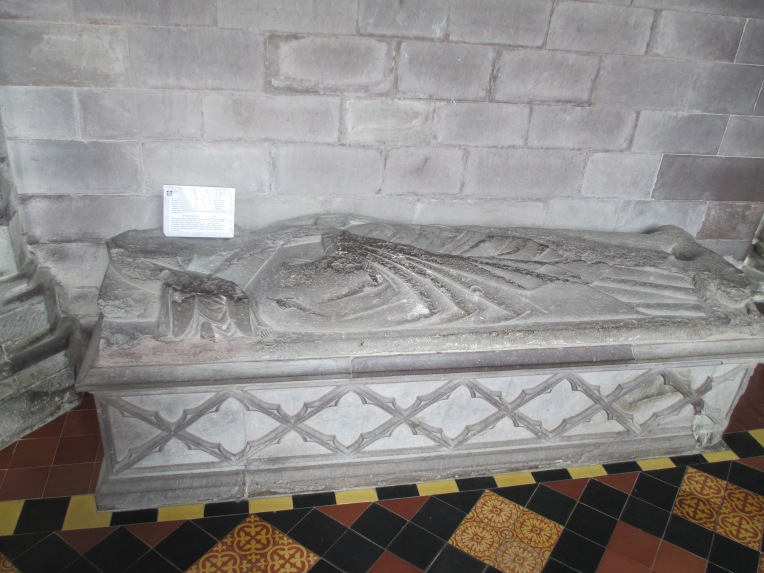
Photo: The current tomb of Empress Maud, one of the antagonists of the Period of Anarchy.

14. Name the children of Henry II and Eleanor of Aquitaine.

henry and eleanor

Answer: William, Henry, Matilda, Richard, Geoffrey, Eleanor, Joanna, John.

If you got all of them but not in order have a point, but you get a bonus point if you got them in order.

Photo: Henry II and Eleanor of Aquitaine.

15. What year did Henry the Young King die?

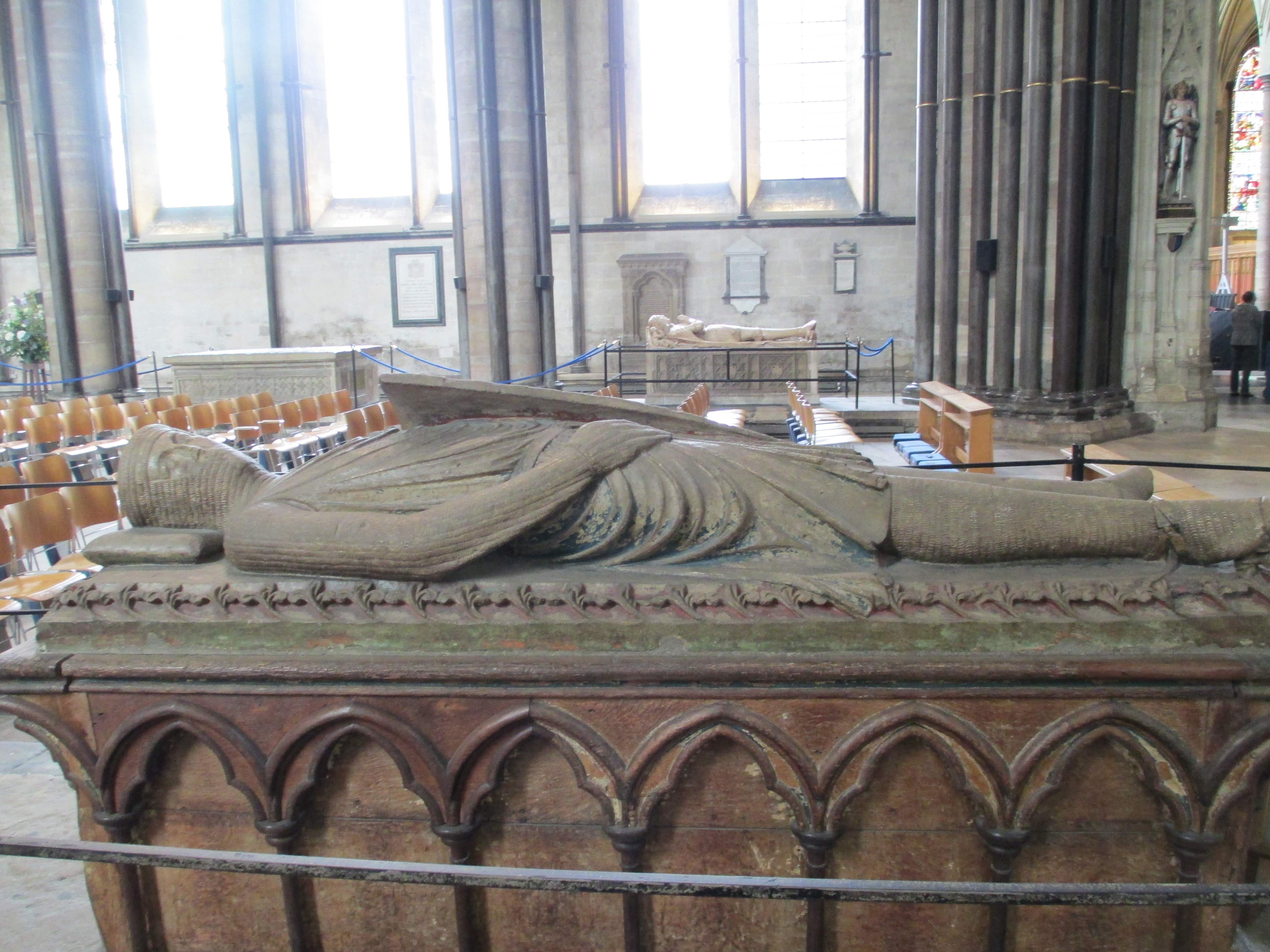
IMG_7222

Answer: 1183.

Photo: Henry’s non contemporary tomb at Rouen Cathedral.

Difficult

16. Name the three places which hold the only four existing copies of the original Magna Carta.
IMG_0476

Answer: Lincoln, Salisbury Cathedral and The British Library (the British Library has 2).

Photo: Part of Lincoln Castle.

17. Ida de Tosny, the wife of Roger Earl of Norfolk, had a son out of wedlock before she married the Earl who was he?

IMG_3084

Answer: William Longsword Earl of Salisbury and bastard son of Henry II.

Photo: His tomb.

18. Which castle did William Marshal, according to the Brut y Tywysogion, subdue with a “vast army” in 1204?

The Rev. John Williams, (ed), Brut y Tywysogion, London: Longman, Green, Longman & Roberts, 1860, p. 261

IMG_5706

Answer: Cilgerran Castle.

Photo: Recent wicker statue of Marshal at Cilgerran

19. How much was King Richard’s ransom?

riveaux

Answer: 100,000 silver marks and 200 hostages. You get the point if you got the monetary amount.

Photo: Riveaux Abbey, a Cistercian foundation. Cistercian foundations had to contribute part of their wool clips to the ransom.

20. Canterbury Cathedral was begun in which decade?

Canterbury Cathedral

Answer: 1070s

Photo: Canterbury Cathedral

Evil

21. Which illustrious figure ‘processed’ through the Temple Church in London for its consecration in 1185.

temple church

Answer: Patriarch Heraclius of Jerusalem.

Photo: Temple Church in London.

22. According to the History of William Marshal what three things did King Stephen threaten to do to the young William Marshal while he was the King’s hostage?

IMG_3421

Answer: Hang him, catapult him at the walls of his father’s castle and crush him with a millstone.

A.J Holden & David Crouch (eds) S. Gregory, trans, History of William Marshal, Volume I, London: Anglo-Norman Text Society, 2002, p. 31.

You can have the point if you got these in any order but you have to have all three to get the point.

Photo: William Marshal

23. The Bayeux Tapestry is how many metres long?

Bayeux Tapestry 16

Answer: 70.34m, but you can have the point if you said 70.

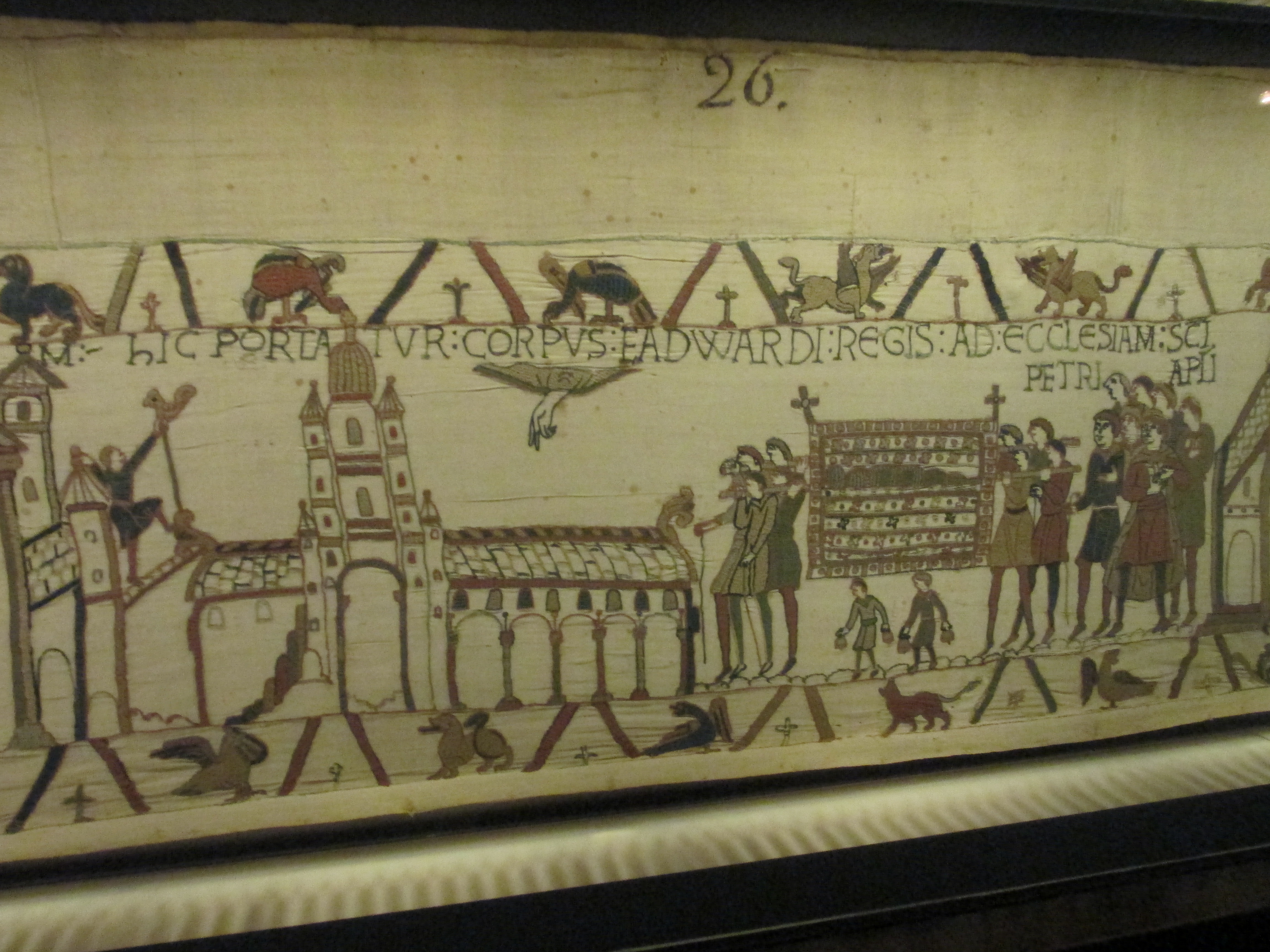
Photo: My favourite scene in the Bayeux Tapestry with the Hand of God coming out of the sky.

24. Which papal legate played a significant role in the Magna Carta negotiations and in the Regency of Henry III?

IMG_6033

Answer: Guala Bicchieri. You can have the point if you only got Guala, or said Gualo. It is a variation of the spelling and often only Guala or Gualo is written.

Photo: Facsimile of Salisbury’s Magna Carta in the Temple Church.

25. Who did Geoffrey of Monmouth describe as “an accomplished scholar and philosopher, as well as a brave soldier and expert commander”?

.

IMG_2472

Answer: Robert Earl of Gloucester and oldest illegitimate son of Henry I. The passage is from Geoffrey’s dedication of his work History of the Kings of Britain.

http://www.yorku.ca/inpar/geoffrey_thompson.pdf pg 2.

Photo: Monmouth Castle. Geoffrey was born somewhere in the region of Monmouth

The End

So that’s it. How did you do?

1-5: Well you’ve got some basics down pat. Good start.

6-10: You know more than basics, well on your way.

11-15: Good work, beginning to build a wealth of obscure facts.

16-20: Impressive. You know you stuff.

21-25: Incredible effort. You may know more about this period than is sensible 🙂

26-27  remember the two bonus points: Speechless. Incredible. You definitely know more than you need to about this specific period and area.

27: If you got them all… Sure you didn’t write the quiz?

Now if you feel like it put your results in the poll below.

The photos are all mine.

Historic Buildings, Modern Art.

In many cases historic buildings are finding a new meaning in an increasingly technological world as canvases for modern art. Whether it is as a cinema, or a projection space or as a place for installations. This sort of repurposing brings new life and new significance to historic buildings.

There are many examples, but I thought I’d just discuss a few. I’d like to begin with some I have previously mentioned in an earlier post.

Fontevraud is an abbey in France that was founded in the 11th century. Various parts of it have been used for artistic installations. Font art The Cloister. You can walk on this sculpture, creating whole new ways of seeing an ancient building.Font DormThe dormitory. You are able to lie in these boats, simulating the experience of the sleeping monks.

The two installations in Fontevraud both work with the history of the building to give alternative ways of experiencing it.

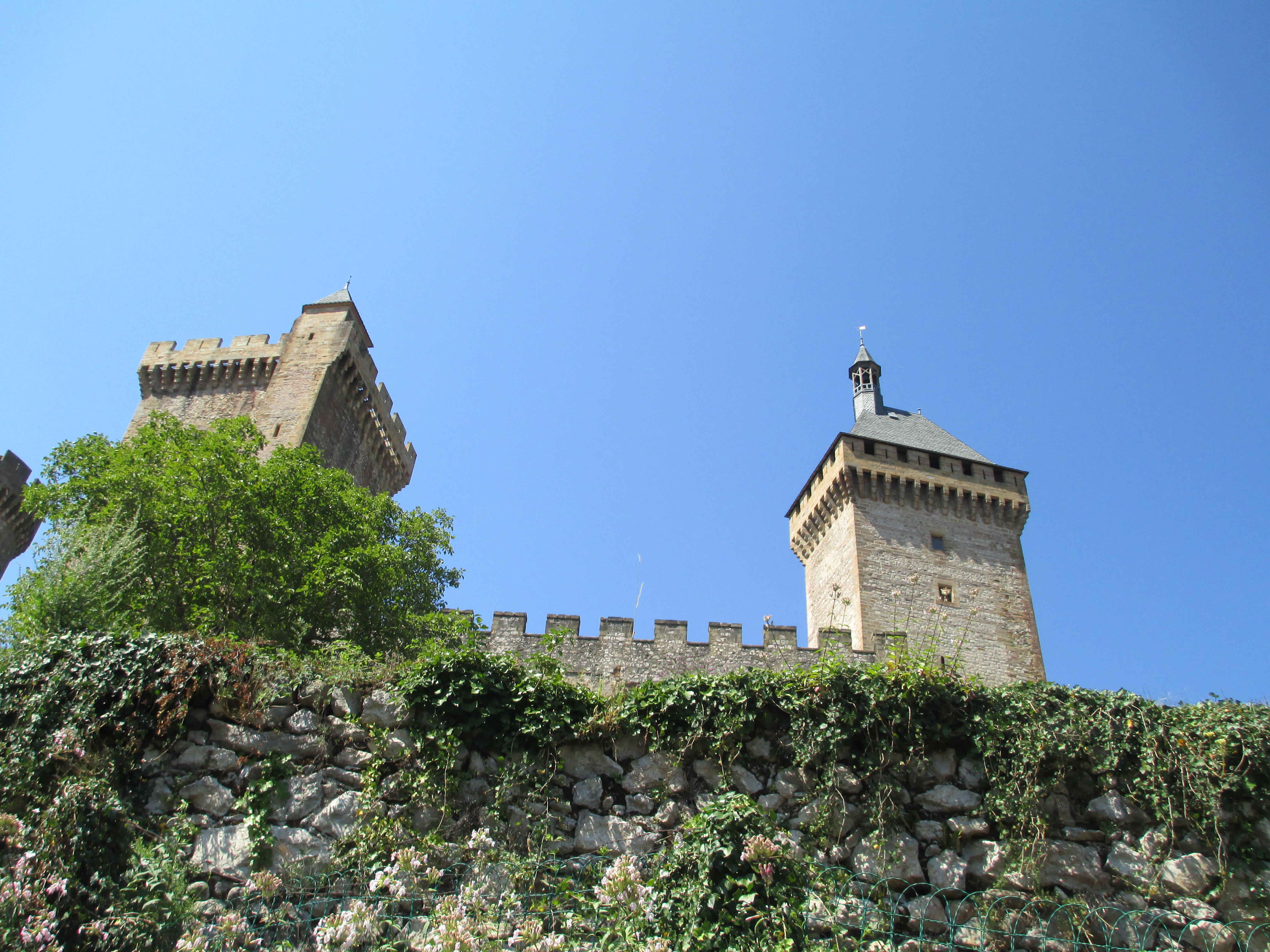
Another example from France is Foix Castle not that far from Toulouse.  You can see the castle below. It is perched on a a lump of carboniferous limestone and parts of the castle itself date from the 11th century. It was involved in the Albigensian Crusade and was part of an area of known Cathar sympathisers.

IMG_9125 IMG_9037

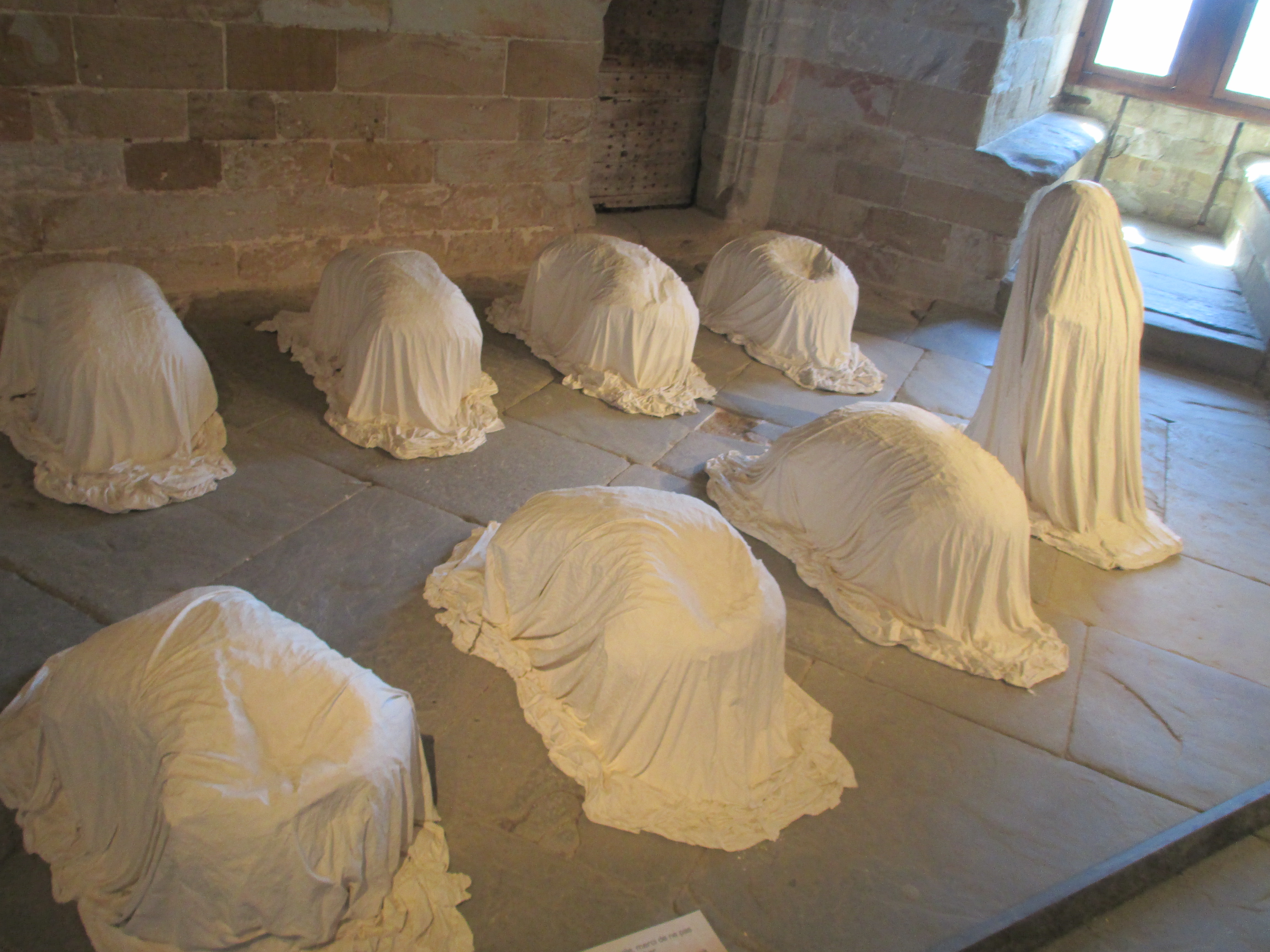
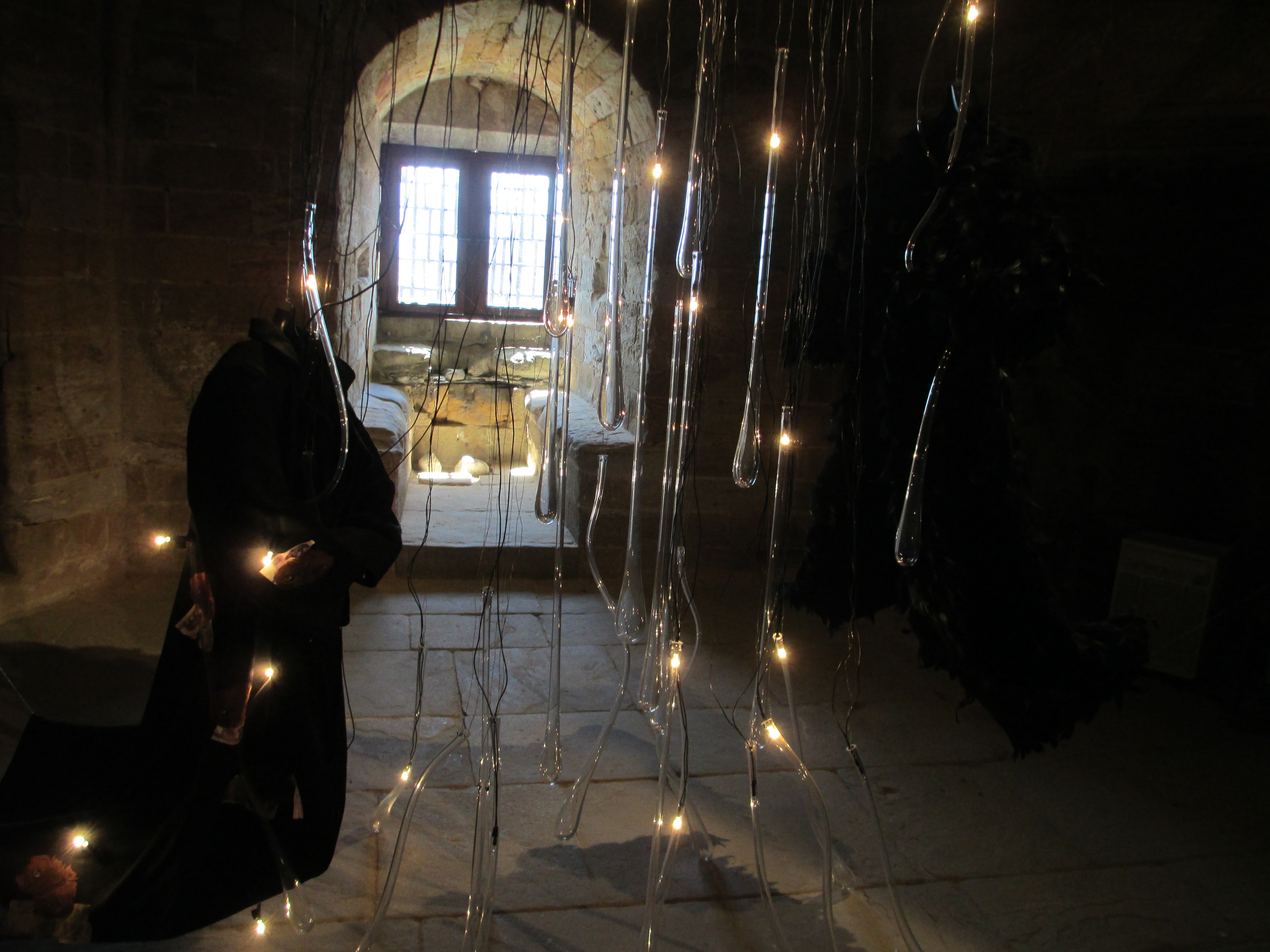
The installations below could be found inside and were both representations of people at prayer. Again repurposing an old building and using its own history for art.

IMG_9095

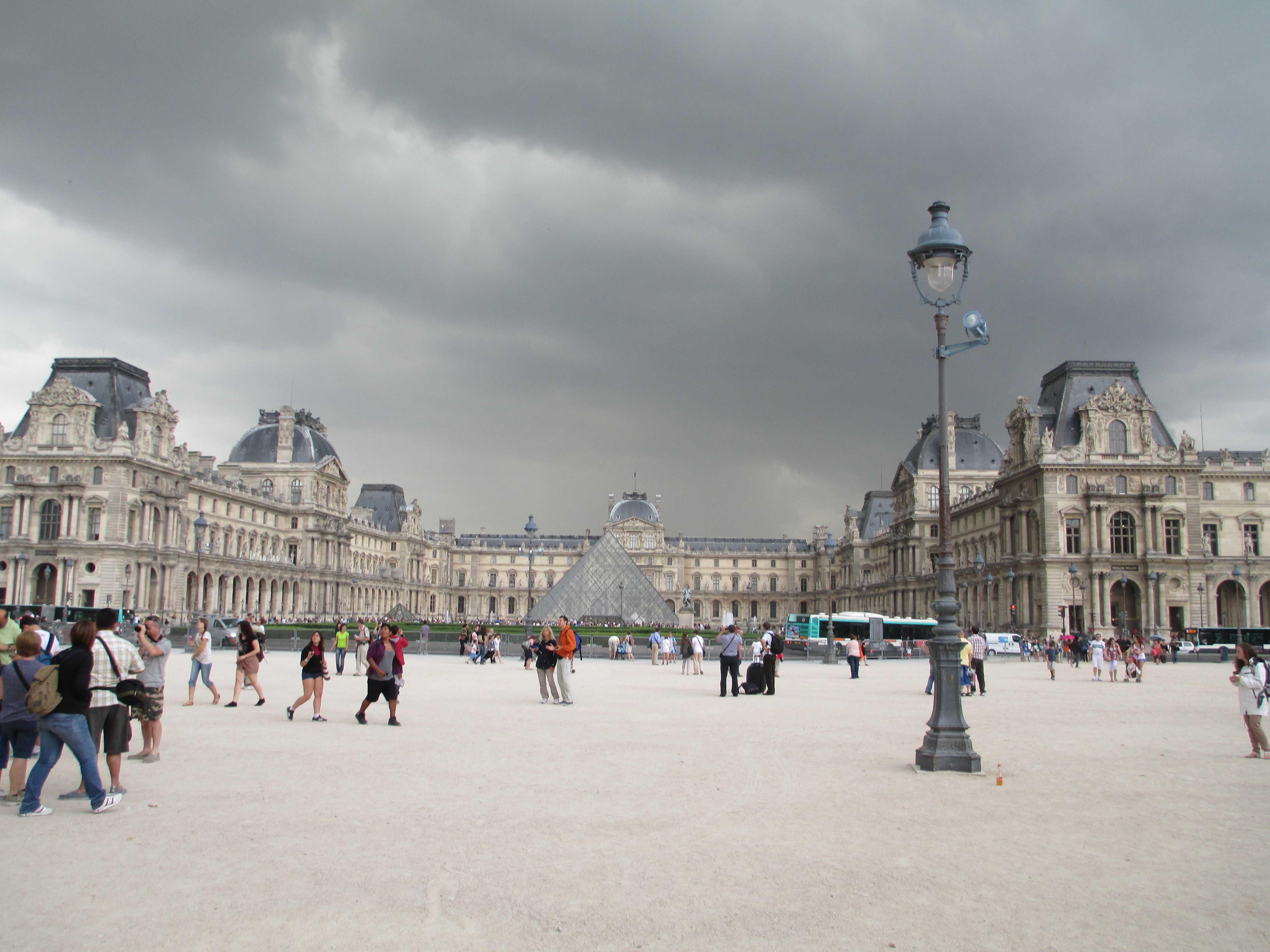
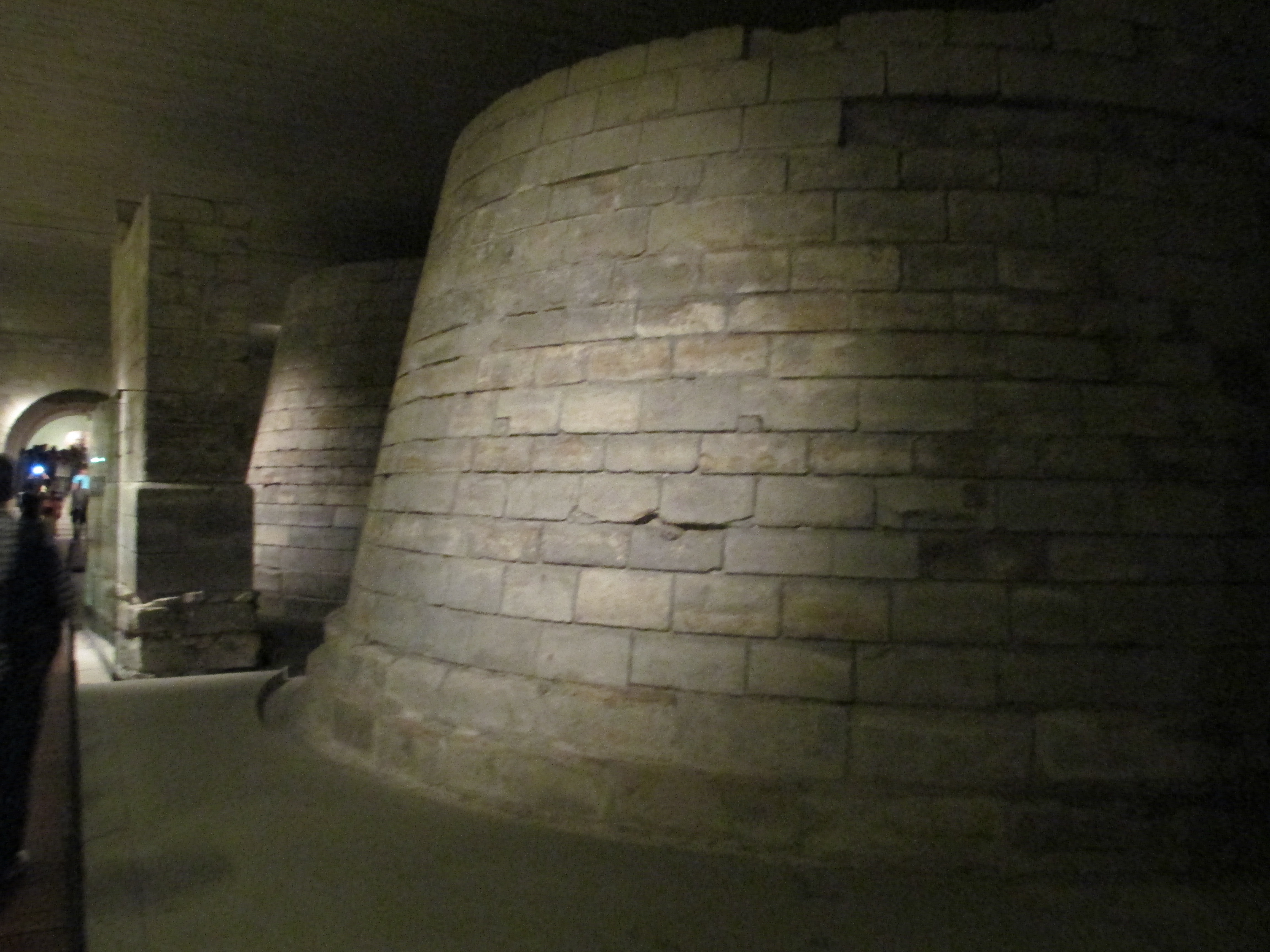
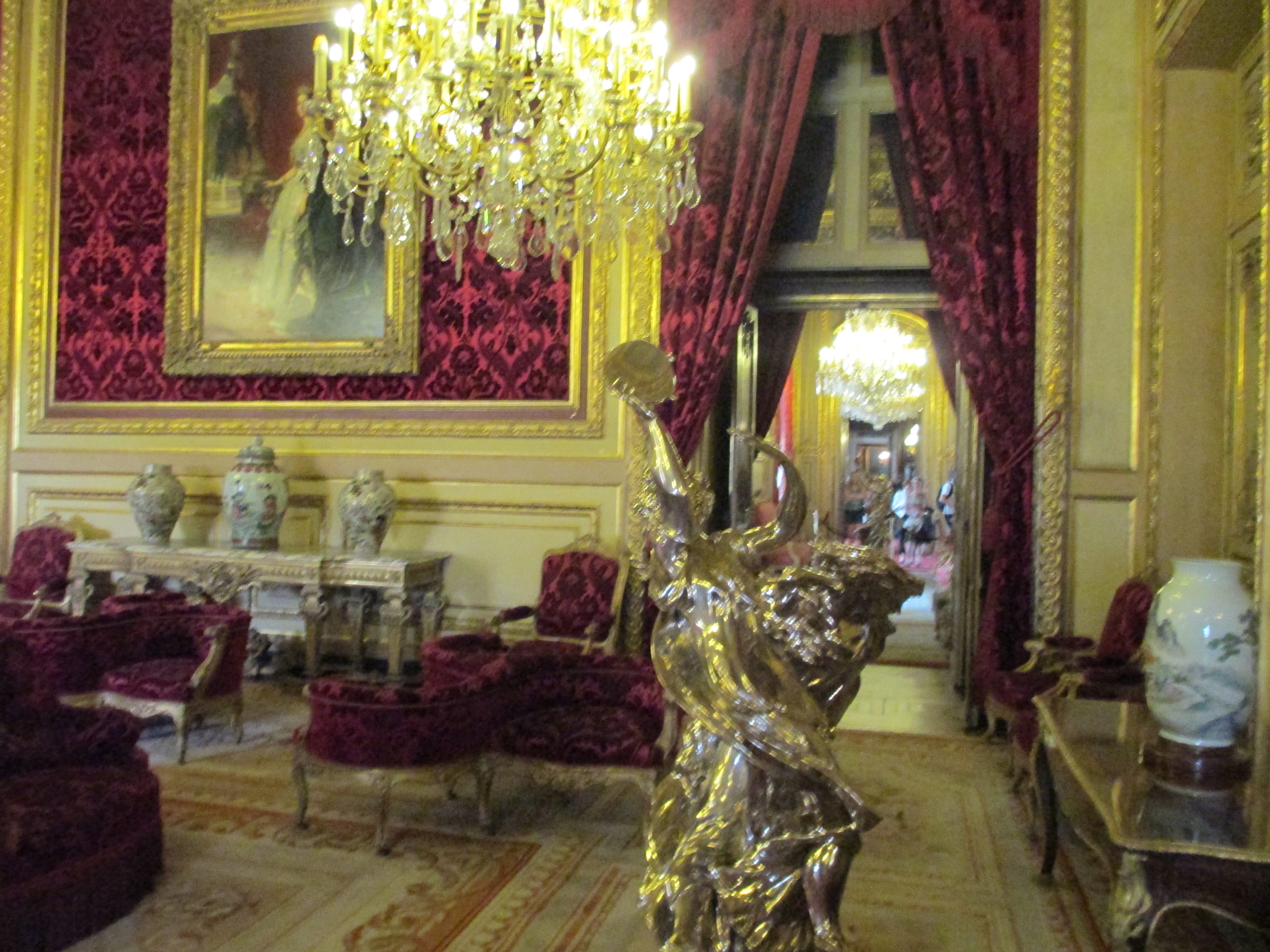
IMG_9103Fontevraud and Foix notwithstanding, probably the best known historic building repurposed for art is The Louvre itself in Paris. IMG_7023It is an ancient palace and castle and now one of the most famous art galleries in the world.  As you can see from its foundations, incidentally one of my favourite parts of The Louvre, it has been there for a long time. In fact it began its life as a fortress commissioned by Phillip Augustus to protect Paris in c. 1190. This fortress was large even for its time, with a keep measuring roughly 15m diameter and 30m in height. IMG_6997Within the Louvre itself you also have the repurposing of rooms, such as Napoleon III’s apartments, for the display of modern art. In this particular case they were integrated to simultaneously blend in with the overt opulence and to reflect it. IMG_6944 IMG_6939 IMG_6937IMG_6929

Historic buildings are not just used for static art. They are also used for performances, such as the Vivaldi concert in the stunning Sainte Chapel you can see below.  Sainte Chapel was commissioned by Louis IX, later Saint Louis, and was originally built to house his collection of holy relics. It is one of the few survivors of the full colour that would have been present in many of the larger churches and cathedrals. It also has one of the largest collections of 13th century stained glass. IMG_7918IMG_7930 IMG_7922

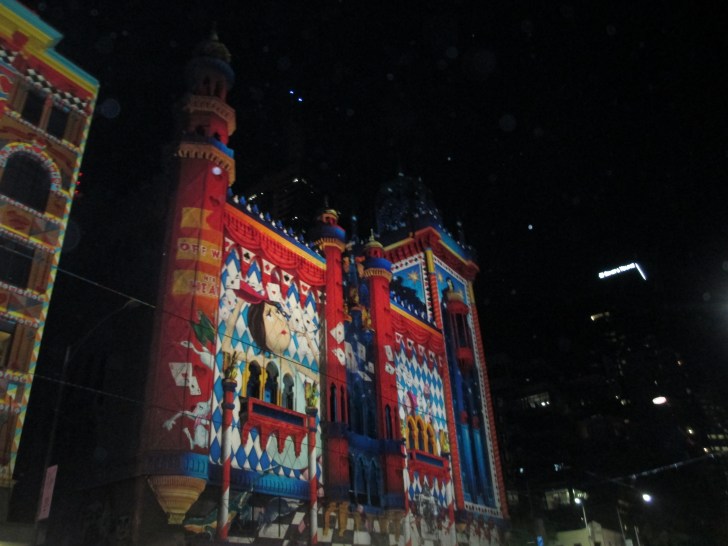
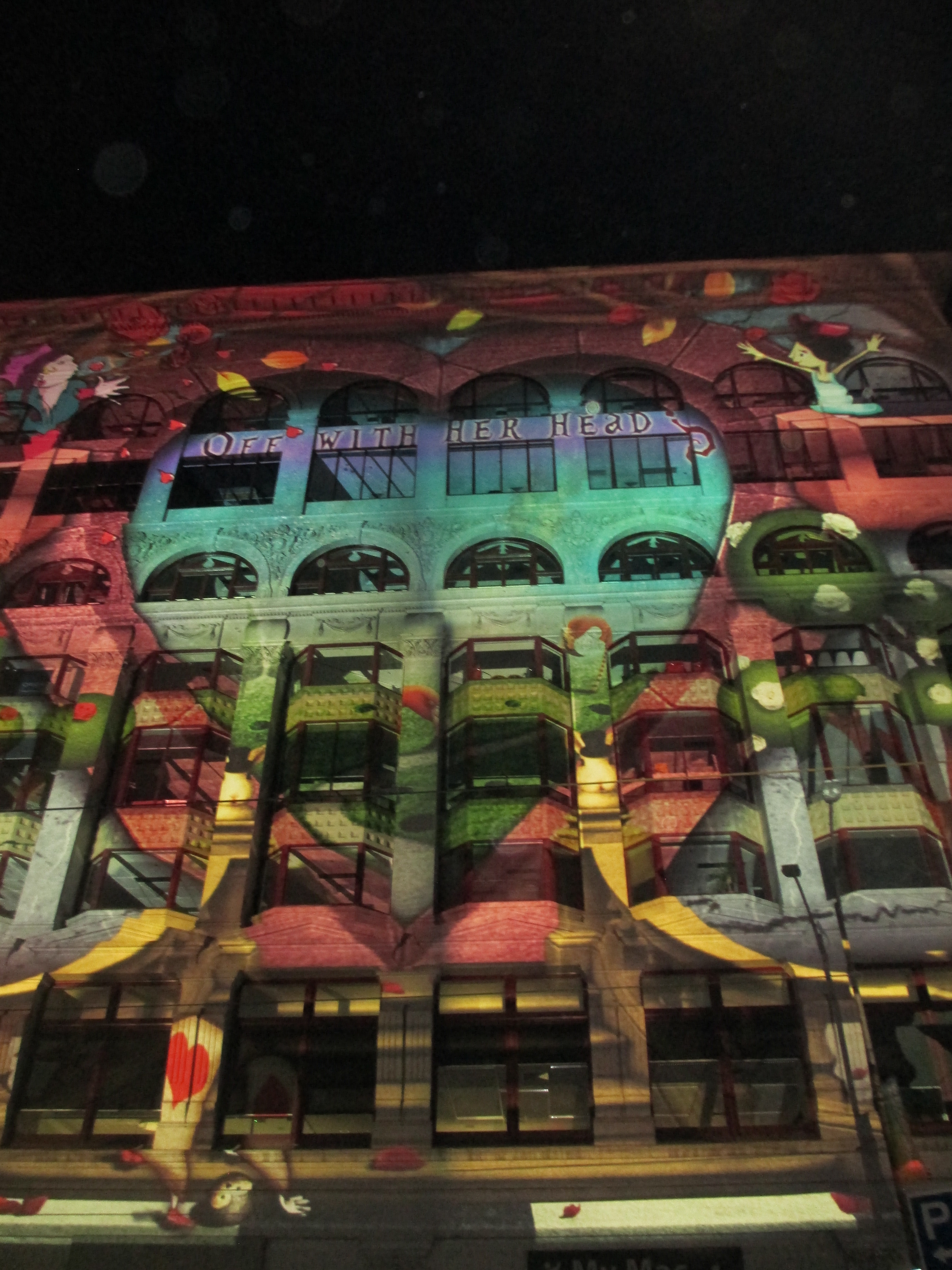
Aside from music and art installations historic buildings are becoming canvasses in their own right. This often happens in festivals such as the recent Melbourne White Night. Melbourne has many historic buildings, by historic in Melbourne I mean 1800s and early 1900s not medieval, and on White Night several come alive with astounding light and sound displays.

The State Library of Victoria is one of my favourite buildings in Melbourne. The SLV has been on its site, though in a smaller building, since it opened in 1856. The founders wanted to create a place of learning for all Victorians and a place to preserve Victoria’s heritage. It is not one building. It is actually made up of 23 individual buildings that have been repurposed and integrated over the years. In the SLV my favourite room is the Latrobe domed reading room which was opened in 1913. The dome itself is 114 feet in diameter and 114 feet high. It is a wonderful place to study or write. During a normal day it looks like this. lobBut on White Night this year, this happened.

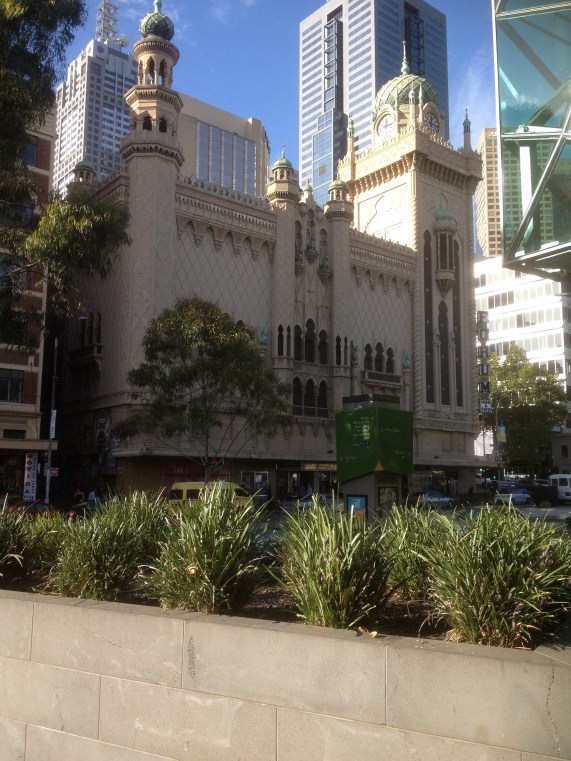
Other buildings were illuminated externally. Such as the Forum Theatre. The Forum opened in 1929 and is slightly insane in its own right even without illumination.  It was built as an immersive theater and the interior has a large number of greek and roman statues as well as a blue sky with stars. This is what is looks like normally.

Interior

IMG_0943Exterior

And this is what it and its surrounding buildings look like when they’re lit up. IMG_1186

IMG_1187IMG_1181IMG_1182 IMG_1183

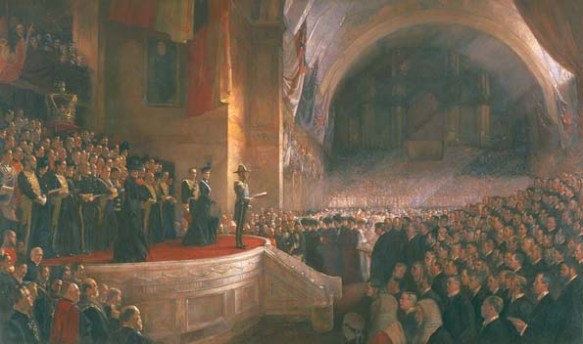
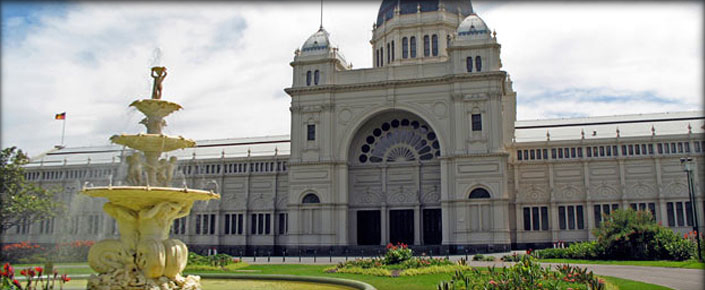
The final building I wanted to look at is in some ways the most spectacular and the most important historically. The Royal Exhibition Building in Carlton Gardens was completed in 1880 for Melbourne’s first international exhibition. It is one of the world’s oldest examples of exhibition pavilions. It was also the site of Australia’s first parliament in 1901.  The Argus described the event as.

The atmosphere was radiant and illuminated the vast spaces of the building and the great sea of faces with a bright Australian glow. A sight never to be forgotten was the assemblage which, in perfect order but with exalted feeling, awaited the arrival of the Duke and Duchess in the great avenues which branch out from beneath the vast dome of the Exhibition Building. (Argus 10 May 1901)

And it was depicted in the famous Tom Roberts painting below.

PA0013

This is what the Exhibition Building looks like during the day, a beautiful example of exhibition architecture. promo-reb-thebuilding

Below is the truly stunning work of moving modern art it became on White Night. Sorry about any talking in the background.

Historic buildings have their own story and their importance and purpose is fundamental to what they are. Integrating modern art allows whole new interpretations of the past, new ways of viewing history and art and the ability to bring these buildings to brand new audiences.

For more information see…

http://museumvictoria.com.au/reb/

http://www.aph.gov.au/Visit_Parliament/Parliament_House_Art_Collection/Tom_Roberts_Big_Picture

http://www.forummelbourne.com.au/history.php

http://www.slv.vic.gov.au/search-discover/history-our-building

http://guides.slv.vic.gov.au/content.php?pid=405532&sid=3319092

http://www.grands-sites-ariege.fr/fr/chateau-de-foix/detail/34/presentation-2

http://www.louvre.fr/en/history-louvre

The photos and videos are all mine apart from:

The inside of the Forum, which can be found at http://www.tripadvisor.com/LocationPhotoDirectLink-g255100-d258068-i46387954-Forum_Melbourne-Melbourne_Victoria.html#85255678

The Exhibition Building which can be found at http://museumvictoria.com.au/reb/

The Tom Roberts painting which can be found at http://www.aph.gov.au/Visit_Parliament/Parliament_House_Art_Collection/Tom_Roberts_Big_Picture

Fontevraud, Robert d’Arbrissel and Monasticism.

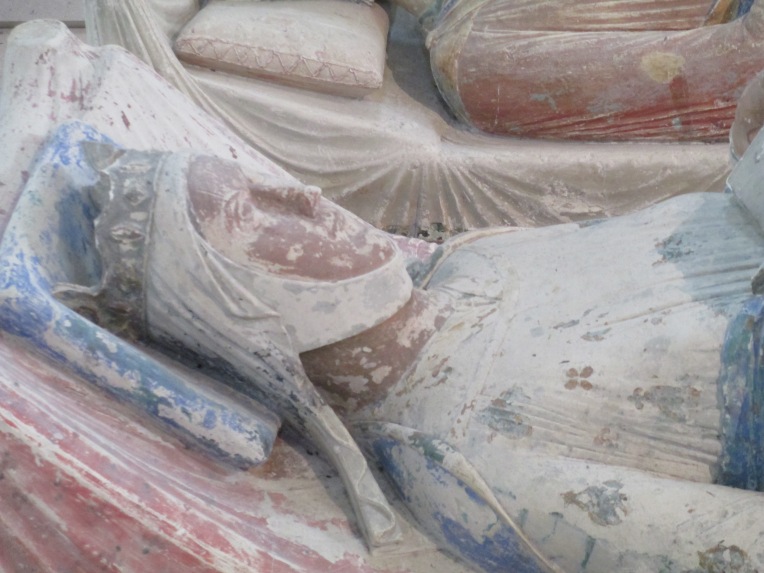
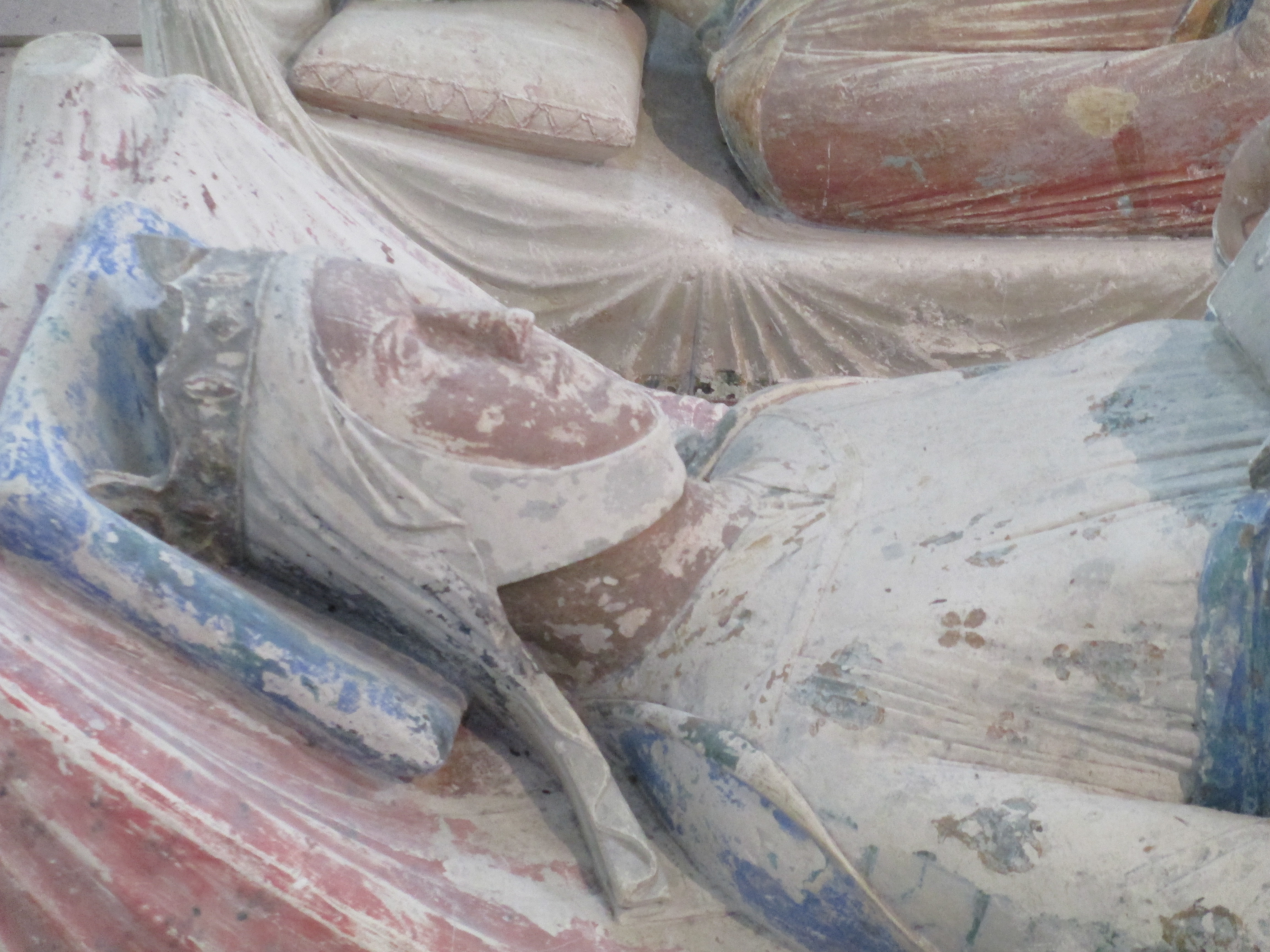
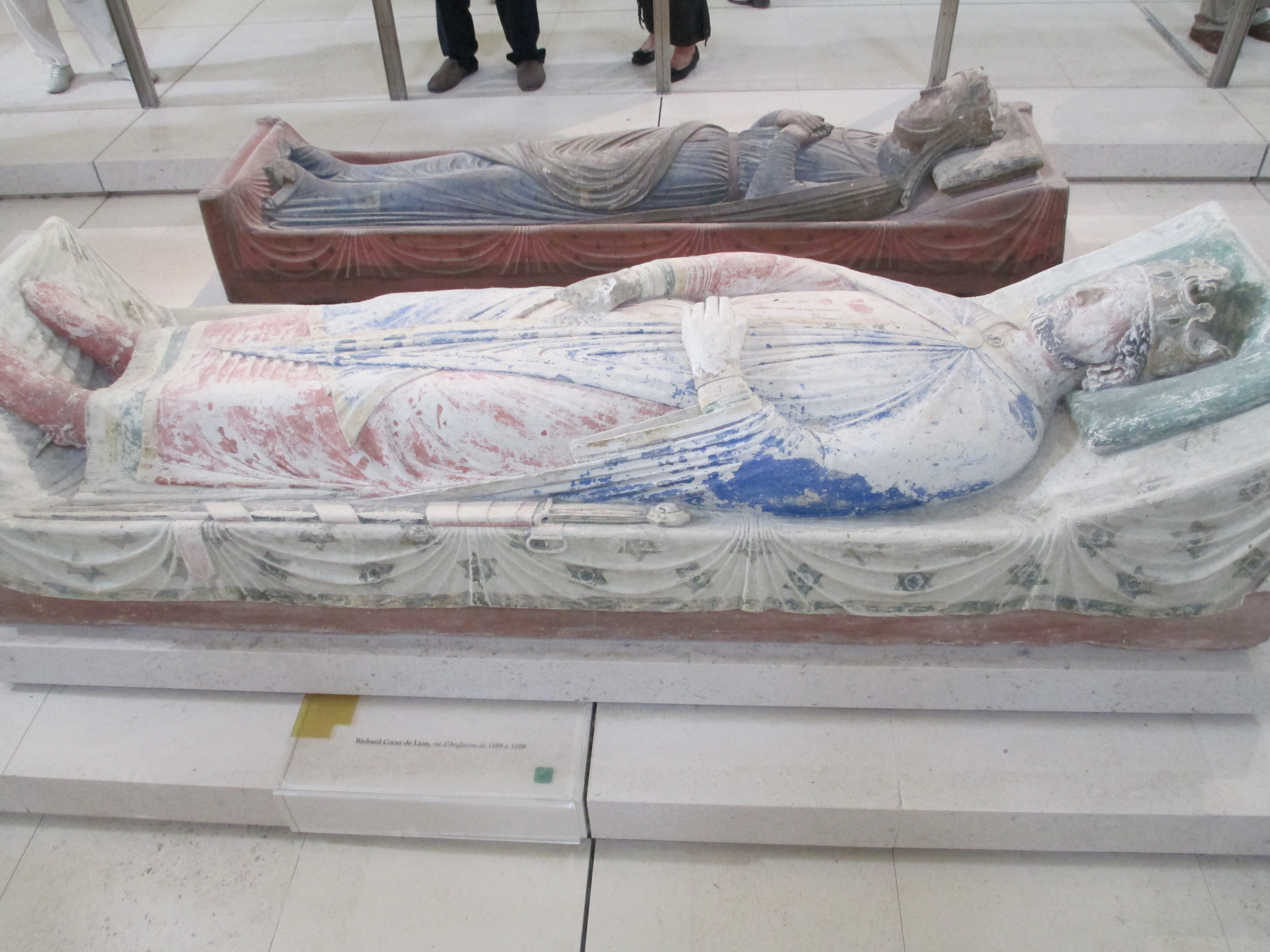
Fontevraud has appeared in some of my other posts because Henry II, Eleanor of Aquitaine, Richard I and Isabelle of Angouleme are buried there.

richard and is

Isabelle of Angouleme and Richard I

henry and eleanor

Henry II and Eleanor

It is, however, an absolutely fascinating place in its own right and one of the most beautiful buildings I’ve ever seen.

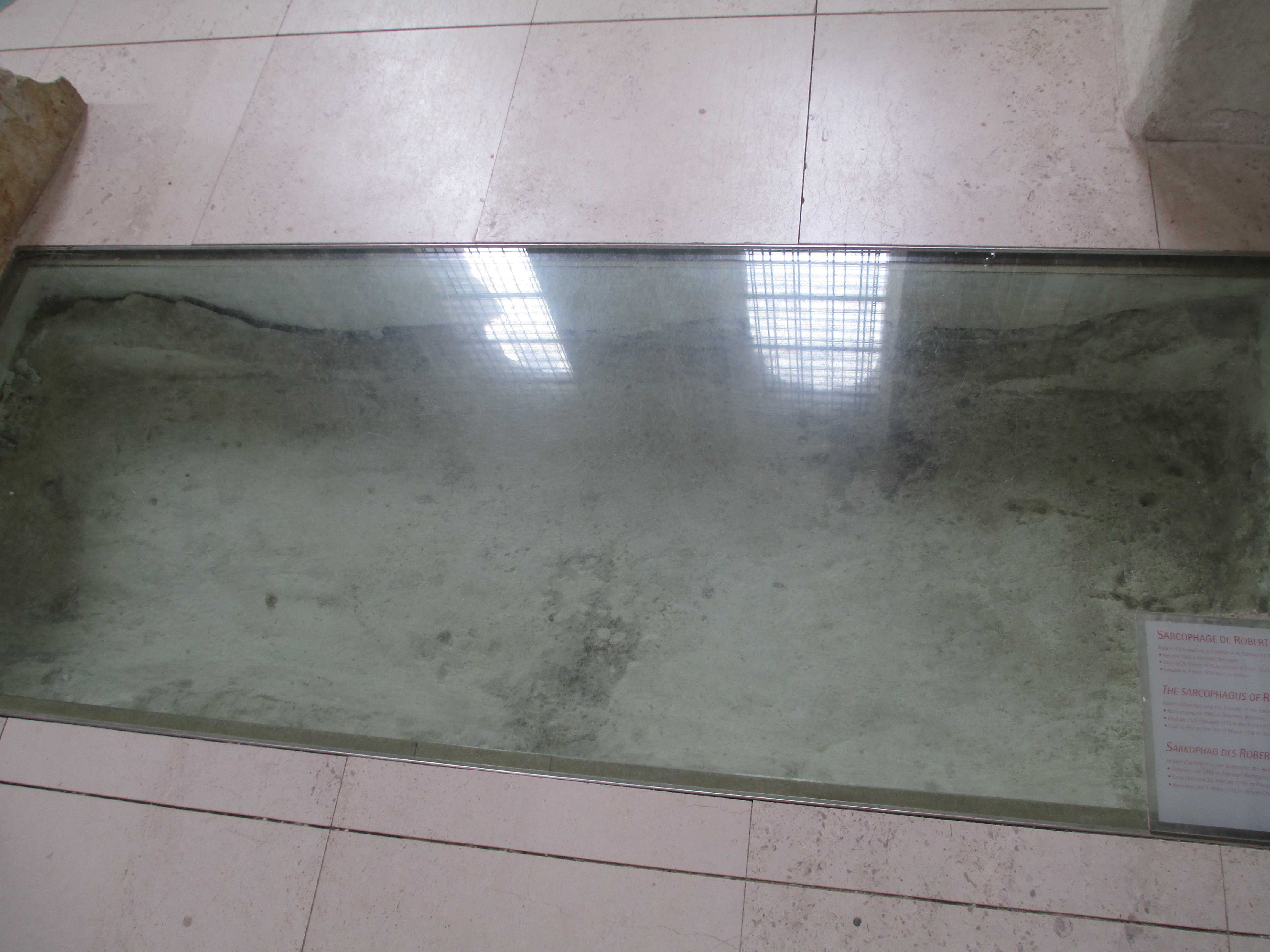
Fontevraud was founded in c. 1101 by Robert d’Arbrissel. The remains of his tomb can be seen below.

robert of A

Robert d’ Arbrissel was an enigma even in his own time. Fulke V of Anjou described him as a thunderclap of holy exhortation which lit up the whole church with its eloquence. Peter Abelard, a fascinating figure in his own right, called him “That outstanding herald of Christ.” But many contemporary churchmen viewed Robert as a danger to his own soul and the souls of his female followers. Robert was everything from a parish priest, to a student, to a hermit, but he has been remembered as the founder of Fontevraud.

Fontevraud was an atypical abbey even for its time because it was founded as a mixed community of men and women and the Abbess ruled over the whole community, male and female. This was exceptionally unusual. The fact that many of Robert’s followers were women was part of the reason he was distrusted, but was also in a way a product of his times. With older men marrying much younger women widowhood was common, but it is clear at Robert’s message and personality attracted not only widows but unhappy wives. Some of his followers were also former clerical wives cast aside in the newer push for chastity amongst the clergy. This was also a time where clerical celibacy was seen to imply a strict separation of men and women in religious life. An ideal that Robert definitively did not share. (Venarde, xi-xxix).

In fact it is quite possible that the majority of Robert’s followers were women. The only piece of surviving spiritual writing from Robert himself is directed to Countess Ermengarde of Brittany who was the sister of Robert’s main patron Count Fulke V of Anjou.
angers

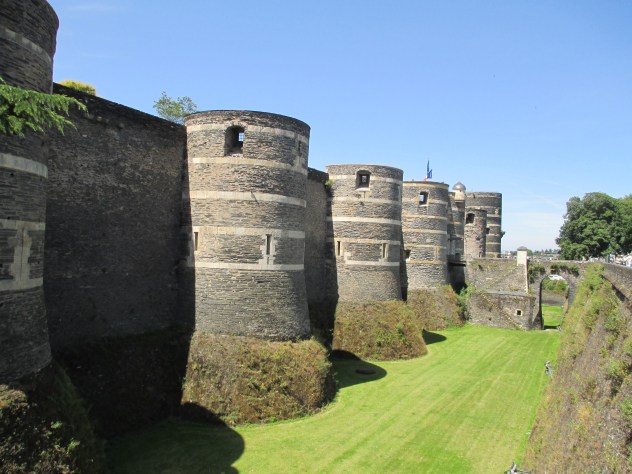
The walls of Chateau d’Angers the home of the Counts of Anjou, though these were built after the time of Count Fulke V.

Ermengarde herself was fascinating. She was the daughter of Fulke the IV of Anjou, engaged but never married to Duke William IX of Aquitaine, the grandfather of Eleanor of Aquitaine, and then the wife of Count Alan IV of Brittany. She was her husband’s regent while he was on crusade from 1096 till 1101. She became dissatisfied with her marriage and attempted to end it through flight and an appeal to an ecclesiastical court, but she failed to get the annulment. It was shortly after this in 1109 that Robert wrote to her. She was described by poet-bishop Marbode of Rennes, who hated Robert, as powerfully eloquent, extremely astute and the glory of Brittany. In later life, after her husband retired to a monastery in 1112, she played an important role in the court of her son before following Bernard of Clairvaux to Burgundy. Bernard himself was an interesting figure, if very strange and in my opinion quite annoying, and I will write more on him in a later post. In Burgundy she became a nun before going with some fellow nuns to the Holy Land where her brother Fulke was King of Jerusalem. She returned to Brittany where she remained active at the court until she died in 1147. The extent of her relationship with Robert is unknown, it is possible that she visited Fontevraud but it can’t be proven. The letter he wrote to her just after she attempted to have her marriage annulled is very interesting.(Venarde, 68-69).

It is too long to go into great detail here, but a basic breakdown is possible.

1. The spirit of pride is bad

2. Do not trust or yield to every spirit

3. Take heart and be strong.

4. Do not regret too much that you are bound to an infidel husband. You can still benefit God’s people.

5. Don’t be too anxious about changes of place and appearance.

6. Fear not enemies of Christ for they will not harm you unless God allows it.

7/8. Do not get puffed up by good fortune or shattered by adversity, for those who fear God want for nothing.

9. Believe, love, hope in God, do good, settle in the land of your heart and feed on its riches.

10. Flee the wicked words of savage men in your heart.

11. Alms and prayer are good if done for God but profit nothing if done for the praise of mankind.

12. Many clerics are hypocrites

13. You can not get out of your own marriage but you should do what you can to get your daughter out her her’s as it consanguineous.

14. Don’t disclose all your plans to all your household and friends, many are self serving.

15. Exercise caution and discretion in all things.

(Venarde, 68-79).

Fontevraud also rose out of a period of change for monasticism in general. There was the beginnings of a shift in the way monasticism was practiced. The Cistercians rose out of a reaction against the interpretation of benedictine monasticism which created great wealth and power for the institutions, not the monks themselves necessarily. The best example of this was the monastery of Cluny which was founded  in 910 and financed by Duke William I of Aquitaine. Cluny created a number of brother and sister houses which answered directly to Cluny. By Robert’s time it had gained exceptional wealth.

musee de moyen age

The Exterior of the Musee du Moyen Age in Paris. Which was originally the Paris townhouse of the Abbots of Cluny.

The Cistercians were a reaction against the opulence and focus on wealth that Cluny represented. They favoured a strict adherence to the rule of Benedict and Bernard of Clairvaux was one of the leading lights. The Cistercians wanted to go back to the basics and their monasteries were heavily focused on self sufficiency, simplicity and were often remote and agrarian.

riveauxRiveaux Abbey, a Cistercian abbey in England.

Robert’s Fontevraud was different again. In c. 1101 Robert settled his followers at what would become Fontevraud. Until that point he had been an itinerant preacher, albeit with a significant number of followers including a number of noble women. In fact he departed to continue preaching by c. 1103 having seen the beginning of permanent monastic settlement and appointed two female superiors. However it was not until October 1115 that an Abbess of Fontevraud was appointed after Fontevraud has been recognised by papal authority. Robert’s intentions for this mixed community were never exactly clear, except for working towards spiritual excellence. Despite this when he died on February 25th 1116 and was buried at Fontevraud, Fontevraud and the daughter houses it had established were, as described by Venarde, “Well on the way to becoming the wealthiest order of monasteries for women in Roman Catholic Europe.” (Venarde, xxii).
font outside

The statutes of Fontrevraud are reasonably clear but they don’t conform exactly to specific monastic orders. Sisters and brothers lived and worshipped together. The women were guided by the rule of St Benedict, but the statutes don’t make clear whether the male members are to follow Benedictine or Augustine rule. So they are neither monks nor cannons, they are simply called brothers and Robert makes clear they are in the service of and obedient to the women of Fontevraud. (Venarde, 84-87).

There were a number of interesting women who became Abbesses of Fontevraud, Petronilla the first Abbess being one of them. She was a noble widow who became a follower of Robert’s and he personally appointed her the first Abbess of Fontevraud. Another was Matilda of Anjou. She was abbess from c. 1150 -1158. She is remarkable because if not for one of the most interesting accidents in the medieval period she would have been Queen of England. She was the daughter of Fulke the V of Anjou, the brother of Ermengarde and patron of Robert, but she was married to William the only legitimate son of Henry I. William drowned on the White Ship in 1120 along with much of the young nobility of England and France. Matilda could have remained at court and she did for a time. Henry I was more than happy to have her and he would have married her off again. In the end though she took vows at Fontevraud in c. 1128 and became Abbess there in c. 1150.

Many of the early Plantagenets were patrons of Fontevraud, as evidenced by the fact that four of the them are buried there. Indeed Eleanor of Aquitaine spent her last years there and died there in the 1204. She was a great patron of Fontevraud throughout her life. One of her surviving charters is evidence of her patronage. In this charter she gives the abbey and the “nuns serving God there” the “rent of one hundred pounds, in perpetual alms, from the provosture of Poitiers and the vineyard of Benon, particularly what is received from Marcilly.” (Epistolae).

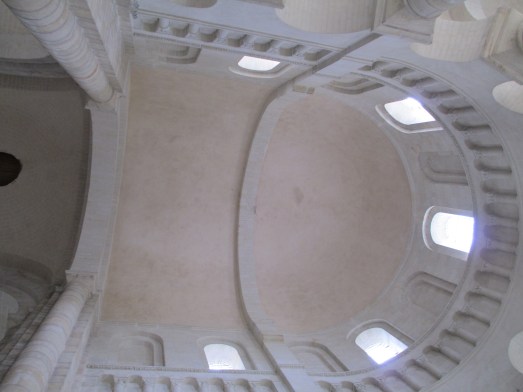
Fontevraud as a complex of buildings has gone through many changes since it was built. The church was begun to hold the body of Robert and is Romanesque in style with a Byzantine influence. It dates from successive periods in the 1100s. You can see the interior below.
roof font main hallside chapel

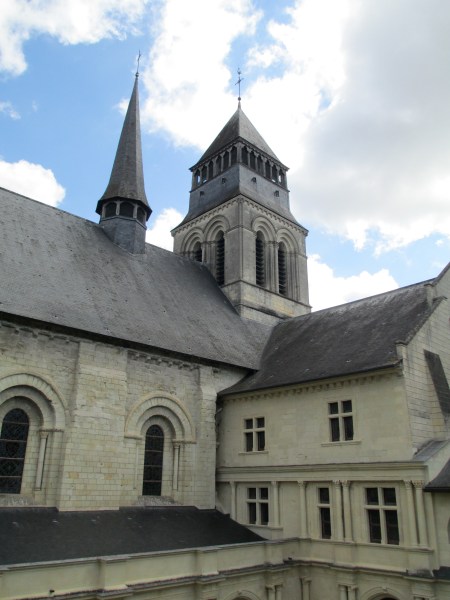
You can see the spectacular grandeur of Fontevraud’s exterior built in the beautiful creamy local tuffeau stone in the photos below.

IMGFont church est_8136 Font long

When it was built much of the interior would have been painted.  Some of the early paint remains in fragmented sections.
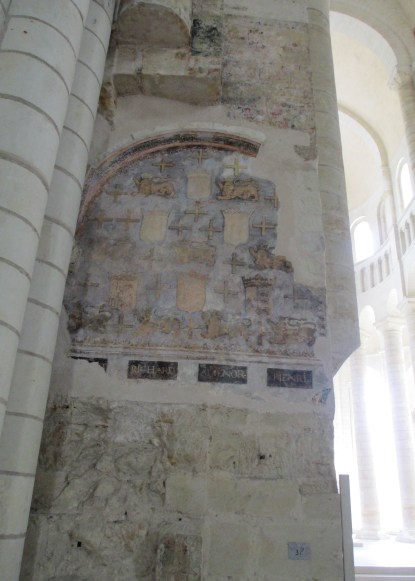
Font paint

Some of the later paintings can be seen in more detail. As can be seen in the  chapter house photo below, which was painted and remodelled in the 16th century to show the wealth and prestige of King Francis I.
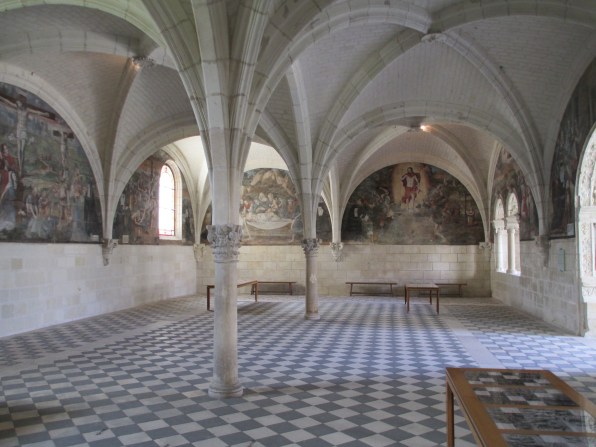
font side chapel painting

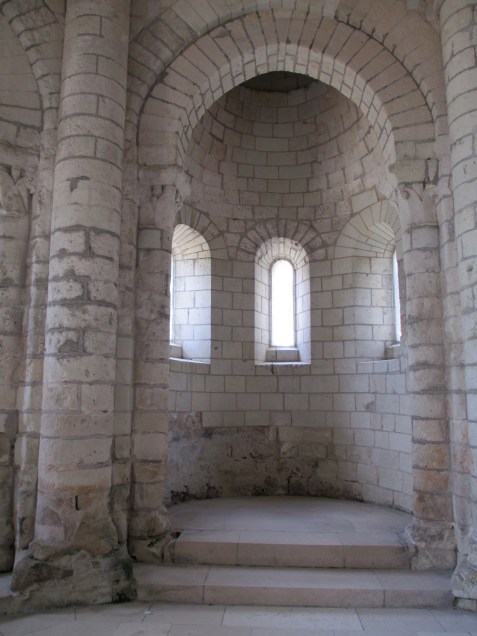
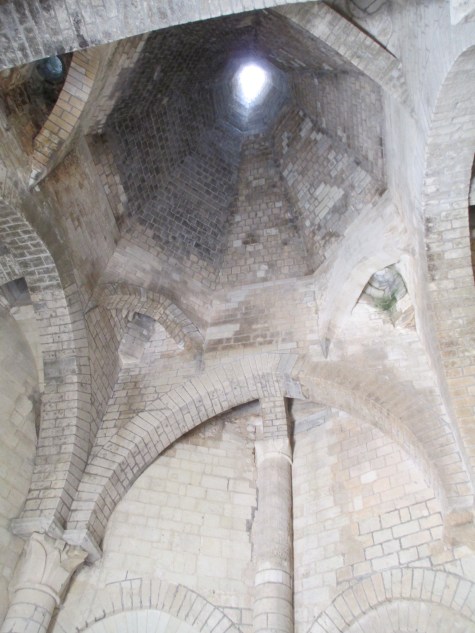
 Probably my favourite of all the buildings is the kitchen. It  dates to the early 1100s though it has been remodelled. It is built of the more heat resistant charente stone. It is also built in the Byzantine Romanesque style brought back from the crusades.
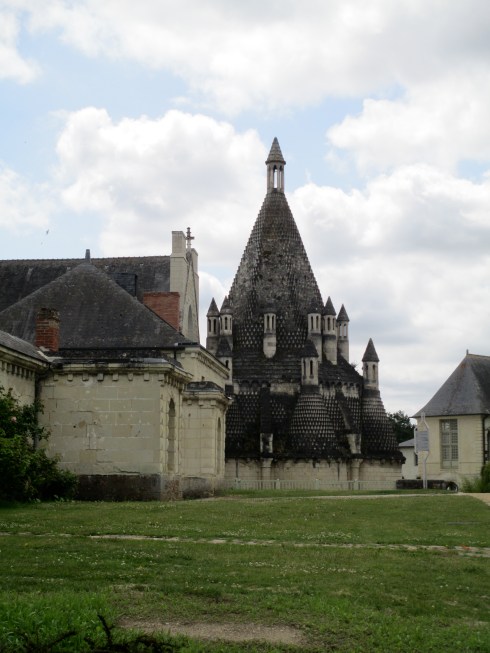
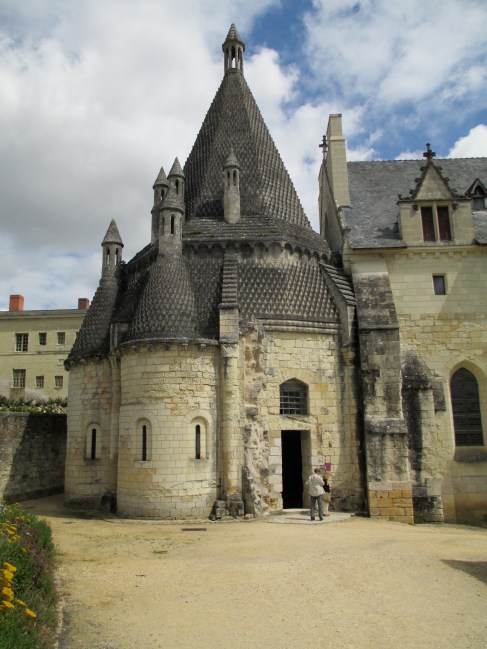
font kitchen from back

font kitchen

The interior is constructed so one embrasure was used to make hot coals and the meals were cooked in the embrasures away from the prevailing wind to prevent the blowback of smoke. The central chimney got rid of both smoke and vapours.
font kitcehn inside font kitchen inside

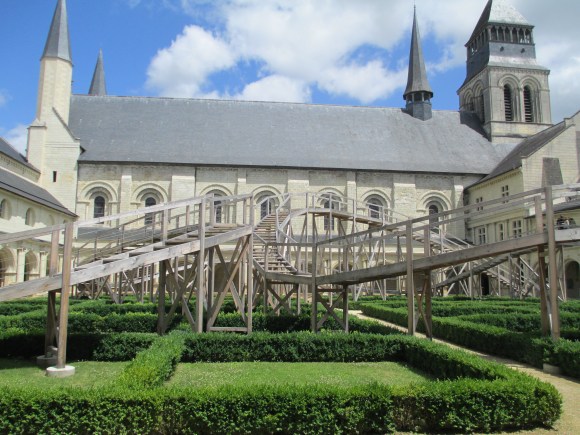
The fact that anything of Fontevraud survives at all is really saying something because it was deconsecrated in the revolution and  Napoleon decided to use it as a prison in 1804 and it remained one for a long time. In fact the last prisoners left in 1985.  The abbey was completely restored in the 20th century and now is also used for a variety of art installations such as the two that can be seen below. The first was in the dormitories and the second was in the cloister and could be walked on, giving you different perspectives of an ancient building.

Font Dorm

Font art

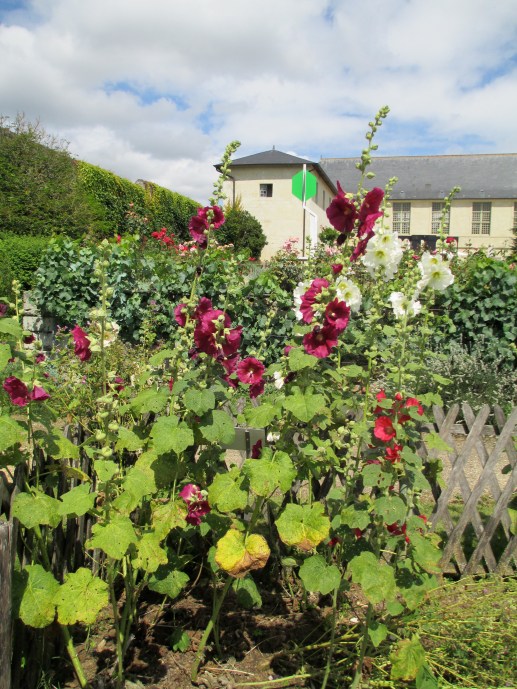
The gardens are also absolutely worth visiting.
font gardensfont gardens2
Font garden

It is a truly beautiful place with a fascinating history. A place where the calm seems to have seeped into the stone.font cloisterI went to Fontevraud so I could see Eleanor of Aquitaine’s tomb but it is much more than that. It is truly one of the most incredible places I have ever been.

font back

Bruce L. Venarde. Robert of Arbrissel. ISBN: 9780813213545.

Eleanor of Aquitaine Charter to Fontevrault, 1185 at http://epistolae.ccnmtl.columbia.edu/letter/885.html, accessed 26/9/2010.

Other sources include the signs at Fontevraud, and my university course notes on monasticism.

The photos are all mine.