
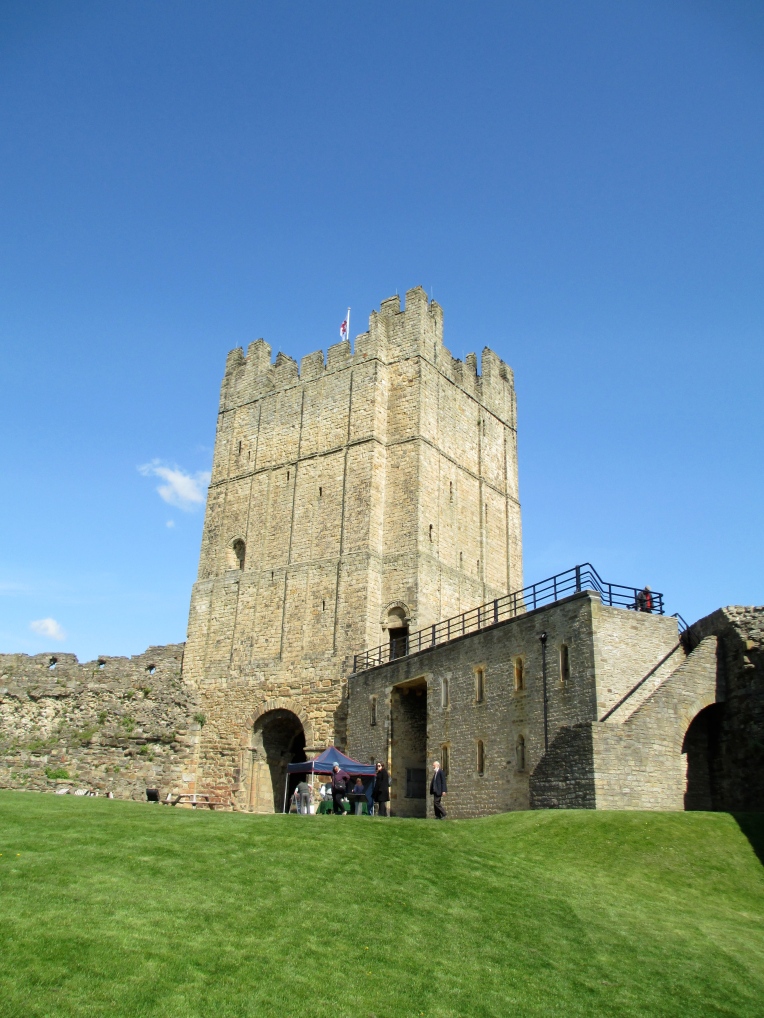
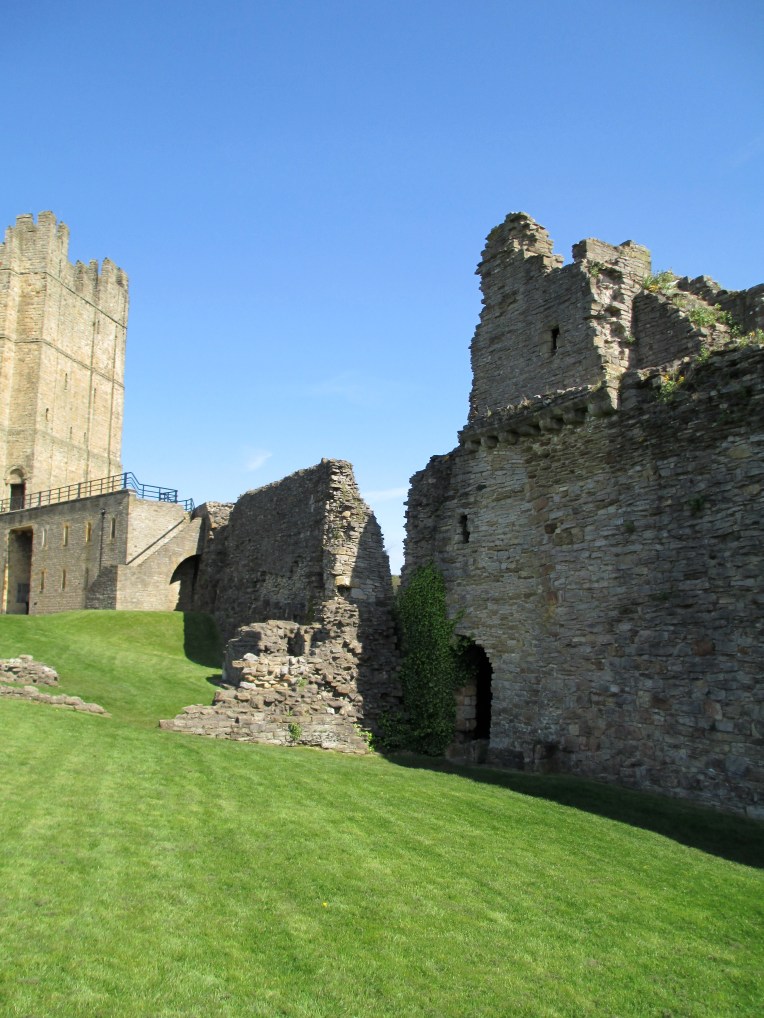
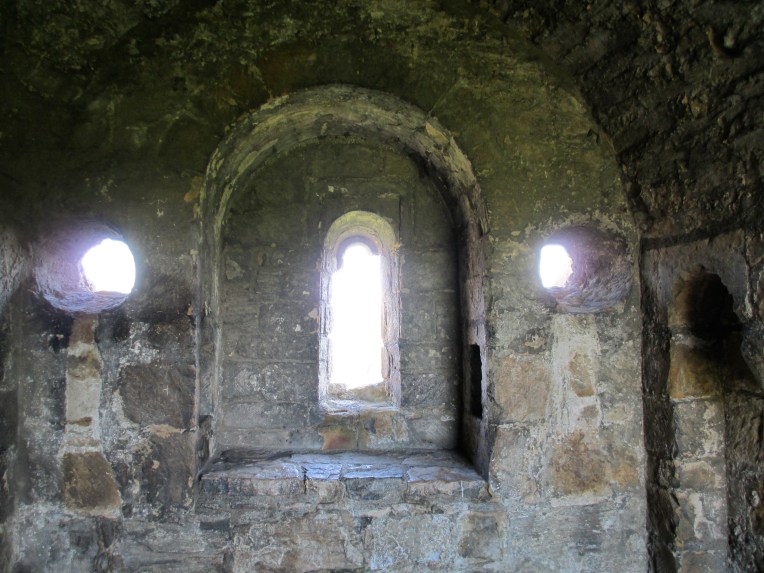
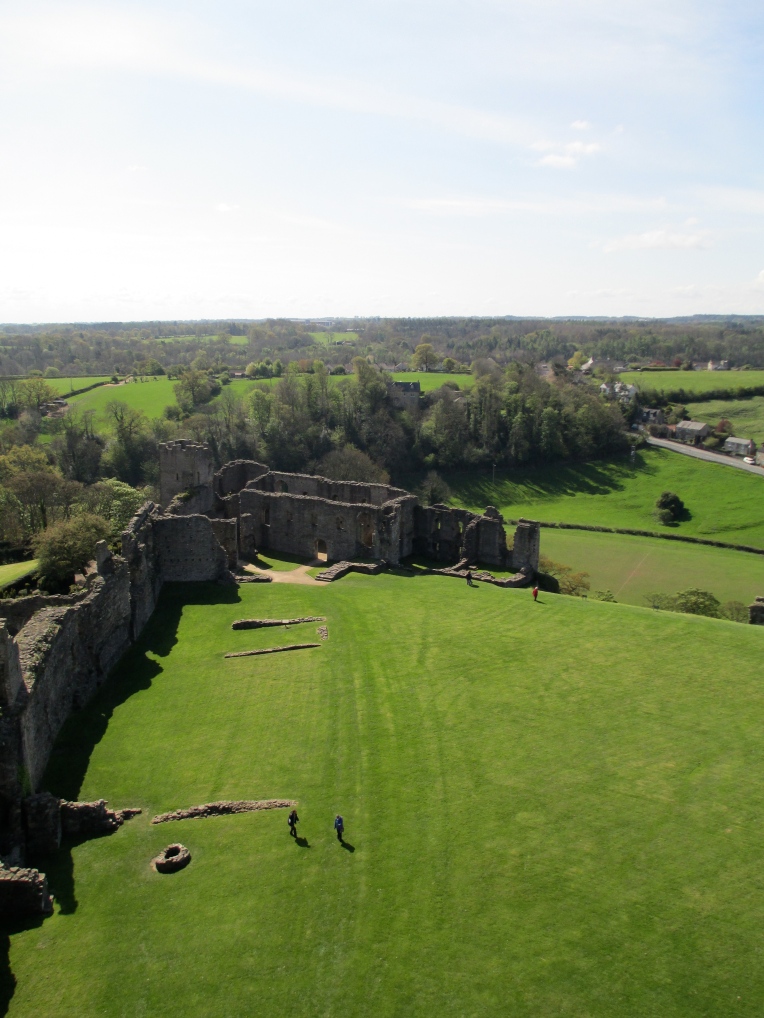
 As Richmond Castle is one I’ve written about before I thought I’d provide the link to the previous post rather than write a new history.
Holidays
Advent Calendar of Castles: December 5th: Pickering Castle
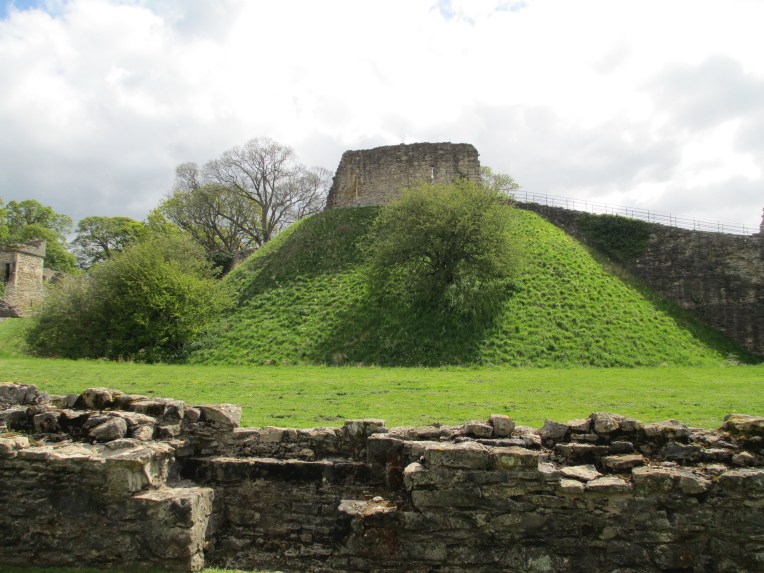
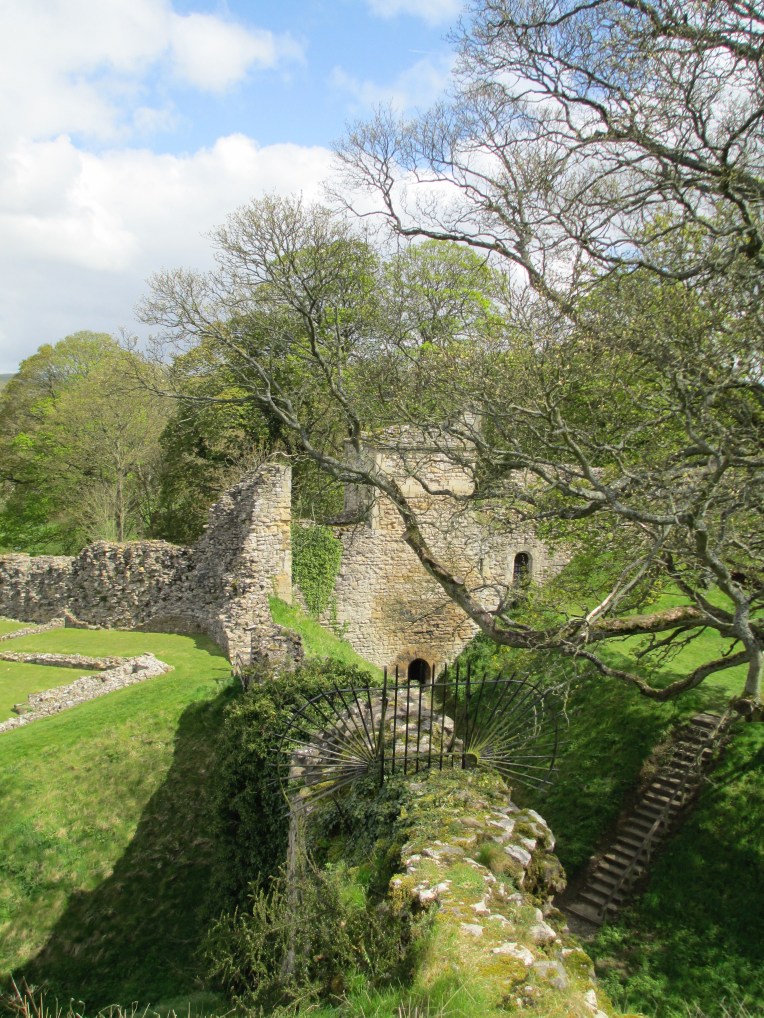

Pickering Castle was established by William the Conqueror in c. 1070. It was built in response to the northern revolts against his rule. William’s stamping of authority on the north is known was the Harrying of the North. Such an innocuous name sounds like it was a minor irritation, however this couldn’t be further from the truth. William the Conqueror led a brutal pillaging of the north, killing people and destroying crops and food. Tens of thousands of people starved to death in the aftermath.
The original castle would have been earth and timber and the motte on which it was built still stands today. The rebuilding of the castle in stone began around 1180 and continued into the 13th century under successive kings. Within the walls there is also a chapel dedicated to St Nicholas which dates to roughly 1227. Until the mid 16th century the castle would have had a resident chaplain.
By the early 14th century the castle has passed into the hands of Thomas Earl of Lancaster, the grandson of Henry III. He married heiress Alice de Lacey and using her money introduced more stone buildings, including building a new hall for the family to live in, within the walls of the castle. In the mid 14th century Edward II ordered the outer walls to be built in stone, including stone towers as part of the walls. He used the castle for raising horses. He established a stud at the castle and often used it as a hunting lodge.
By the time of the civil war the castle had fallen too much into disrepair to be used for defence and in the 17th century parts of the castle were used as a court house. The castle came into the hands of English Heritage in 1926.
References:
Site visit 2012.
http://www.britainexpress.com/counties/yorkshire/castles/pickering.htm
The Harrying of the North: http://www.historyextra.com/article/bbc-history-magazine/battle-of-hastings-aftermath-consequences-harrying-of-the-north
The photos are all mine.
Advent Calendar of Castles: December 4th: York Castle


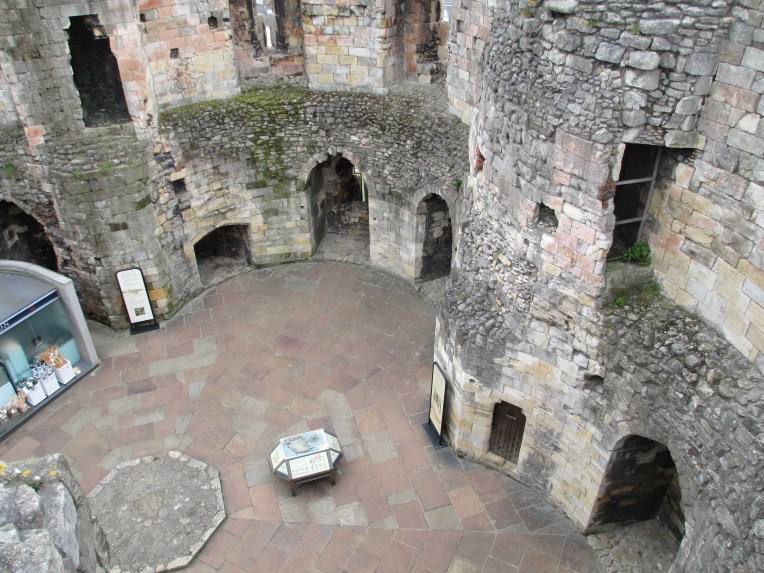
The castle you see in the photos is all that remains of York’s once much larger castle. The current structure, known as Clifford’s Tower, was built in the 13th century and served as the heart of government in York and was also used to house the royal treasury. That is not to say that there was not a castle on the site prior to the construction of Clifford’s Tower. A wood and earth Norman tower was built on this site in the 11th century and suffered much damage and rebuilding during these tumultuous times, but it probably survived largely intact until the 12th century. The castle was then the setting for one of the most infamous incidents in York’s history. In 1190 tensions between the York Jewish community and the largely Christian population came to a head and roughly 150 Jews were given protective custody in the wooden castle that stood on the current site of Clifford’s Tower. Something went terribly wrong though and the royal officials found themselves shut out of the castle. They summoned reinforcements to retake the castle and these reinforcements joined with a local mob. The mob and the reinforcements were soon out of control and the Jews in the castle were besieged. On the 16th of March the Jews inside realized there was no way out and they committed suicide and set the tower alight rather than face the wrath of the mob. According to some accounts some Jews did survive and came out under an amnesty to then be massacred by the mob.
The tower burnt down but it was rebuilt, in wood and stone, but it wasn’t until the mid 13th century that the tower you see today was constructed. Henry III ordered a new stone tower to be built in roughly 1245 to help deal with the threat of the Scots. The tower was finished by the end of the 13th century and would have likely stood surrounded by a moat of some description and an outer bailey and walls were added in the 14th century. Over the years the tower and castle acted largely as an administrative centre rather than a royal residence. The first recorded use of the name “Clifford’s Tower’ dates to the mid 16th century but it is possible that the name comes from the rebel Roger de Clifford who was executed in 1322 and whose body was displayed on a gibbet at the castle.
References:
Site visit 2012
http://www.english-heritage.org.uk/visit/places/cliffords-tower-york/history/
The photos are all mine.
Advent Calendar of Castles: December 3rd: Peveril Castle
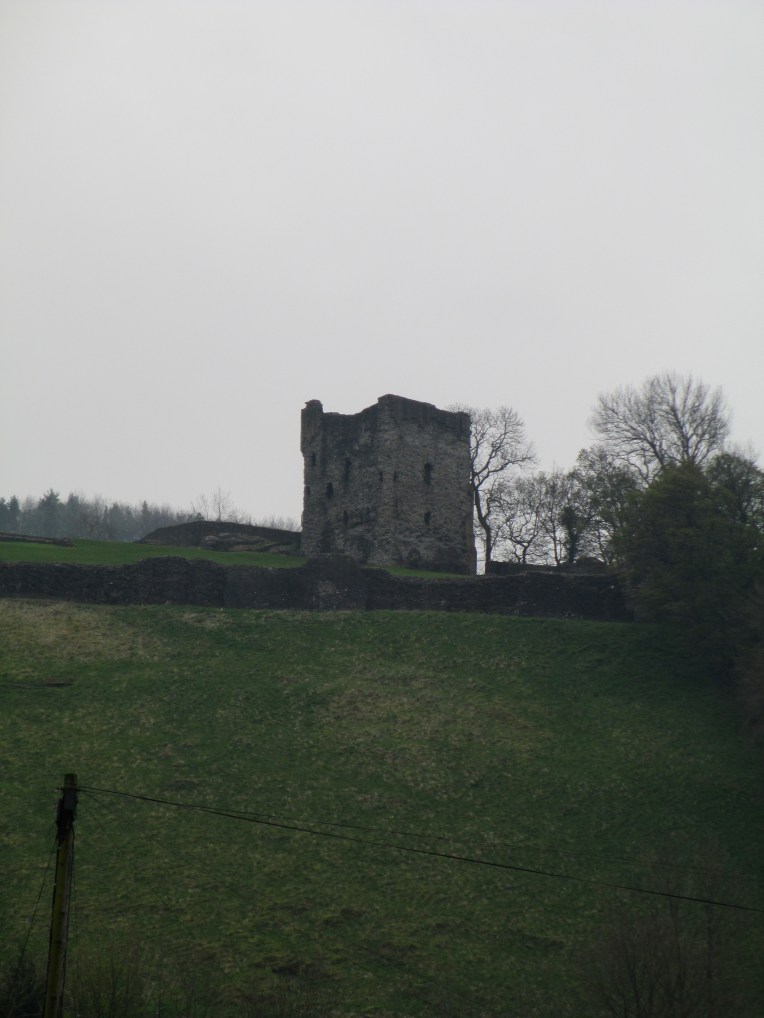

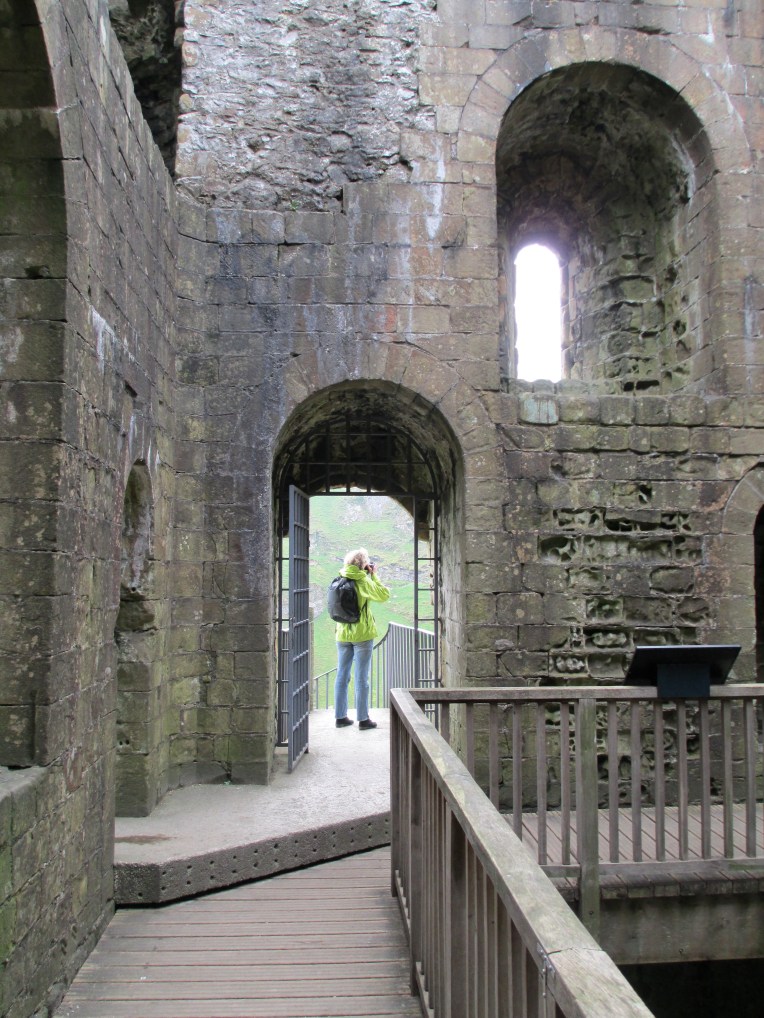
Advent Calendar of Castles: 3rd of December Peveril Castle
As this is a castle I have written extensively about before, I thought I’d provide a link to my previous post rather than a new potted history.
https://historicalragbag.com/2016/09/26/peveril-castle/
The photos are all mine.
Advent Calendar of Castles: December 2nd Lincoln Castle.


Lincoln Castle was begun by William the Conqueror in c.1068 making it one of the first Norman castles built. It was part of the Conqueror’s plan of the domination of England through a network of castles. It was through castles like Lincoln that he administered and controlled his new territory. Lincoln Castle stands on the site of an old roman fort and when it was built 166 Saxon houses were demolished to make way for it.
In the early medieval period Lincoln castle was the site of two decisive battles. The first was in 1141 during the time period known as the Period of Anarchy (1136-1154). King Stephen and the Empress Matilda were fighting for control of the country. It was a time which the Anglo-Saxon Chronicle described as “people openly said that Christ slept, and his saints.” In 1141 the Earl of Chester and his brother William of Roumare had rebelled against King Stephen and taken Lincoln Castle by deceit. Oderic Vitalis’ version says that they sent their wives in on the pretext of a friendly visit and the Earl arrived to collect the women with only three knights and then, “Once inside the castle they suddenly snatched crowbars and weapons which lay to hand and violently expelled the king’s guards. Then William burst in with a force of armed knights, according to a pre‑arranged plan, and in this way the two brothers took control of the castle and the whole city.”
Regardless of how they took the castle they held it and King Stephen arrived to besiege the castle. The Earl of Chester escaped and alerted Robert of Gloucester, Empress Matilda’s brother and the head of her campaign for the crown. Gloucester arrived in Lincoln with an army and there was a pitched and bloody battle, unusual in a war that was mainly looting and skirmishes, Gloucester’s forces were victorious and King Stephen was captured.
The other key battle at Lincoln was in 1217. It was so bloodless that it was soon known as the Fair of Lincoln. William Marshal headed forces fighting for the newly crowned Henry III. Marshal was the young Henry’s regent. They were fighting the remains of the barons who had forced King John to sign the Magna Carta in 1215. The majority of barons had returned to the royal fold after King John’s death, but there were a few hold outs who were still supporting Prince Louis of France as their candidate for king. Prince Louis’ forces were besieging Lincoln which was held by the remarkable Nicola de la Haye (who I hope to write more about later), Marshal’s forces came to relieve the siege. They had help from the inside the castle and the battle was a route. Prince Louis’ forces were demolished and the battle was pretty much the end of the baronial revolt, though it was the Battle of Sandwich and paying off Louis that got rid of him completely.
Outside of these two key battles Lincoln continued to be both a prison and court for centuries to come. It is also the location of one of the only four surviving original copies of the Magna Carta as well as a copy of the 1217 Charter of the Forest.
References
Site visit 2012
Lincoln castle information leaflets.
https://www.lincolncastle.com/content/history
Anglo Saxon Chronicle: http://www.britannia.com/history/docs/1137.html
Battle of Lincoln 1141: http://deremilitari.org/2014/03/the-battle-of-lincoln-1141-from-five-sources/
The Fair of Lincoln 1217: Tout, T.F, ‘The Fair of Lincoln in the ‘Histoire de Guillaume le Maréchal’, The English Historical Review, 18, 1903, pp. 240-265.
The photos are all mine.
Advent Calendar of Castles December 1st: Castle Rising
This year for christmas I’m running an advent calendar of medieval castles. Each day I’ll post three photos of a castle and some information. Today I’m starting with Castle Rising in Norfolk just out of Kings Lynn.

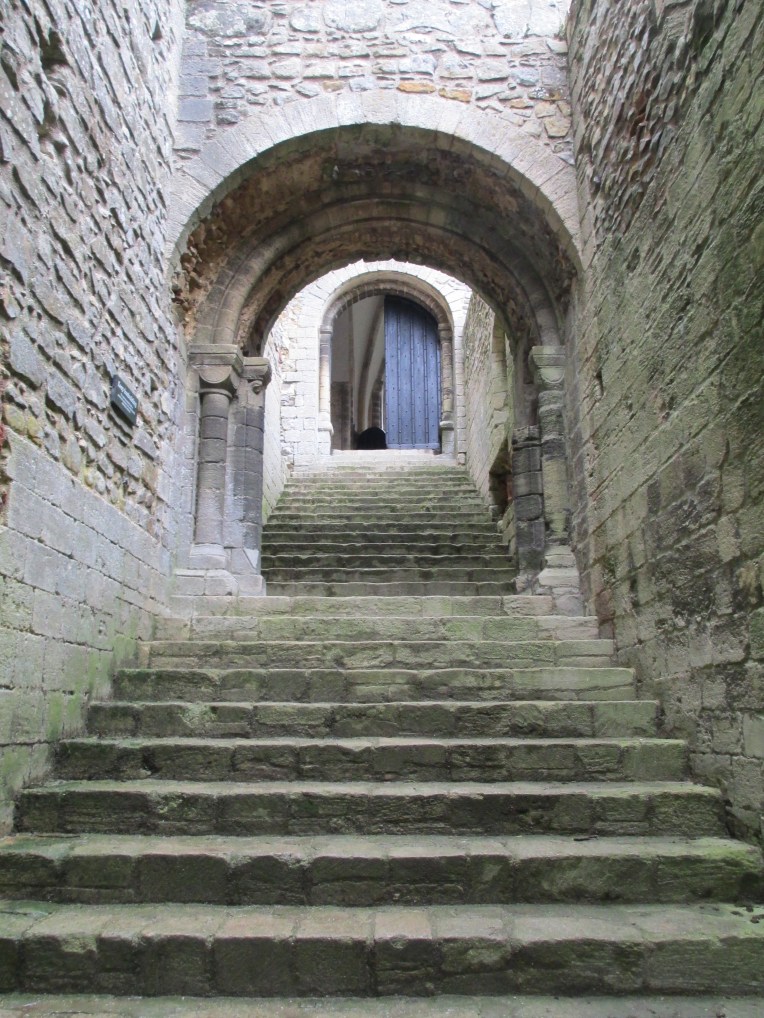
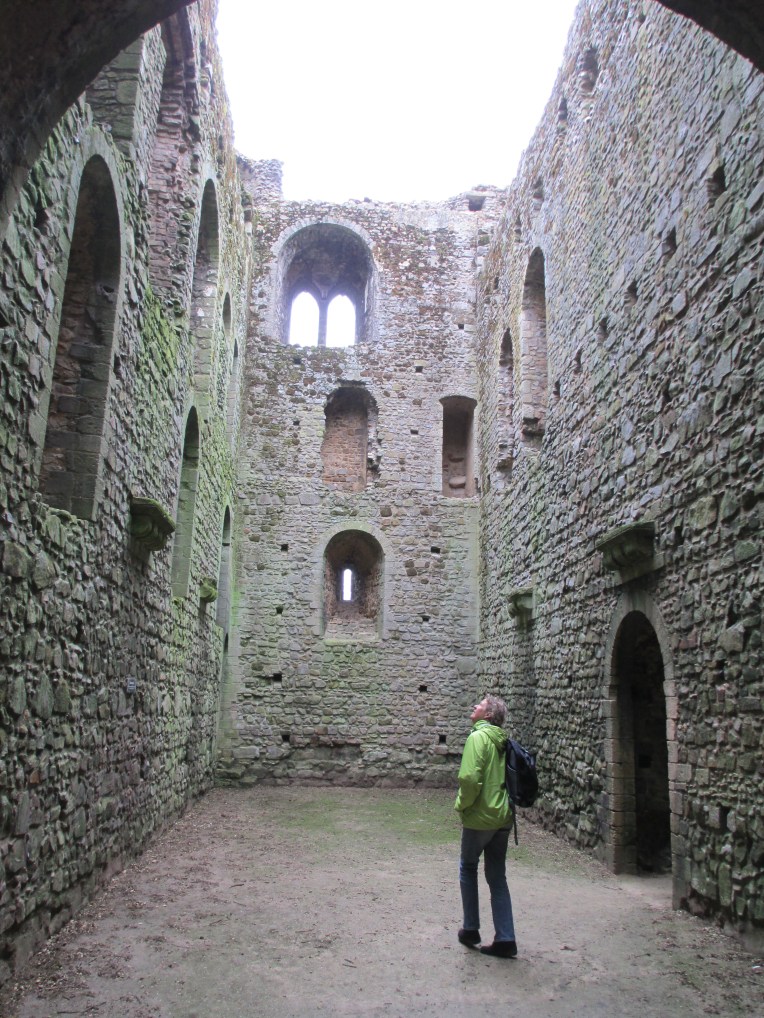
William d’Albini the Earl of Arundel began having the castle built in c. 1138. It was most likely built for his new wife, who was the widow of Henry I, Adeliza of Louvain. The keep itself was probably envisioned as self-contained accommodation for the lord and his family. It is curiously domestic in scale, but the massive earthworks make it clear that defence was at least considered. The uppermost levels of the keep were likely added at a later date and this included re-roofing and adding an extra room at the top of the keep. As well as the keep, in the grounds behind the earth works, there are the remains of a Norman church. It most likely predates the castle and would have been replaced by the current parish church in the town of Rising around the time the castle was built.
The d’ Albini family died out in the 13th century and Castle Rising passed into the Montalt family. The Montalt family died out in the 14th century and Castle Rising came into royal hands. It was after this that the castle entered what is probably its best known phase when it became the residence of Queen Isabella, known as the she wolf of England. She was the Queen of Edward II and many argue she had a role in his murder. It has been argued that Castle Rising was her prison, but it is also just as possible that it was the residence she chose in exile. There were certainly buildings erected for her in the grounds of the castle
Castle Rising ultimately came into the hands of the Howard family who still own and manage it today.
References:
Site visit 2012
http://www.castle-rising-history.co.uk/castlecameo.html
http://www.castlerising.co.uk/thecastle.html
http://www.english-heritage.org.uk/visit/places/castle-rising-castle/
The photos are all mine
Medieval Quotes Advent Calendar 23rd of December
Urban II’s address at the Council of Clermont calling for the 1st Crusade in 1095, as recorded by Fulcher of Chartres. There is more than one version of this address, this is just the one recorded by Fulcher.
“Most beloved brethren: Urged by necessity, I, Urban, by the permission of God chief bishop and prelate over the whole world, have come into these parts as an ambassador with a divine admonition to you, the servants of God. I hoped to find you as faithful and as zealous in the service of God as I had supposed you to be. But if there is in you any deformity or crookedness contrary to God’s law, with divine help I will do my best to remove it. For God has put you as stewards over his family to minister to it. Happy indeed will you be if he finds you faithful in your stewardship. You are called shepherds; see that you do not act as hirelings. But be true shepherds, with your crooks always in your hands. Do not go to sleep, but guard on all sides the flock committed to you. For if through your carelessness or negligence a wolf carries away one of your sheep, you will surely lose the reward laid up for you with God. And after you have been bitterly scourged with remorse for your faults-, you will be fiercely overwhelmed in hell, the abode of death. For according to the gospel you are the salt of the earth [Matt. 5:13]. But if you fall short in your duty, how, it may be asked, can it be salted? O how great the need of salting! It is indeed necessary for you to correct with the salt of wisdom this foolish people which is so devoted to the pleasures of this -world, lest the Lord, when He may wish to speak to them, find them putrefied by their sins unsalted and stinking. For if He, shall find worms, that is, sins, In them, because you have been negligent in your duty, He will command them as worthless to be thrown into the abyss of unclean things. And because you cannot restore to Him His great loss, He will surely condemn you and drive you from His loving presence. But the man who applies this salt should be prudent, provident, modest, learned, peaceable, watchful, pious, just, equitable, and pure. For how can the ignorant teach others? How can the licentious make others modest? And how can the impure make others pure? If anyone hates peace, how can he make others peaceable ? Or if anyone has soiled his hands with baseness, how can he cleanse the impurities of another? We read also that if the blind lead the blind, both will fall into the ditch [Matt. 15:14]. But first correct yourselves, in order that, free from blame , you may be able to correct those who are subject to you. If you wish to be the friends of God, gladly do the things which you know will please Him. You must especially let all matters that pertain to the church be controlled by the law of the church. And be careful that simony does not take root among you, lest both those who buy and those who sell [church offices] be beaten with the scourges of the Lord through narrow streets and driven into the place of destruction and confusion. Keep the church and the clergy in all its grades entirely free from the secular power. See that the tithes that belong to God are faithfully paid from all the produce of the land; let them not be sold or withheld. If anyone seizes a bishop let him be treated as an outlaw. If anyone seizes or robs monks, or clergymen, or nuns, or their servants, or pilgrims, or merchants, let him be anathema [that is, cursed]. Let robbers and incendiaries and all their accomplices be expelled from the church and anthematized. If a man who does not give a part of his goods as alms is punished with the damnation of hell, how should he be punished who robs another of his goods? For thus it happened to the rich man in the gospel [Luke 16:19]; he was not punished because he had stolen the goods of another, but because he had not used well the things which were his.
“You have seen for a long time the great disorder in the world caused by these crimes. It is so bad in some of your provinces, I am told, and you are so weak in the administration of justice, that one can hardly go along the road by day or night without being attacked by robbers; and whether at home or abroad one is in danger of being despoiled either by force or fraud. Therefore it is necessary to reenact the truce, as it is commonly called, which was proclaimed a long time ago by our holy fathers. I exhort and demand that you, each, try hard to have the truce kept in your diocese. And if anyone shall be led by his cupidity or arrogance to break this truce, by the authority of God and with the sanction of this council he shall be anathematized.”
After these and various other matters had been attended to, all who were present, clergy and people, gave thanks to God and agreed to the pope’s proposition. They all faithfully promised to keep the decrees. Then the pope said that in another part of the world Christianity was suffering from a state of affairs that was worse than the one just mentioned. He continued:
“Although, O sons of God, you have promised more firmly than ever to keep the peace among yourselves and to preserve the rights of the church, there remains still an important work for you to do. Freshly quickened by the divine correction, you must apply the strength of your righteousness to another matter which concerns you as well as God. For your brethren who live in the east are in urgent need of your help, and you must hasten to give them the aid which has often been promised them. For, as the most of you have heard, the Turks and Arabs have attacked them and have conquered the territory of Romania [the Greek empire] as far west as the shore of the Mediterranean and the Hellespont, which is called the Arm of St. George. They have occupied more and more of the lands of those Christians, and have overcome them in seven battles. They have killed and captured many, and have destroyed the churches and devastated the empire. If you permit them to continue thus for awhile with impurity, the faithful of God will be much more widely attacked by them. On this account I, or rather the Lord, beseech you as Christ’s heralds to publish this everywhere and to persuade all people of whatever rank, foot-soldiers and knights, poor and rich, to carry aid promptly to those Christians and to destroy that vile race from the lands of our friends. I say this to those who are present, it meant also for those who are absent. Moreover, Christ commands it.
“All who die by the way, whether by land or by sea, or in battle against the pagans, shall have immediate remission of sins. This I grant them through the power of God with which I am invested. O what a disgrace if such a despised and base race, which worships demons, should conquer a people which has the faith of omnipotent God and is made glorious with the name of Christ! With what reproaches will the Lord overwhelm us if you do not aid those who, with us, profess the Christian religion! Let those who have been accustomed unjustly to wage private warfare against the faithful now go against the infidels and end with victory this war which should have been begun long ago. Let those who for a long time, have been robbers, now become knights. Let those who have been fighting against their brothers and relatives now fight in a proper way against the barbarians. Let those who have been serving as mercenaries for small pay now obtain the eternal reward. Let those who have been wearing themselves out in both body and soul now work for a double honor. Behold! on this side will be the sorrowful and poor, on that, the rich; on this side, the enemies of the Lord, on that, his friends. Let those who go not put off the journey, but rent their lands and collect money for their expenses; and as soon as winter is over and spring comes, let hem eagerly set out on the way with God as their guide.”
From
http://legacy.fordham.edu/halsall/source/urban2-fulcher.html
Medieval Quotes Advent Calendar 22nd of December
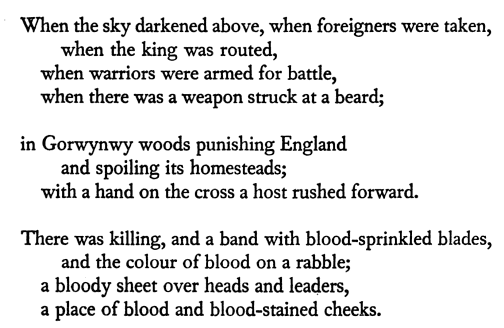
A bit different today. Some medieval poetry. These are from Hywel ap Owain, a fascinating figure in his own right. He was a Welsh prince and an accomplished poet. You can find out more about him here http://michaelfaletra.weebly.com/hywel-ap-owain-gwynedd.html
I’ve included two poems. The first is a recounting of a battle with the English
Ode VII
The second is a love poem
Ode V

For interests sake I’m including the original welsh of the first 6 lines of Ode V. Poems really need to be read in their original language to get a true sense of the work. I’m not 100% certain of its veracity as I don’t read welsh and it is from wikiquote, I generally try to find other sources but in this case I can’t find another welsh version anywhere. Nevertheless it is still interesting.
Karafy gaer wennglaer o du gwennylan;
myn yd gar gwyldec gweled gwylan
yd garwny uyned, kenym cared yn rwy.
Ry eitun ouwy y ar veingann
y edrtch uy chwaer chwerthin egwan,
y adrawt caru, can doeth yn rann.
Welsh from https://en.wikiquote.org/wiki/Hywel_ab_Owain_Gwynedd
English translations from
https://books.google.com.au/books?id=GzYawdzshXAC&pg=PP2&lpg=PP2&dq=Welsh+Poems,+6th+Century+to+1600&source=bl&ots=dWaYor3CIg&sig=jIChcVFixaiOpC36vboz3SbOAjs&hl=en&sa=X&ved=0ahUKEwj-qvz3oenJAhVC7GMKHcJnCIEQ6AEIITAB#v=onepage&q&f=false
Medieval Quotes Advent Calendar 21st of December
On the death of Caedwalla king of the West Saxons in 689CE
“In the third year of the Aldfrith’s reign, Caedwalla, king of the West Saxons, after ruling his people most ably for two years gave up his throne for the sake of the Lord and to win an everlasting kingdom, and went to Rome. He was anxious to gain the special privilege of being washed in the fountain of baptism within the the threshold of the apostles; for he had learned that by the way of baptism alone can the human race attain entrance to the heavenly life; at the same time he hoped that, soon after his baptism, he might be loosed from the bonds of flesh and pass, cleansed as he was, to eternal joy; and both of these things came to pass with God’s help just as he intended. He arrived in Rome while Sergius was pope and was baptised on the holy Saturday before Easter Day in the year of Our Lord 689; while still in his white robes, he was attacked by an illness and, on 20 April, he was freed from the bonds of flesh and joined the company of the blessed in Heaven.”
From Bede The Ecclesiastical History of the English People. pg 244 ISBN:9780192838667
 Historical Ragbag