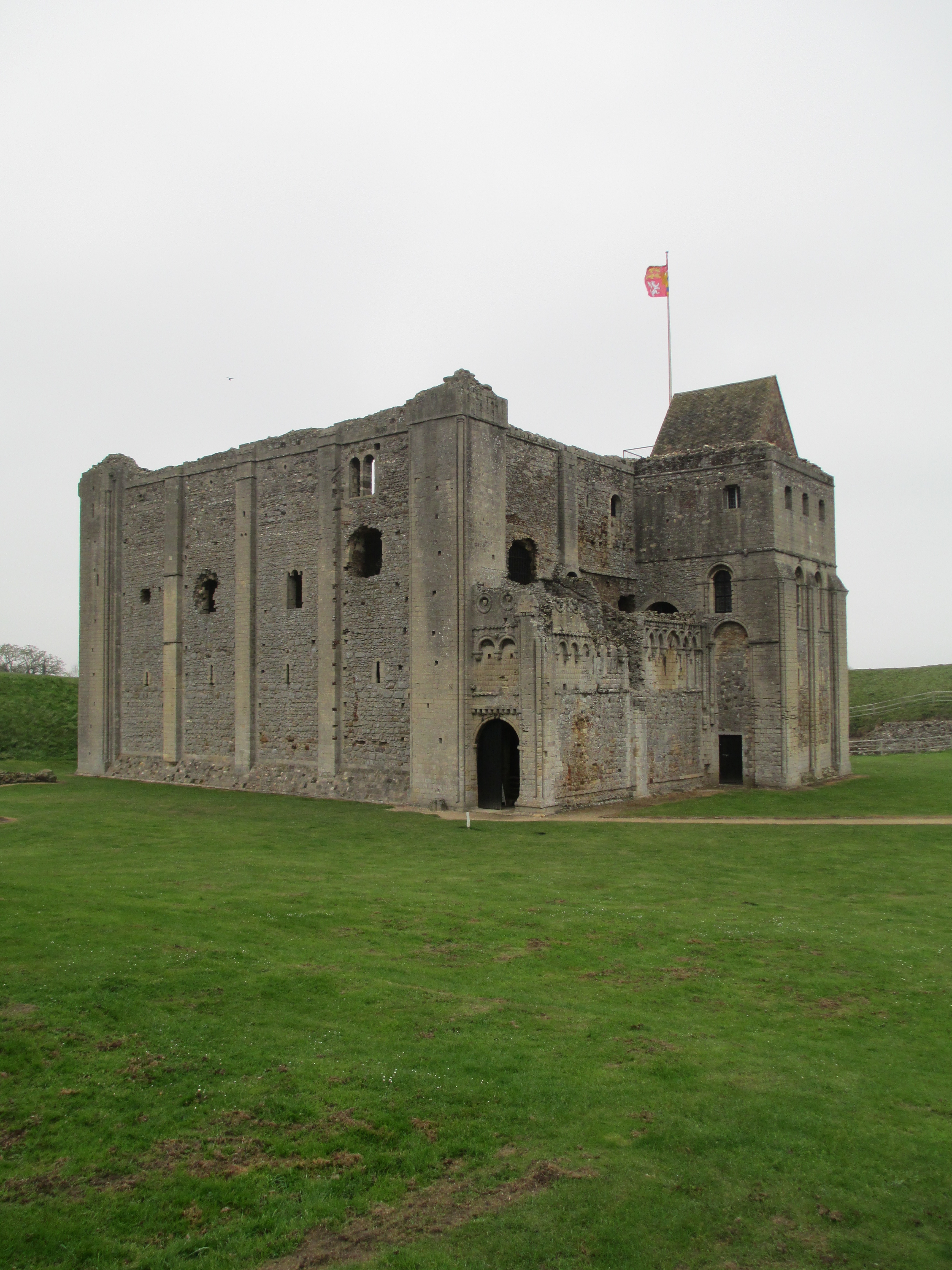
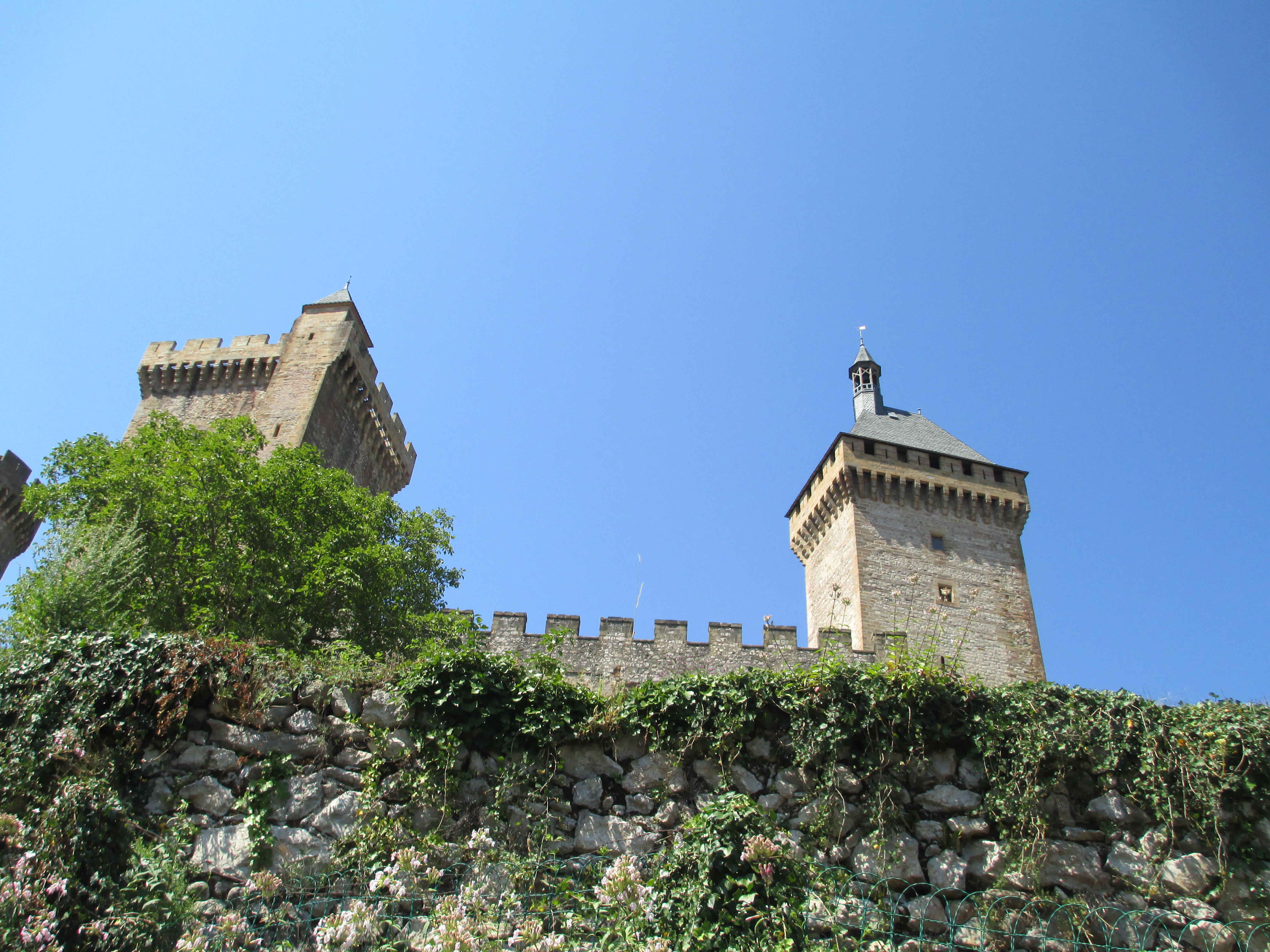
Name the Castle

So you think you know castles?

See how many of the twenty castles below you can identify.

The rules are simple. You get one photo of a Castle and then you have to name it. The answer is below the photo.  All the castles are in the UK, Ireland or France. The photos are all mine.

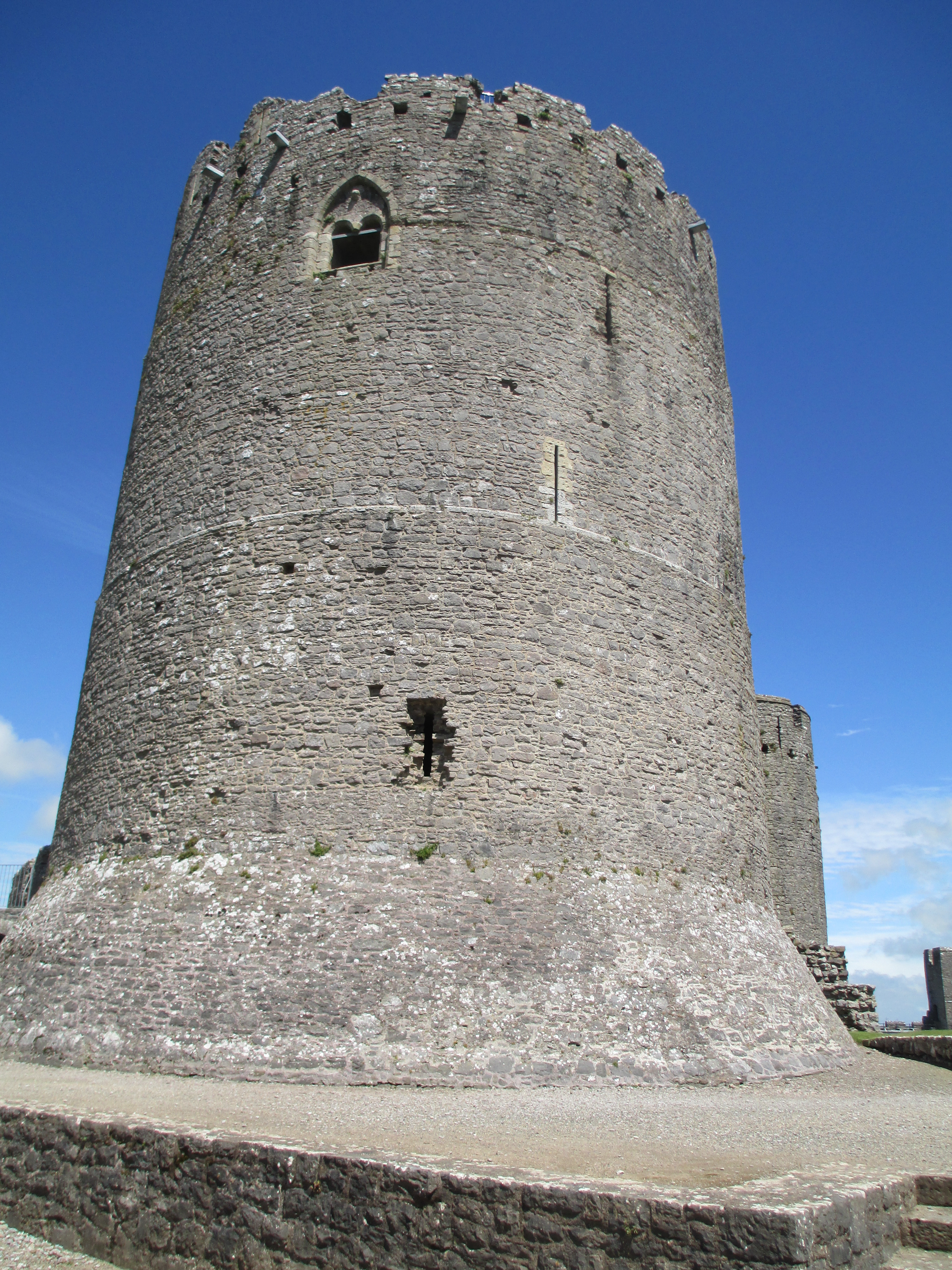
1.

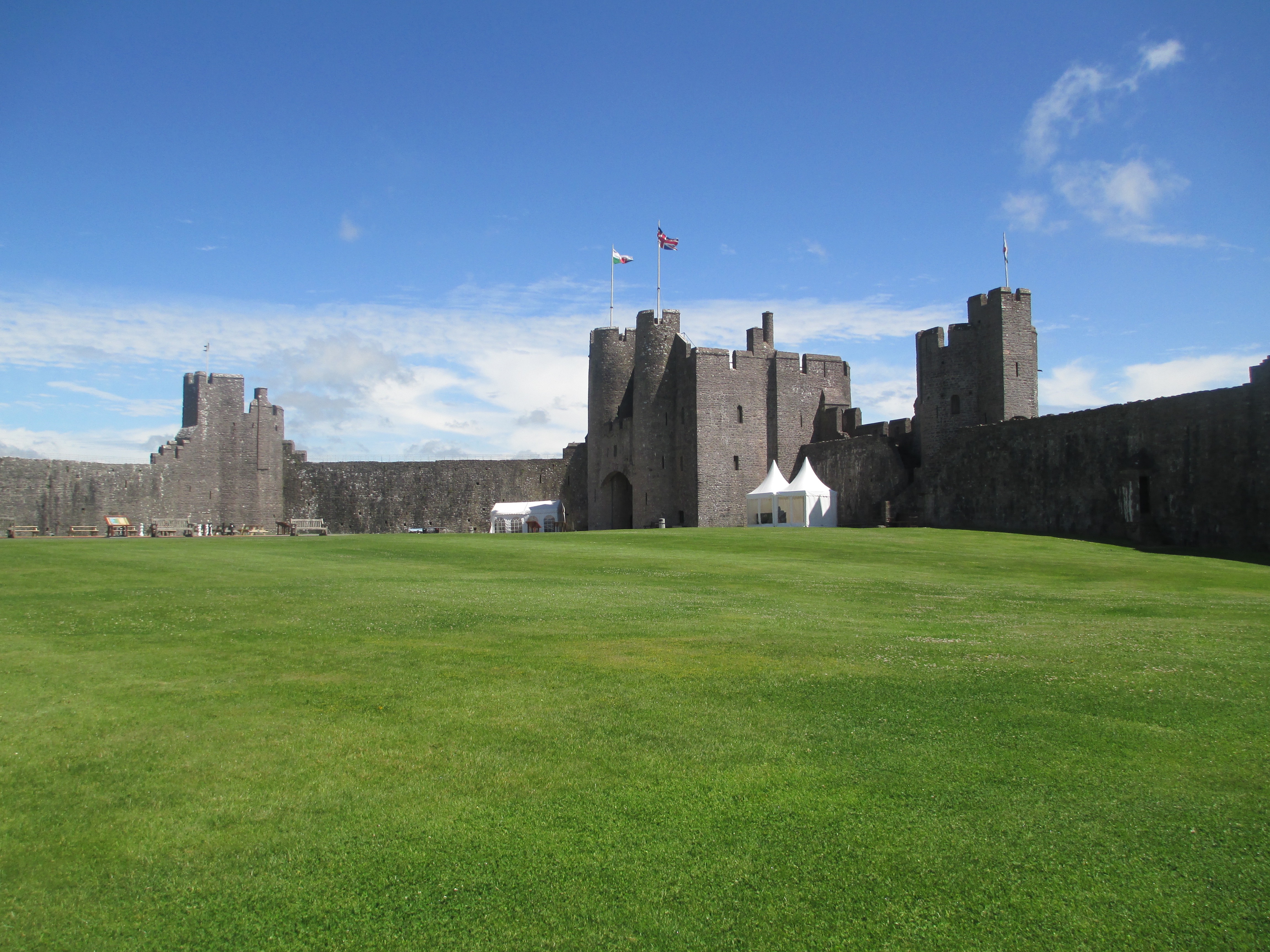
IMG_5427

Pembroke Castle Wales

2.

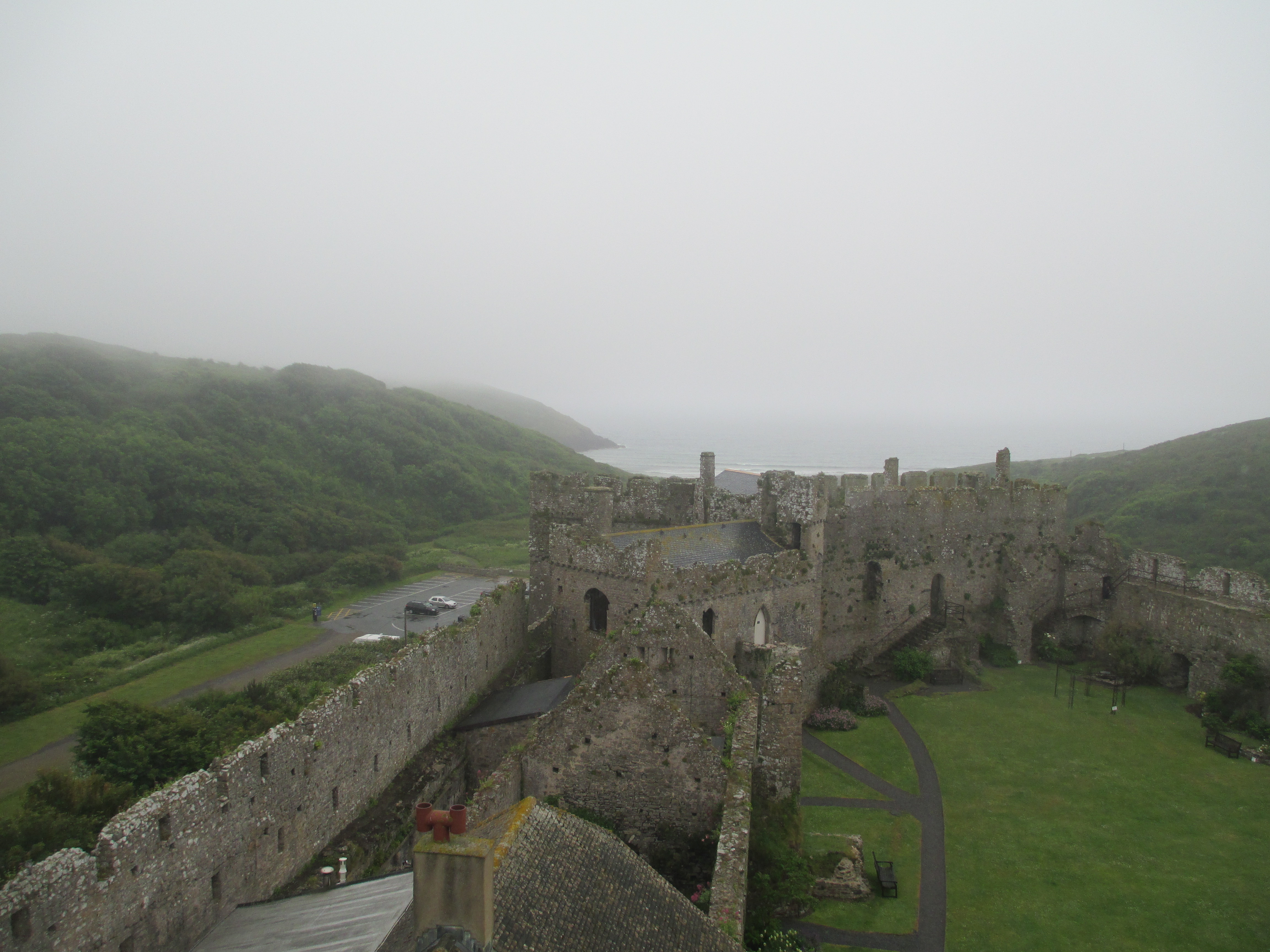
IMG_5292

Manorbier Castle Wales

3.

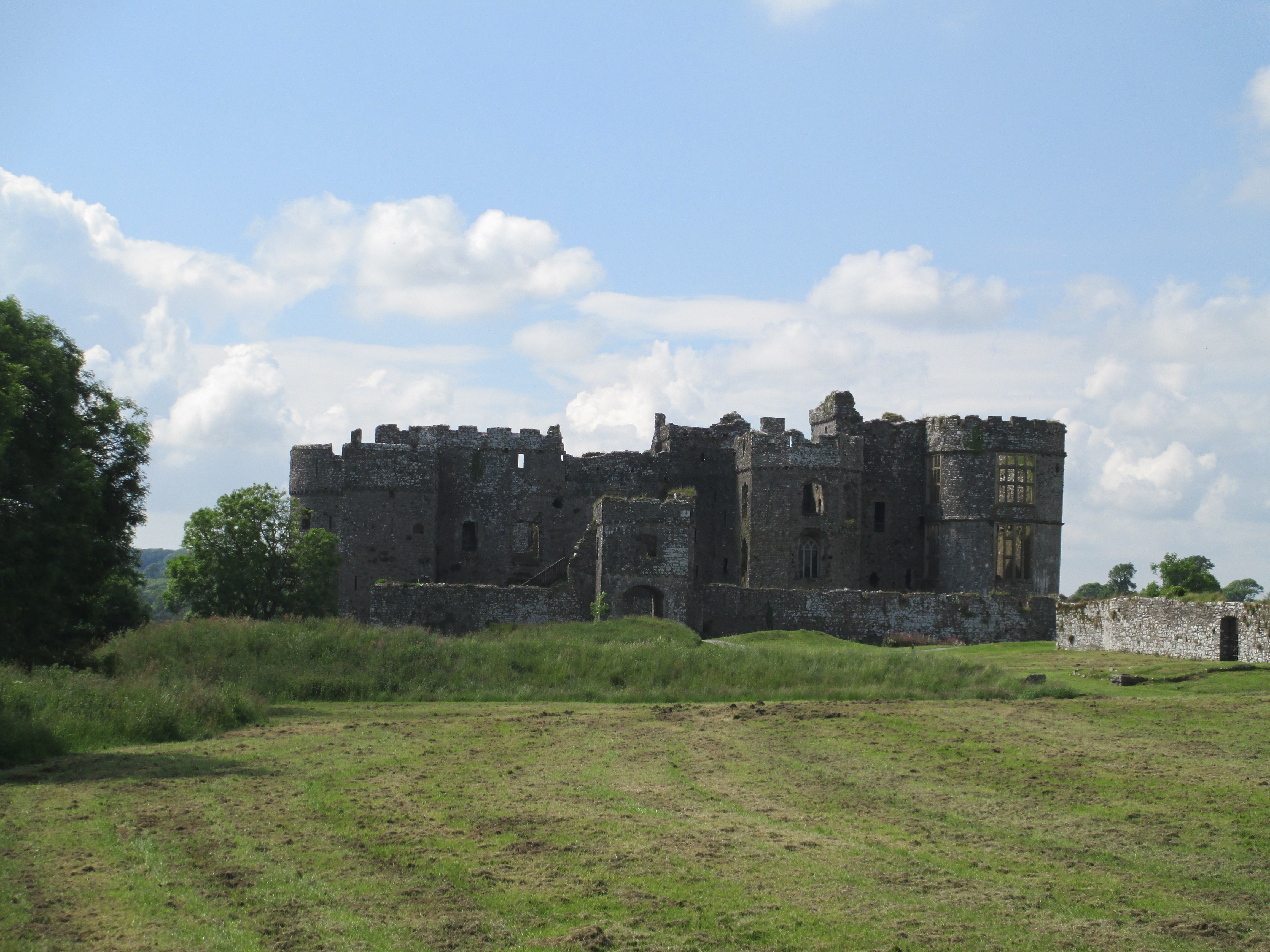
IMG_4974

Carew Castle Wales

4.

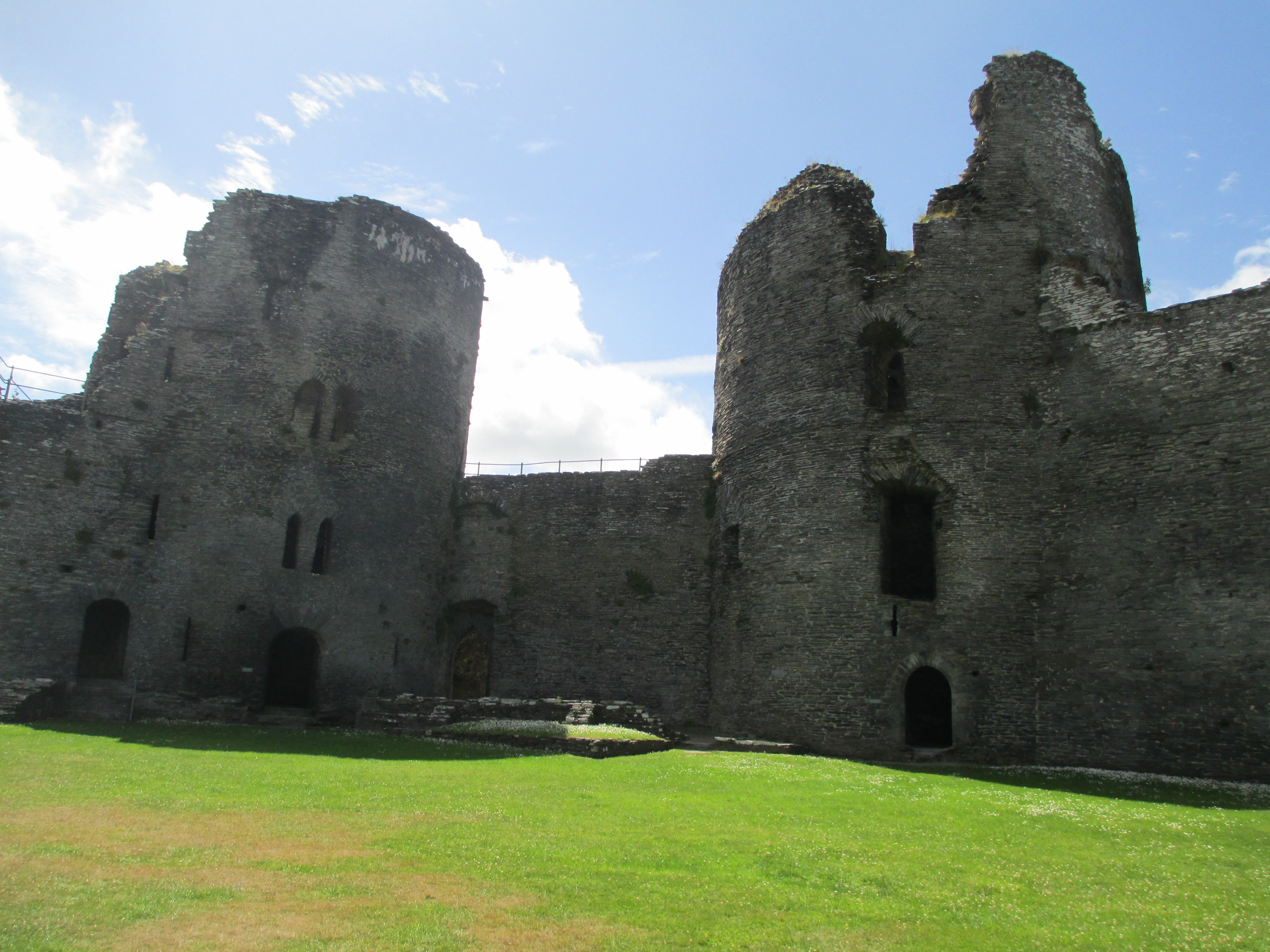
IMG_5709

Cilgerran Castle Wales

5.

IMG_2472

Monmouth Castle Wales

6.

IMG_0476

Lincoln Castle England

7.

IMG_2067

Conwy Castle Wales

8.

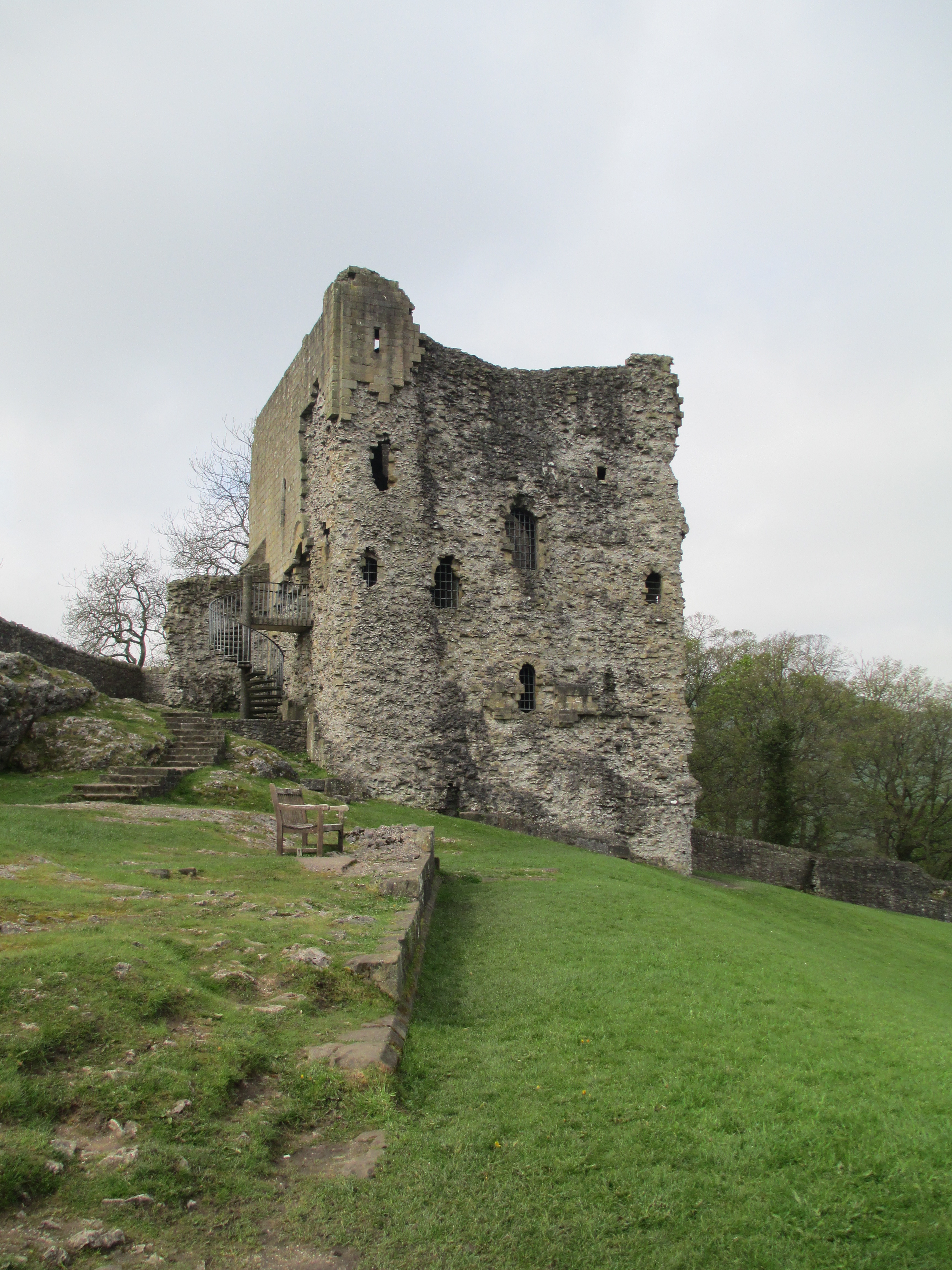
IMG_0551

Peveril Castle England

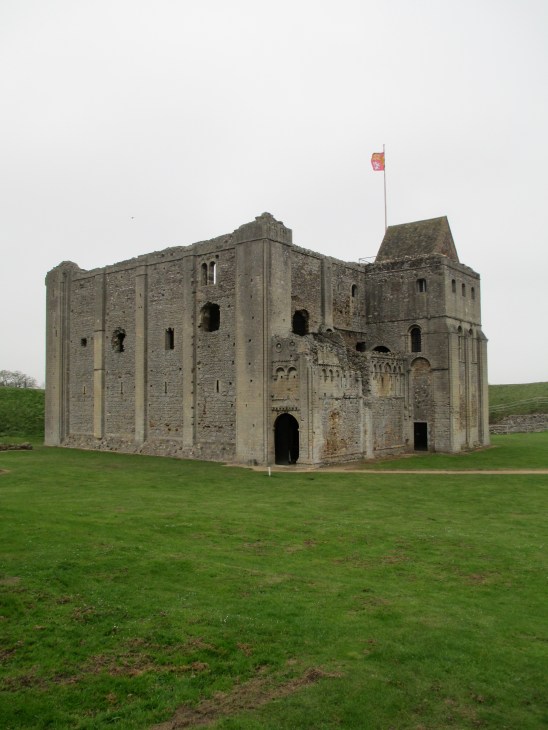
9.IMG_0363

Castle Rising England

10.

IMG_1488

Doune Castle Scotland

11.

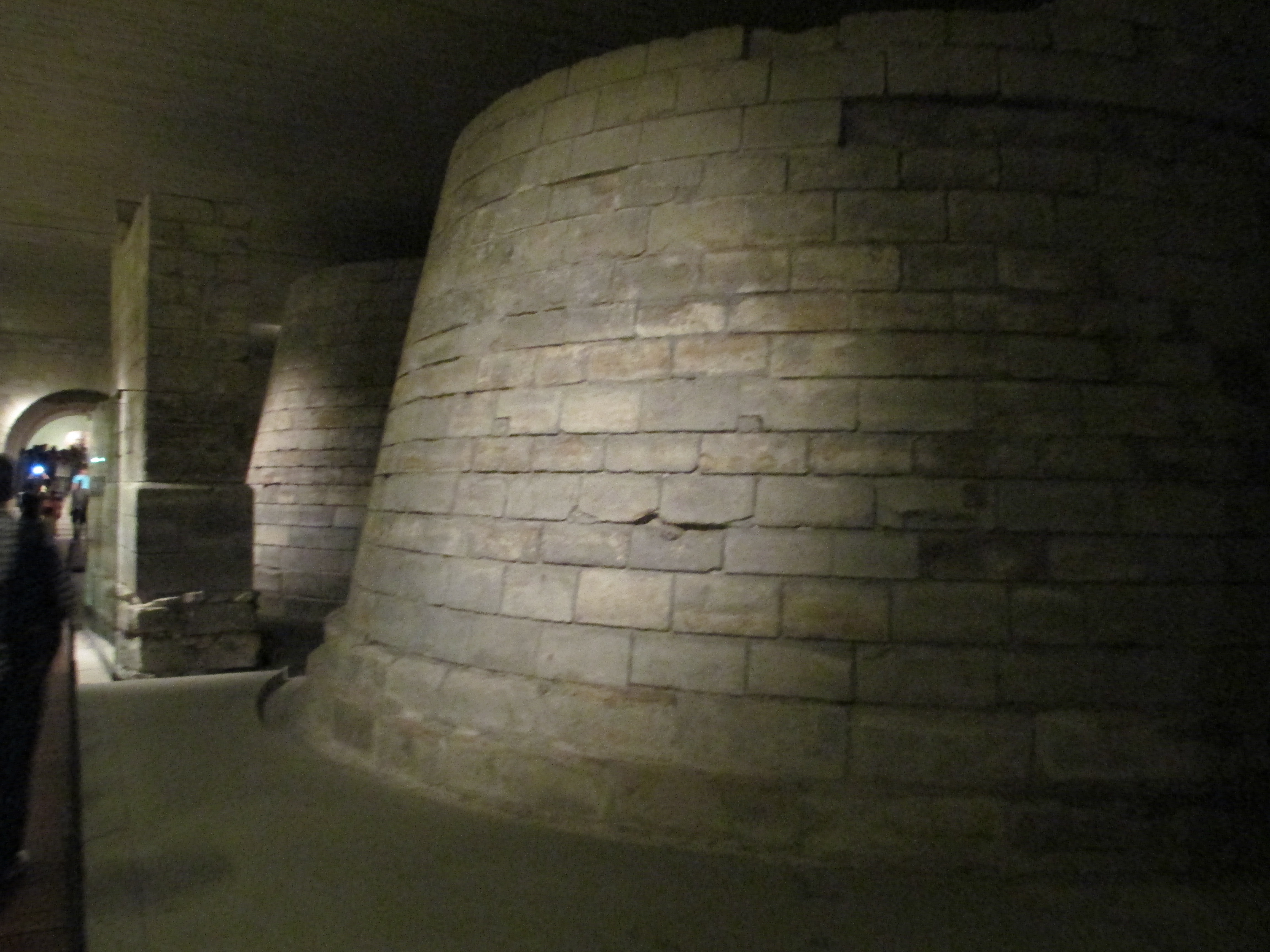
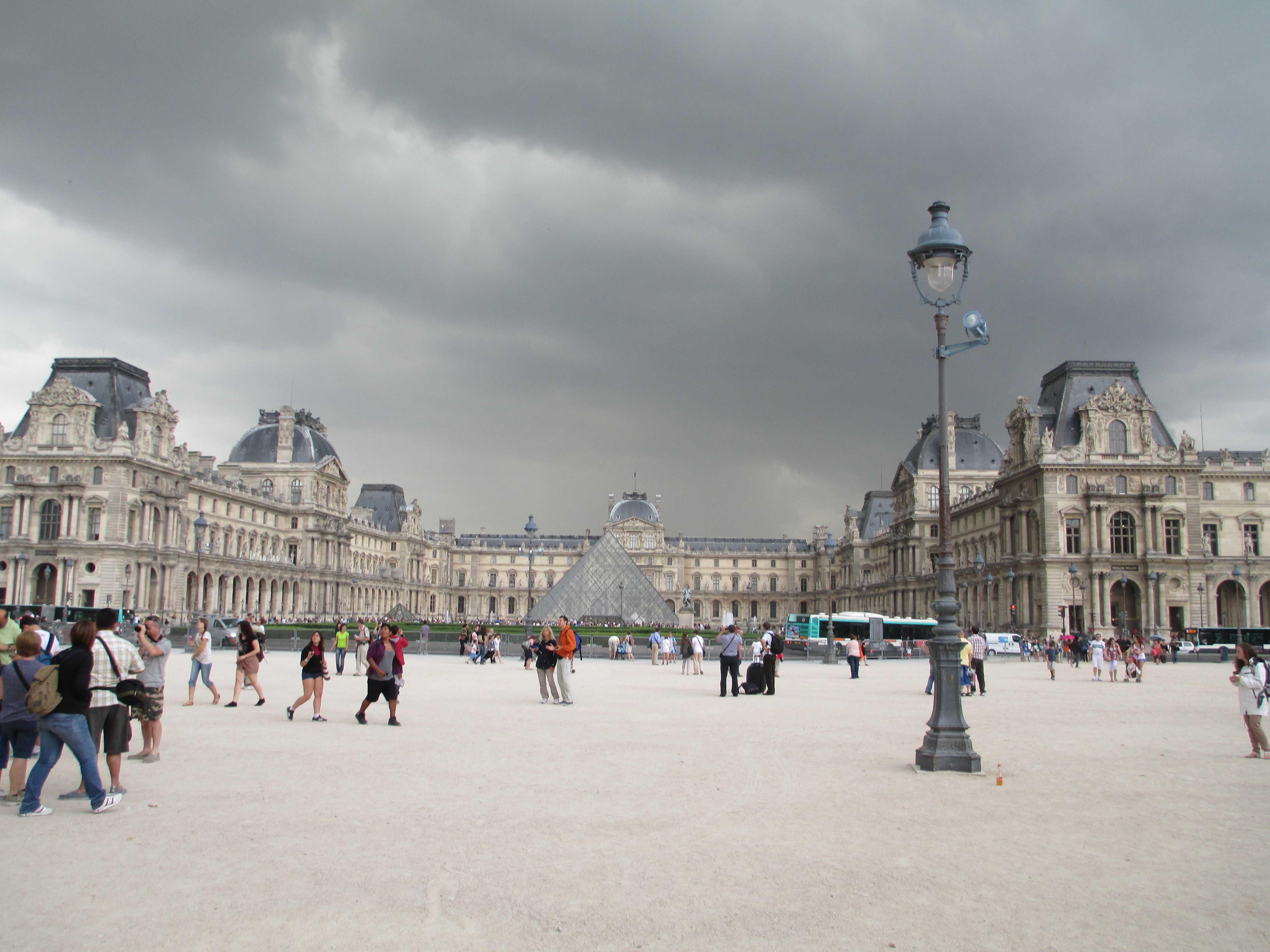
IMG_6997

Foundations of the Louvre France

12.

IMG_9125

Foix  Castle France

13.

angers

Angers Castle France

14.

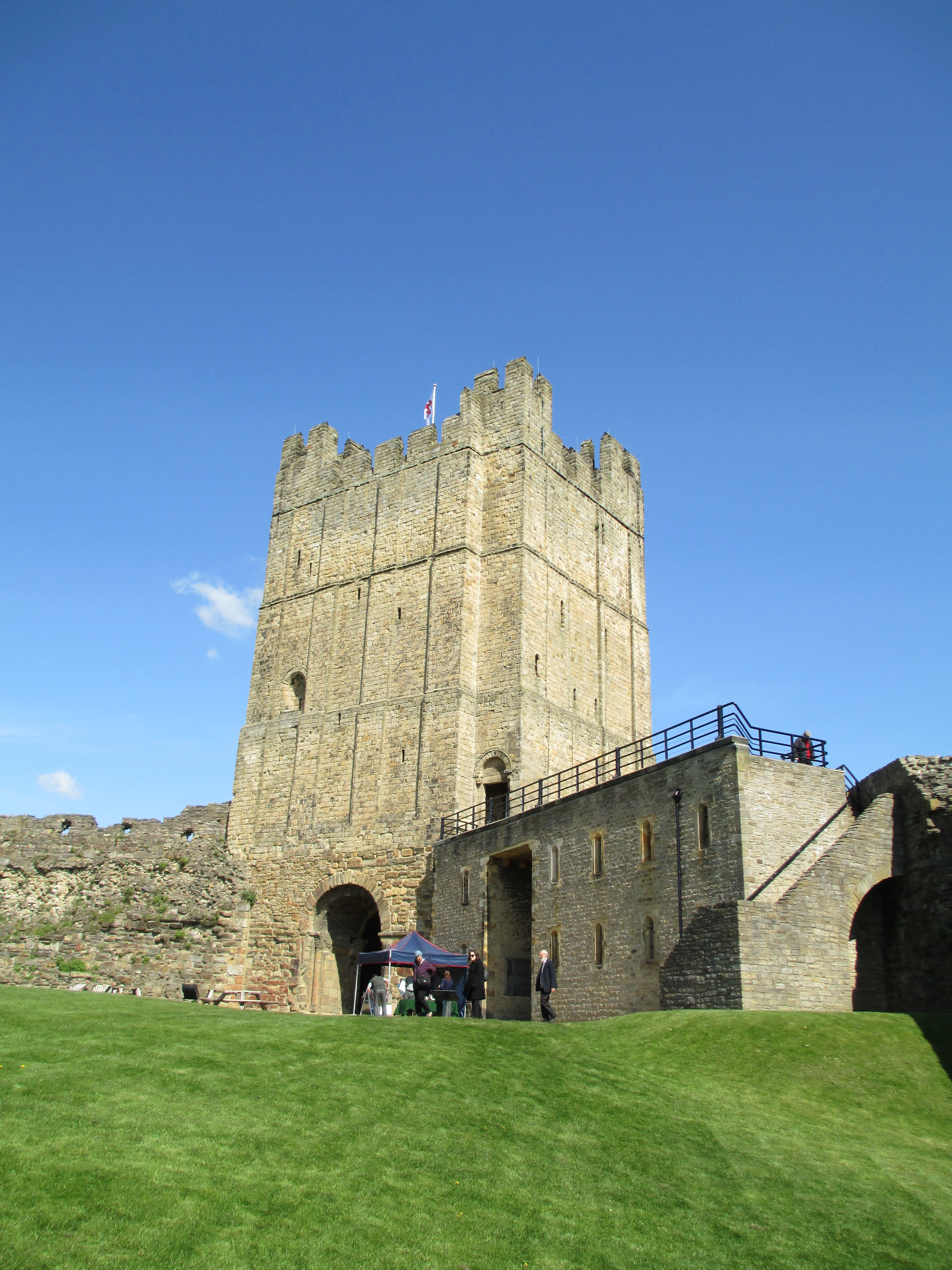
IMG_1147

Richmond Castle England

15.

kilkenny

Kilkenny Castle Ireland

16.

ferns castle irland

Ferns Castle Ireland

17.

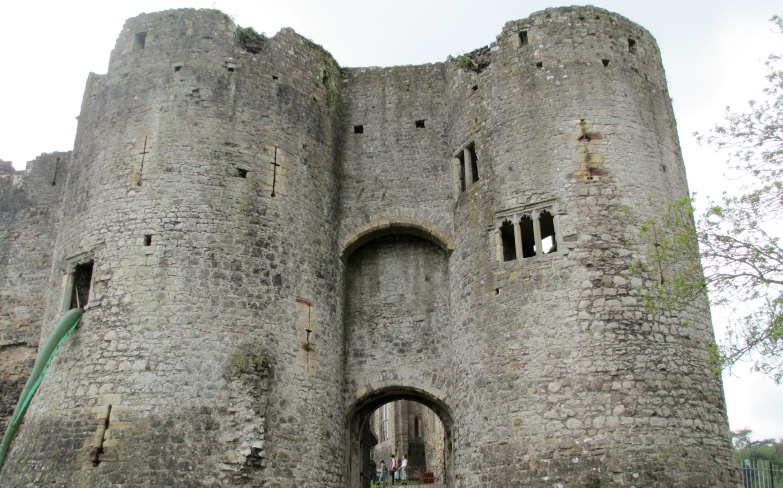
Chepstow Castle Wales

Chepstow Castle Wales

18.

IMG_4636

Trim Castle Ireland

19.

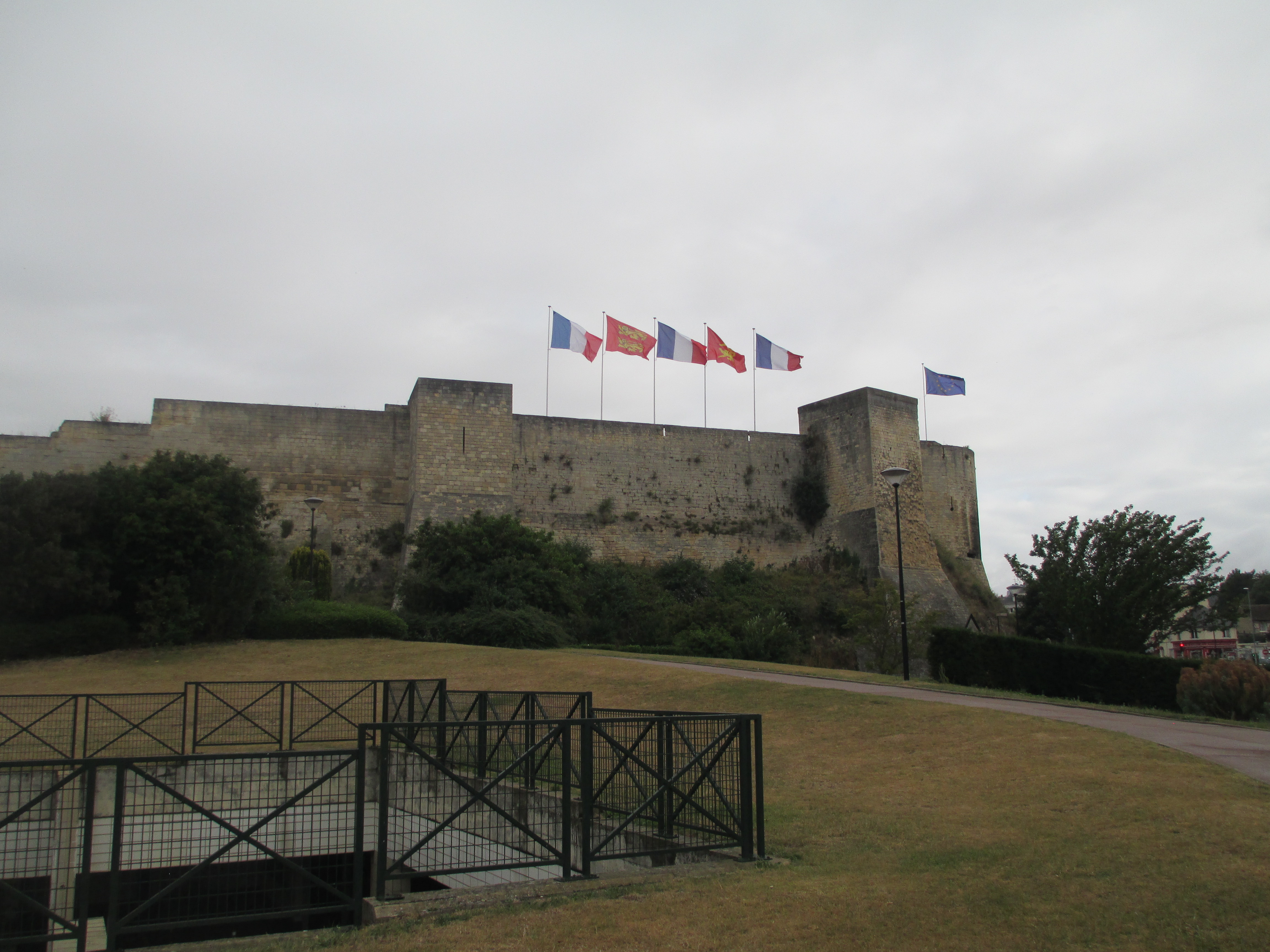
IMG_6866

Caen Castle France

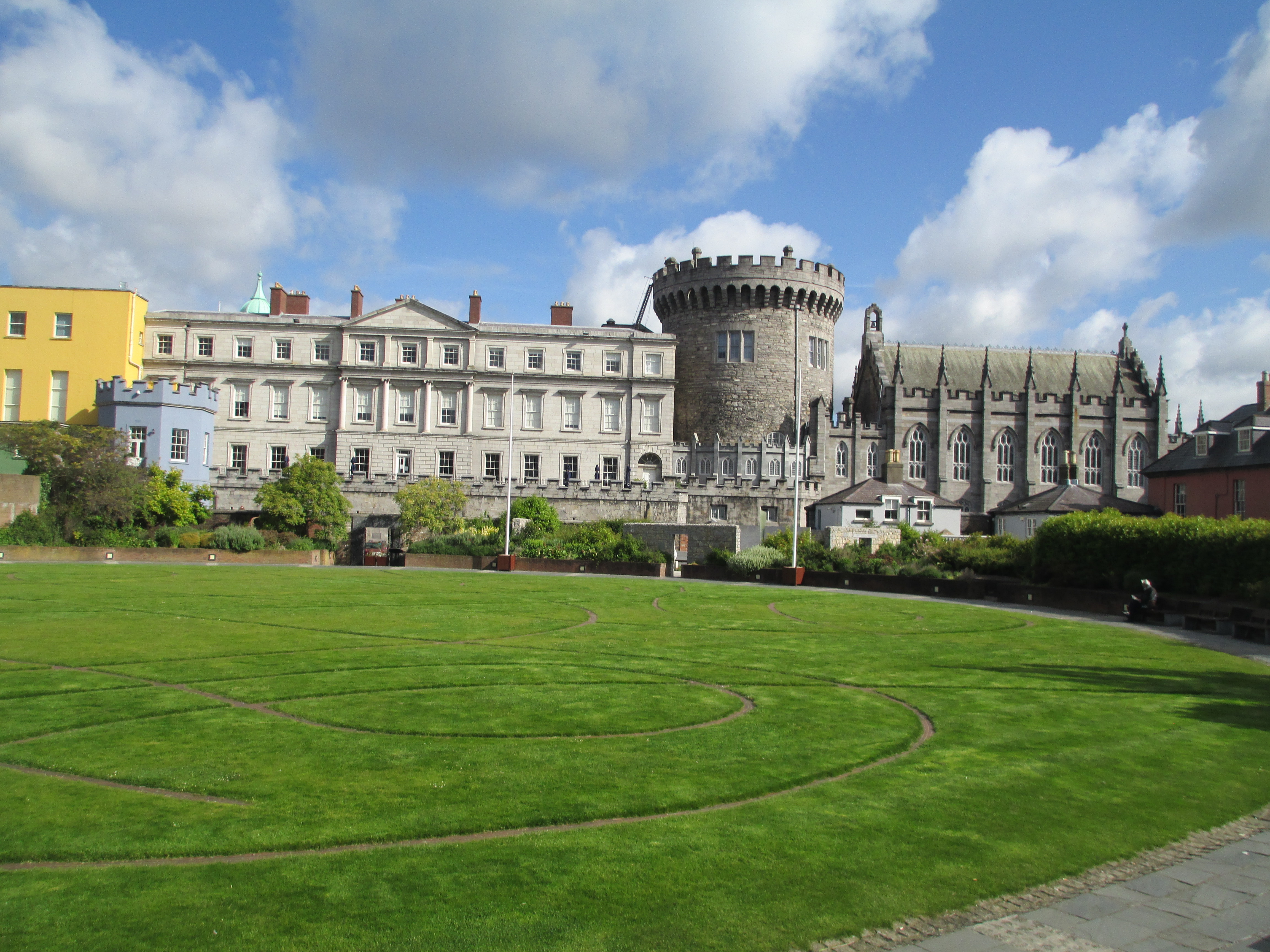
20.

IMG_1580

Dublin Castle Ireland

So how did you do?

1-5 Look you had a go, but on the upside it’s an excuse to study more castles!

6-10 Getting there, good job, you know your keeps.

11-15: Excellent. Spectacular. You know a hell of a lot about specific castles, this might be a little obsessive.

16-20: Incredible. Amazing. Are you sure you didn’t write the quiz?

Want to see how you did compared to everyone else?

Pembroke Castle

IMG_5435

Pembroke Castle in South West Wales is one of the most impressive castles on Welsh soil. I hesitate to say Welsh castle, because it wasn’t built by the Welsh. The building of Pembroke Castle was begun by Arnulph de Montgomery in c. 1093 as a key part of the Norman subjugation of this portion of Wales.

This first castle was nothing like the imposing fortress we see today jutting out into the Cleddau Estuary.

IMG_5478

Gerald of Wales, albeit writing in the late 1100s, described Pembroke as originally being “a slender fortress of stakes and turf.” But it was in an immensely strategic position and as such soon became an important fortress.

Pembroke was besieged by the Welsh is 1094 and in 1096, but both times it was held by the Normans led by Gerald de Windsor who was the custodian of the castle for Arnulph de Montgomery.  However by 1102 Arnulph had been implicated in a revolt against Henry I and was forced to flee and Pembroke castle and the lands around it were escheated to the crown. By 1105 Gerald de Windsor was custodian again, this time in the name of the crown, and he married the Welsh princess Nest. Nest is one of the most fascinating women of the period and much has been written about her. But in brief she was the daughter of the Welsh Prince Rhys ap Tewdwr, thus an important marriage prize as Rhys’ former kingdom made up much of what was now the lands of Pembroke. Nest was most likely the mistress of Henry I before she married Gerald and probably bore him illegitimate offspring. She was said to have been a great beauty and would have been very young, in her teens, when she was the king’s mistress. She was then married off to Gerald at least partly to lend credence to Gerald’s position as a royal officer and person in charge of Pembroke. She was then abducted, there is debate over whether it was willing or not, from  either Cilgerran Castle or Carew Castle both of which Gerald had begun to build

IMG_5709

Cilgerran Castle

IMG_4974

Carew Castle

She was abducted by Owen son of Cadwgan, another Welsh Prince. Owen came into Nest and Gerald’s chamber and Gerald hid or escaped, depending on which version you read, down the privy shoot and Owen abducted Nest, two of Nest’s children and possibly some castle treasure.  After much unrest Nest was eventually returned to Gerald and Owen ultimately died in rebellion against Gerald. Nest married again after Gerald died in the 1120s and had children from that marriage as well. Nest ended up with some important descendants including Gerald of Wales, who was descended from her and Gerald de Windsor. Gerald of Wales is one of the more prolific writers of the late 1100s and is responsible for works on both the people of Ireland and the people of Wales. He was born at the nearby Manorbier Castle.

IMG_5292

Manorbier Castle

Leaving Nest aside. After Gerald de Windsor died the castle remained in crown hands until the reign of King Stephen. The Earldom of Pembroke was officially created in 1138 and the de Clare family were the beneficiaries of its creation with Gilbert de Clare appointed as the ruler of the territory. There was also a small town growing up around the castle and we know that it had liberties and freedoms from fairly early on because there is a surviving charter from Henry II which discusses them. It reads, in one translation.

“Henry by the Grace of God, King of England, Duke of Normandy and Aquitaine and Count of Anjou to the Archbishops, Bishops, Abbots, Earls of Justices, Barons and Sheriffs, and to all his faithful people of all England, Wales, Ireland, Normandy, Brittany, Anjou, Poitou, Gascony, and to all his men, whether dwelling on this side or beyond the seas greetings. Know that I have given and granted, and by this my present Charter, have confirmed in my burgesses of Pembroke all their liberties, immunities and free customs as freely and fully as they had them in the time of King Henry, my grandfather.”

Gilbert de Clare died in 1148 and was succeeded by his son Richard de Clare, known as Strongbow. I’ve written more about Strongbow and especially the role he played in the Norman conquest of Ireland earlier and it can be found here.  Strongbow died in 1176 and King Henry II retained all his lands and the wardship of his daughter Isabel de Clare. Isabel became the heir to all of Strongbow’s lands including Pembroke when her brother Gilbert died as a minor in 1185. Isabel married William Marshal at the behest of Richard I in 1189 thus making Marshal one of the most powerful men in the country as Isabel held other lands in England, Ireland and France as well as those in Wales. Marshal wasn’t actually invested with the title of Earl of Pembroke until 1199 when King John came to the throne.  Marshal had the iconic Great Keep at Pembroke Castle built.
IMG_5423

Great Keep Pembroke Castle

IMG_5365

Inside the Great Keep of Pembroke Castle.

The Great Keep was built in c. 1200 in a time when square keeps were much more common. It stands at 75 feet high with walls approximately 20 feet thick at its base.  When William Marshal died the castle was inherited by his son William Marshal II. Marshal had five sons each of whom died childless. So when the last Marshal son, Anselm, died in 1145 all of Marshal’s extensive lands were divided up amongst the descendants of his five daughters. Pembroke Castle went to his daughter Joan’s descendants, she was married to Warine de Munchery. It was their son in law William de Valance who retook some of the surrounding lands that had been lost to the Welsh over the years. De Valance died in 1296 and the Earldom of Pembroke and thus the castle entered into a fairly quiet period. Until the death of Earl John Hastings in 1389 when the castle returned to the hands of the King in this case Richard II. Henry IV declared his son John to be Earl of Pembroke in c.1399 and later the castle bounced back and forth between sides in the War of the Roses. Its greatest claim to fame in this period is that Henry Tudor, later Henry VII was born there in 1456. 

IMG_5427You can see the tower he was most likely born in on the far right of the photo.

The physical buildings that can now be seen in Pembroke are products of various stages of its history. I’m not going discuss all of them, but I will mention a few.

The oldest part is the Norman Hall which was built probably under the rule of Richard Strongbow c. 1150-1170 when the defences would still have been made of timber.

IMG_5389

Norman Hall.

For me the most fascinating part of Pembroke Castle, apart from the Great Keep, was actually not built by any of the castle’s inhabitants. Wogan’s Cavern beneath the Norman Hall is a naturally occurring cavern. There have been tools dating back to the middle stone age found in it along with Roman coins. This suggests that the Cavern has been used for shelter for thousands of years. When the castle was built the cavern was used for storage and the entrance was protected as part of the defensive plan. It is one of the most surprising things I’ve ever seen in a castle. Largely because of its sheer immensity.

IMG_5397

IMG_5408 IMG_5396

Wogan’s Cavern

Pembroke Castle is very much a stronghold. It has played a part in most important eras of British History and is in and of itself a dramatic and imposing castle. I went there originally because of its connection to William Marshal. But I went back because it is a spectacular castle, a testament to the strength of its builders. It commands the Cleddau Estuary and you can see why it has been so formidable for so many years.

IMG_5353

References.

Pembroke for King and Country: Phil Carradice. ISBN: 09521092

and

http://www.theguardian.com/commentisfree/2007/dec/21/britishidentity.uk

and

Two visits to Pembroke Castle.

All the photos are my own.

An Easy to Evil Medieval British Quiz.

The way this quiz works.

It’s pretty simple. You see the question with a photo underneath and underneath the photo you’ll find the answer. There’s twenty five questions so keep track of how many you get right and how many you get wrong and see how you do at the end. There’s also a poll at the end so you can see how you compare to everyone else if you’re interested.

As the title suggests, it starts off easy and gets much more complicated. There are five sections: Easy, Medium, Hard, Difficult and Evil.

Enjoy.

Easy

1. What year was the Magna Carta sealed?

IMG_3377

Answer: 1215.

Photo: Part of Runnymede the water meadow where Magna Carta was signed.

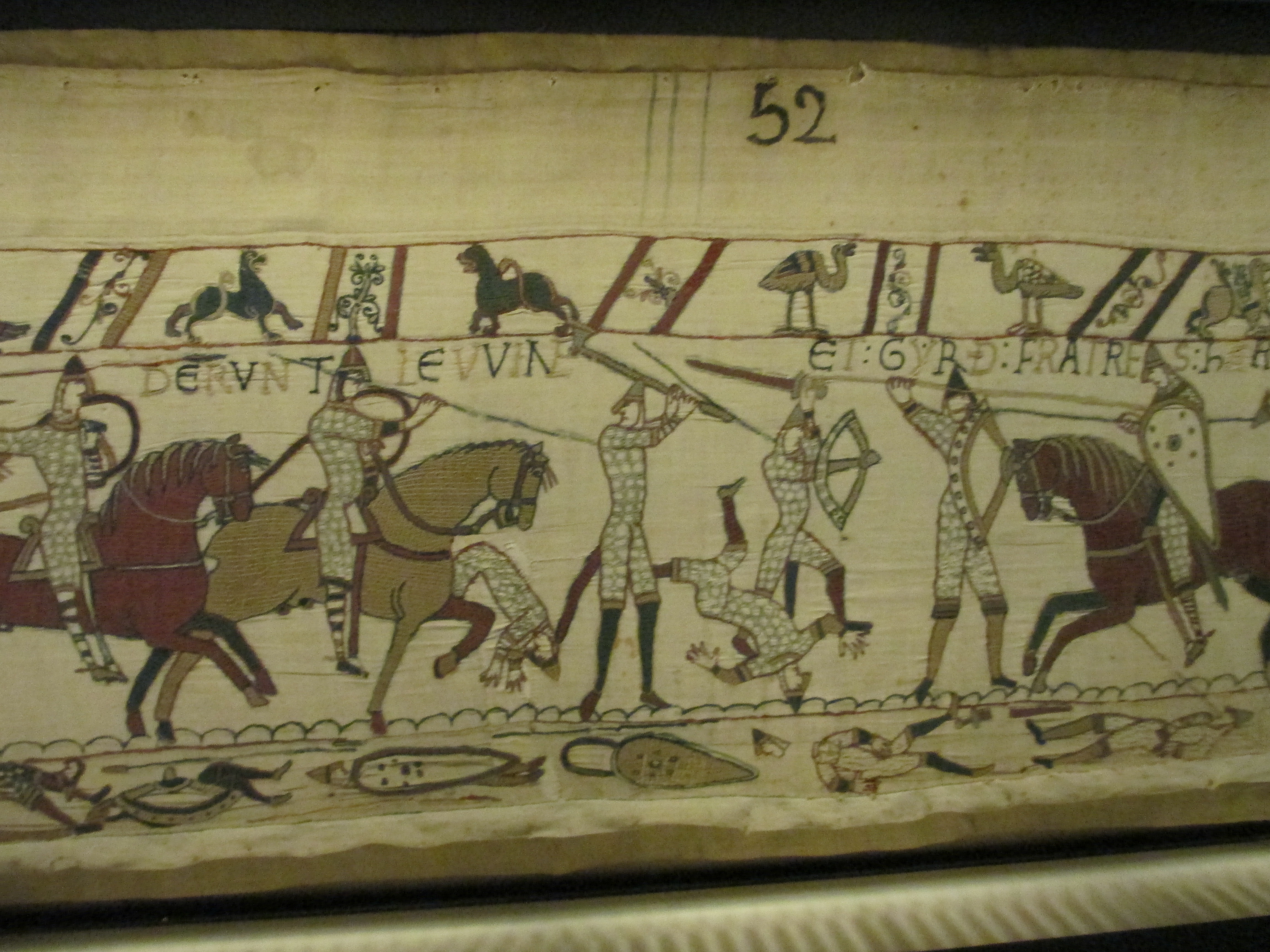
2. What year was the Battle of Hastings?

Bayeux Tapestry 35

Answer: 1066

Photo: The Battle of Hasting in the Bayeux Tapestry.

3. Henry II fought with which Archbishop of Canterbury?

henry close

Answer: Thomas Becket.

Photo: Henry II at Fontevraud Abbey.

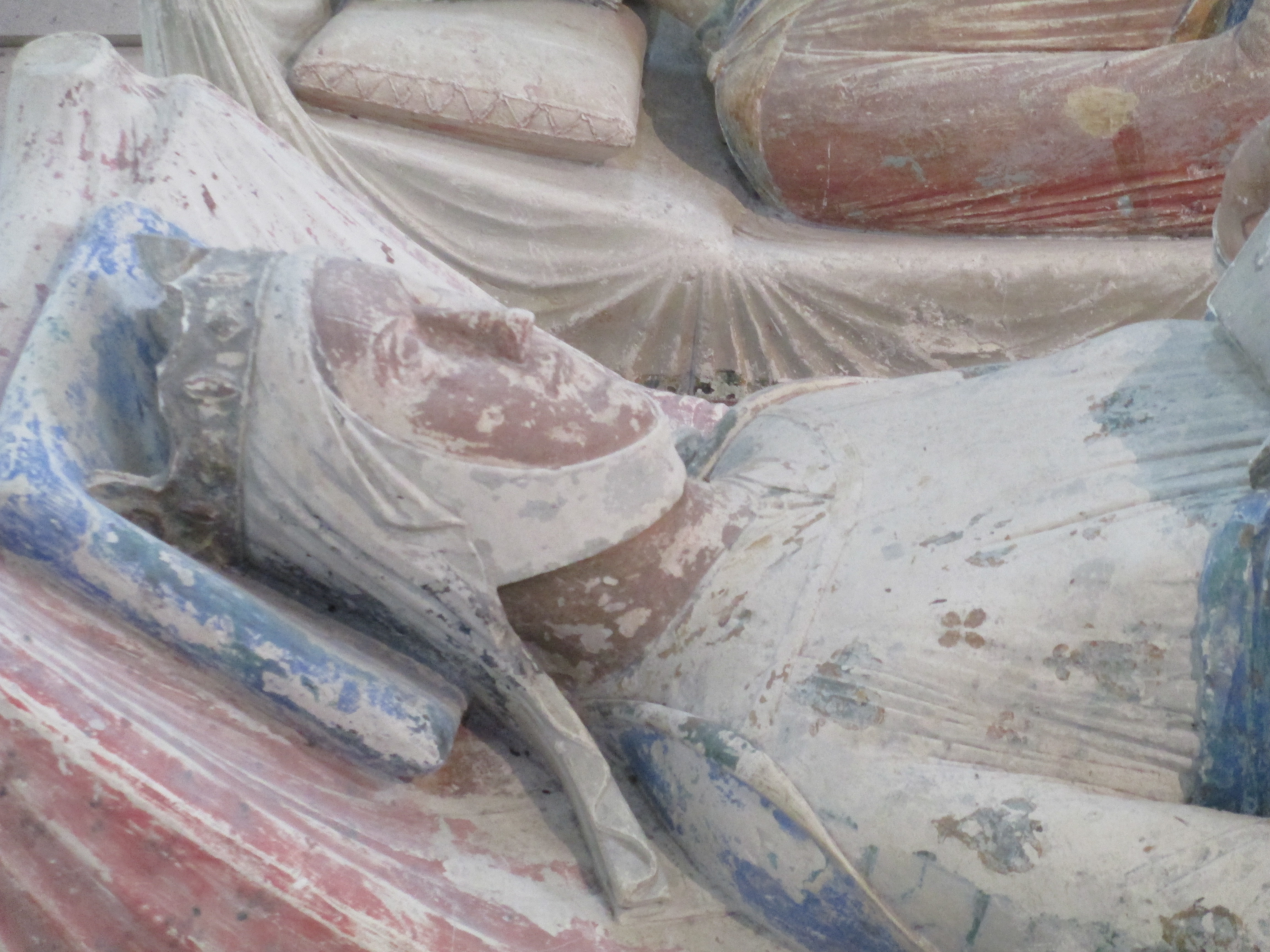
4.  Eleanor of Aquitaine was the mother of which Kings of England?

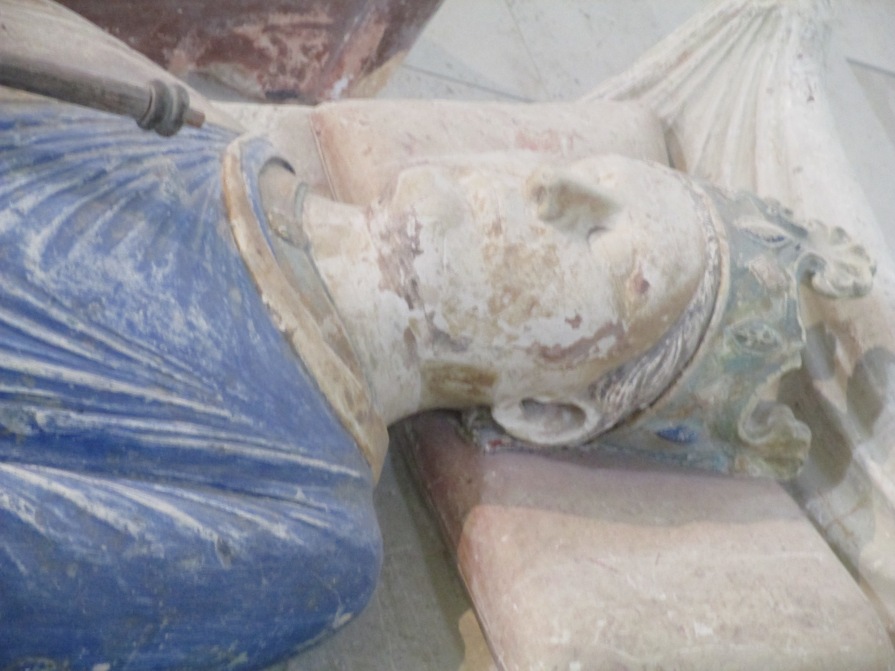
eofa

Answer: Richard I and John I. You get a bonus point if you said Henry the Young King as well.

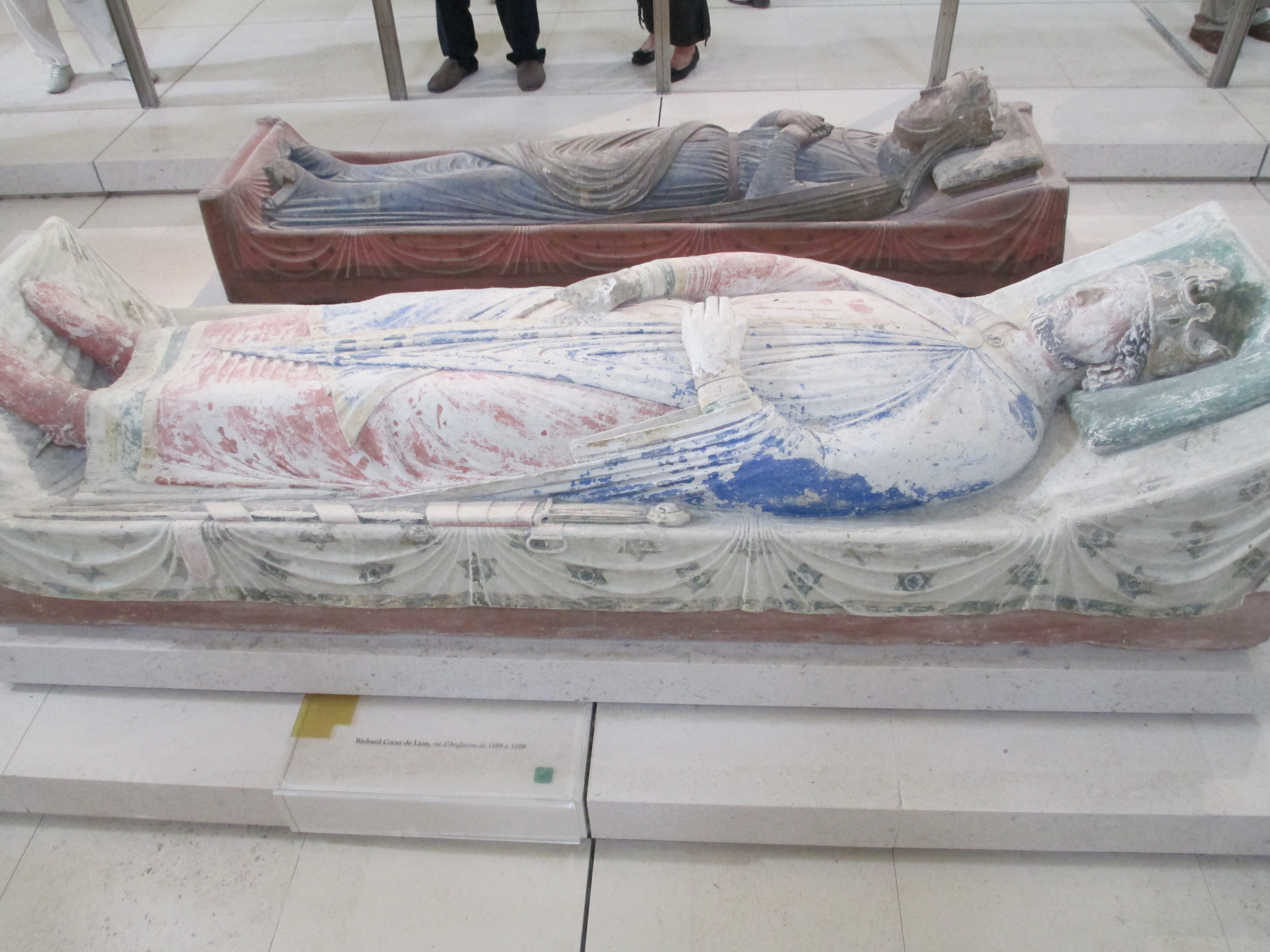
Photo: Eleanor of Aquitaine Fontevraud Abbey.

5. William the Conquerer commissioned which survey in 1086?

IMG_6144

Answer: Domesday Book

Photo: A recreation of the Domesday Book from in the National Archives.

Medium

 6. Which crusade did Richard the Lionheart fight in?

Richard I

Answer: Third Crusade

Photo: Richard the Lionheart and Isabel of Angouleme. 

7. King John married his daughter Joan to which Welsh Prince?

llew coffin 1

Answer: Llywelyn Fawr or Llywelyn ap Iorwerth. Either is correct

And I wouldn’t be deducting points if you spelt either wrong.

Photo: Llywelyn’s coffin.

8. William Marshal married which heiress, the daughter of Richard Strongbow?

IMG_3419

Answer: Isabel de Clare.

Photo: William Marshal’s effigy.

9. King John lost his baggage train in which inlet?

IMG_0401

Answer: The Wash

Photo: Part of The Wash as it looks now.

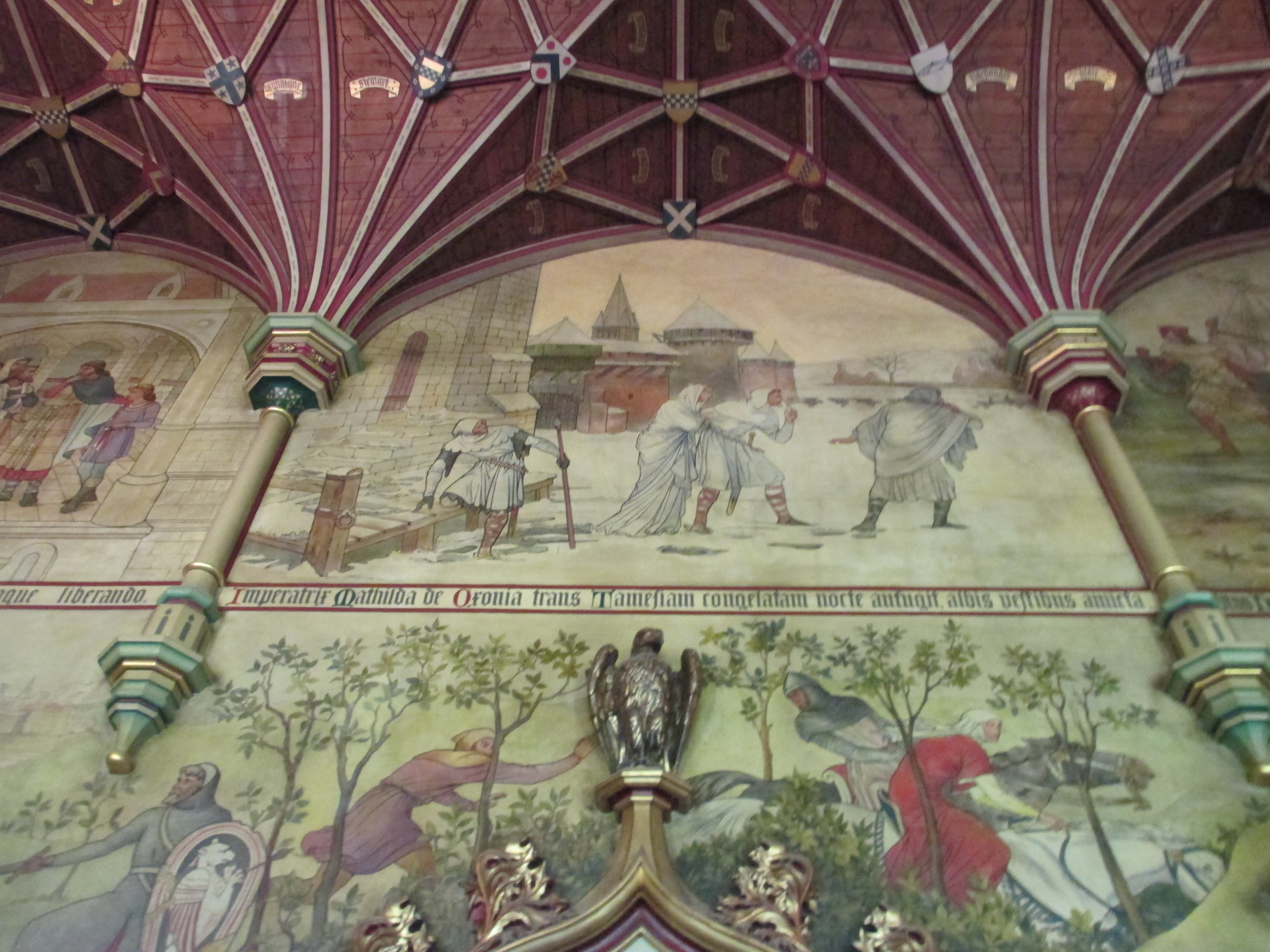
10. Empress Maud purportedly escaped through King Stephen’s army and the snow from which Castle?

IMG_5026

Answer: Oxford Castle.

Photo: 1800s drawing from Cardiff Castle of the escape.

Hard

11. William the Conquerer is buried in which town?

IMG_7063

Answer: Caen.

Photo: William the Conquerer’s tomb.

12. Which King was born in Winchester Castle?

IMG_4161

Answer: Henry III.

Photo: Great Hall of Winchester Castle.

13. How did the Anglo-Saxon Chronicle famously describe the Period of Anarchy 1136-1154?

IMG_7239

Answer: It was a time “that Christ and His saints slept.”

Michael Swanton, (ed) & trans, The Anglo-Saxon Chronicle, London: Phoenix Press, 2000, p. 265. You get the point if you got a variant of this, there’s different translations.

Photo: The current tomb of Empress Maud, one of the antagonists of the Period of Anarchy.

14. Name the children of Henry II and Eleanor of Aquitaine.

henry and eleanor

Answer: William, Henry, Matilda, Richard, Geoffrey, Eleanor, Joanna, John.

If you got all of them but not in order have a point, but you get a bonus point if you got them in order.

Photo: Henry II and Eleanor of Aquitaine.

15. What year did Henry the Young King die?

IMG_7222

Answer: 1183.

Photo: Henry’s non contemporary tomb at Rouen Cathedral.

Difficult

16. Name the three places which hold the only four existing copies of the original Magna Carta.
IMG_0476

Answer: Lincoln, Salisbury Cathedral and The British Library (the British Library has 2).

Photo: Part of Lincoln Castle.

17. Ida de Tosny, the wife of Roger Earl of Norfolk, had a son out of wedlock before she married the Earl who was he?

IMG_3084

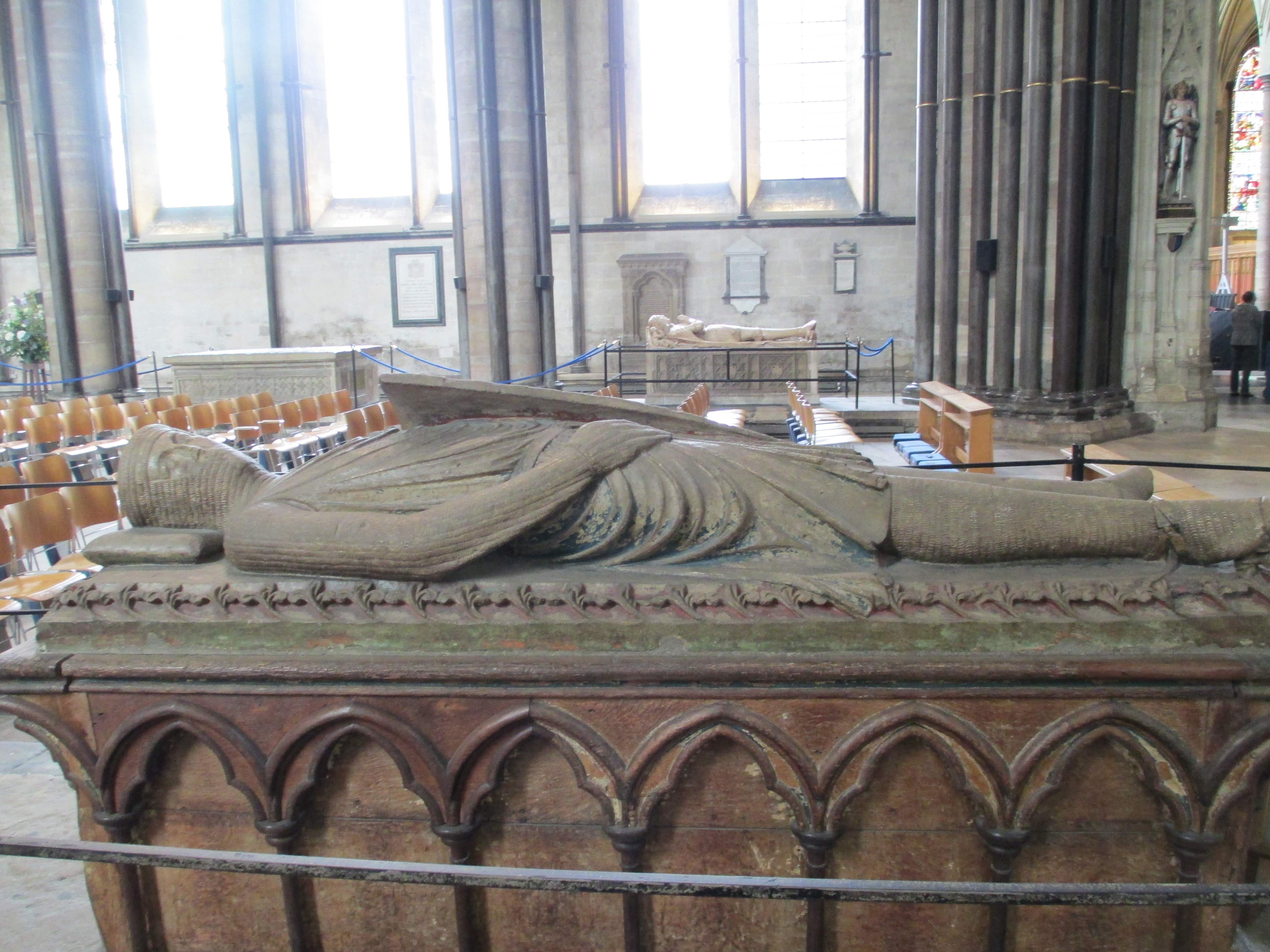
Answer: William Longsword Earl of Salisbury and bastard son of Henry II.

Photo: His tomb.

18. Which castle did William Marshal, according to the Brut y Tywysogion, subdue with a “vast army” in 1204?

The Rev. John Williams, (ed), Brut y Tywysogion, London: Longman, Green, Longman & Roberts, 1860, p. 261

IMG_5706

Answer: Cilgerran Castle.

Photo: Recent wicker statue of Marshal at Cilgerran

19. How much was King Richard’s ransom?

riveaux

Answer: 100,000 silver marks and 200 hostages. You get the point if you got the monetary amount.

Photo: Riveaux Abbey, a Cistercian foundation. Cistercian foundations had to contribute part of their wool clips to the ransom.

20. Canterbury Cathedral was begun in which decade?

Canterbury Cathedral

Answer: 1070s

Photo: Canterbury Cathedral

Evil

21. Which illustrious figure ‘processed’ through the Temple Church in London for its consecration in 1185.

temple church

Answer: Patriarch Heraclius of Jerusalem.

Photo: Temple Church in London.

22. According to the History of William Marshal what three things did King Stephen threaten to do to the young William Marshal while he was the King’s hostage?

IMG_3421

Answer: Hang him, catapult him at the walls of his father’s castle and crush him with a millstone.

A.J Holden & David Crouch (eds) S. Gregory, trans, History of William Marshal, Volume I, London: Anglo-Norman Text Society, 2002, p. 31.

You can have the point if you got these in any order but you have to have all three to get the point.

Photo: William Marshal

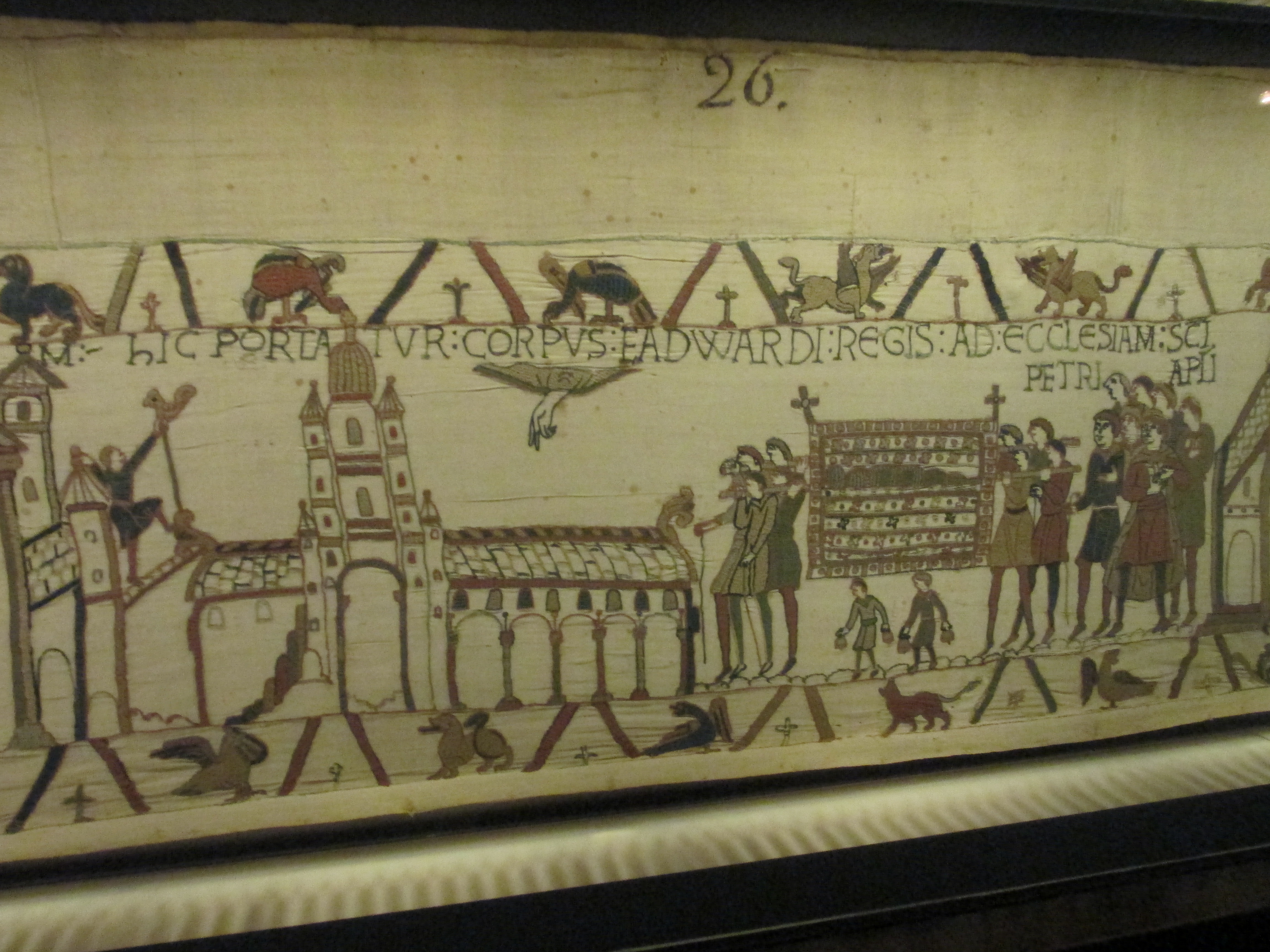
23. The Bayeux Tapestry is how many metres long?

Bayeux Tapestry 16

Answer: 70.34m, but you can have the point if you said 70.

Photo: My favourite scene in the Bayeux Tapestry with the Hand of God coming out of the sky.

24. Which papal legate played a significant role in the Magna Carta negotiations and in the Regency of Henry III?

IMG_6033

Answer: Guala Bicchieri. You can have the point if you only got Guala, or said Gualo. It is a variation of the spelling and often only Guala or Gualo is written.

Photo: Facsimile of Salisbury’s Magna Carta in the Temple Church.

25. Who did Geoffrey of Monmouth describe as “an accomplished scholar and philosopher, as well as a brave soldier and expert commander”?

.

IMG_2472

Answer: Robert Earl of Gloucester and oldest illegitimate son of Henry I. The passage is from Geoffrey’s dedication of his work History of the Kings of Britain.

http://www.yorku.ca/inpar/geoffrey_thompson.pdf pg 2.

Photo: Monmouth Castle. Geoffrey was born somewhere in the region of Monmouth

The End

So that’s it. How did you do?

1-5: Well you’ve got some basics down pat. Good start.

6-10: You know more than basics, well on your way.

11-15: Good work, beginning to build a wealth of obscure facts.

16-20: Impressive. You know you stuff.

21-25: Incredible effort. You may know more about this period than is sensible 🙂

26-27  remember the two bonus points: Speechless. Incredible. You definitely know more than you need to about this specific period and area.

27: If you got them all… Sure you didn’t write the quiz?

Now if you feel like it put your results in the poll below.

The photos are all mine.

Favourite Castle Results

I ran a poll a couple of weeks ago on favourite castles. Thanks to everyone who voted and thanks to all who put in ‘other’ options. I now have more castles to go and visit. I figure you’ve all had enough time to vote now so here are the results.

5th Place:

Doune.

Ferns.

4th Place:

Peveril.

Conwy.

Castle Rising.

Carrickfergus.

Alnwick.

Sandal.

Peel Castle Isle of Man.

Caerphilly.

Third Place: 

Foix

IMG_9125

2nd Place:

Pembroke

pembrokeMiddleham.

IMG_1241Richmond

IMG_1147


In 1st place is:

Chepstow

Chepstow Castle Wales

Chepstow Castle

I have to say I am quite pleased with this result as Chepstow is one of William Marshal’s castles. Thanks again to everyone who voted and please feel free to let me know if you think there are others that should be on the list. I might do an open poll in a couple of months.


What is your favourite castle

Just a very short post. I was wondering what everyone’s favourite castles are. I have listed a few of mine in the poll below, but please feel free to add your own answers or to chose one of mine. Also I’d love to hear some of the reasons in the comments.

For inspiration here are photos of the castles I’ve listed.


IMG_1147Richmond Castle

Chepstow Castle Wales

Chepstow Castle

pembroke

Pembroke Castle

IMG_0548

Peveril Castle

IMG_2041

Conwy Castle

ferns castle irland

Ferns Castle

IMG_0363

Castle Rising. 

IMG_1488

Doune Castle. Yes I have a soft spot for Doune because of its Monty Python connections.

IMG_9125

Foix Castle

Historic Buildings, Modern Art.

In many cases historic buildings are finding a new meaning in an increasingly technological world as canvases for modern art. Whether it is as a cinema, or a projection space or as a place for installations. This sort of repurposing brings new life and new significance to historic buildings.

There are many examples, but I thought I’d just discuss a few. I’d like to begin with some I have previously mentioned in an earlier post.

Fontevraud is an abbey in France that was founded in the 11th century. Various parts of it have been used for artistic installations. Font art The Cloister. You can walk on this sculpture, creating whole new ways of seeing an ancient building.Font DormThe dormitory. You are able to lie in these boats, simulating the experience of the sleeping monks.

The two installations in Fontevraud both work with the history of the building to give alternative ways of experiencing it.

Another example from France is Foix Castle not that far from Toulouse.  You can see the castle below. It is perched on a a lump of carboniferous limestone and parts of the castle itself date from the 11th century. It was involved in the Albigensian Crusade and was part of an area of known Cathar sympathisers.

IMG_9125 IMG_9037

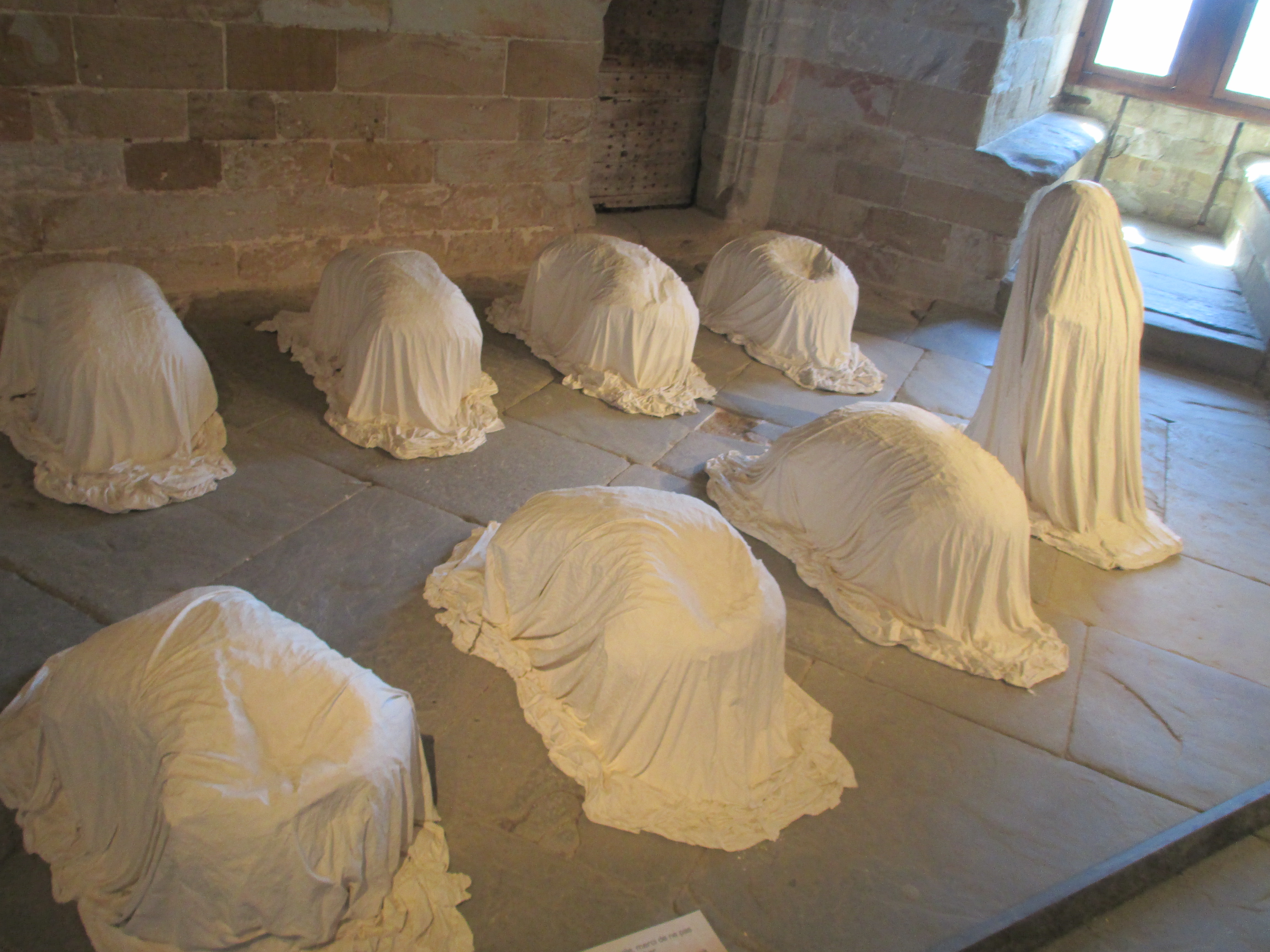
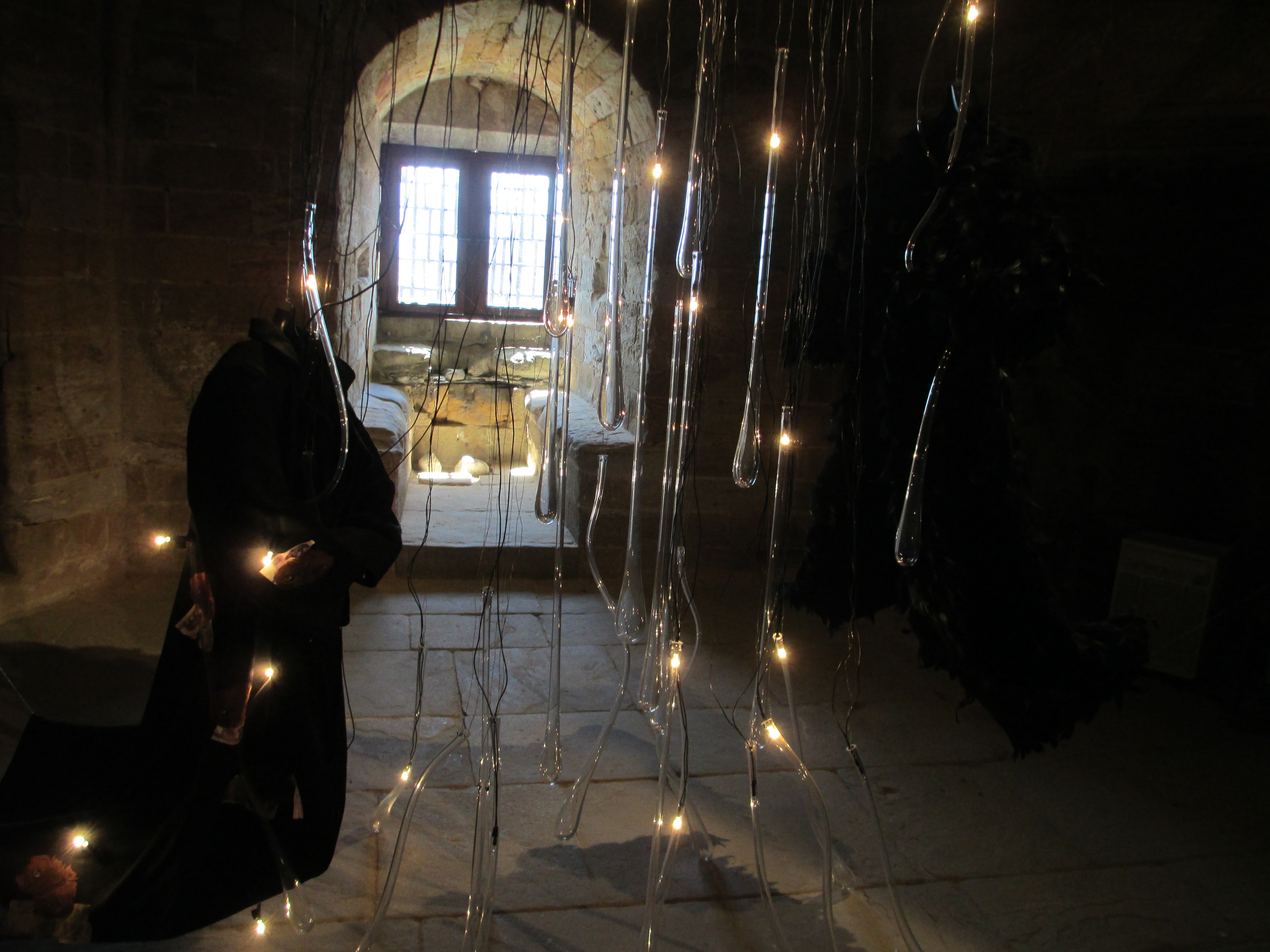
The installations below could be found inside and were both representations of people at prayer. Again repurposing an old building and using its own history for art.

IMG_9095

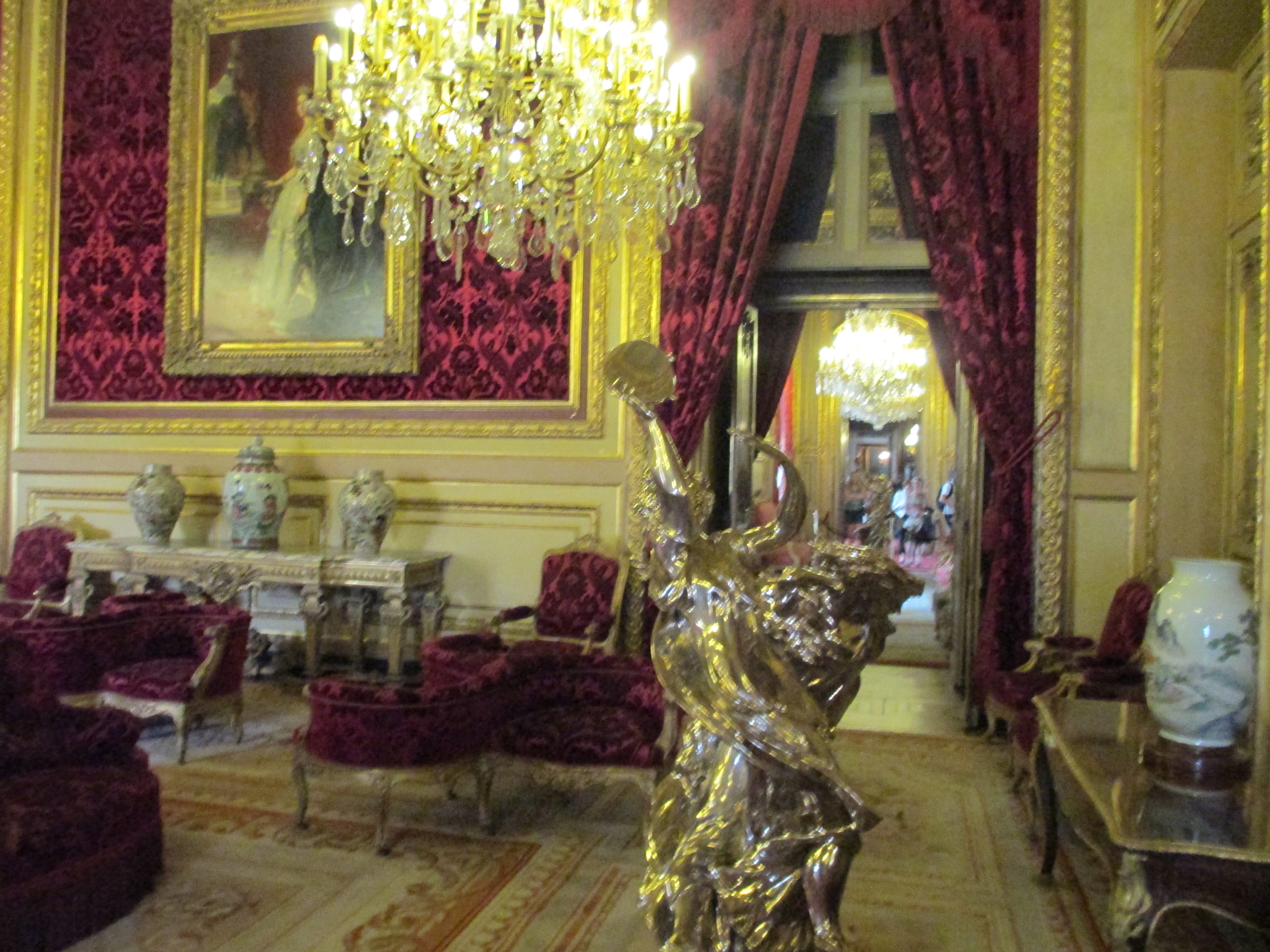
IMG_9103Fontevraud and Foix notwithstanding, probably the best known historic building repurposed for art is The Louvre itself in Paris. IMG_7023It is an ancient palace and castle and now one of the most famous art galleries in the world.  As you can see from its foundations, incidentally one of my favourite parts of The Louvre, it has been there for a long time. In fact it began its life as a fortress commissioned by Phillip Augustus to protect Paris in c. 1190. This fortress was large even for its time, with a keep measuring roughly 15m diameter and 30m in height. IMG_6997Within the Louvre itself you also have the repurposing of rooms, such as Napoleon III’s apartments, for the display of modern art. In this particular case they were integrated to simultaneously blend in with the overt opulence and to reflect it. IMG_6944 IMG_6939 IMG_6937IMG_6929

Historic buildings are not just used for static art. They are also used for performances, such as the Vivaldi concert in the stunning Sainte Chapel you can see below.  Sainte Chapel was commissioned by Louis IX, later Saint Louis, and was originally built to house his collection of holy relics. It is one of the few survivors of the full colour that would have been present in many of the larger churches and cathedrals. It also has one of the largest collections of 13th century stained glass. IMG_7918IMG_7930 IMG_7922

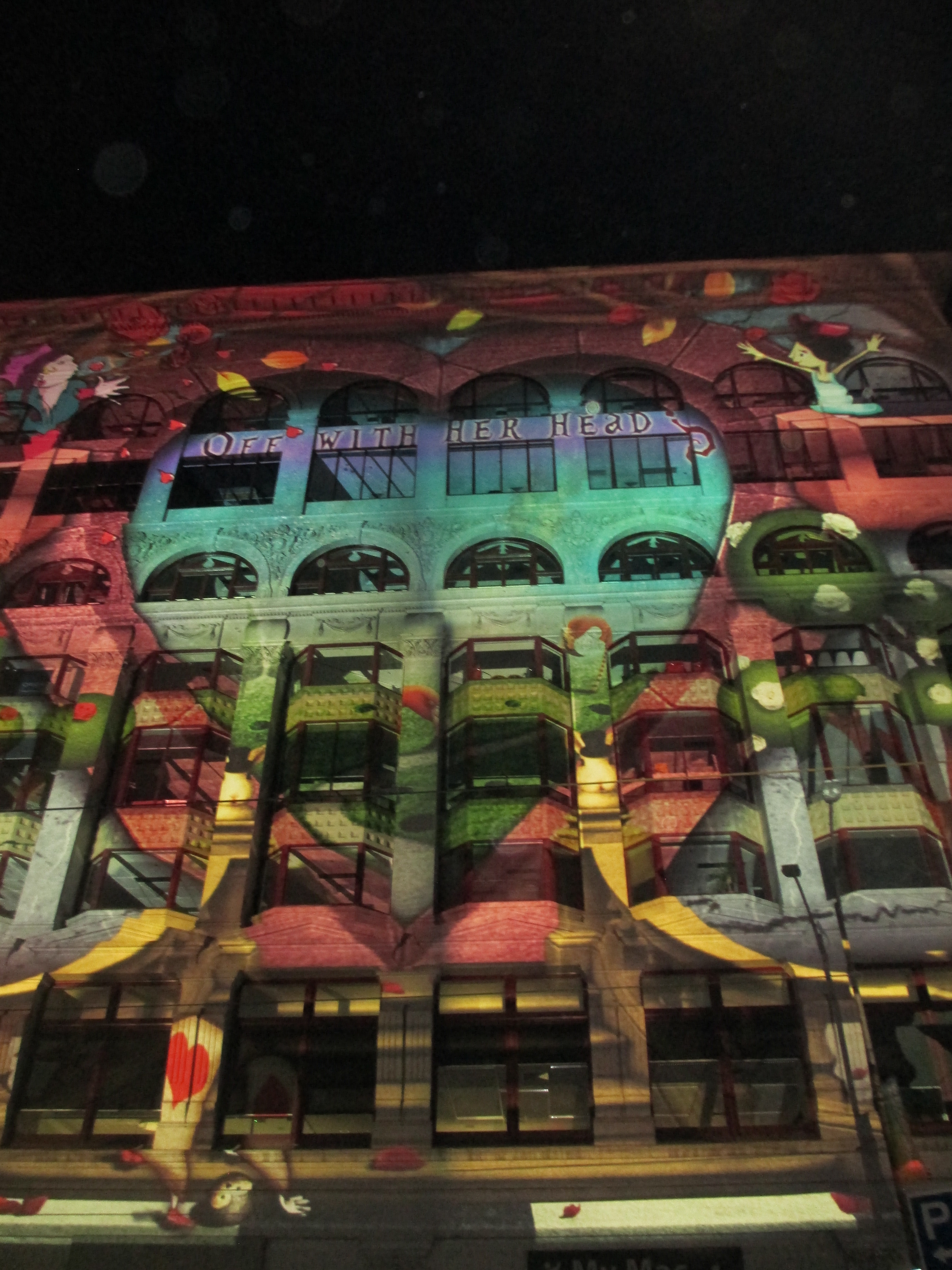
Aside from music and art installations historic buildings are becoming canvasses in their own right. This often happens in festivals such as the recent Melbourne White Night. Melbourne has many historic buildings, by historic in Melbourne I mean 1800s and early 1900s not medieval, and on White Night several come alive with astounding light and sound displays.

The State Library of Victoria is one of my favourite buildings in Melbourne. The SLV has been on its site, though in a smaller building, since it opened in 1856. The founders wanted to create a place of learning for all Victorians and a place to preserve Victoria’s heritage. It is not one building. It is actually made up of 23 individual buildings that have been repurposed and integrated over the years. In the SLV my favourite room is the Latrobe domed reading room which was opened in 1913. The dome itself is 114 feet in diameter and 114 feet high. It is a wonderful place to study or write. During a normal day it looks like this. lobBut on White Night this year, this happened.

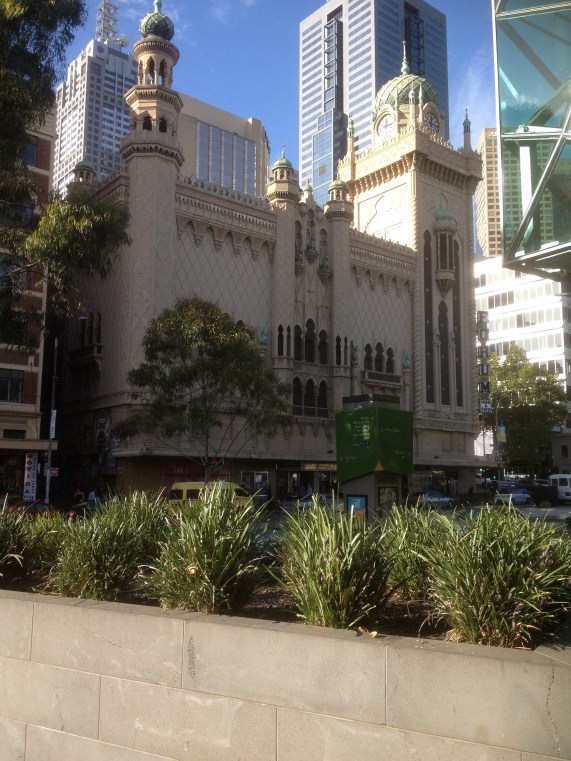
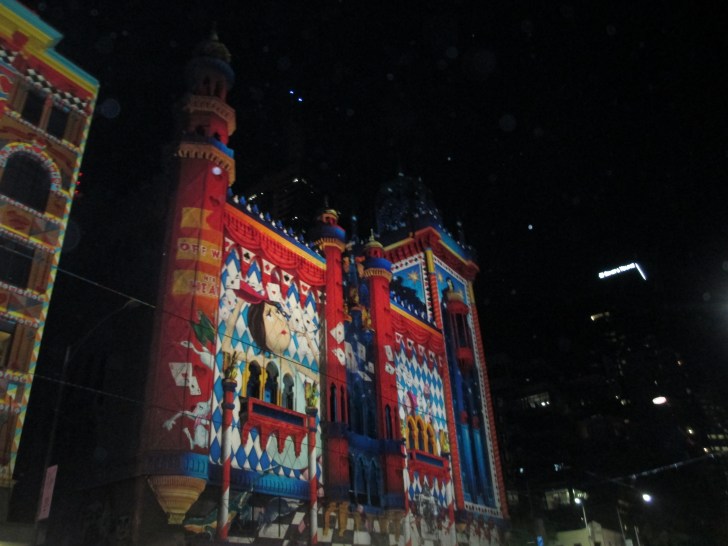
Other buildings were illuminated externally. Such as the Forum Theatre. The Forum opened in 1929 and is slightly insane in its own right even without illumination.  It was built as an immersive theater and the interior has a large number of greek and roman statues as well as a blue sky with stars. This is what is looks like normally.

Interior

IMG_0943Exterior

And this is what it and its surrounding buildings look like when they’re lit up. IMG_1186

IMG_1187IMG_1181IMG_1182 IMG_1183

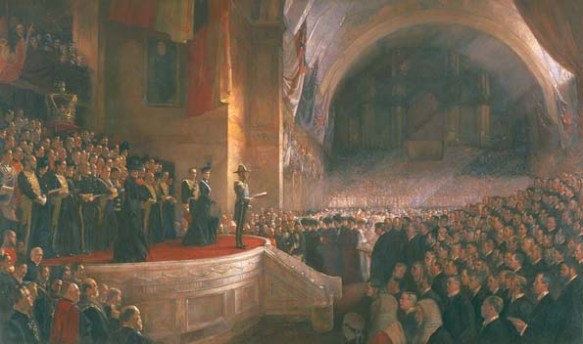
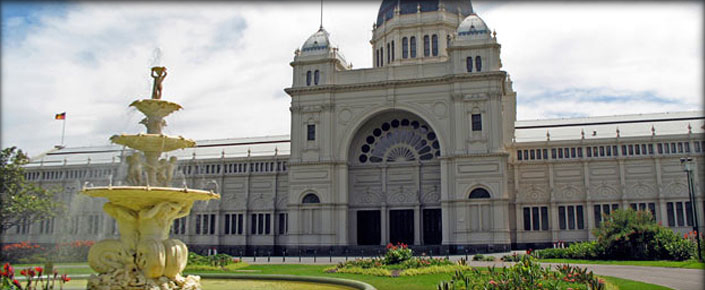
The final building I wanted to look at is in some ways the most spectacular and the most important historically. The Royal Exhibition Building in Carlton Gardens was completed in 1880 for Melbourne’s first international exhibition. It is one of the world’s oldest examples of exhibition pavilions. It was also the site of Australia’s first parliament in 1901.  The Argus described the event as.

The atmosphere was radiant and illuminated the vast spaces of the building and the great sea of faces with a bright Australian glow. A sight never to be forgotten was the assemblage which, in perfect order but with exalted feeling, awaited the arrival of the Duke and Duchess in the great avenues which branch out from beneath the vast dome of the Exhibition Building. (Argus 10 May 1901)

And it was depicted in the famous Tom Roberts painting below.

PA0013

This is what the Exhibition Building looks like during the day, a beautiful example of exhibition architecture. promo-reb-thebuilding

Below is the truly stunning work of moving modern art it became on White Night. Sorry about any talking in the background.

Historic buildings have their own story and their importance and purpose is fundamental to what they are. Integrating modern art allows whole new interpretations of the past, new ways of viewing history and art and the ability to bring these buildings to brand new audiences.

For more information see…

http://museumvictoria.com.au/reb/

http://www.aph.gov.au/Visit_Parliament/Parliament_House_Art_Collection/Tom_Roberts_Big_Picture

http://www.forummelbourne.com.au/history.php

http://www.slv.vic.gov.au/search-discover/history-our-building

http://guides.slv.vic.gov.au/content.php?pid=405532&sid=3319092

http://www.grands-sites-ariege.fr/fr/chateau-de-foix/detail/34/presentation-2

http://www.louvre.fr/en/history-louvre

The photos and videos are all mine apart from:

The inside of the Forum, which can be found at http://www.tripadvisor.com/LocationPhotoDirectLink-g255100-d258068-i46387954-Forum_Melbourne-Melbourne_Victoria.html#85255678

The Exhibition Building which can be found at http://museumvictoria.com.au/reb/

The Tom Roberts painting which can be found at http://www.aph.gov.au/Visit_Parliament/Parliament_House_Art_Collection/Tom_Roberts_Big_Picture

Richmond Castle

Richmond Castle in North Yorkshire is one of my favourites and this is at least partly due to the relatively intact St Nicholas’s Chapel which dates to the late 11th century. It was in this chapel that I came the closest I have ever come to telling off another tourist. I was standing there marvelling at the fact that it had survived, that it had the original circular windows, the original barrel vaulted ceiling and the remains of a tiny bit of the original paint. Then a woman came in with two friends and she just stood there complaining that the windows were too small and didn’t let in enough light. I didn’t tell her off, but it was a near thing.

So St Nicholas’s Chapel is where I’m going to start. It was built in the late 11th century and is an excellent, if a bit mutilated, example of a castle chapel.

st nic chap 2

In this photo you can see the beautiful round windows and the edge of the barrel vaulted ceiling. These windows would have been the backdrop to the altar and there may have been a pane of stained glass in the central window.

Around both sides of the room was a bench and an arcade with columns. The bench would have been used as a seat and although the columns have been torn away you can see the remaining stubs in the photo below.

IMGst nic chap 3_1151

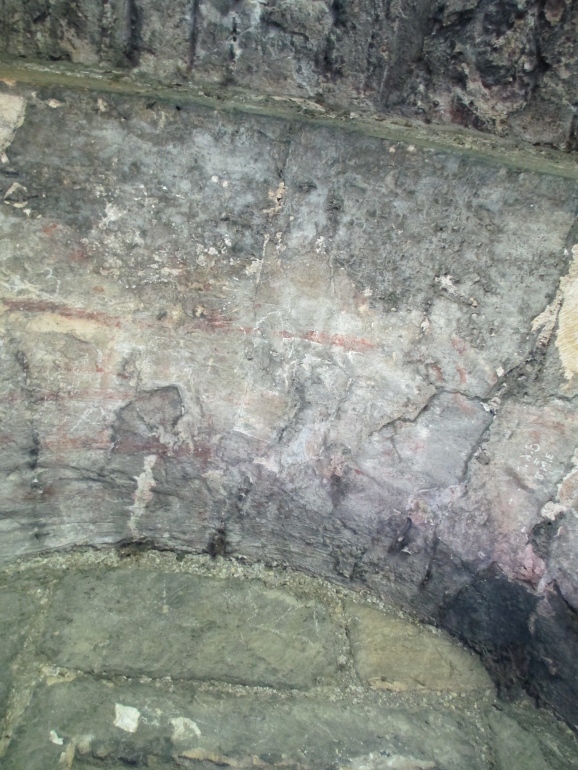
The walls would have been painted, probably in yellow or cream with red to mark out the lines of masonry. Some of the red paint survives and can still be seen, just, in the top of the arches.

st nic chap 5

St Nicholas’s Chapel is one of the earliest parts of the castle, but Richmond’s origins are a little obscure. It was definitely one of the castles erected in the aftermath of 1066, but there are conflicting sources as to exactly when it was built. It was probably founded by Alan Rufus in around 1070. He was related to the Conquerer and he’d commanded the Bretons at the Battle of Hastings. Count Alan had the earliest surviving parts of the castle built, including long stretches of the stone curtain wall, the great gateway in the ground floor of the keep and Scolland’s hall.

Scoland's hallsIMG_1147IMG_1137You can see Scolland’s Hall, the entrance to the keep at the bottom of the great tower and some of the curtain wall in the above photos.

Scolland’s Hall is itself a fascinating part of the castle. It is named after one of the constables of the castle who died between 1146 and 1150. The hall itself dates to the late 11th century making it, apart from the great tower of Chepstow Castle, perhaps the earliest surviving domestic interior in England. It is two stories and the great hall and solar would have been raised up on the first floor above the undercroft. You can see the sockets in the walls where the beams supporting these rooms would have been. IMG_1168 IMG_1167

After Count Alan died in 1089 Richmond castle passed to his two younger brothers in turn and then eventually to his nephew, who was also called Alan. He was the first to style himself as Earl of Richmond. He also married the daughter of the Duke of Brittany, harking back to the first Alan’s origins. Unfortunately Earl Alan died before he could inherit the Duchy of Brittany.  His son Conan however managed to claim it and it was Conan who probably built the great tower of Richmond Castle.

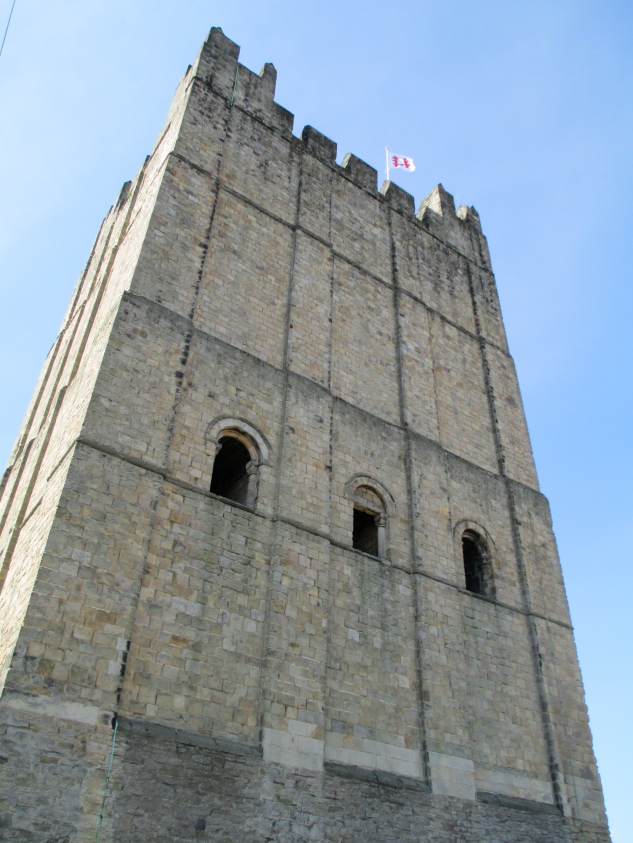
tower richmond

The Great Tower of Richmond Castle.

Unfortunately for Conan he was eventually forced to turn his Duchy over to Henry II and he betrothed his daughter Constance to Henry’s third son Geoffrey. Their marriage was a perfect example of the complexity or heiresses and marriage which I have discussed at length in an earlier postGeoffrey himself is probably my favourite of Henry II’s sons and if he hadn’t died tragically in a tournament in 1186 the 12th and 13th centuries could have been very different because John may never have been king.

The honour of Richmond was a bone of contention between Henry and Geoffrey with Henry continuing to with-hold it even after he allowed Geoffrey to marry Constance and become Duke of Brittany. Henry was never adept at sharing power and this is what largely cost him his relationship with his sons and his wife.

henry close

Henry II

The castle itself didn’t play any more major roles until 1207 when the constable Roald was at odds with King John. Roald refused to state the value of the castle’s contents for taxation purposes so King John stripped him of his office and forced him to buy it back with 200 marks and four palfreys. The castle was also caught up in the conflict when the north of England rose up against King John in 1215. There isn’t any record of a siege at Richmond when King John retaliated, but Roald was captured and kept imprisoned in the castle until 1216.

The honour and castle remained the possession of the Dukes of Brittany throughout the 12th and 13th centuries but it was repeatedly confiscated by the King and there was actually some work done on it by Henry III and Edward I. In fact it is likely that Edward I finished the so called Robin Hood Tower which stands over the St Nicholas Chapel. You can see the remains of the tower on the right.IMG_1155

By 1538 Richmond was declared derelict. It became an object of fashionable tourism in later years and was painted by many artists including Turner. It was repaired in the early 19th century to stop it actually falling down. It was leased to the army from 1854 and Baden-Powell commanded there in 1910. The castle passed to the Ministry of Works around 1931 and eventually became the property of English Heritage in 1984.

Richmond castle has a long hisory. It is a beautiful castle with some of the most interesting and early surviving castle structures in England, especially the St. Nicholas Chapel. But, if tiny scraps of possibly 11th century paint and barrel vaulting aren’t your thing then the view from the top of the great tower alone is well worth the visit.

IMG_view from the top 21132 view from the top

The information from this post comes largely from the signs at Richmond Castle and the English Heritage Guide Book. The photos are all my own.

Marriage Alliances 1180-1250: Part 4 Isabel de Clare.

One of the most interesting heiresses of the period, not in the least because she was married to William Marshal, was Isabel de Clare. Isabel’s marriage to Marshal typified the incredibly important political role that the marriage of these heiresses played. These marriages were not only used as rewards, they were used to elevate men to real positions of power. In some occasions these men could help to change the face of a country, I would argue that Marshal was one of these and his marriage to Isabel was what gave him the status to have a real political affect.

Isabel herself is a little hard to pin down. In essentials she was the perfect medieval wife possessing of great fortune and very fecund, they had ten children, but she makes her own mark in a variety of interesting ways. While the History of William Marshal can not be taken entirely at face value the sentiment that is expressed throughout the work is that Isabel was actively involved in the rule of domains that were essentially hers.
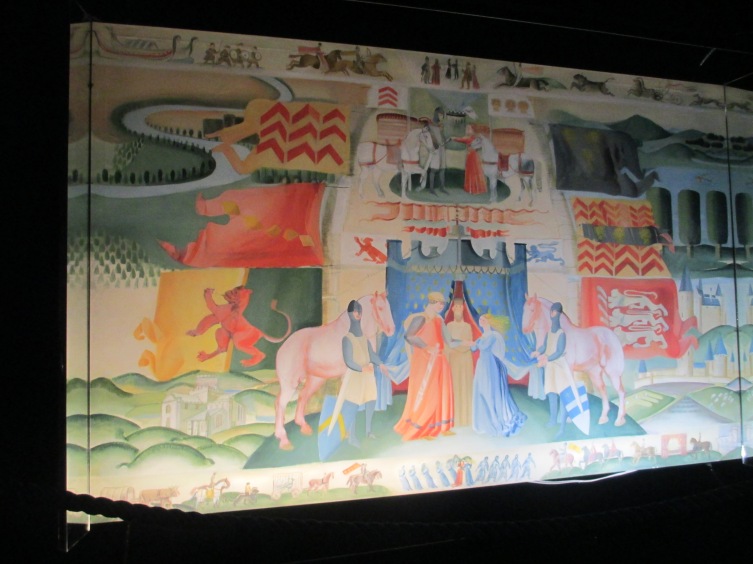
marriage of aoife and storngbow

The marriage of Marshal and Isabel de Clare as depicted in the modern  Ros tapestry in New Ross in Ireland.

Marshal’s marriage to Isabel de Clare was the most significant elevation in his life. The lands that he gained, the children that he had from the marriage and the qualities of Isabel herself were the building blocks on which Marshal’s status was established. Marriage to Isabel gave Marshal substantial and geographically diverse lands as well as titles and wealth. In comparison, materially, Marshal brought little to the marriage because he was a virtually landless knight who only had one small estate in England and probably the rents of some lands in France. He had amassed considerable wealth however from his prowess on tourney field and he was known and respected by King Richard. Isabel gave Marshal lands in England, Ireland, Wales and what is now France and these lands gave Marshal both wealth and authority.[1]  Marshal’s marriage to Isabel mean that he made an indelible mark on her lands, not the least in Ireland. The affect Marshal had on these Irish lands illustrates just how much political change the marriage of an heiress could generate.
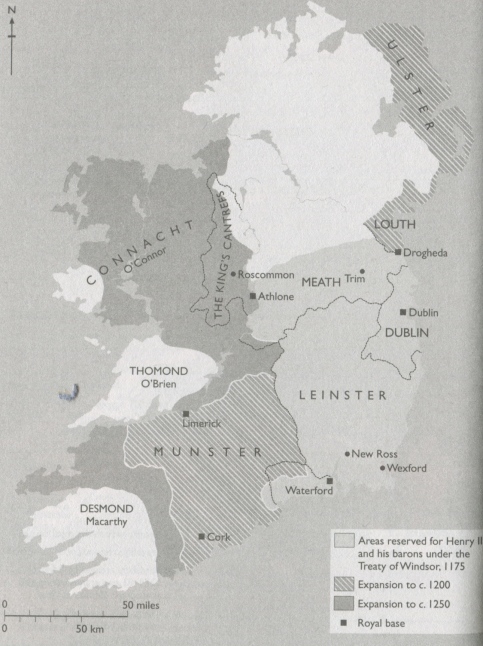
medieval irelandjpeg


Ireland under the Normans. You can see Leinster, Marshal’s lands, on the right.

David Carpenter, The Struggle for Mastery: Britain 1066-1284, London: Penguin Books, 2004, p. xx.

 Isabel’s Irish lands came to her from her father Earl Richard de Clare, known as Strongbow, who had gained them by force, and through her mother Aoife, the daughter and heiress of King Dermot MacMurchada of Leinster who was deposed as king in 1166.[1] Strongbow was a leader in a force spearheaded by English lords who won Leinster back for King Dermot. They were given permission to do so by their king Henry II in a letter recorded by Giraldus Cambrensis c. 1166. This was the beginning of the English occupation in Ireland.[2] The rewards Dermot gave Strongbow in return for his services were recorded in the relatively contemporary poem The Song of Dermot and the Earl: his daughter Aoife in marriage and his kingdom after his death. Dermot died in 1171.[3]
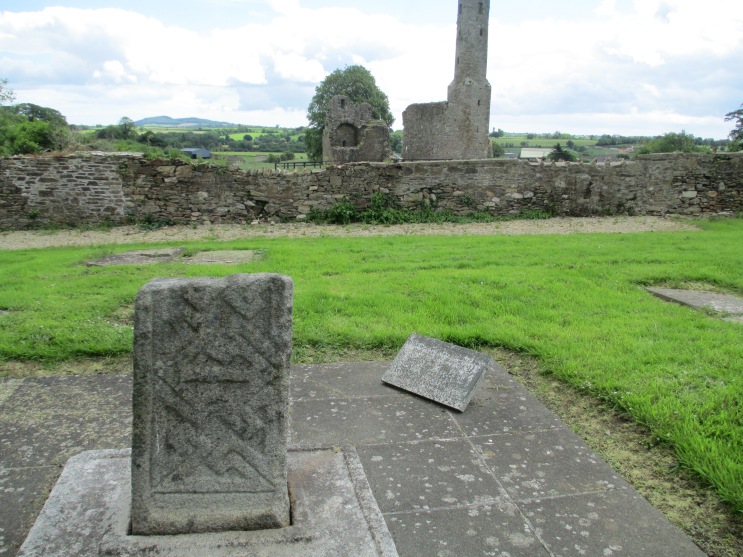
 

Diarmut grave


Dermot’s grave in Ferns, Ireland.

Strongbow died in 1176 leaving a son and daughter too young to inherit and so Leinster was in the hands of the Crown until Strongbow’s son came of age. The son, Gilbert, died as a minor in 1185 and thus Isabel de Clare inherited everything. Marshal on marrying Isabel gained lordship of her entire estate.[4] Trouble could be expected from the local Irish population who were not likely to welcome a new overlord. These peoples included the English lords who had been settled there for more than a decade and the original Irish lords. Marshal faced an uphill challenge in controlling and developing Leinster and it was one at which he certainly succeeded

On taking possession of Leinster Marshal sent deputies but did not go himself until c. 1201, and then only for a brief visit. The Irish Annals found in The Chartularies of St Mary’s Abbey in Dublin recorded that Marshal was in Ireland c. 1201.
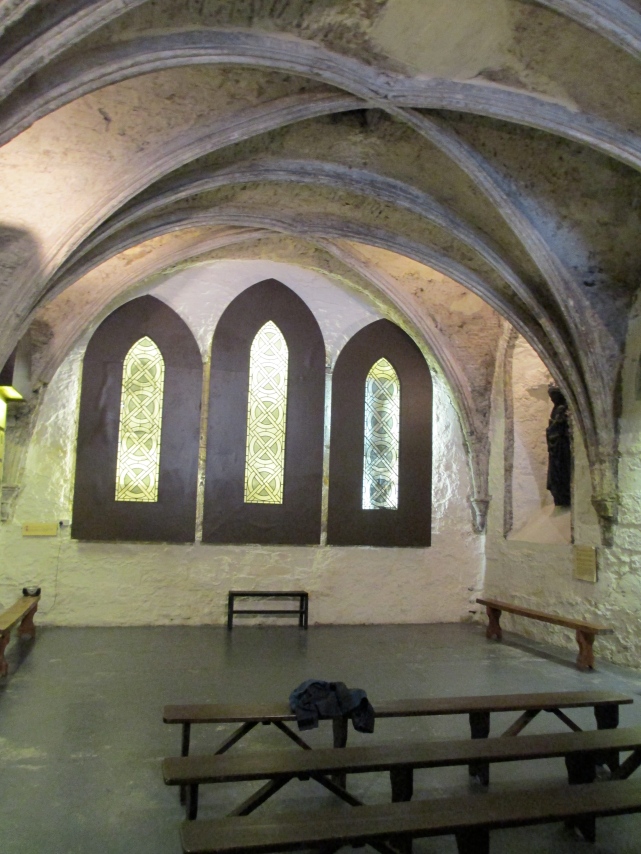
st mary's dublin

All that remains of St Mary’s Abbey in Dublin.

They said that he came in a storm and, in thanks to God for his survival on the unforgiving Irish Sea, he founded the abbey of Tintern Parva.[5]
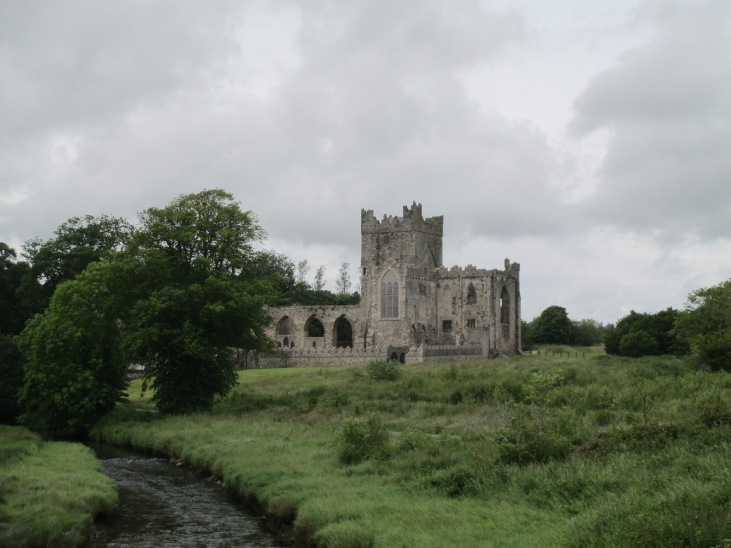
tintern parva

Tintern Parva on the Hook Head Peninsula in Ireland.
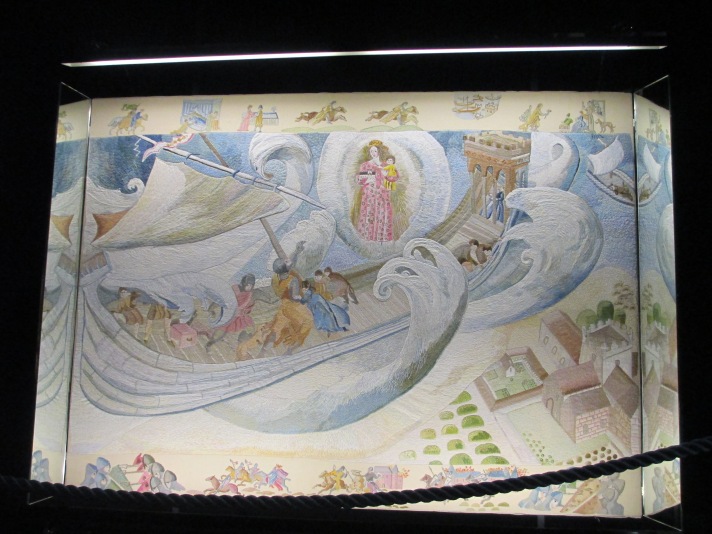
ship on the way to ireland

Depiction of the near disaster on the Irish Sea from the Ros Tapestry.

Marshal returned to Ireland in c. 1207 and faced rebellion, mainly from Meyler Fitz Henry. Fitz Henry was one of the original settlers, a bastard grandson of Henry I and had been appointed Justiciar of Ireland, ruler in the king’s absence, by King John. He was tenant in chief of some small fiefs, most of which he held from Marshal. Fitz Henry and Marshal were in repeated conflict and King John involved himself in Fitz Henry’s favour. Fitz Henry led many battles against Marshal’s lands both when Marshal was in Ireland and when he was not.[6] As can be seen in two charters from King John in 1216 Marshal ultimately managed to prevail and found his way back to John’s favour with Fitz Henry disgraced. The first granted Marshal Fitz Henry’s fees, a form of rent or tax, in Marshal’s own lands. The second said that if Fitz Henry should die or take the habit Marshal was to receive Fitz Henry’s fees in the Justicary’s jurisdiction, which effectively disinherited Fitz Henry’s son.[7]

As well as exercising control Marshal was responsible for developments such as the port town of New Ross. Marshal began New Ross, which still exists today, in c. 1207.[8] Once it was established, Marshal set about making it a viable port town. When he was back in favour with King John, c. 1212, Marshal negotiated to ensure that shipping could continue through Waterford and onto New Ross. Waterford was the main port and the Crown had controlled it since 1171.[9] Marshal needed his own port and New Ross suited well because of its deep harbour, river access to the heart of Leinster and links with nearby lordships.[10]
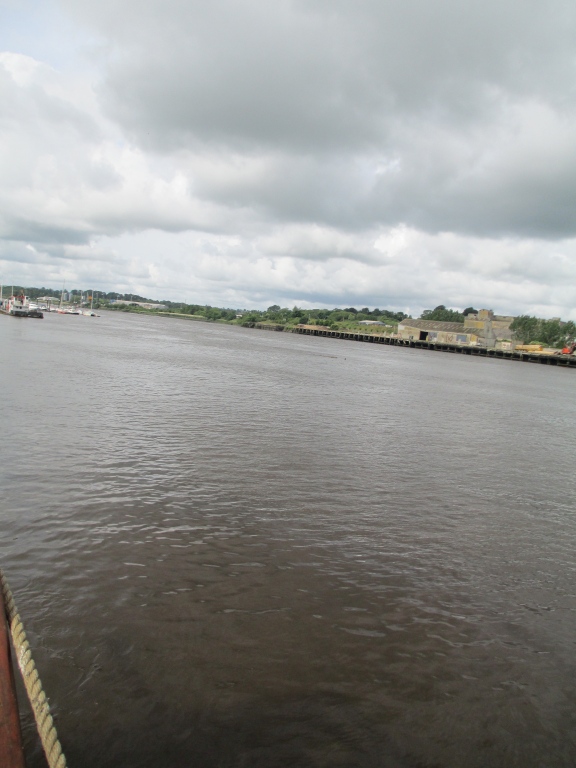
river new ross

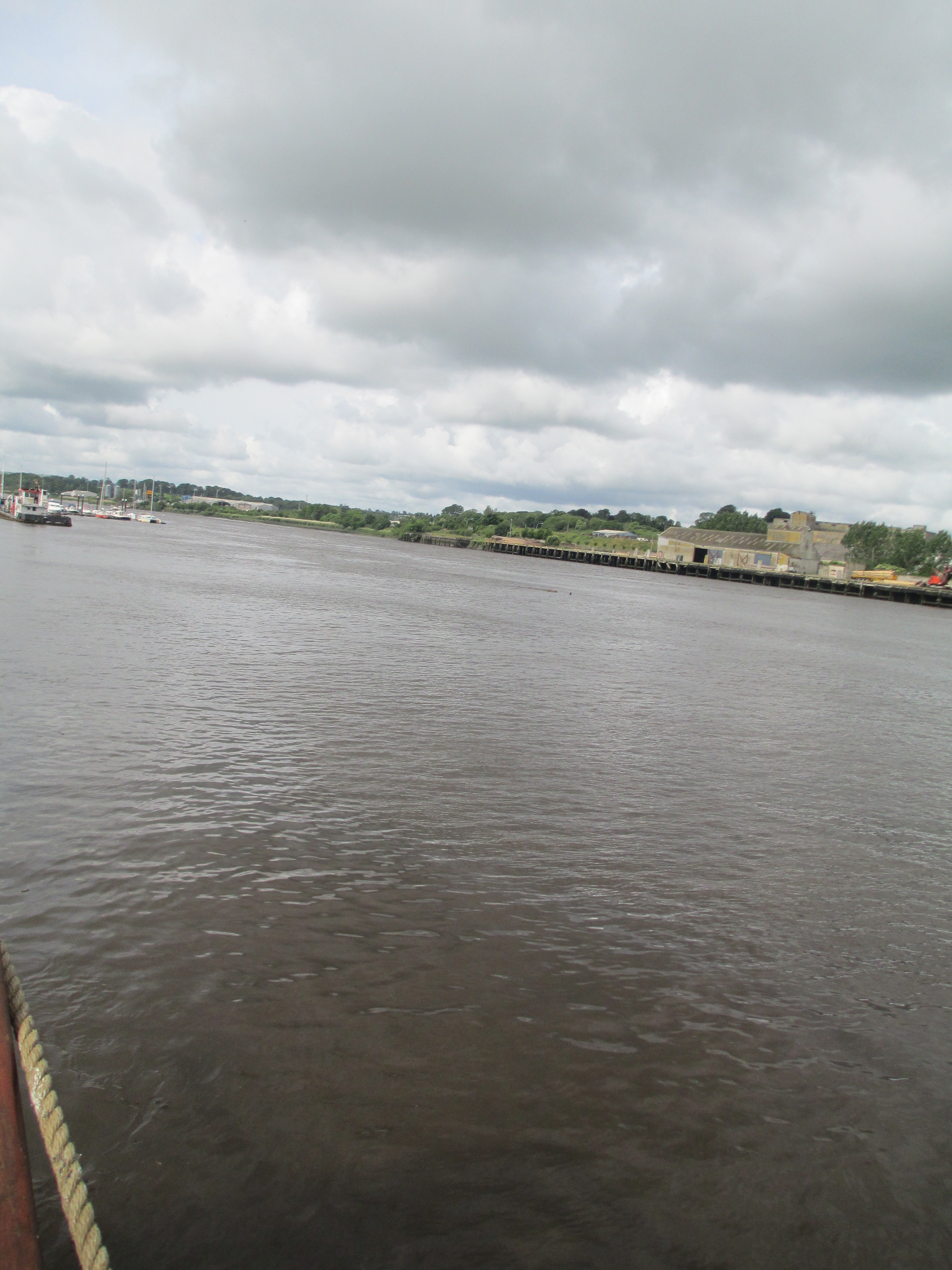
 The Barrow river in New Ross.

New Ross is only one of the building and consolidation projects that Marshal undertook in his Irish lands during his lordship. He established other towns and also built a number of castles. He made settlements on the edges of nearby counties, retook land that had been previously lost and established monastic foundations and built a lighthouse which still stands today.
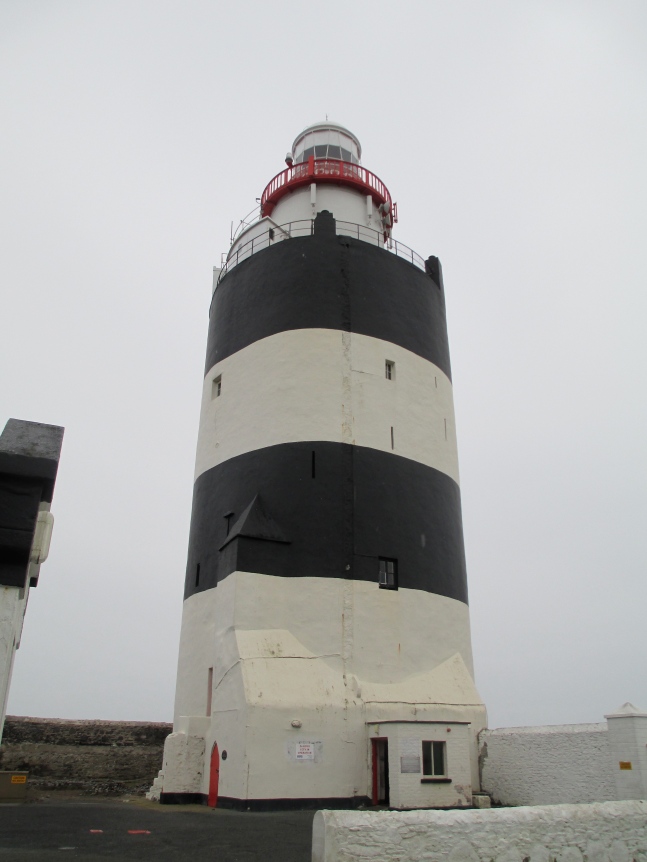
lighthouse

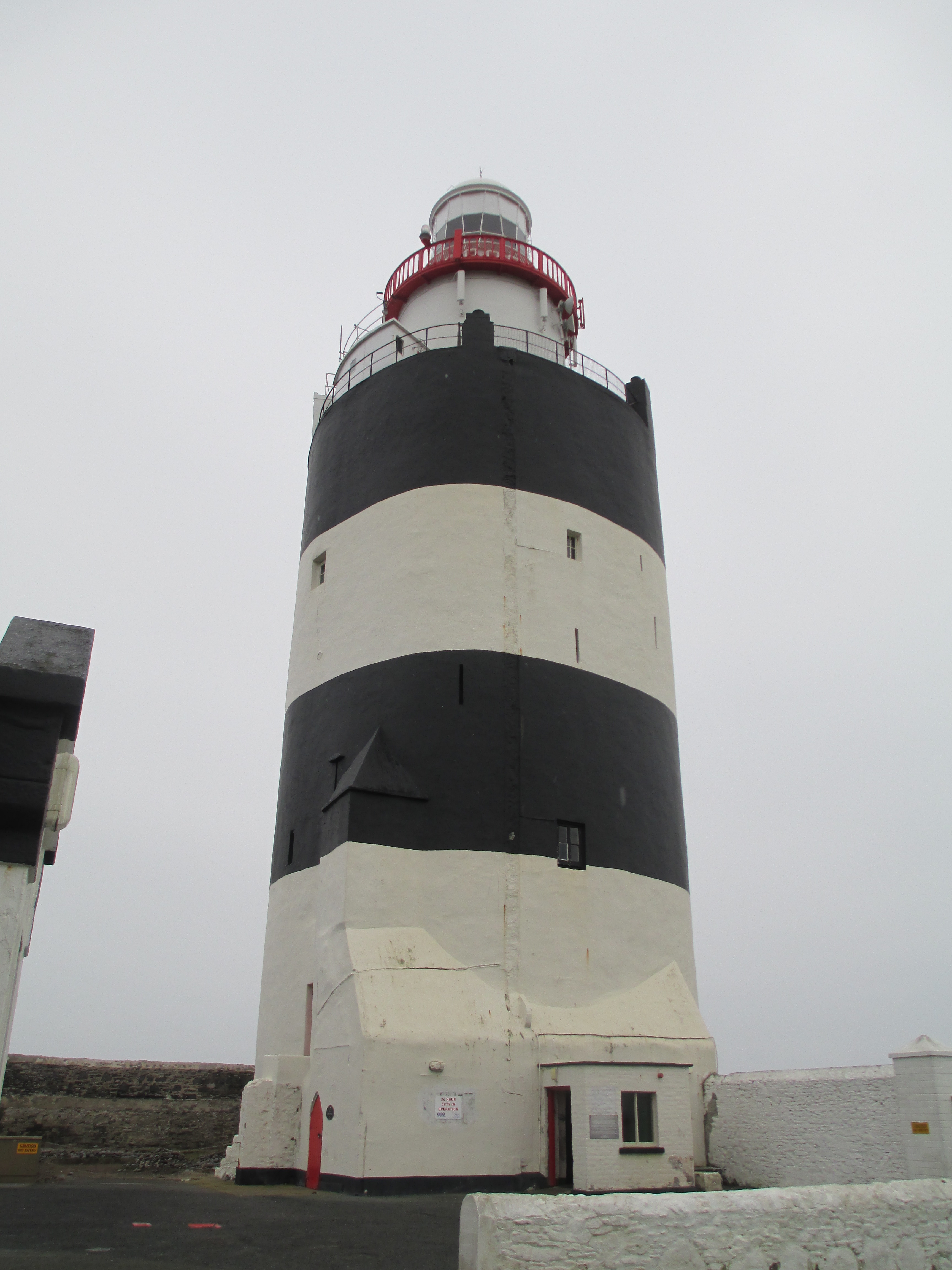
 Marshal’s lighthouse on the Hook Head Peninsula.
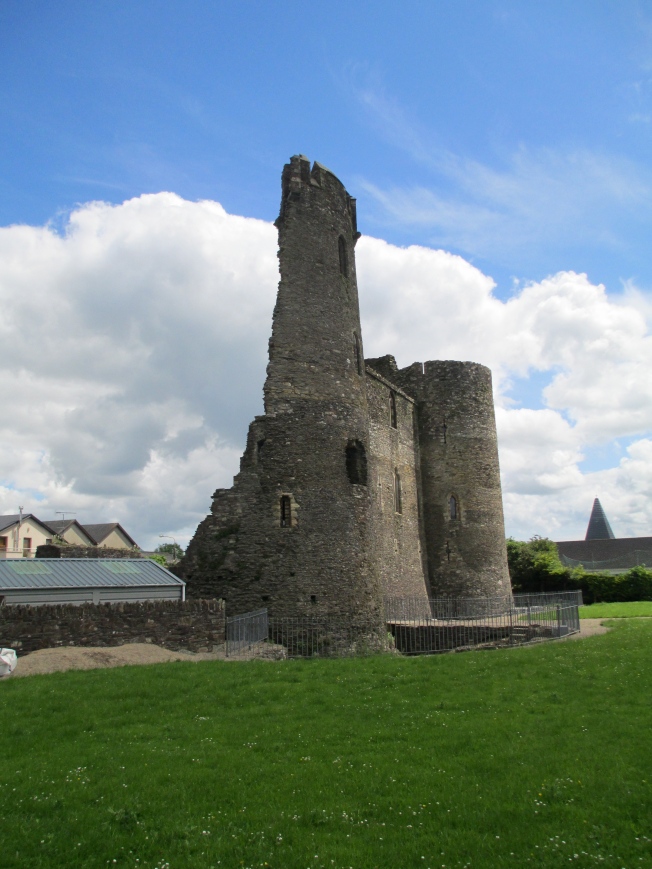
ferns castle irland

Ferns Castle which Marshal also built.

Marshal also took over lands that had lacked any kind of central authority because the Crown had run them for many years from a distance.[11] Marshal managed to establish a strong and stable lordship, despite the fact that he was so caught up in English affairs. This administrative skill ensured that he maintained his position as Lord of Leinster, as well as his other lands, and that he was sufficiently influential and experienced to become first the Earl of Pembroke, a title which he came to through right of Isabel, under King John in 1199 and then Regent in 1216.
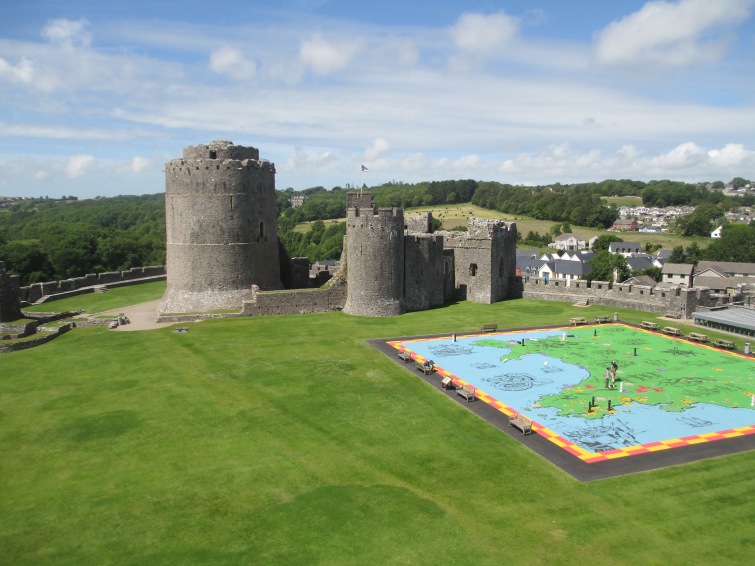
IMG_5435

Pembroke Castle in Wales.

When Marshal married Isabel de Clare he became one of the most influential barons of his time because the marriage laws meant he became ruler of everything that was hers. When it came to marriage, a woman’s lineage, her family and connections, were as important as her lands. In Marshal’s case through Isabel he gained the physical lands themselves but also the eminence of her background as the daughter of an earl and the granddaughter of a King of Ireland.

Lineage and land were not all that Marshal gained from his marriage because the couple also had ten children, five sons and five daughters, all of who survived to adulthood.[12] All five daughters married influential and high ranking noblemen and only the youngest, Joan Marshal, was unmarried when her father died.[13] This gave Marshal alliances in a variety of noble families, another use for heiresses, and helped to give him the support he needed to stay in power even when he was out of favour with King John. It is due to his eldest son William that his memory survives today in such detail because it was he who commissioned the History. Marshal achieved what eluded many prominent landholders of his time because he had five sons thus having multiple heirs. When Marshal died his authority and legacy seemed safe and his position solidified, which must have made reaching the top of his society seem worthwhile because he had been able to protect all his family and to pass on what he created secure in the knowledge of its survival. Success in this time was intended to be dynastic rather than just personal. Unfortunately this was not to come to pass because, although Marshal never knew it, his sons all died childless and his lands were dispersed.[14]
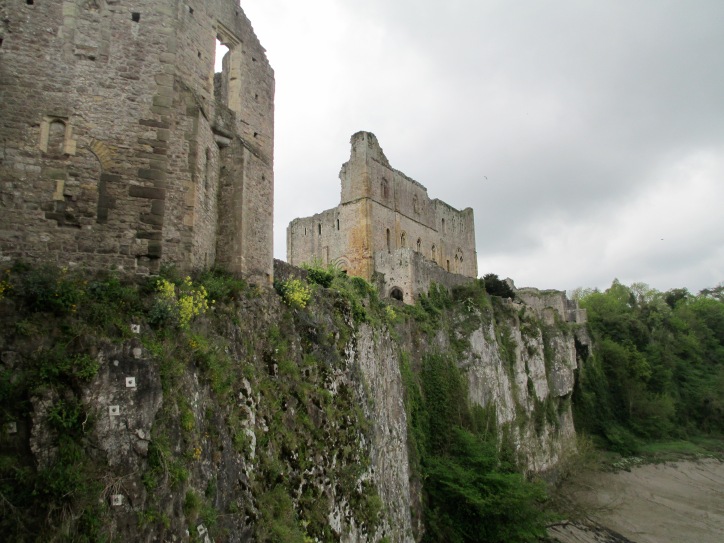
 

Chepstow Castle Wales

Chepstow Castle which Marshal gained from marriage to Isabel. He also built significant proportions of it.

Children, lineage and land aside, Isabel as a person and the role she played in the marriage and thus in Marshal’s ascent is much harder to define but just as vital and fortuitous. Isabel came to the marriage probably in her late teens while Marshal was in his early forties. Despite the age difference by all accounts she was an active participant in the marriage and in the governing of the lands. If she had not been it is unlikely that Marshal would have succeeded so well in holding together his disparate domains. She was not only his entrée into the high aristocracy, but her support was important to the retention of his authority. There may have been no legal repercussions if Isabel had not supported Marshal, but the people he ruled were her vassals and would have been more likely to rebel against their new untried lord without Isabel’s support.

Marshal trusted Isabel and her abilities enough to leave her in an administrative position in Ireland c.1207 during the fragile military and political situation, when King John forced him back to England. Before returning to England in c. 1207 the History reports that he said to his men.

My Lords, here you see the countess whom I have brought here by the hand into your presence. She is your lady by birth, the daughter of the earl who graciously, in his generosity, enfieffed you all, once he had conquered the land. She stays behind here with you as a pregnant woman. Until such time as God brings me back here, I ask you all to give her unreservedly the protection she deserves by birthright, for she is your lady, as we well know; I have no claim to anything here save through her.[15]

While it is very unlikely that he spoke these exact words the sentiment is clear. Isabel was Marshal’s key to ruling.

Isabel was a potent symbol to Leinster. She was the daughter of the Princess of Leinster and the granddaughter of its last king, which would have pleased the Irish lords. She was the daughter of Richard Strongbow who had been responsible for establishing many of current English lords, or at the least their fathers, in their lands in Leinster and because she was pregnant she represented the future of the lordship. By leaving her behind Marshal had a reasonable chance that many of his lords would cleave to her and thus his cause, which would leave him free to deal with King John.

Isabel proved a very able defender of Marshal and their lands in Ireland. Almost as soon as Marshal left, she found herself embroiled in war and by 1208 she was besieged in Kilkenny castle and “she had a man let down over the battlements to go and tell John of Earley that it was the very truth that she was besieged in Kilkenny.”[16] John of Earley came and Isabel’s men were victorious. It was also Isabel with whom Meyler Fitz Henry first made peace and it was recorded in History that “he [Fitz Henry] had made peace first with the countess and then with the earl’s men, and … he had given his son Henry as a hostage for his inheritance.”[17] Isabel was very much in command of the defence of her lands even if she could not physically lead men. Isabel was a unifying figure because of her lineage and without her presence in Ireland and her willing participation Marshal could have easily lost Ireland while he was trapped at John’s court.
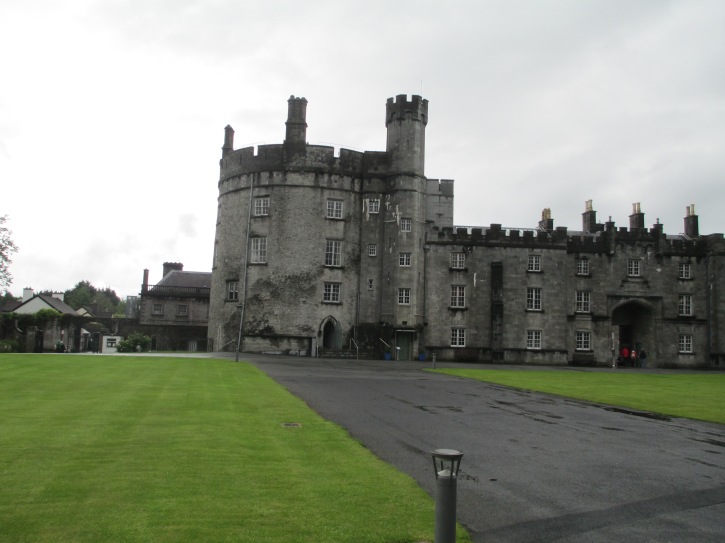
kilkenny

 Kilkenny Castle as it is today.

Defending her lands was not Isabel’s only involvement because she was also engaged in their creation and improvement. Marshal took the fact that his only claim to the lands was through Isabel very seriously because he made many developments in Leinster with charters that had Isabel’s ‘counsel and consent’ recorded on them.[18] According to Cóilín Ó Drisceoil there is a tradition that Isabel had been heavily involved with making the decision to locate the foundation of the town of New Ross on the Wexford bank of the Barrow River. This was not necessarily the most practical bank on which to build a town, as it was steep and required the building of one of the longest bridges in medieval Ireland. It was perfect however from a political point of view because Wexford was the centre of the former Kingdom of Leinster.[19] The earliest written mention of the tradition of Isabel’s involvement in New Ross’s foundation was in the 1607 work Britannia by William Camden.[20] Isabel understood the political imperatives in building a new city and made sure that they were carried out correctly. She also helped to ensure that Marshal remained lord of all their other lands as well because unlike other noble wives she commonly travelled with him throughout their domains and was involved in their governance. She was the symbol by which Marshal governed as well as an active participant.
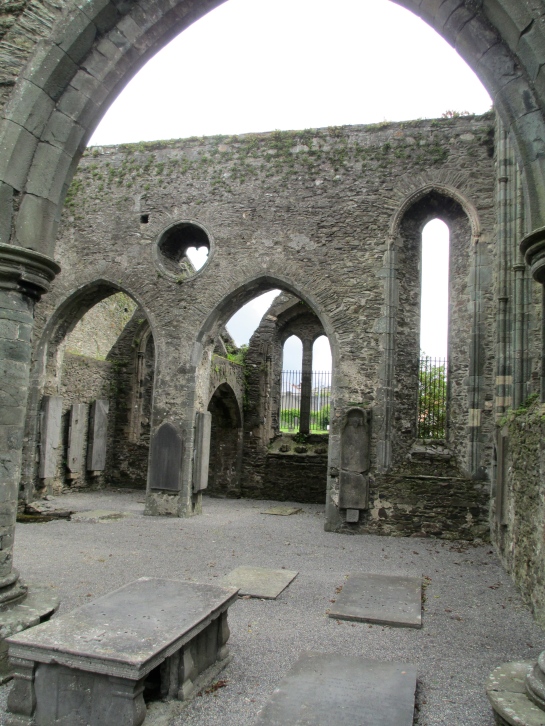
st mary's New ross

 St Mary’s Abbey which Marshal and Isabel built in New Ross.

Marshal and Isabel’s match seems to have become one of love. This was exemplified by the way Isabel behaved during and after Marshal’s prolonged death. Marshal first began to fall ill around the end of January 1219 and it took him until midday on May 14th 1219 to actually die.[21] A very moving picture of Isabel just after his death was painted in History “whilst mass was being sung it was observed that the countess could not walk without danger of coming to grief, for her heart, body, her head and limbs had suffered from her exertions, her weeping and her vigils.”[22] This was a final testament to a woman who had stood strongly by Marshal throughout much of his life and his protracted death and had continued to love him. Isabel died only a year later and was buried at Tintern Abbey in Wales.
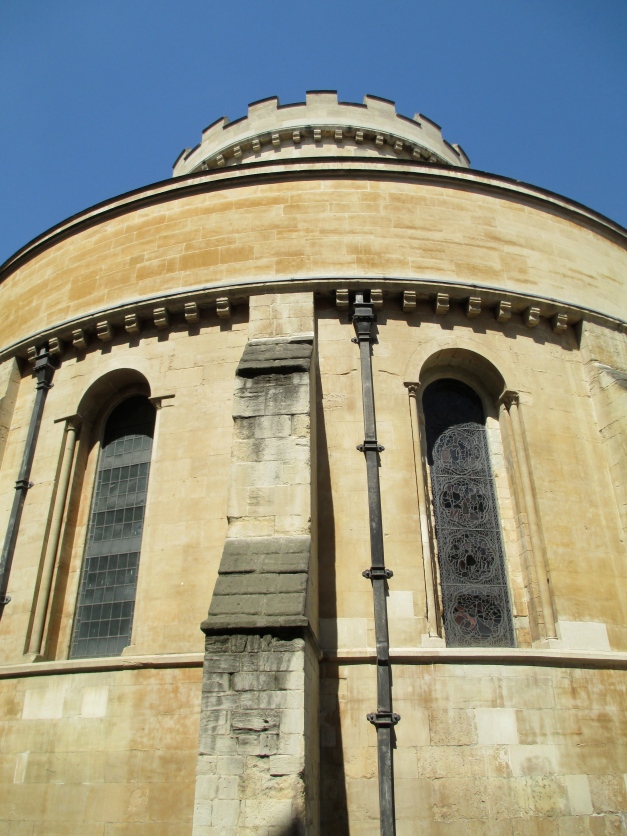
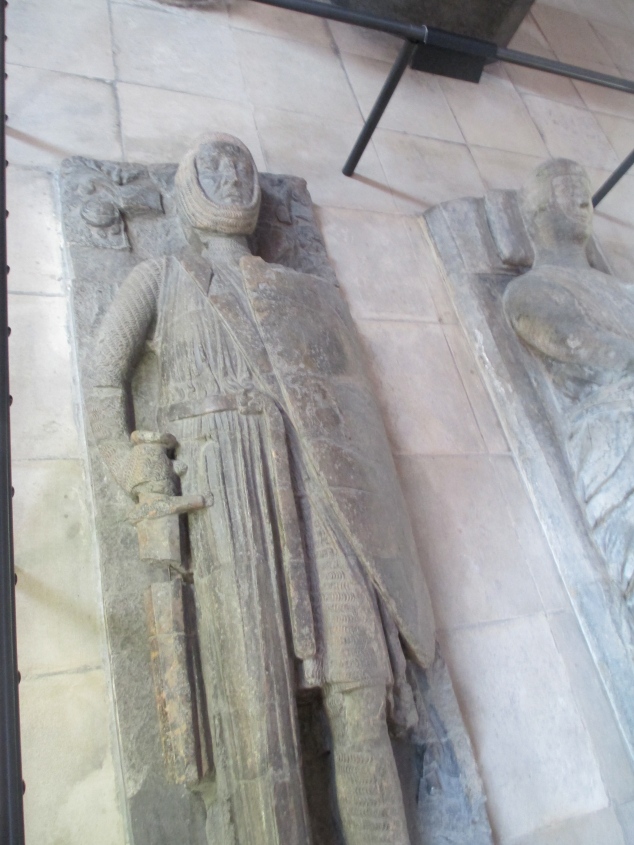
temple churchIMG_3419

The Temple Church in London where Marshal was burried and his effergy.
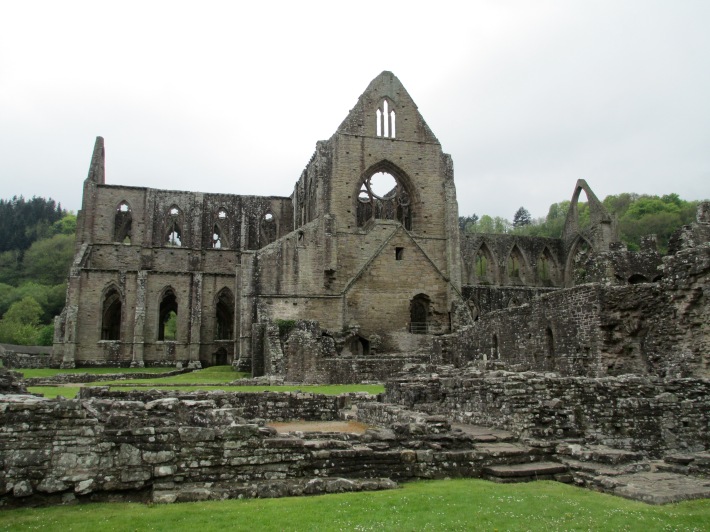
tinturn abbey

Tintern Abbey in Wales where Isabel was burried, no trace of her burial remains.

Marshal was given Isabel as a reward and as a way of binding a skilled warrior and an admired man to the new King Richard I in 1189. The authority bestowed on him by this land and the wealth he acquired through marriage meant that he had the ability to make an indelible mark on England. When King John died in 1216 he left a country in turmoil with many of the country’s barons in rebellion. The then approximately 70 year old Marshal was made Regent for the nine year old Henry III and under his direction the country was brought back from the brink and Henry III’s kingship saved. The situation was dire enough to prompt Marshal to declare, according to the History, when he assumed the Regency that “if all the world deserted the young boy, except me, do you know what I would do? I would carry him on my shoulders and walk with him thus,” “ and never let him down from island to island, from land to land.” [23] Marshal was the head of the government who defeated the rebellious barons and the French Prince Louis, later Louis VIII, who was the barons’ candidate for the throne of England.[24] Marrying wards to loyal followers as rewards was a long held practice and one that continued. Much of the time it had little overall effect, however on occasion it elevated a man such as Marshal to a prominent position in society which enabled them to have a far-reaching consequences on the political situation, often in multiple countries.

This will for the moment be the end of my series of noble marriages. I may come back to it at a later date.

All the photos, obviously baring the map at the beginning, are mine.


[1] Catherine A. Armstrong, William Marshal Earl of Pembroke, Kenneshaw: Seneschal Press, 2006, pp. 60-61.

[2] Giraldus Cambrensis, The Conquest of Ireland, (trans.) Thomas Forster, Cambridge: Parenthesis Publications, 2001, p. 13.

[3] Anonymous, The Song of Dermot and the Earl, (ed.) & (trans.) Goddard Henry Orpen, Oxford: the Clarendon Press, 1892, pp. 19-27.

[4] Armstrong, Earl of Pembroke, p. 77.

[5] John T. Gilbert, (ed.) Chartularies of St Mary’s Abbey Dublin with The Register of its House at Dunbrody and Annals of Ireland, Volume II, London: Longman and Co, 1884, pp. 307-308.

[6] Sidney Painter, William Marshal: Knight Errant, Baron and Regent of England, Baltimore: John Hopkins Press, 1933 pp. 145-146.

[7] H.S Sweetman, (ed.) Calendar of Documents, Relating to Ireland, 1171-1251, London: Longman and Co, 1875, p. 106.

[8] Cóilín Ó Drisceoil, “Pons Novus, villa Willielmi Marescalli: New Ross, a town of William Marshal” in John Bradley & Cóilín Ó Drisceoil, (eds) William Marshal and Ireland, Dublin: Four Courts Press, pp. 8-9. A note about this particular text. I am unsure what is happening with the publication of this text. I was very kindly sent advanced chapters and given clear permission to use them for reference in my thesis. I feel that as the sections of this post in which I am using this information are almost verbatim from my thesis that this permission should extend to this post. I am endeavouring to discover what has happened to the publication of this book, but it seems as if it may have actually fallen through, I’m not sure. I still think the information is worth including though.

[9] Sweetman, (ed.) Ireland, p. 99.

[10] Ó Drisceoil, “New Ross” in Bradley & Ó Drisceoil, (eds) William Marshal and Ireland, pp. 10-11.

[11] Adrian Empy, “The Evolution of the Demesne in the Lordship of Leinster: the Fortunes of War or Forward Planning?” in Bradley & Ó Drisceoil, (eds) William Marshal and Ireland, pp. 36-38.

[12] T.L Jarman, William Marshal: First Earl of Pembroke, Oxford: Basil Blackwell, 1930, p. 99.

[13] Anonymous, History of William Marshal, (ed.) AJ. Holden, (trans.) S. Gregory & (notes.) David Crouch, Volume II, London: Anglo-Norman Text Society, 2002. pp. 410-411.

[14] Matthew of Westminster, The Flowers of History: Especially as they Relate to the Affairs of Britain from the Beginning of the World to the year 1307, (ed.) & (trans.) C.A. Yonge, Volume II, London: AMS Press, 1968 , pp. 257-258.

[15] History, Volume II, pp. 177-179.

[16] History, Volume II, p. 193.

[17] History, Volume II, p. 195.

[18] Ó Drisceoil, “New Ross” in Bradley & Ó Drisceoil, (eds) William Marshal and Ireland, pp.11-12.

[19] Ó Drisceoil, “New Ross” in Bradley & Ó Drisceoil, (eds) William Marshal and Ireland, pp. 9-11.

[20] William Camden, Britannia, (trans.) Phillemon Holland, at http://www.philological.bham.ac.uk/cambrit/irelandeng1.html#ireland1, accessed 05/12/14.

[21] David Crouch, William Marshal, Knighthood, War and Chivalry, 2nd ed, London: Pearson Education, 2002, pp. 138-140.

[22] History, Volume II, p. 453.

[23] History, Volume II, p. 287.

[24]D.A Carpenter, The Minority of Henry III, Los Angeles: University of California Press, 1990, pp. 17-64.

A Very Historical Door.
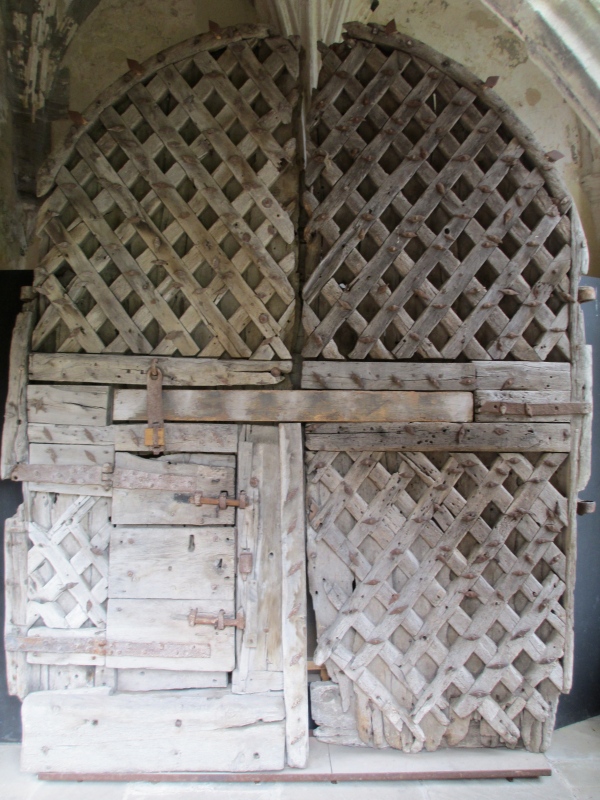
doorThis door is to be found in Chepstow Castle in Chepstow (called Striguil in the 12th century) in Wales. The door dates from the 12th century. While this in itself makes the door interesting, how it was discovered and what it meant adds even greater significance. This door hung in the doorway of the main gatehouse of the castle.
IMG_2519

The building of the gatehouse can be dated with reasonable certainty to  the rule of William Marshal. Marshal gained the castle in 1189 through  marriage to Isabel de Clare. This can be surmised for three main  reasons.

1. A Short Cross Silver penny of Henry II  was found in the foundations of the gatehouse. These pennies weren’t minted until the mid 1180’s.

2. The wood of the doors was dated using dendrochronology to an estimated felling date of between 1159 and 1189.

3. Pre 1189 the castle was in the hands of the crown as part of a wardship, held by Henry II, until its heiress Isabel de Clare married. Thus Henry II had no incentive to build a huge gatehouse at a castle which he was going to have to hand over to Isabel’s husband.

This is where it gets interesting. Marshal most likely built the gatehouse shortly after he became Lord of Striguil. There is no way he should have had the funds for such an impressive construction, because prior to his marriage he only had a very small landed estate. So where did the money come from?  Marshal was known as the most successful tourney knight of his age, but the fact that he had the resources to at least begin the construction of the gatehouse show he must have been truly spectacular.

Information sourced from

Richard Avent & Dan Miles, “The Main Gatehouse” in Rick Turner & Andy Johnson, (eds) Chepstow Castle, Its History and Buildings, Logaston: Logaston Press, 2006, pp. 51-62, pp. 52-53.