
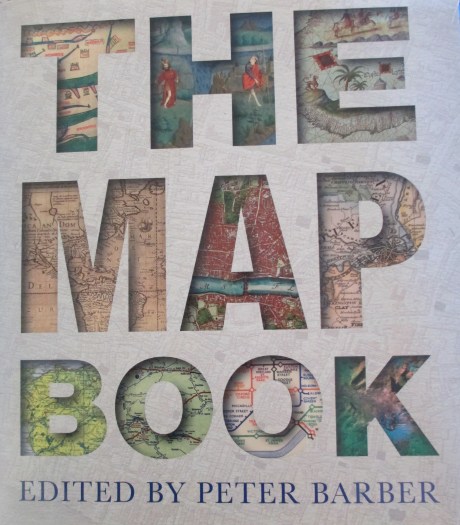
The Map Book is a fascinating chronological journey throughout the history of maps. It begins in 1500BC with fossilised prayers.
 It concludes with modern satellite images from 2005.

This book has many gems all of which are worth a look, but I’m going to focus on a handful of my favourites.
I will begin in the middle of the chronological line and work backwards.
The first map I wanted to talk about is the 1521 map of the City of Augsburg.

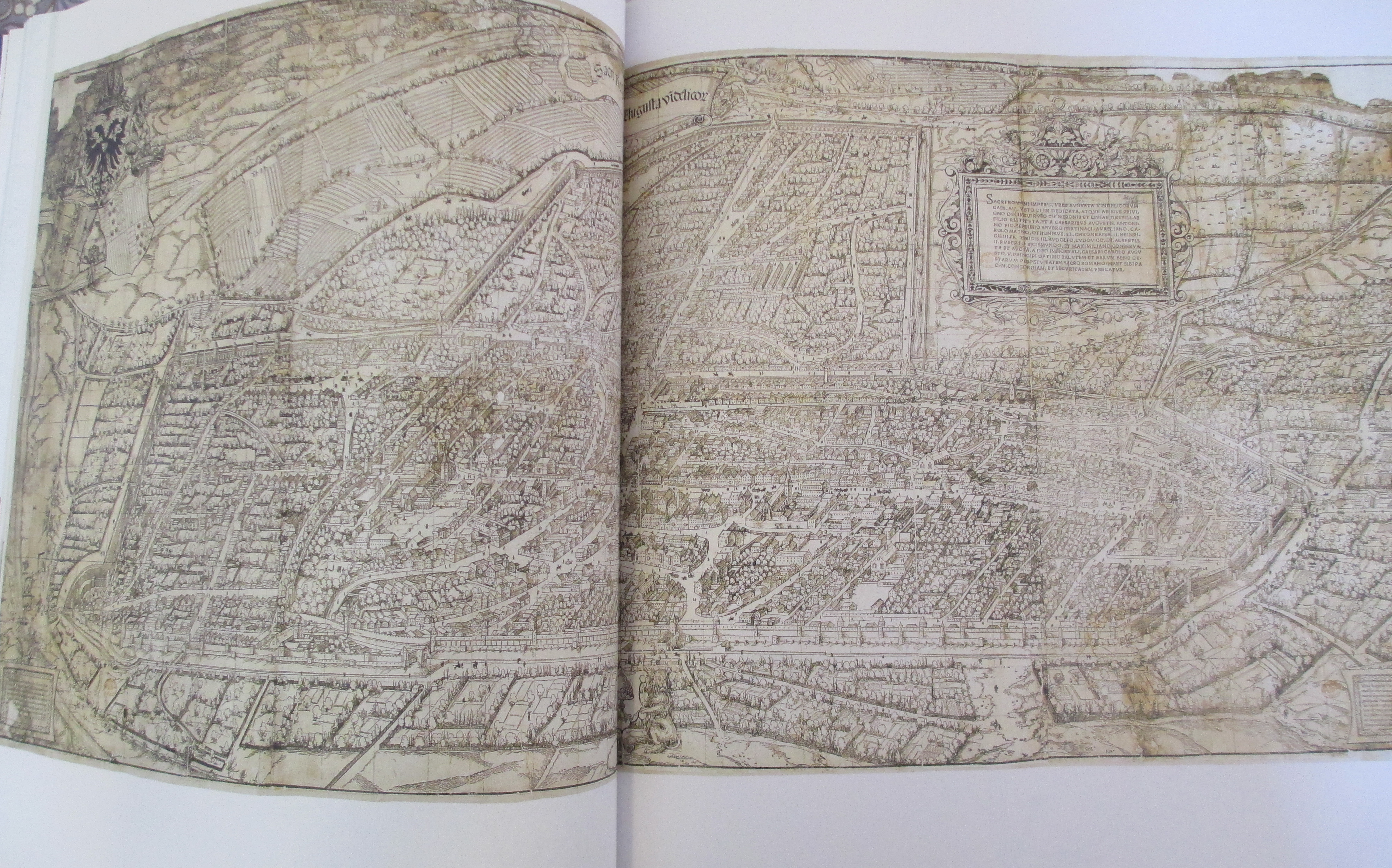 This map is the earliest printed north European measured town plan. It appears to be a purely pictorial view as every house is depicted, which is what I like about it. It is surprisingly accurate though because it’s the product of a survey by Jorg Seld. Seld was a goldsmith from Augsburg who was also a military engineer. The map was cut into wood blocks and then printed, though only two copies survive. If you look closely you can see the citizens of Augsburg out and about in the city. As well as being accurate it’s also a map of praise to the Holy Roman Empire. You can see the arms of Emperor Charles V below the double headed imperial eagle in the top left hand corner.
The next map moves further back in time and illustrates just how important maps can be as a demonstration of power.
 The map dates from 1360 and is one of the earliest detailed maps of England and Wales. This is a departure from earlier medieval maps because it’s actually recognisable as a map, where as earlier maps tended to be more allegorical than geographically accurate. It depicts castles, towns, abbeys, churches and the roads which linked them all. Above all though, it is emblematic of Edward I’s England and his reign. This is how he imposed royal authority on the country. The castles he built in the newly conquered Wales were essential to bringing it under his control. This map stood as the template for future maps until the mid 16th century.
The next map I want to consider is probably my favourite. The Hereford Mappa Mundi.
 The picture above is from The Map Book, however I am including the below picture so that you can see some more of the detail.
 This map dates from 1300 and is a wonderful depiction of the medieval world and how it saw itself. It is a map of the world, but as a map for navigation it’s completely useless. It is much more about medieval identity, history and religion than it is about geographical accuracy. Jerusalem sits at the centre with the rest of the world radiating out. It includes people from antiquity such as the Alexander the Great and it has the travel of the apostles and pilgrimage routes. There are also some real world geographic features such as Lincoln Cathedral, Hereford and the River Wye in England and Paris and Rome in Europe, amongst other cities. It roughly maps the world as it was known then, essentially Europe, Asia and North Africa. The Mappa Mundi is many layered in meaning and extremely detailed in reality. It contains over 500 drawings, depicting 420 cities and towns, 15 Biblical events, 33 plants, animals, birds and strange creatures, 32 images of the peoples of the world and eight pictures from classical mythology.
Some years ago Hereford Cathedral, where the map now resides, gave permission for the map to be scanned. The scan has been turned into an in depth exploration of the map online. It is well worth a look because the detail that can be seen is incredible.
For more information on the Mappa Mundi and to have a better look at the second photograph go to http://www.herefordcathedral.org/visit-us/mappa-mundi-1
The Map Book is a wonderful exploration of cartography through the ages and well worth a look.
The Map Book
Author: Peter Barber
ISBN: 9780802714749



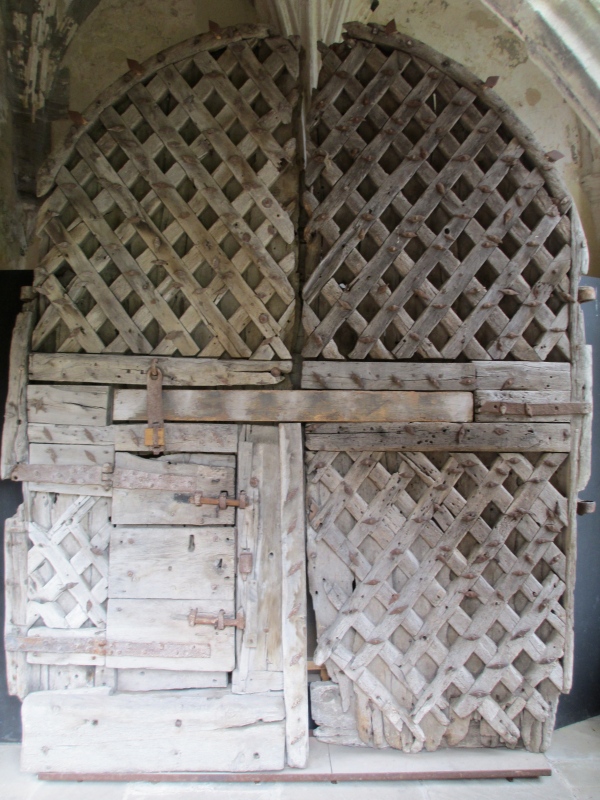 This door is to be found in Chepstow Castle in Chepstow (called Striguil in the 12th century) in Wales. The door dates from the 12th century. While this in itself makes the door interesting, how it was discovered and what it meant adds even greater significance. This door hung in the doorway of the main gatehouse of the castle.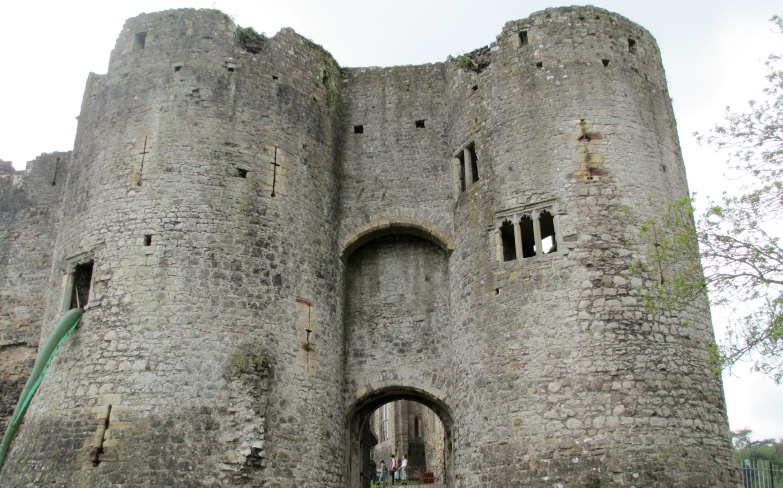
 Historical Ragbag