Strata Florida Tiles

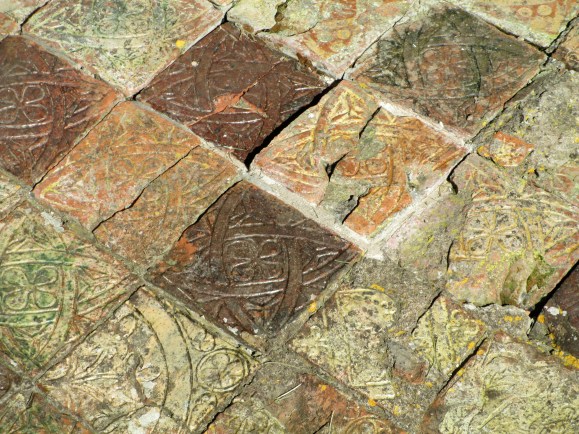
These are medieval tiles from Strata Florida Abbey in Wales.Tiles Strata Florida

The abbey itself is absolutely beautiful, though there isn’t much left. It was not a casualty of the Dissolution of the Monasteries, which is the reason most of the abbeys in the UK are ruins. Strata Florida was a casualty of the repeated English incursions because it always strongly supported the Welsh Princes.

Strata Florida

The abbey is also where the important Welsh Chronicle Brut y tywysogion was written. It was a year by year account of the main events in Wales from AD682 to AD1282. It finished with the death of Llywelyn ap Gruffudd, known as the last true Prince of Wales. The full text of the chronicle can be found at https://archive.org/details/brutytywysogiono00cara.

The abbey is also the burial place for some of the Welsh Princes of Deheubarth and their families.

burial

The tiles themselves are interesting just because they survived. Not many medieval tiles did. These particular ones date to the early 14th century. They were uncovered in excavations in the 1880s and the large section that is now in the south transept are made up of many of these fragments. Their discovery helped Strata Florida become a tourist attraction to wealthy Victorians, though it is rumoured that the occasional tile was taken as a souvenir. The tiles were made in England but laid in Wales and only important guests and choir monks were allowed to stand on them. They also have patterns and designs. See if you can see any of them.tiles strata floridaCommon symbols include the fleur de lis which is a reminder of the origins of the Abbey. It was founded by the Norman lord Robert FitzStephen. The fleur de lis is also a link back to the Abbey’s mother house in Clairvaux in Burgundy. The tiles are also decorated with images of a man gazing into a mirror, which might be trying to say something about the perils of vanity. One of the more intriguing designs is that of the coat of arms of Hugh Despenser, it can be seen in the top right hand corner of the above photo. He was reviled by the Welsh so the presence of his coat of arms is somewhat perplexing, it is possible that it just happened to be placed there when the tiles were made in England. tile ex

As you can see the tiles are now covered by a modern roof to protect them. The tiles are truly beautiful and even the relatively small collection that survives today gives a good idea as to just how spectacular the full expanse must have been when the abbey was whole.


Book Preview: Celebrities of the World

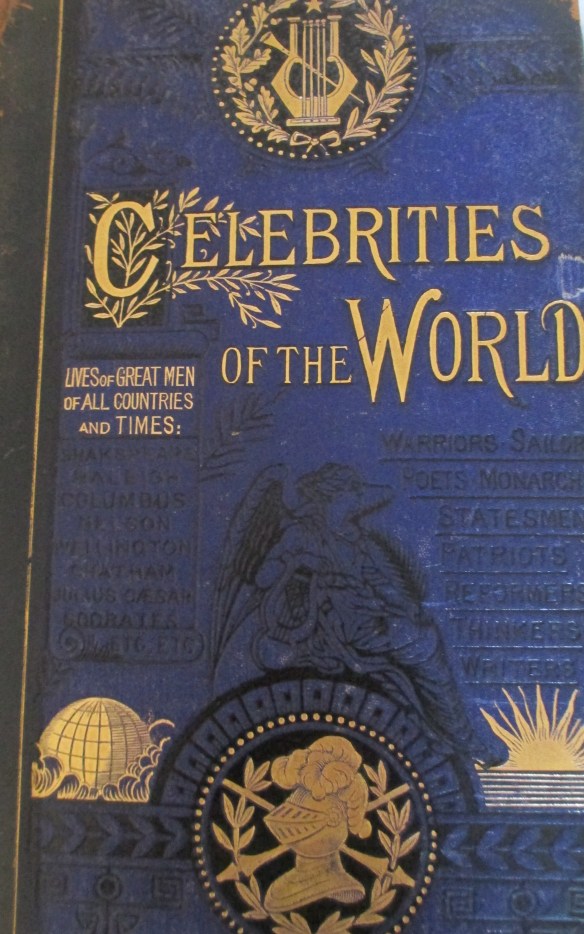
This book is an interesting one. cow coverIt dates from the 1880s and is essentially  a collection of those considered celebrities throughout history. The men included, and I’m not being generalist here there are no women, range from Alexander the Great, to Geoffrey Chaucer,to Simon de Montford.

                 cow alexandercow chaucercow sdem


cow legendThe book describes itself as cataloguing: warriors, sailors, monarchs, statesmen, patriots, reformers, thinkers and writers. It also has a number of lovely printed illustrations. For each person depicted it usually has, at least, a picture and in some cases, lcow sdem2ike Simon de Montford’s, depictions of their actions. In de Montford’s case it is a picture of him expelling ‘Jews and other aliens.’ As you can see it is a book of its time. It is a beautifully put together book though and it is an interesting illustration of how our ideas of celebrity have changed, even if the information is a bit outdated.
cow fronticecow spine

Loch Ard Gorge

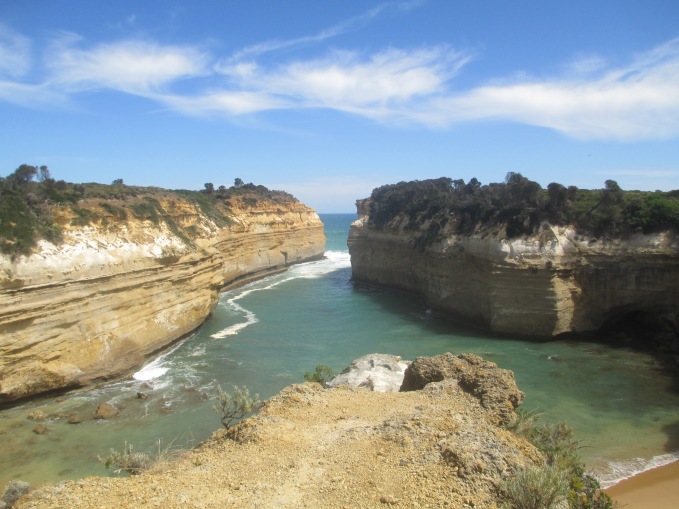
Loch Ard Gorge lies on Victoria’s Great Ocean Road, not far from Port Campbell. The Twelve Apostles are the best known of the Great Ocean Road’s natural landmarks. Loch Ard Gorge, however,  is known and named for a reason other than its natural beauty.

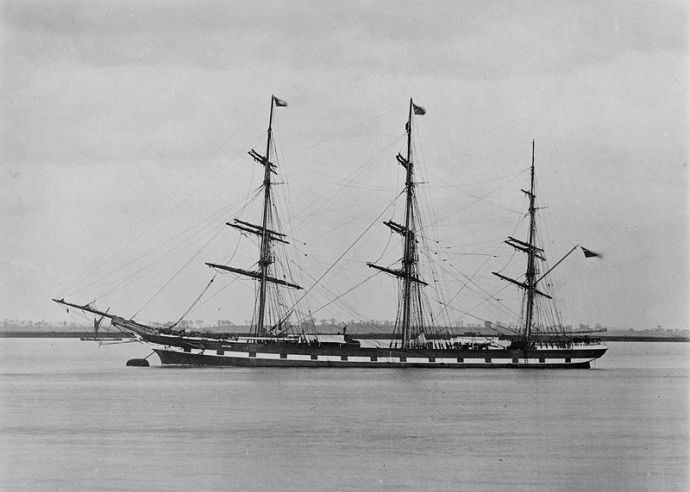
Loch Ard Gorge is the site of one of Victoria’s worst shipwrecks. The Loch Ard sailed from England on March 2nd 1878 with 54 passengers and crew aboard. It was bound for Melbourne.loch ard sunshne
lochard1At 3am on the 1st of June 1878 Captain Gibbs was expecting to see land as they should have been approaching Victoria’s coast. He was looking for the lighthouse at Cape Otway, but the ship was sailing through a heavy fog.
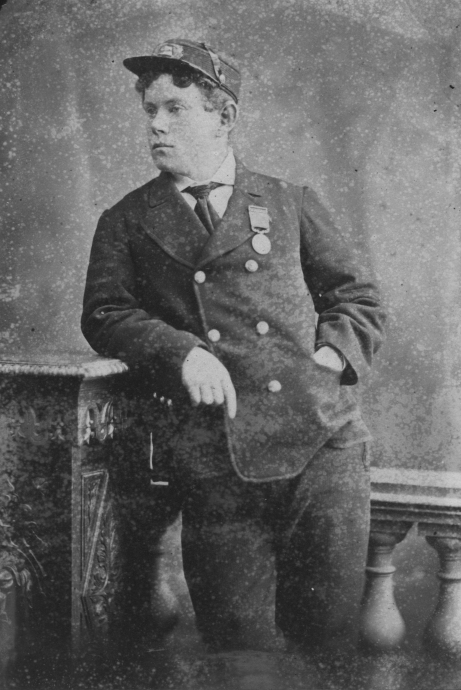
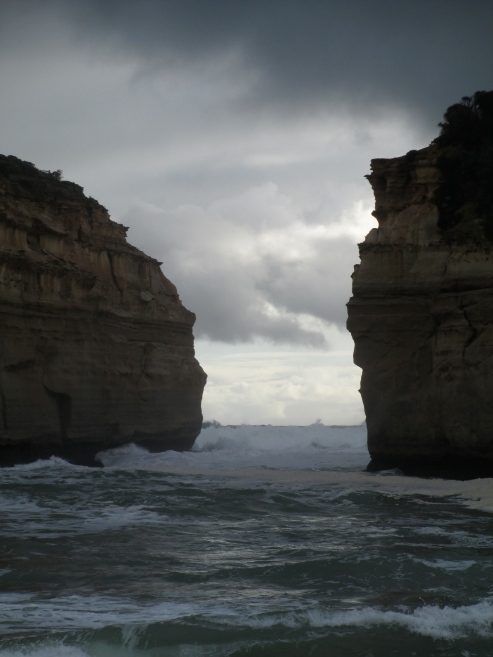
At 4 am when the fog lifted Captain Gibbs realised they were far too close Victoria’s sheer cliffs. The Captain tried everything including lowering the anchor and attempting to tack back out to sea, but the ship ran into a reef jutting out from Mutton Bird Island. Waves broke over the ship and masts and rigging came down, knocking passengers and crew overboard. They managed to launch a life boat but it crashed into the side of the Loch Ard and then capsized. Tom Pearce, the crew member who had launched the lifeboat, managed to cling on underneath it and was swept out to sea. When the  flood tide came in he drifted back to shore and into what is now known as Loch Ard Gorge.  He swam to shore and dragged himself to beach. tom

Tom Pearce

loch ard close

Loch Ard Gorge

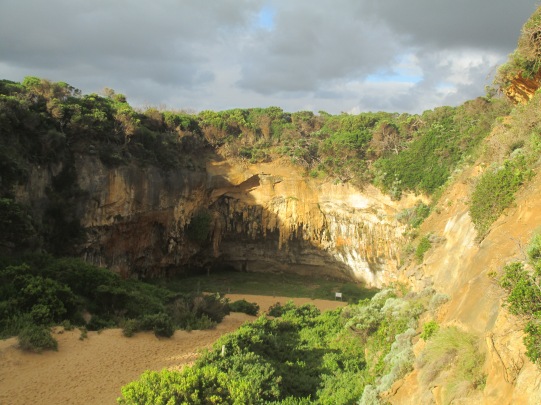
 Tom was one of only two survivors. The other was a passenger, Eva Carmichael. Eva had been making the trip to Melbourne with her family.  She ran onto the deck to find out what was happening. In all the chaos Captain Gibbs grabbed her and said “if you are saved Eva, let my dear wife know that I died like a sailor.” She was then swept over the side by a wave. She saw Tom on the rocky beach and shouted and waved until her saw her. Tom swam out and dragged the exhausted Eva to the beach. They went back to the cave and opened a case of brandy that had washed ashore and huddled together to try and keep warm.

eva

Eva Charmichael

A while later Tom scaled a cliff, which was no small feat in itself, to try to find help.

cliff 2

The cliffs at Loch Ard Gorge

He followed hoof prints and came by chance upon some men from the nearby Glenample Station. By the time he led them back to Loch Ard it was cold and dark. Eva stayed at Glenample for six weeks recovering before returning to Ireland, this time by steamer. Tom went to Melbourne to receive a hero’s welcome. Many expected Tom and Eva to marry, as they’d spent the night unsupervised, but
they were to be disappointed when Tom and Eva went their separate ways.

It is a miracle that anyone survived. The seas on that piece of coast are known for their savagery. The video below was taken on a mildly stormy day, it is only too easy to imagine what it would have been like when the Loch Ard sank. Especially with the waves destroying the ship.

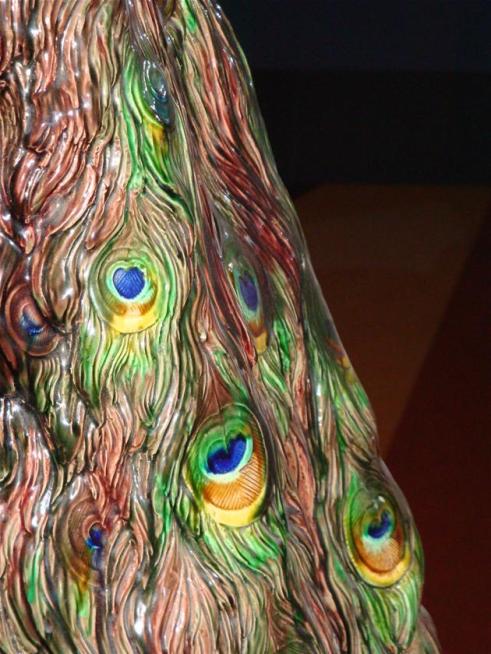
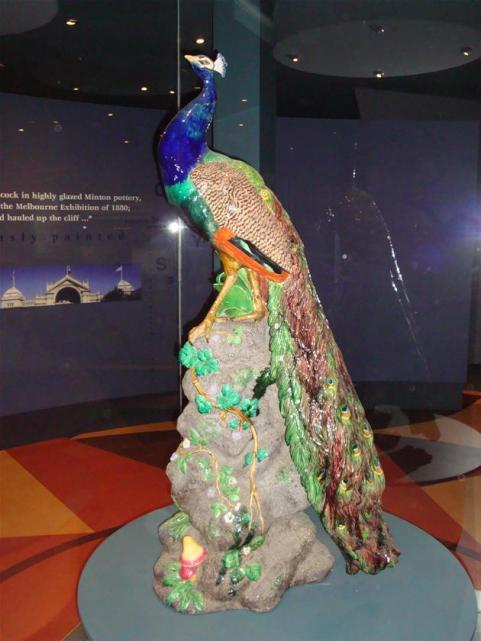
Although there were only two survivors of the Loch Ard, some of the cargo also survived, including a Minton Porcelain Peacock, one of only nine in the world, the most unlikely thing to have endured a shipwreck. It was destined for the International Exhibition in Melbourne in 1880 and must have been packed exceptionally well. It now resides in Flagstaff Hill Maritime Village in Warrnambool and was recently valued at over $4 million. It is also on the Victorian Heritage Registerr519455_2867236
peacock

The wreck of the Loch Ard remains at the base of Mutton Bird Island. It can be dived by experienced divers.

The peacock photos are from http://www.abc.net.au/local/photos/2010/02/23/2827955.htm

For more information on the Loch Ard see http://www.flagstaffhill.com/history-queries/wreck-loch-ard/


Book Preview: The Grand Medieval Bestiary

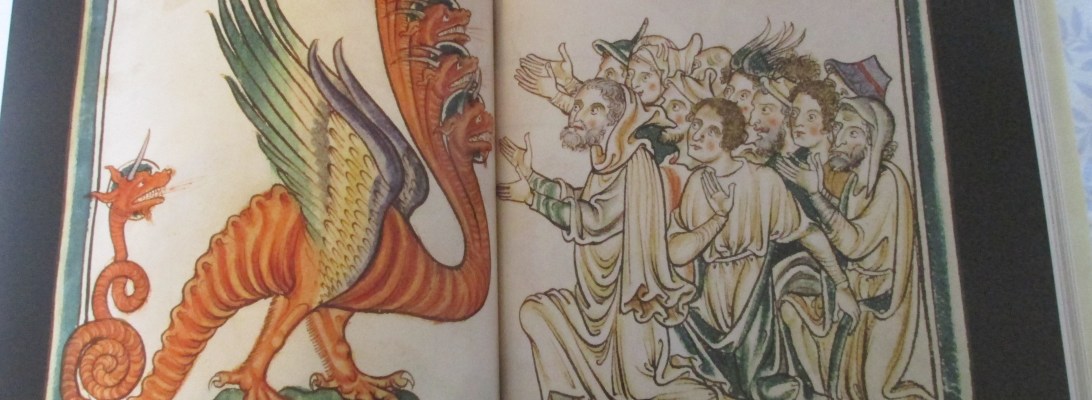
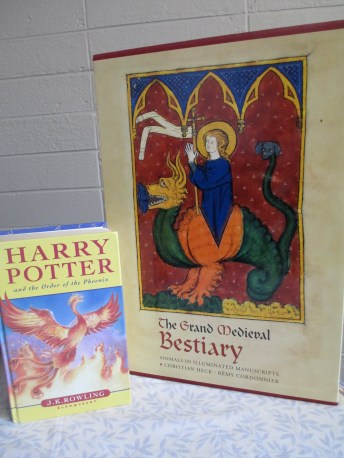
The Grand Medieval Bestiary is one of the most epic and beautiful books I have ever had the pleasure to see. Harry Potter and the Order of the Phoenix is in the photo to illustrate just how large the Grand Medieval Bestiary is. This is a book on a monumental scale. The Grand Medieval Bestiary tells the stories of the animals that featured in illuminated manuscripts. It depicts real world animals, such as the elephant, and how they were seen by people in the medieval period.

beastiary elephantBeastiary

In the case of the elephant it was believed that its primary natural enemy was the dragon. Additionally it was believed that elephants never lay down to sleep. They always leant against a tree and slept standing, but they had to be careful to choose the correct tree. If they didn’t choose correctly and the tree collapsed they couldn’t get up again. If this happened a smaller elephant would climb under a larger elephant and help it up.

The Grand Bestiary also includes mythical animals such as the hydra. The hydra was the mythical beast Hercules fought as one of his twelve labours. The authors of medieval bestiaries came up with logical explanations for the depiction of the hydra regrowing its heads after Hebeasti hydrarcules chops them off. However they did believe that the hydra was a creature who lived in the Nile and fought the crocodiles there by entering their jaws while they slept and tearing them apart from the inside. The hydra also apparently caused an edema of the legs, which was best treated with ox dung.
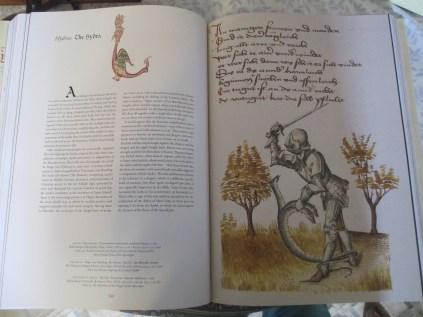
The Grand Medieval Bestiary is a fabulous book, full of life, colour and truly beautiful images. It brings the medieval world of bestiaries and animals wonderfully to life. It is also endlessly entertaining. beast hydra

If you have the shelf space for a book this big, it’s worth it.

Title: The Grand Medieval Bestiary: Animals in Illuminated Manuscripts.

Authors: Christian Heck and Remy Cordonnier

ISBN: 978078921279

A Very Historical Door.

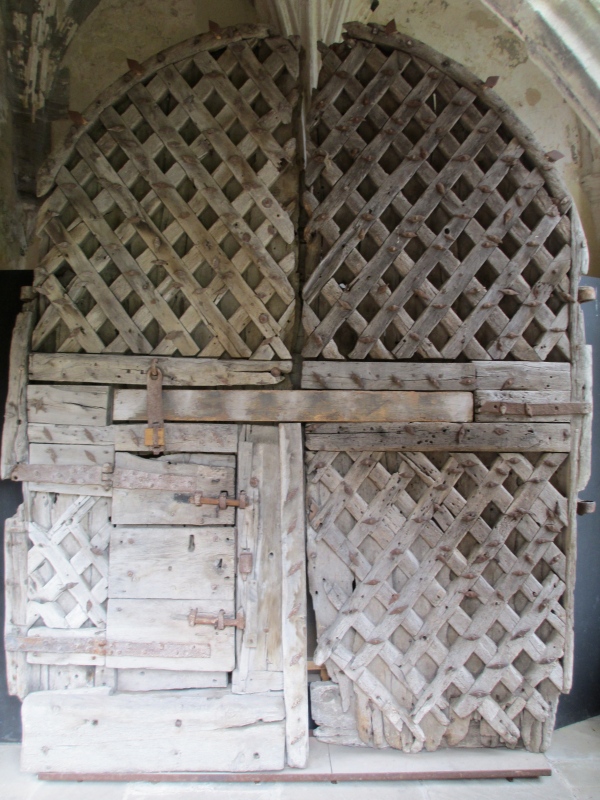
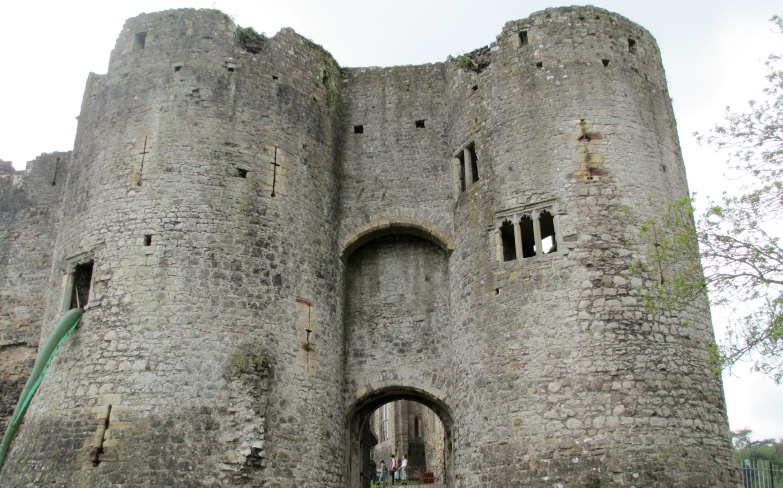
doorThis door is to be found in Chepstow Castle in Chepstow (called Striguil in the 12th century) in Wales. The door dates from the 12th century. While this in itself makes the door interesting, how it was discovered and what it meant adds even greater significance. This door hung in the doorway of the main gatehouse of the castle.
IMG_2519

The building of the gatehouse can be dated with reasonable certainty to  the rule of William Marshal. Marshal gained the castle in 1189 through  marriage to Isabel de Clare. This can be surmised for three main  reasons.

1. A Short Cross Silver penny of Henry II  was found in the foundations of the gatehouse. These pennies weren’t minted until the mid 1180’s.

2. The wood of the doors was dated using dendrochronology to an estimated felling date of between 1159 and 1189.

3. Pre 1189 the castle was in the hands of the crown as part of a wardship, held by Henry II, until its heiress Isabel de Clare married. Thus Henry II had no incentive to build a huge gatehouse at a castle which he was going to have to hand over to Isabel’s husband.

This is where it gets interesting. Marshal most likely built the gatehouse shortly after he became Lord of Striguil. There is no way he should have had the funds for such an impressive construction, because prior to his marriage he only had a very small landed estate. So where did the money come from?  Marshal was known as the most successful tourney knight of his age, but the fact that he had the resources to at least begin the construction of the gatehouse show he must have been truly spectacular.

Information sourced from

Richard Avent & Dan Miles, “The Main Gatehouse” in Rick Turner & Andy Johnson, (eds) Chepstow Castle, Its History and Buildings, Logaston: Logaston Press, 2006, pp. 51-62, pp. 52-53.