Guest Post : How Victorian ideals shaped Australia

Welcome to this guest post by Sam Mee, the founder of the Antique Ring Boutique.
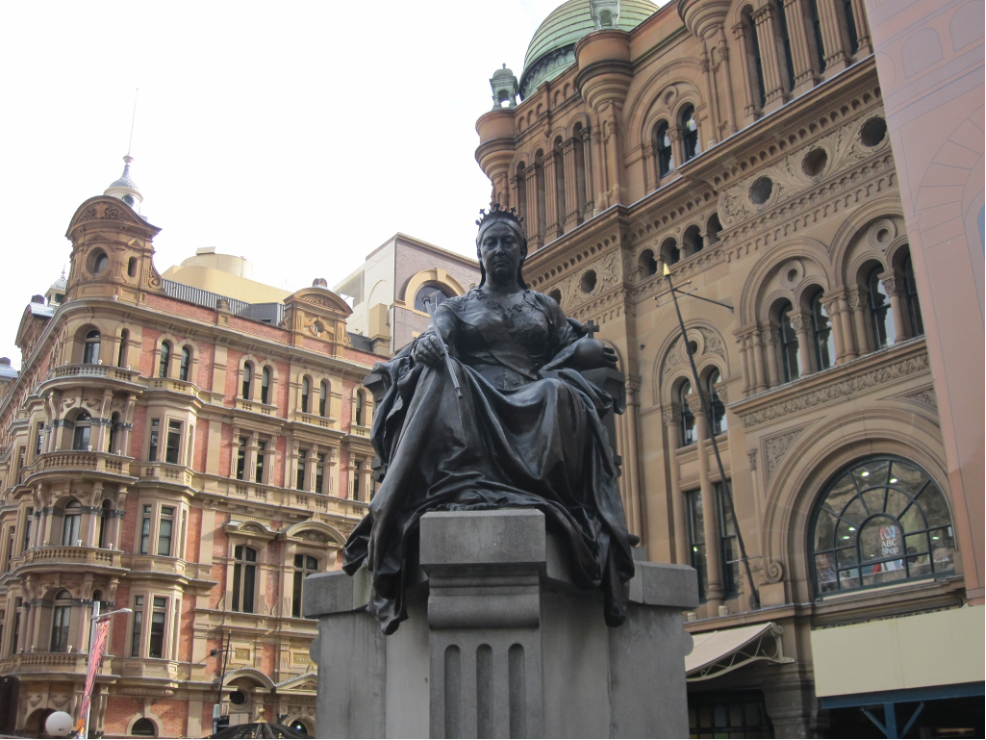
https://commons.wikimedia.org/wiki/File:Queen_Victoria_outside_the_Queen_Victoria_Building_in_Sydney_2011.jpg

Walk through Australian cities today and you can’t miss their 19th-century Victorian inheritance. St Paul’s Cathedral towers above Melbourne’s commercial skyline while Flinders Street Station still dictates the city’s transport logic, much as the original terminus did 150 years ago. Sydney’s sandstone buildings, like the General Post Office, continue to project institutional power even among more modern buildings.
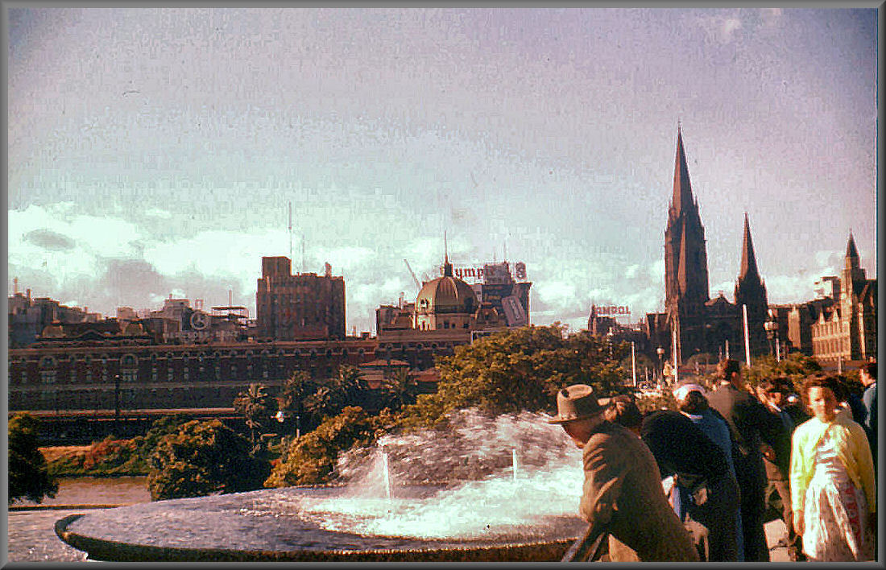
https://commons.wikimedia.org/wiki/File:Melbourne_Cityscape_1959_with_Fountain_and_St_Paul_Cathedral.jpg

The permanence isn’t just a historical quirk. These buildings were designed not just to endure but to control and instruct – to assert order, authority and moral certainty in a society that Britain worried might otherwise unravel. Victorian Britain did not aim just to colonise Australia. It wanted to transplant moral and cultural discipline.

Of course, this project did not unfold on empty land. Victorian ideals were imposed on landscapes that already been shaped by Indigenous law, culture and knowledge system. And the way they were enforced was inseparable from dispossession and violence. Churches, railways, schools and civic institutions became instruments of exclusion as well as of order.

Exporting Victorianism

Victorian ideals arrived in Australia as more than vague notions of Britishness. They formed a coherent ideology grounded in Protestant morality, faith in progress, social hierarchy and the conviction that civilisation could be built. Victorian administrators thought firm guidance was needed to keep stable a distant colony populated by convicts and Indigenous peoples.
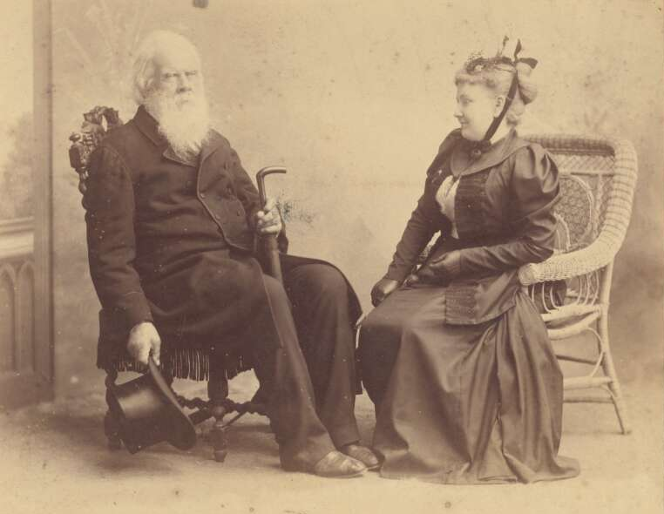
https://upload.wikimedia.org/wikipedia/commons/d/d8/Henry_Parkes_and_Eleanor_Dixon_Parkes_%28cropped%29.jpg?20181227204743

Henry Parkes, often called the “Father of Federation”, shows how Victorian ideals hardened into Australian institutions. He rose from poverty through self-education, exemplifying the Victorian belief in self-help. As Premier of New South Wales, he promoted social improvement through free, compulsory education, through public works and through welfare reforms. These reflected the conviction that a civilised society could be built through institutions. He combined liberal reform with strong imperial loyalty. He championed representative government and also tried to end convict transportation while remaining devoted to Britain, famously describing a “crimson thread of kinship” linking the colonies and the Crown. His 1889 Tenterfield Oration (https://www.nma.gov.au/defining-moments/resources/tenterfield-oration) framed Australian federation as both a moral and national destiny.

Moral regulation in a new land

British Victorian society had strict moral codes and Australian colonial authorities quickly tried to impose these same standards of sexual propriety, sobriety and religious observance.

Licensing laws such as Victoria’s Licensing Act of 1852 and New South Wales’s Sale of Liquors Licensing Act of 1862 (NSW) regulated pubs in gold-rush towns, restricted opening hours and gave the police broad powers of inspection. Police courts in centres like Ballarat routinely prosecuted public drunkenness, treating excessive drinking as a moral/civic offence. Temperance organisations such as the Woman’s Christian Temperance Union gained influence in the late 19th century, alongside Sunday trading restrictions and Sabbath laws that enforced Protestant ideals of work and rest. Marriage and family life were seen as defences against disorder with women cast as moral guardians of the home. These views persisted – in Victoria, for instance, public drunkenness was only formally decriminalised in 2021. And retail hours are still restricted on Sundays in several states. You can listen to the history of Australia’s licensing laws here: https://www.abc.net.au/listen/programs/latenightlive/history-alcohol-law-australia/101969150.

Some colonies copied British Contagious Diseases Acts (CDAs) between the 1860s and 1880s, mirroring (and in some cases outlasting) UK laws designed to combat sexually transmitted disease. The laws allowed police to forcibly examine and detain women suspected of prostitution in “lock hospitals” for treatment, leading to severe restrictions on their liberties. These measures directly replicated British practice, where working-class women in towns and ports were subjected to compulsory medical examination. Obviously the view was that female sexuality, not male behaviour, posed the greatest social risk. Overall, the idea of respectability divided “deserving” settlers from unruly miners, the urban poor and racially marginalised groups. In practice, this meant that poor and working-class women could be detained without trial on the basis of suspicion alone, while male clients faced no equivalent scrutiny.

Gothic architecture and the moral landscape

Few legacies of Victorian influence are as obvious as Gothic Revival architecture (see examples here: https://www.thearcagency.com.au/resources/echoes-of-gothic-the-lasting-influence-of-church-architecture-on-modern-design
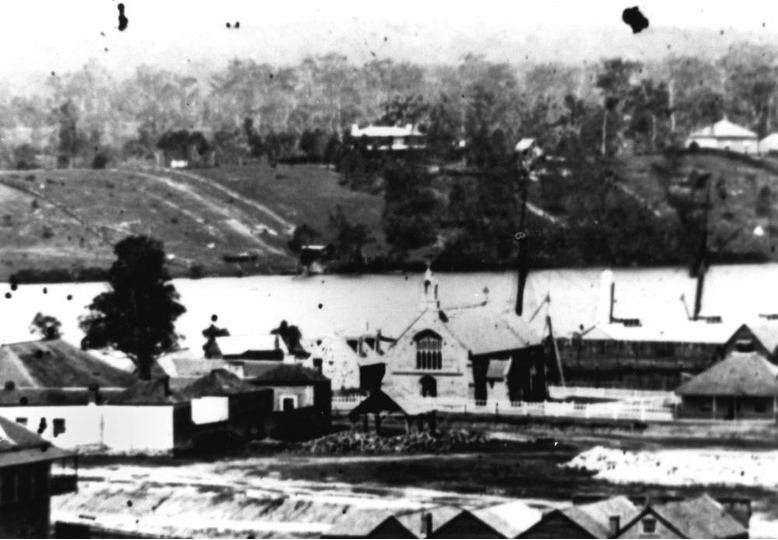
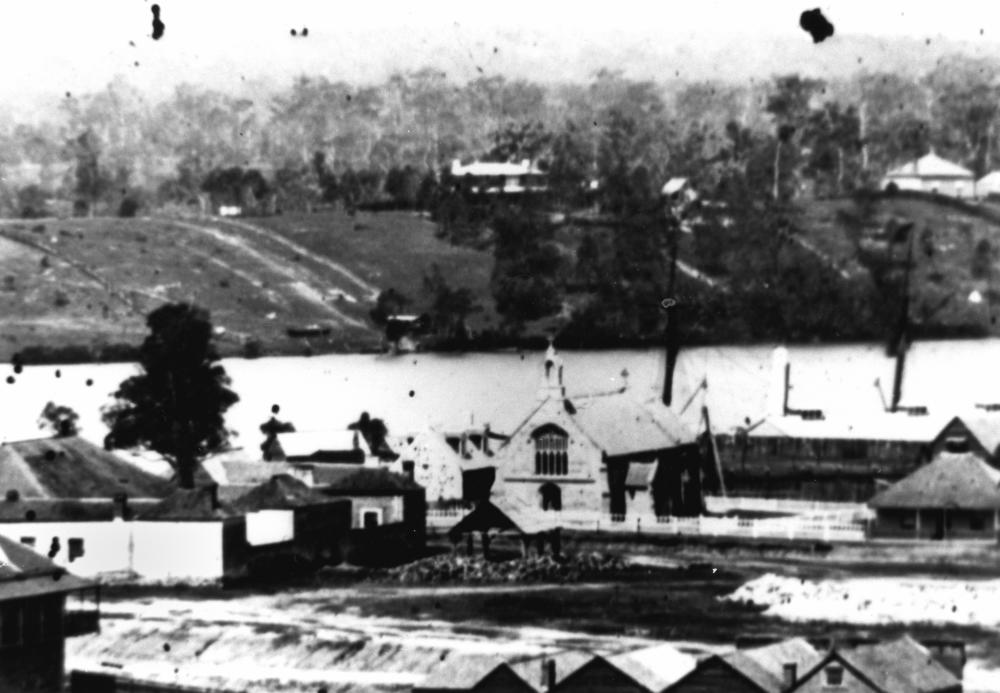
St Stephen’s church in Elizabeth Street in Brisbane, 1862 Https://upload.wikimedia.org/wikipedia/commons/c/cf/StateLibQld_1_118860_St_Stephen%27s_church_in_the_centre_of_a_panoramic_view_taken_in_1862.jpg

This look came to dominate Australian cities – and still does in its historic centres – because it offered a powerful visual language for imperial identity. It was closely associated with Britain and Christian tradition and favoured by both Anglican and Catholic institutions, particularly under the influence of Augustus Welby Pugin. His designs allowed medieval forms to be convincingly reproduced using local materials such as Sydney sandstone and Melbourne basalt. Stained glass and ornate stonework were used not only on churches but also on public buildings and railway stations to give a deliberately European feel. Funded by gold-rush wealth, Gothic Revivalism gave new Australian cities a sense of cultural depth. Indeed, Pugin’s writings argued that Gothic architecture was inherently moral and superior to classical styles associated with paganism or republicanism. Gothic forms also appeared in secular institutions such as the University of Melbourne, where medieval architectural language lent new colonial education the authority and gravitas of ancient European learning.

Controlling gold rush towns

The mid-19th century gold rushes posed the biggest challenge to Victorian ways of thinking in Australia. From the early 1850s finds in New South Wales and Victoria, gold discoveries drew in hundreds of thousands of migrants from Britain, Europe, China and North America. Rapidly expanding settlements of tents and diggings emerged near goldfields almost overnight, forming makeshift towns outside of existing established law and infrastructure. These boomtown societies were dominated by single men of many races who gambled and drank alcohol – all things that Victorians associated with moral disorder. (Watch a live sketch history of the gold rush here: https://www.youtube.com/watch?v=iU9iV56F86s

At first, the colonial authorities tried to impose control using a mining licence system, which required diggers to pay fees and submit to police inspections. Resentment at this system led to the 1854 Eureka Stockade, an armed uprising by miners at Ballarat against what arbitrary taxation and heavy-handed policing (https://www.nma.gov.au/defining-moments/resources/eureka-stockade).
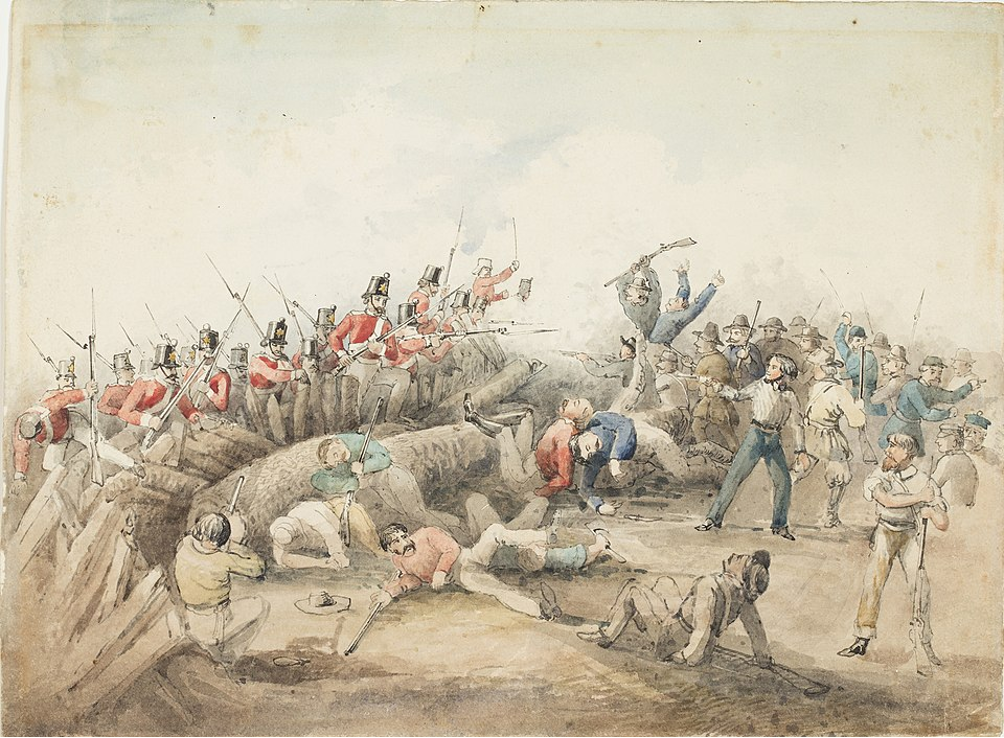
Eureka Stockade Riot, Ballarat, 1854, by John Black Henderson : https://upload.wikimedia.org/wikipedia/commons/0/0d/Eureka_stockade_battle.jpg

Although this rebellion was quickly put down, it did force the colonial governments to reconsider how to control the goldfields. And so after Eureka, reforms in 1855 replaced the punitive licence system with the Miner’s Right, regulating who could mine while linking access to political rights. Colonial police forces were expanded to enforce order and were complemented by town planning schemes that rapidly replaced tents with surveyed streets and permanent buildings.

What’s crucial, though, is that these measures were not simply about managing gold extraction but were designed to transform rough and ready mining camps into disciplined communities. Colonial governors such as Sir Charles Hotham, who governed Victoria from 1854 to 1855, saw the goldfields as moral battlegrounds. His policies reflected a broader Victorian belief that order and institutions could convert chaotic frontier settlements into respectable towns aligned with imperial ideals of civilisation.

Infrastructure as moral progress

Victorian faith in progress was enthusiastically expressed in infrastructure. Railways, roads, bridges, telegraph lines and sanitation systems were celebrated not only as practical achievements but as a sign that civilisation was taking root. Projects such as the expansion of the Victorian rail network from Melbourne into the goldfields and the introduction of sewerage systems in cities were framed as evidence of discipline. These projects were celebrated as civilising achievements, ignoring their effect on land already structured by Indigenous knowledge systems.

Railways in particular embodied Victorian ideology – both in Australia and back in the UK. Contemporary figures such as Alfred Deakin, writing in the 1880s and 90s, described railways and water schemes as the way that Australia could be “made” into a modern nation rather than a scattered frontier.

Timetabled rail services also standardised time across the colonies and tied distant towns into a coherent administrative and economic system. Rail tracks shot out from colonial capitals to ports and mining centres. They promised equality of access but enabled state surveillance and government control over movement.

Less acknowledged was the cost: colonial infrastructure routinely cut across Indigenous landscapes and songlines with rail corridors, and property boundaries that reflected British priorities rather than local ones. Victorian progress was never neutral. It imposed a single vision of order at the expense of others, a legacy that remains embedded in Australia’s built environment and public debate: “Aboriginal people’s entanglements with the New South Wales railways have involved dispossession, removal, employment, mobility, and travel, including the forced removal of children known as the Stolen Generations.” (https://onlinelibrary.wiley.com/doi/10.1111/1745-5871.12675)

Long-term effects

Modern Australia likes to imagine itself as egalitarian and forward-looking but much of its social and physical landscape was shaped by the Victorian worldview. And a similar gap between ideal and reality existed in the 1800s. Alcohol consumption remained high. Violence persisted. The promise of moral uplift frequently clashed with economic exploitation and racial hierarchy.

These contradictions remain visible today. Australia continues to wrestle with the legacy of Victorian moral frameworks imposed on Indigenous communities, particularly through education, land use, legal systems and violence (https://www.workingwithindigenousaustralians.info/content/History_3_Colonisation.html).

Victorianism didn’t just build colonial Australia; it sought to discipline it. And the structures through which that discipline operated still shape Australian life today.

About the author

Sam Mee is the founder of the Antique Ring Boutique (https://www.antiqueringboutique.com/en-au), and sells rings from the Georgian, Victorian, Edwardian and Art Deco eras. You can read more about Victorian jewellery here: https://www.antiqueringboutique.com/en-au/pages/victorian

A note from Ellen

I just wanted to thank Sam for the post, and to acknowledge in the tradition of Historical Ragbag that many of the advantages for the colonisers that Sam discusses in the post are structures that I have directly benefitted from with both sides of my family arriving in the 1850s as these structures were being actively imposed.

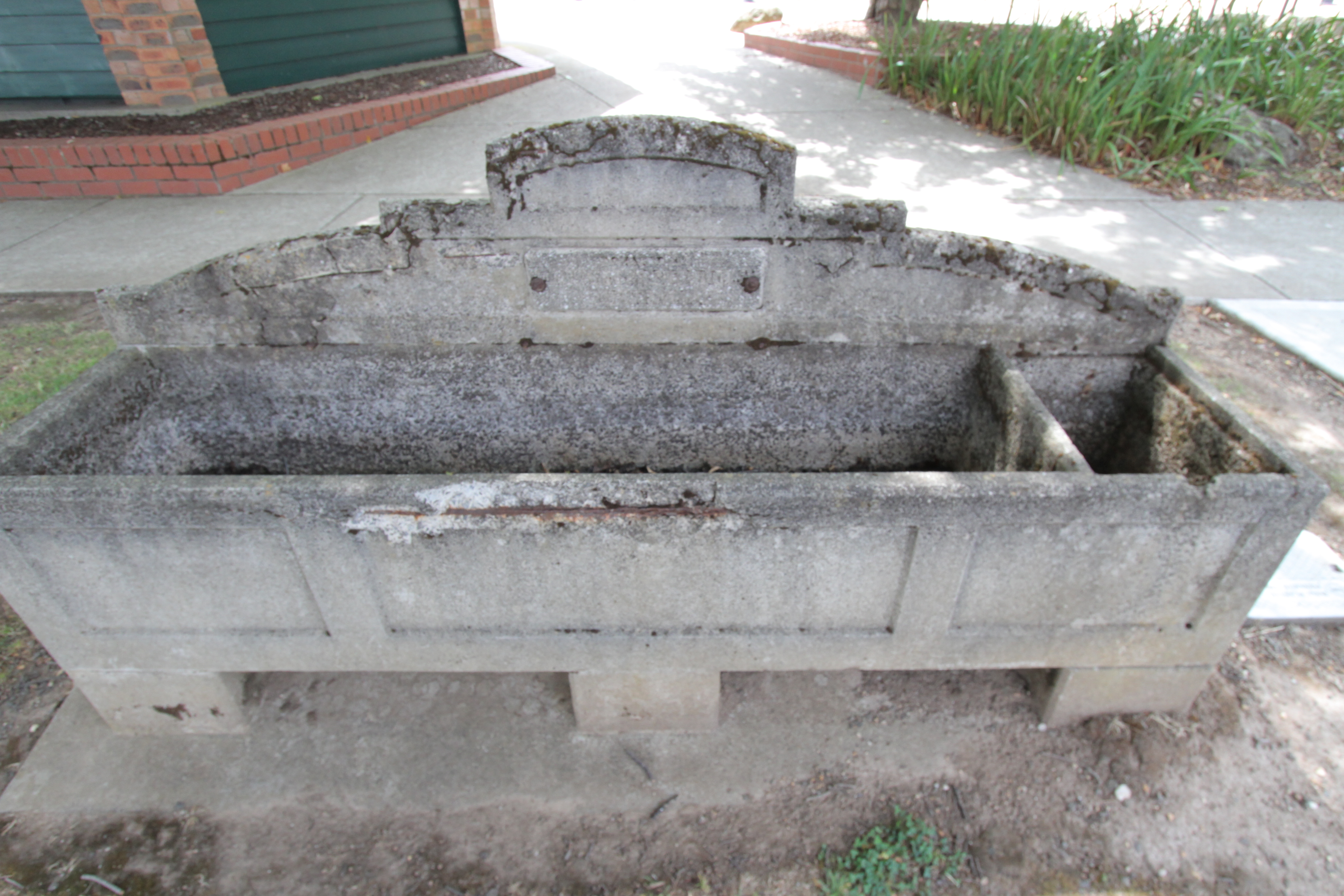
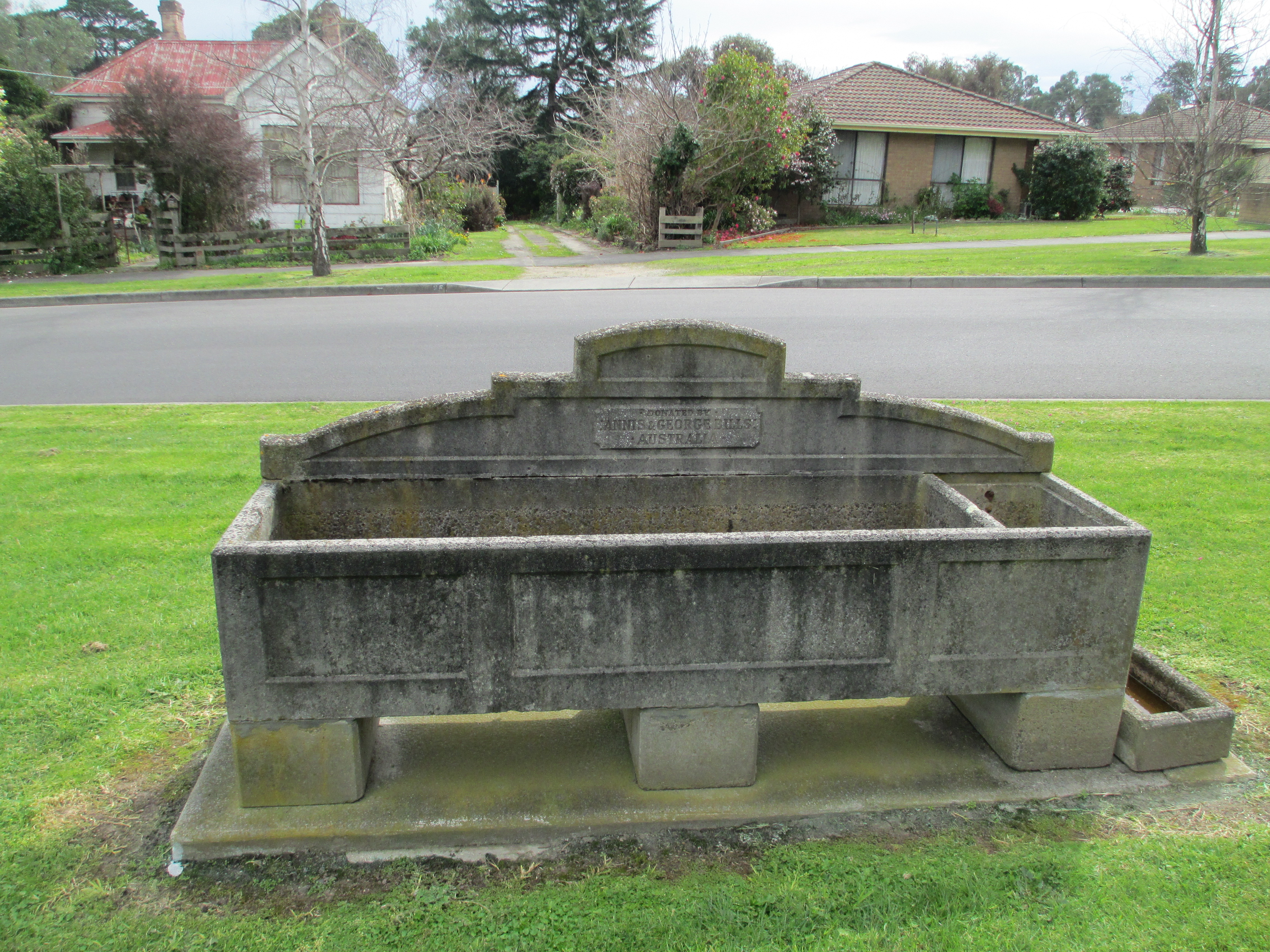
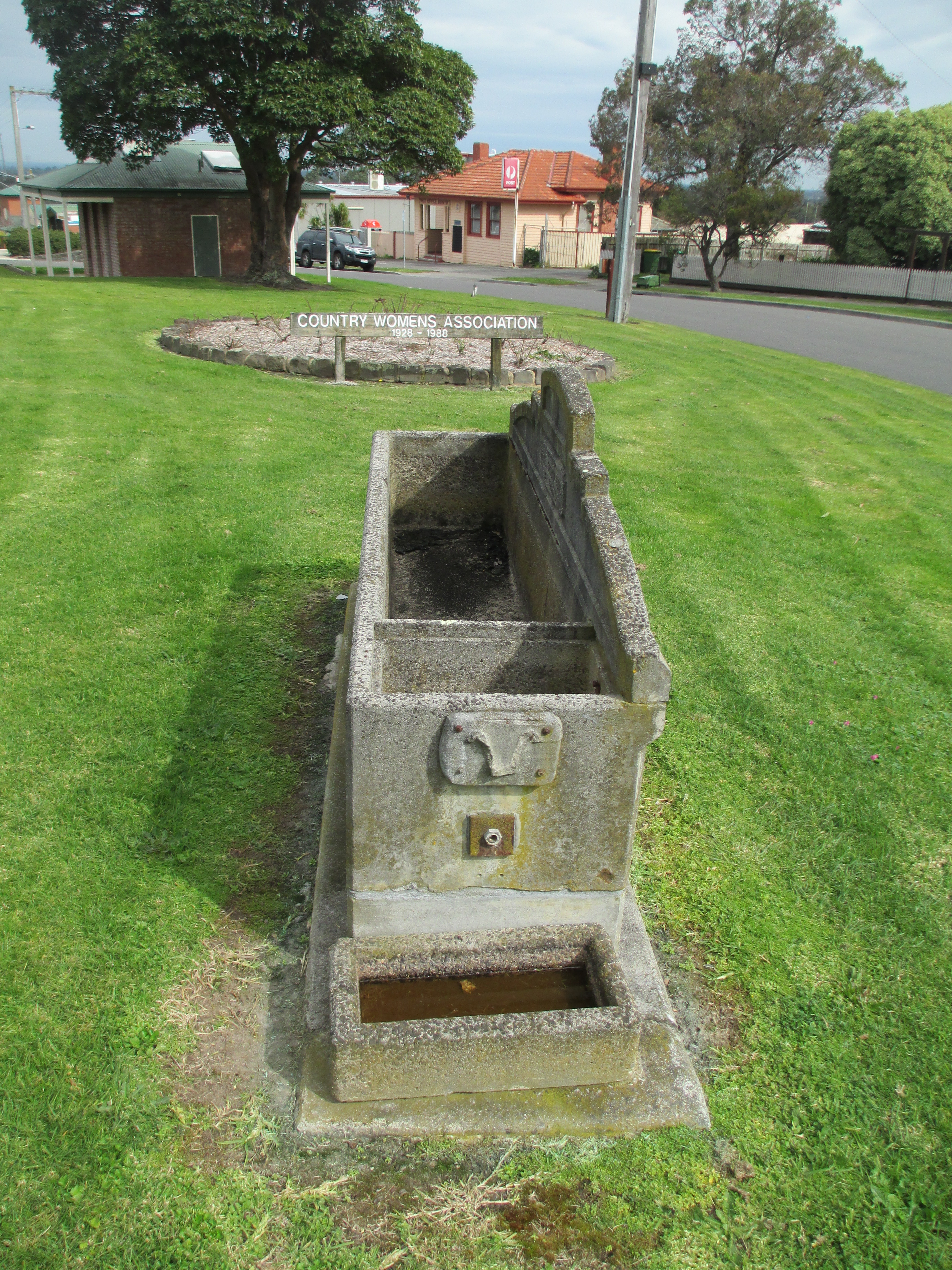
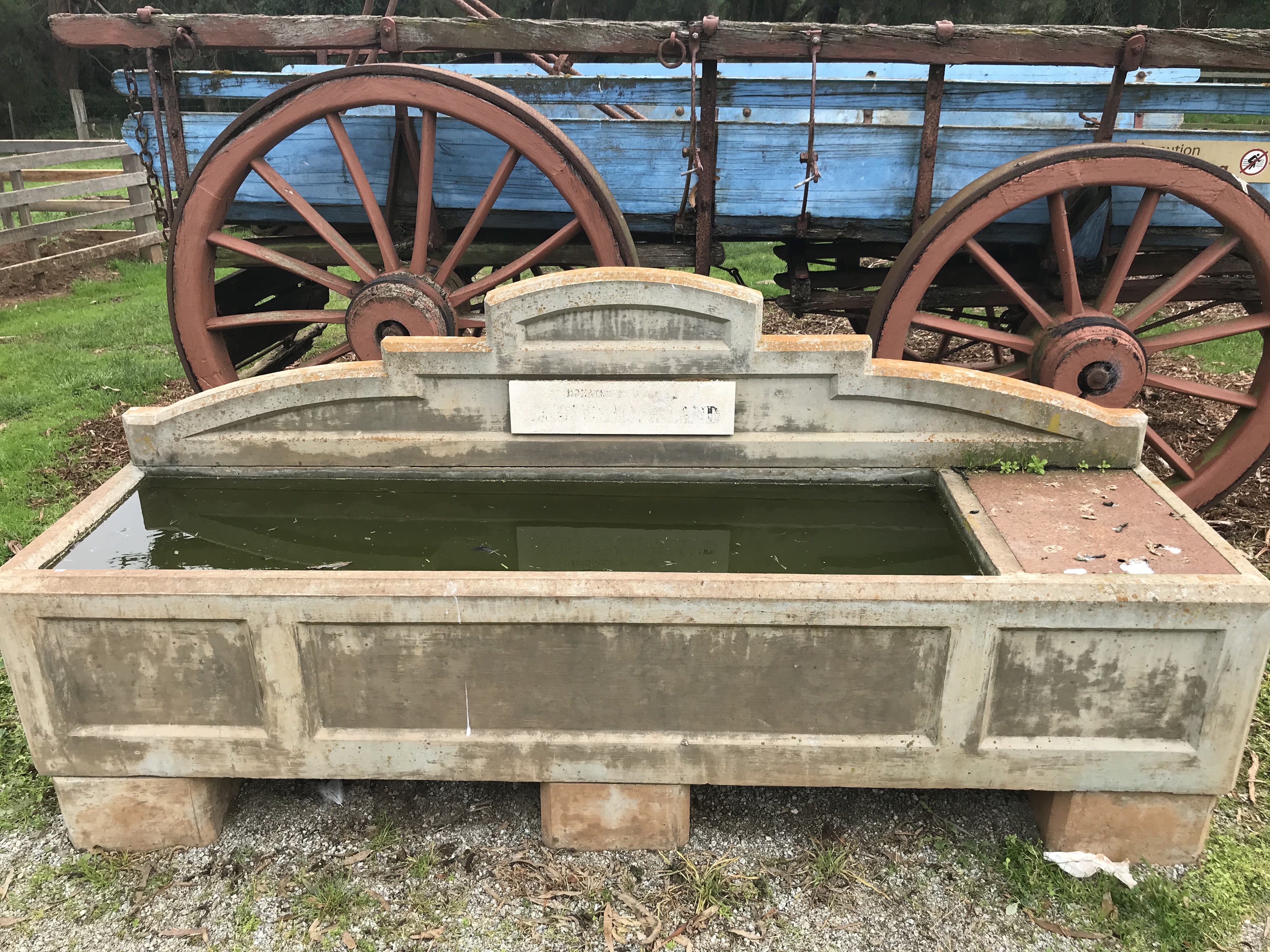
Annis and George Bills Horse Troughs

So, this is technically not a new post. It’s an update to an old one. In 2015 I went on a trip the Wimmera in Victoria and came across two horse troughs in two different towns with the same inscription. The inscription read that they had been donated by Annis and George Bills. You can see them in the photos below

Edenhope horse trough
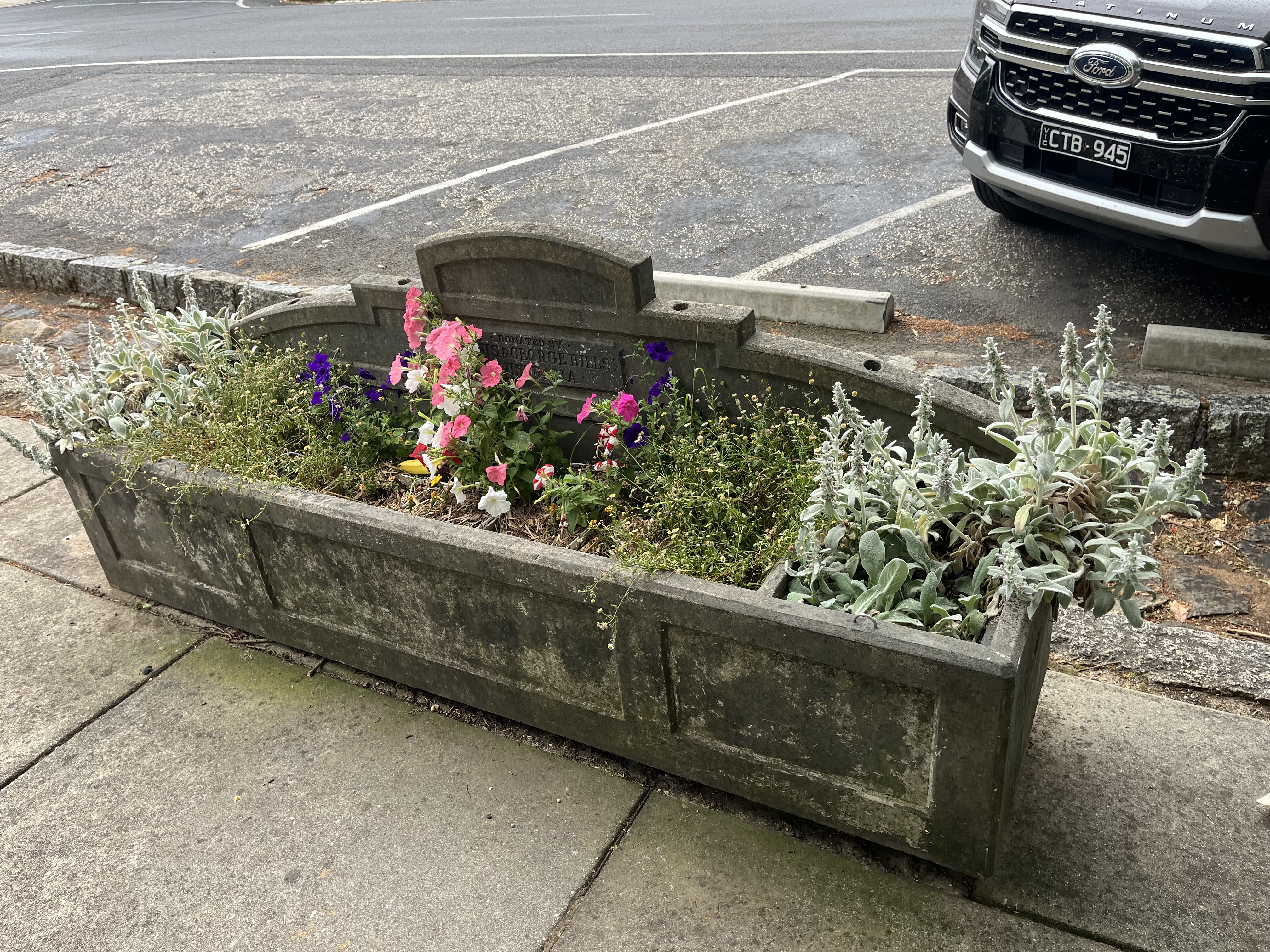
Balmoral horse trough

When I got home I did some digging and found that these two troughs were part of an extraordinary bequest, and that they can be found all over Victoria and some of New South Wales. You can read the original post here, but I’ll provide the overall idea here too.

George Bills made his money out of mattresses, first in making them and then in creating and patenting machinery to weave them. His father, who was a naturalist, came to Australia in the 1800s and, as the Horsham Times described it in 1935, “his heart ached to see the sufferings of dumb animals.” This was a concern that he passed on to his son George who also associated himself with the society for the protection of animals in England, New Zealand and Australia. George’s wife died before him and they had no children so he decided to make provision in his will for the future welfare of animals. The residue of his estate, after several personal bequests, was set aside to provide free memorial horse troughs the length and breadth of the British Empire. Towns applied for them to the trust and many such as Horsham actually have more than one. George died in 1927 and approximately 86 000 pounds was left for the provision of horse troughs. Each was made to the same design and carried the inscription ‘Donated by Annis and George Bills Australia.” By 1937, according the the Adelaide Advertiser, the trust had set up more than 400 horse troughs in Victoria and were expanding to New South Wales.

Sometimes they were for more than horses though and issues could arise, as Dubbo found in 1946. In this particular case dogs and humans were catered for as well as horses. Unfortunately the position of the human’s drinking fountain was problematic. As the Dubbo Liberal and Macquarie Advocate said.

“Unfortunately, lack of foresight was shown in the placing of the adjunct for the public. It is immediately over the small concrete basin for dogs, and at the end of the horse-trough. After drinking, horses have been seen slobbering over the faucet, and dogs licking it.”

The drinking faucet was thankfully moved.

The Dubbo paper also adds the interesting detail that the activities of the trust lapsed during the war period, but began again afterwards, which was when Dubbo applied for its second horse trough with the subsequent problems.

So since writing this original post I’ve been keeping an eye out for them and I’ve found another seventeen that I have photos of. So I thought I’d do this update so I can add in my new photos. And it gives me a spot to upload new ones as I find them. It’s such a fascinating piece of Australian history, and every time I spot one it makes me happy and it’s always interesting to see what use, if any, the town is putting them to now. Anyway, here are the rest of the photos

Ballan
Birchip

Bunyip

Churchill Island- possibly a more modern replica
Essendon
Hawksdale
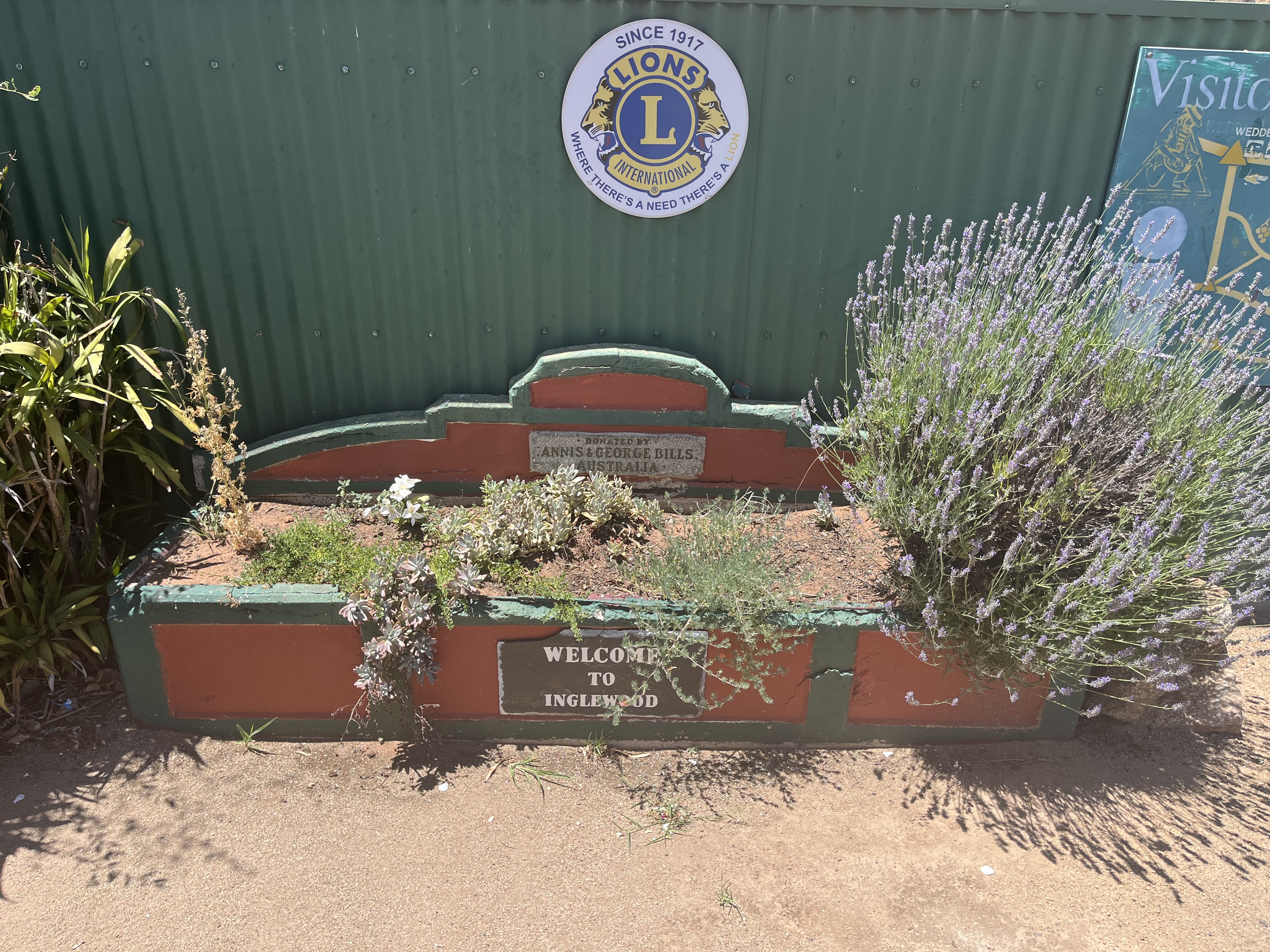
Inglewood
Lake Coorong Station Homestead
Malmsbury

Two different horse troughs, Pioneer Settlement Swan Hill

Rainbow
Tooradin
Warrnambool – Flagstaff Maritime Village
Woodend
Yackandandah

References:

The photos are all mine

Horsham Times: http://trove.nla.gov.au/ndp/del/article/72616702?searchTerm=annis%20and%20george%20bills&searchLimits=

Dubbo Liberal and Macquarie Advocate:

http://trove.nla.gov.au/ndp/del/article/132963328?searchTerm=annis%20and%20george%20bills&searchLimits=

The Adelaide Advertiser: http://trove.nla.gov.au/ndp/del/article/74356258?searchTerm=annis%20and%20george%20bills&searchLimits=

https://billswatertroughs.wordpress.com/

the buried village

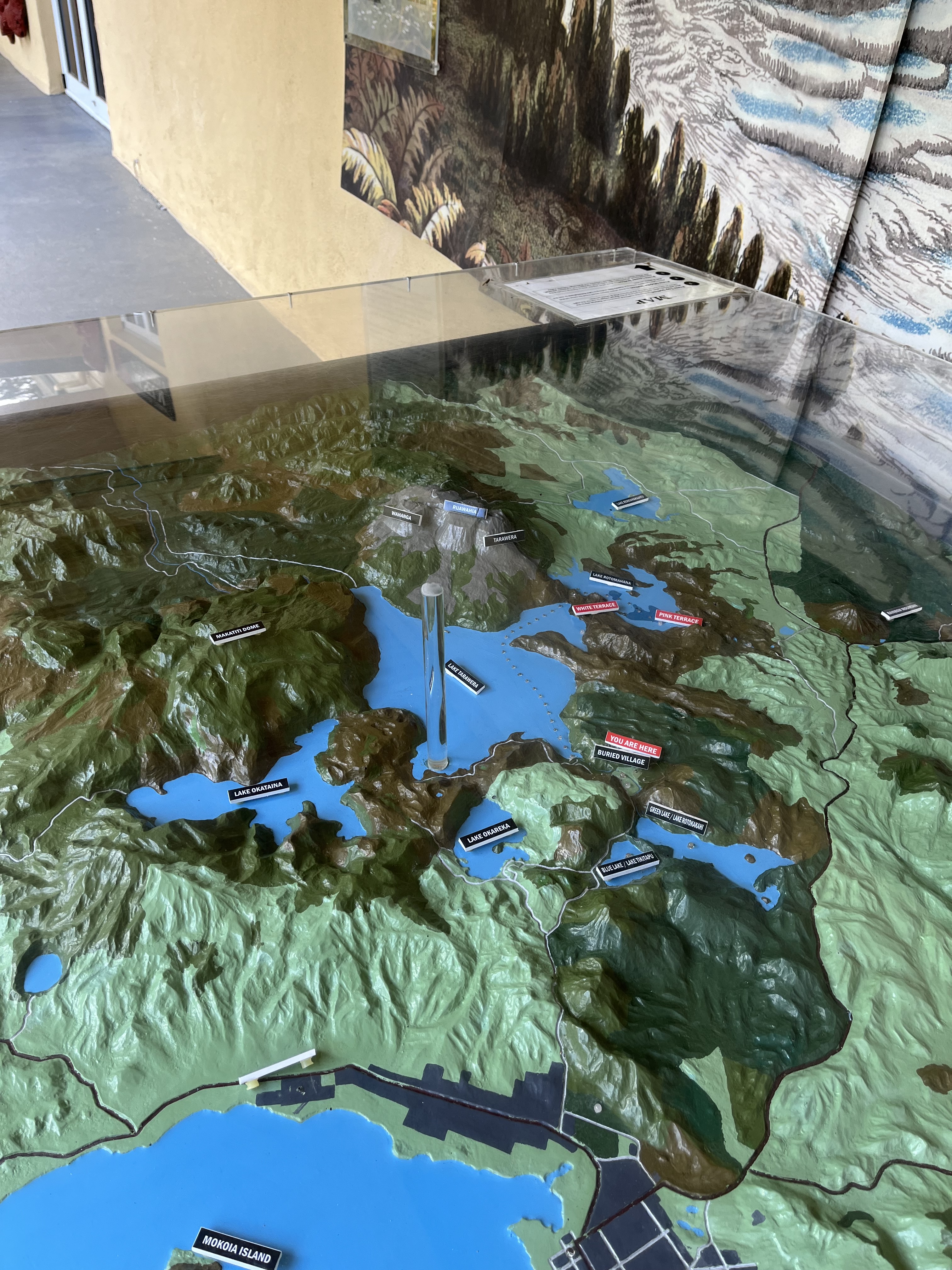
It’s been a while, life, work and other writing are basically the reasons. But I’m hoping to get back into a slightly more regular blog schedule, as there’s a backlog of, I hope, interesting things I want to write about. But back to the buried village. The village in question is Te Wairoa, just out of Rotorua on Aotearoa New Zealand’s North Island. The remains of the village sit in a really beautiful dip in a complex volcanic landscape. The map below gives you an idea of both the location of the village and the volatility of the landscape
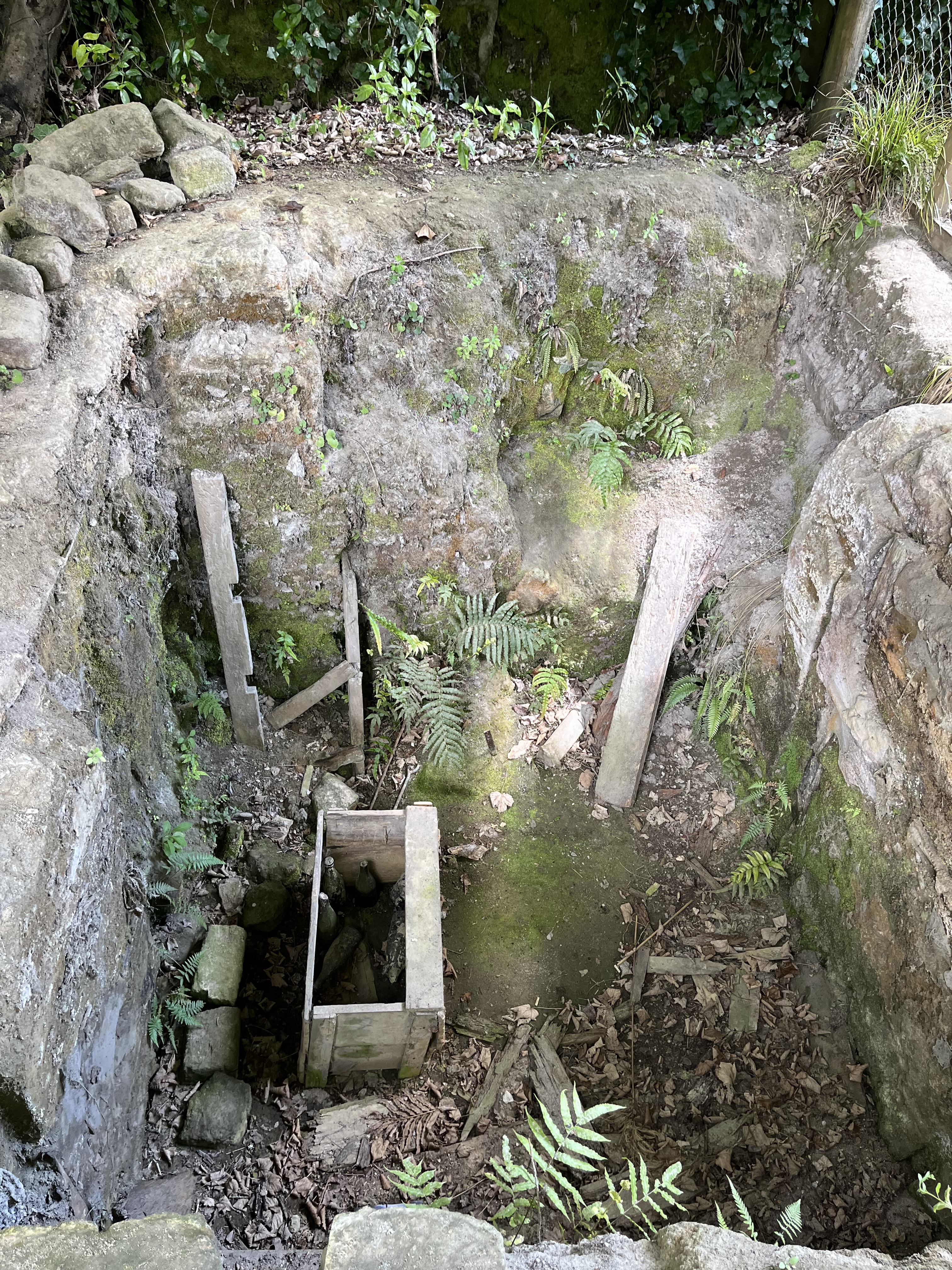
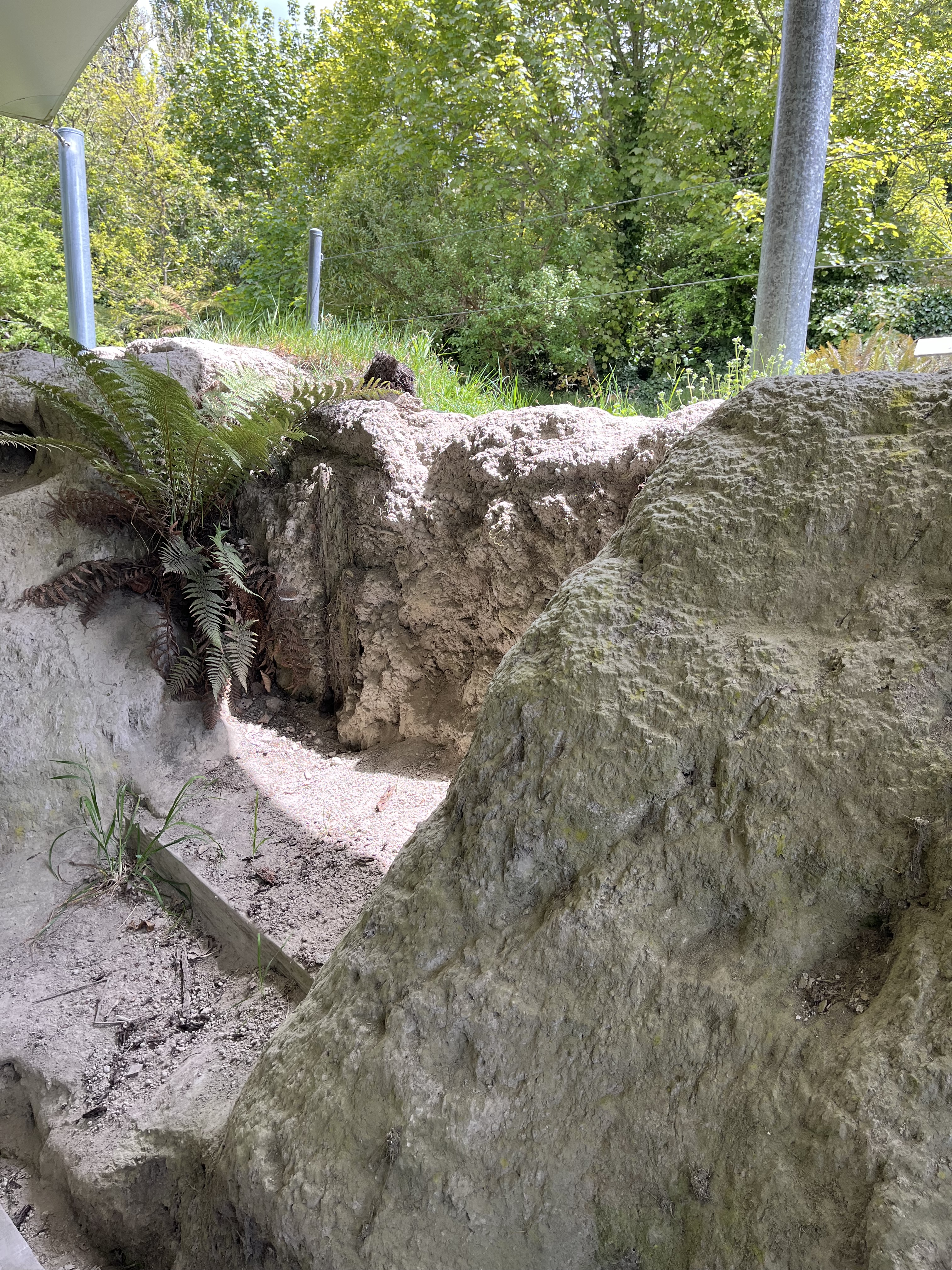
As you might have gathered from the name, the fate of the village is not a happy one, but although one night of 1886 saw the end of the village, it did have a beginning. So we’re going to start there.

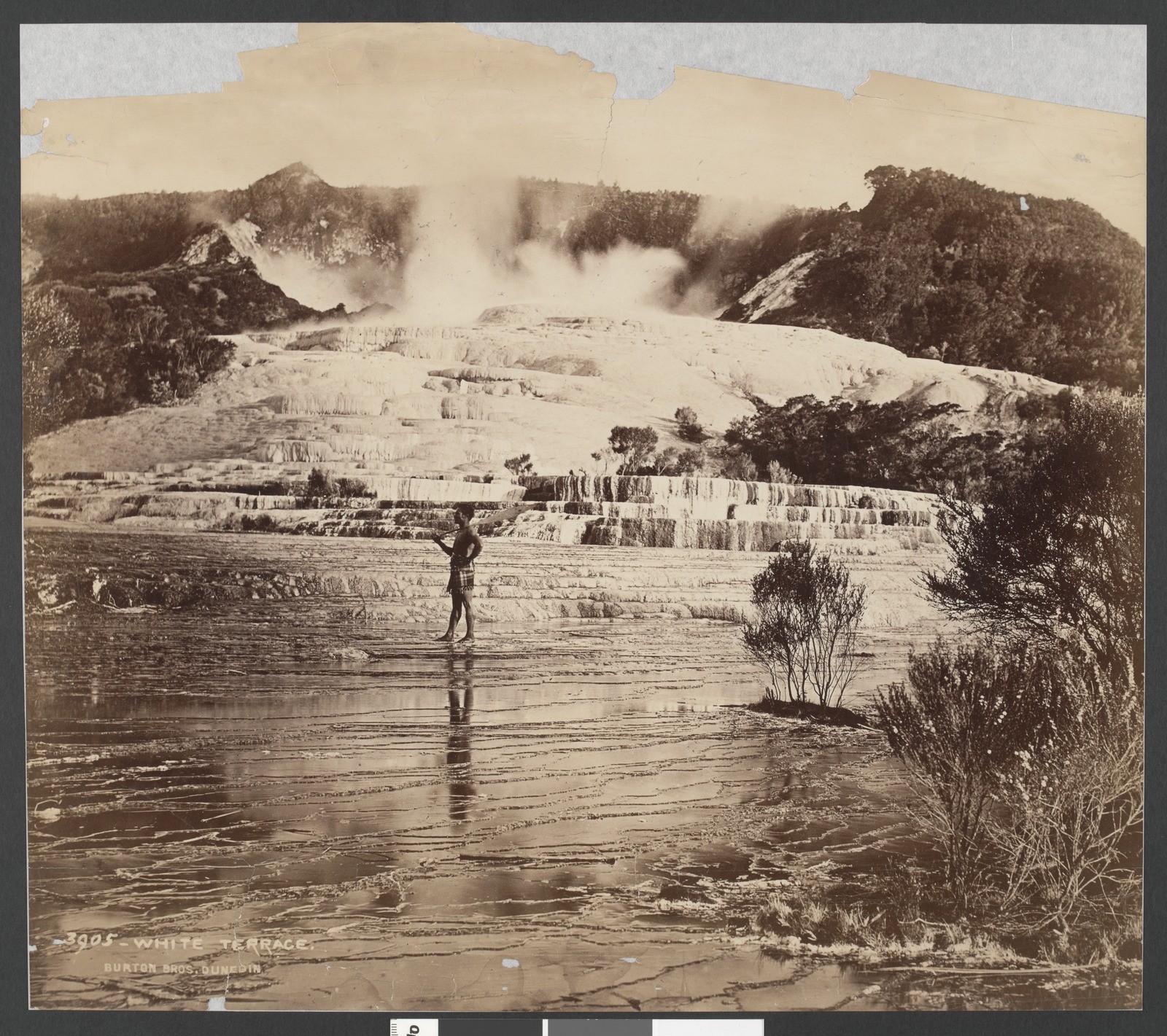
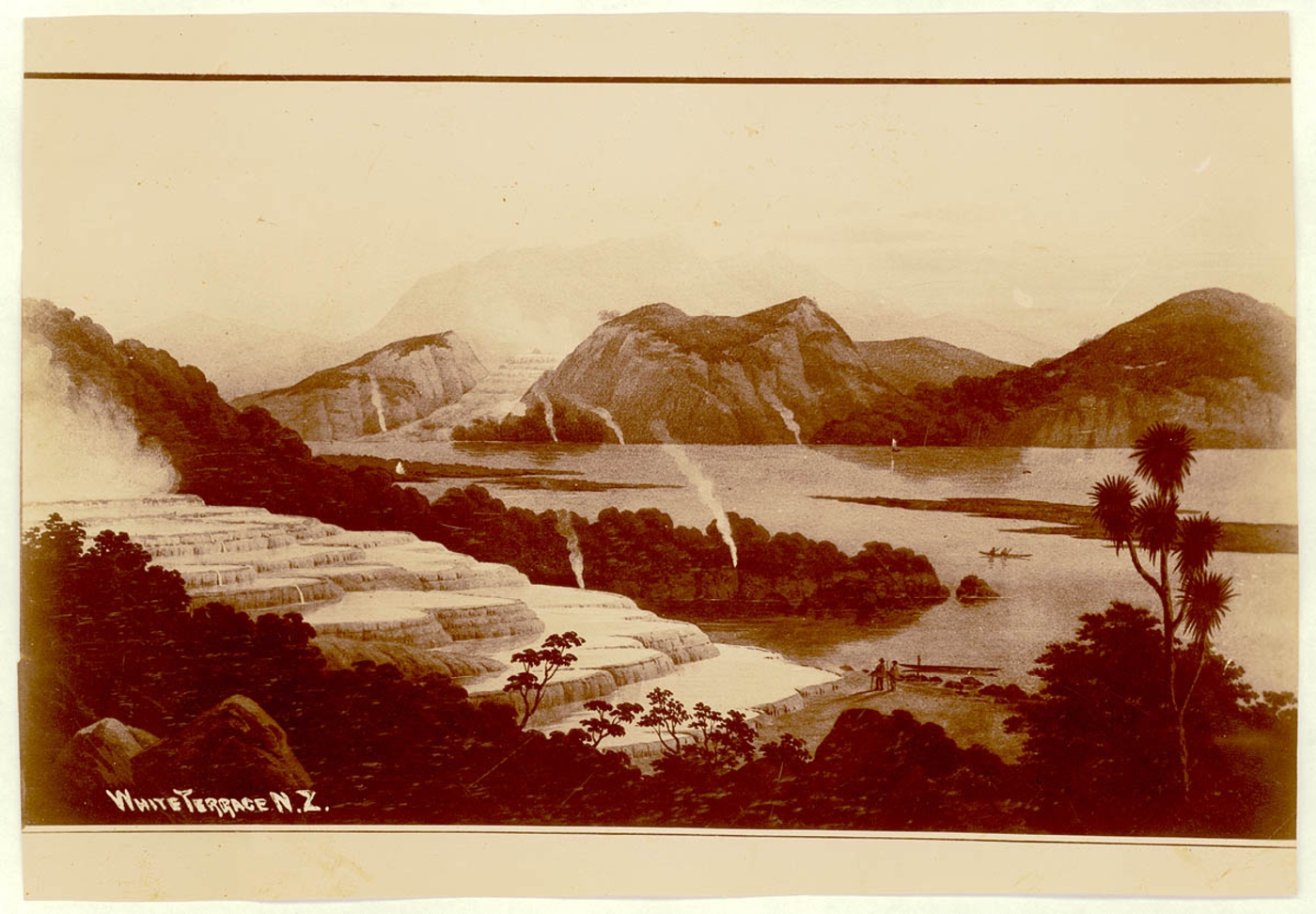
Maori people had been living in the area for generations, but Europeans moved into the area in the early 1800s. The foundations of the town itself are actually, interestingly, rooted in tourism. In the 1850s the local Tarawera iwi began guiding tourists to the magnificent Pink and White Terraces. A tradition that continues with the thermal landscape around Rotorua today. The guides were mainly women, including Guide Sophia who was described as an intelligent and pleasant woman and who bore 15 children. And Guide Kate, who was described as Amazonian. The Pink and White Terraces were extraordinary geological formations of hot and cold sinter baths, described as the 8th wonder of the world. You can see contemporary images of them below.

Victorians (the era not the state) came over long distances to visit these terraces. They were formed over 600 years ago when silica rich residue called sinter, originating from geysers, cascaded down and left thick silica deposits which, when they cooled, built these giant staircases as well as large pools of clear water. The White Terraces were about 280 metre wide and 30 m high, the Pink Terraces were a bit smaller and their colour came from the feric rich waters. You can get an idea of the colour in the painting below.

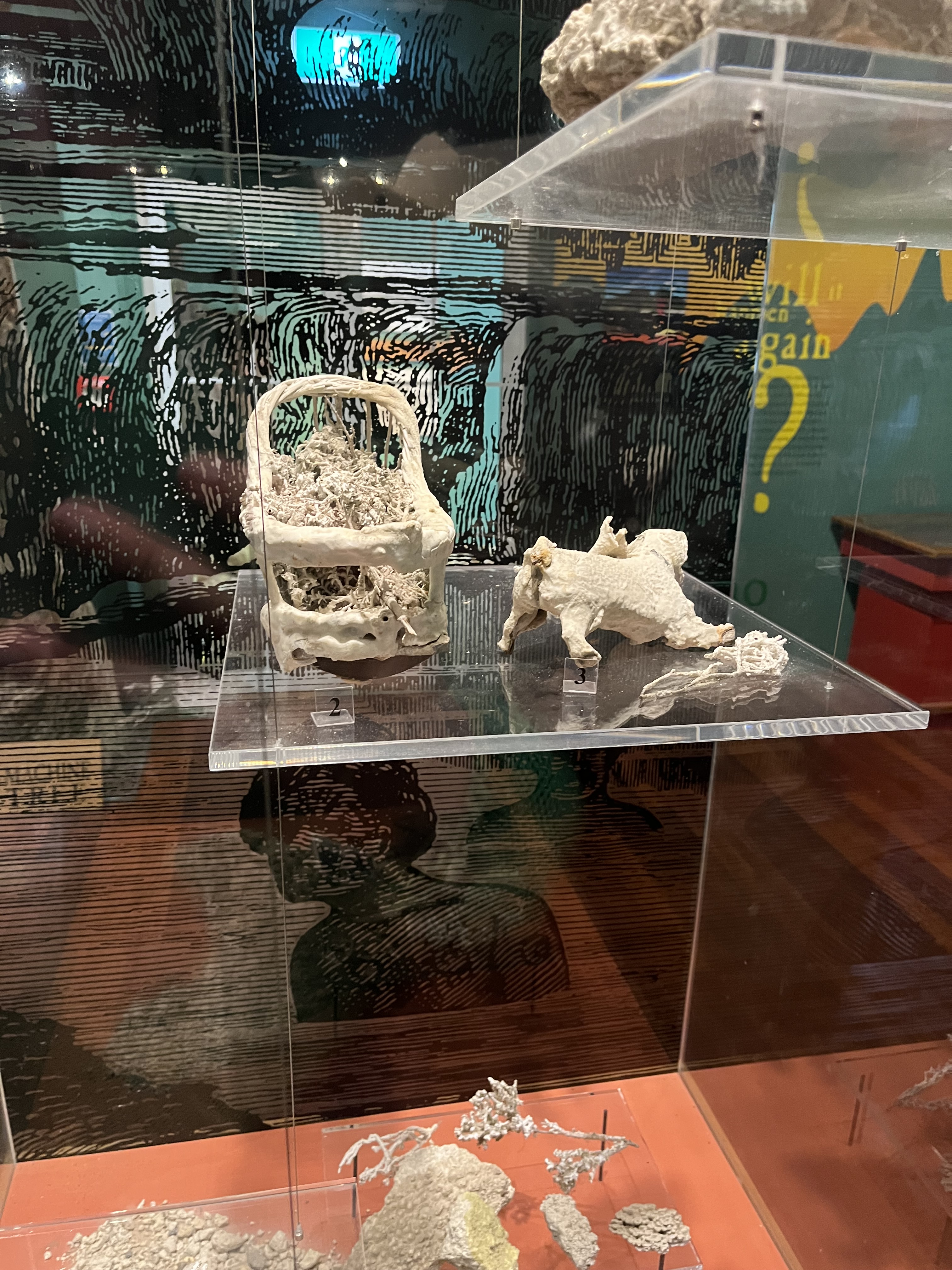
Objects became petrified by these silica rich waters. You can see a petrified hat below, that maybe a tourist left behind.

Some of the items were intentionally petrified for the tourists, including this toy cot and dog made out of newspaper.

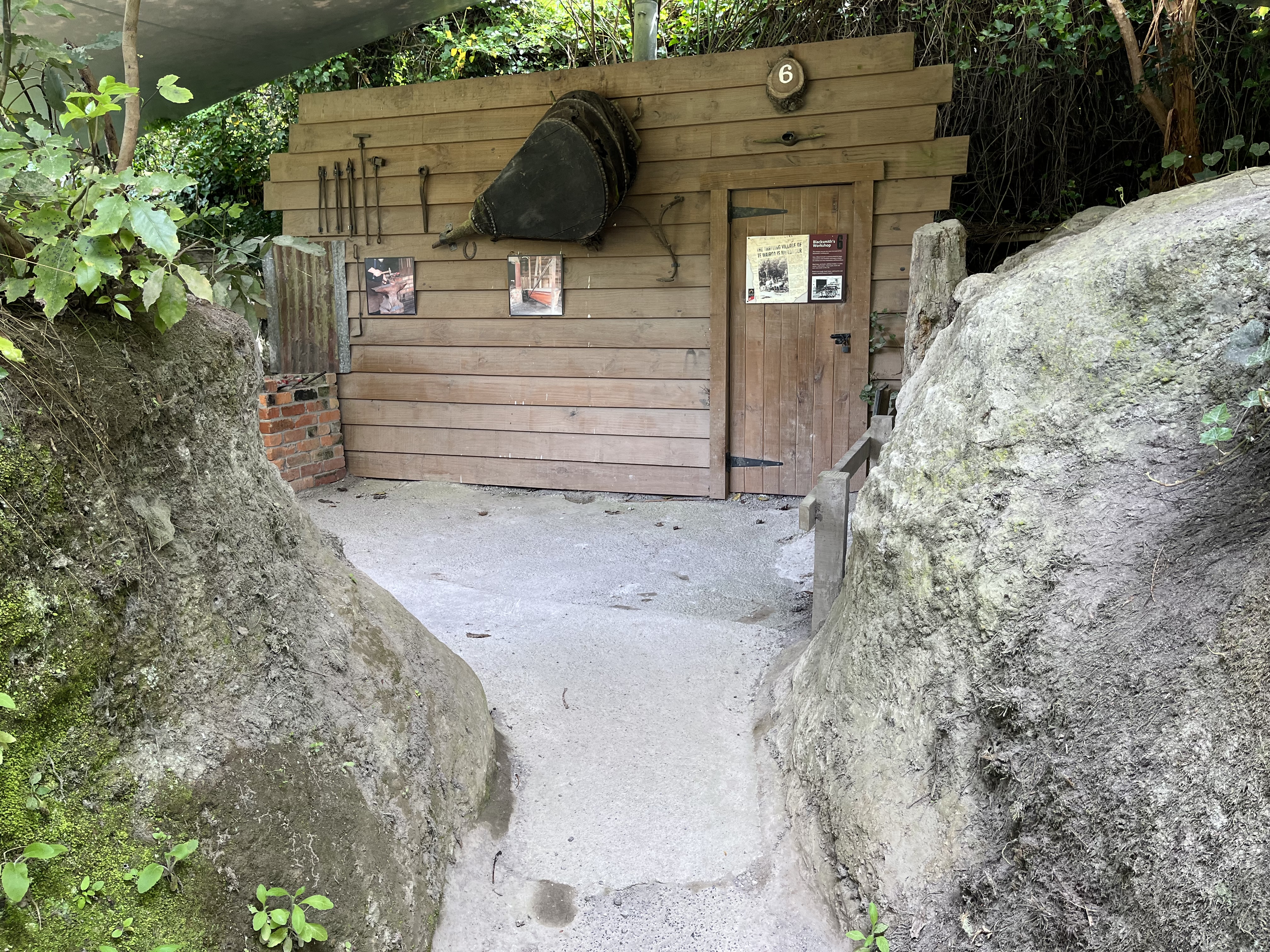
By the 1880s Te Wairoa itself had become the hub of this tourist trade, boasting two hotels: McRae’s Rotomahana Hotel and the unliscenced Terrace Hotel. The village was home to Maori and Europeans and included a school, a church, a meeting house, blacksmith’s, a store, flour mill and houses and whares (Maori dwelling – usually steep roofed). You can see it in the image below.

As you’ll see in the caption above, this was Te Wairoa before the eruption. Which brings us to the night of the June 9th 1886. There were warnings : on May 31st the creek was suddenly dry and then water surged filling the creek towards the lake, but then quickly drained away again. This was noted by Guide Sophia as she led tourists out to the lake. Then when they were crossing the lake in a boat towards the terraces, European and Maori people on the boat saw a Maori waka (war canoe) bigger than any known on the lake, and the men rowing the waka didn’t respond to any calls, so they were thought to be spirits. When the boat arrived at the Pink Terraces they found that a geyser had ejected mud much further than usual. These all together provoked unease across the valley, but there wasn’t really anything that could be done.

All remained calm until the 9th of June.

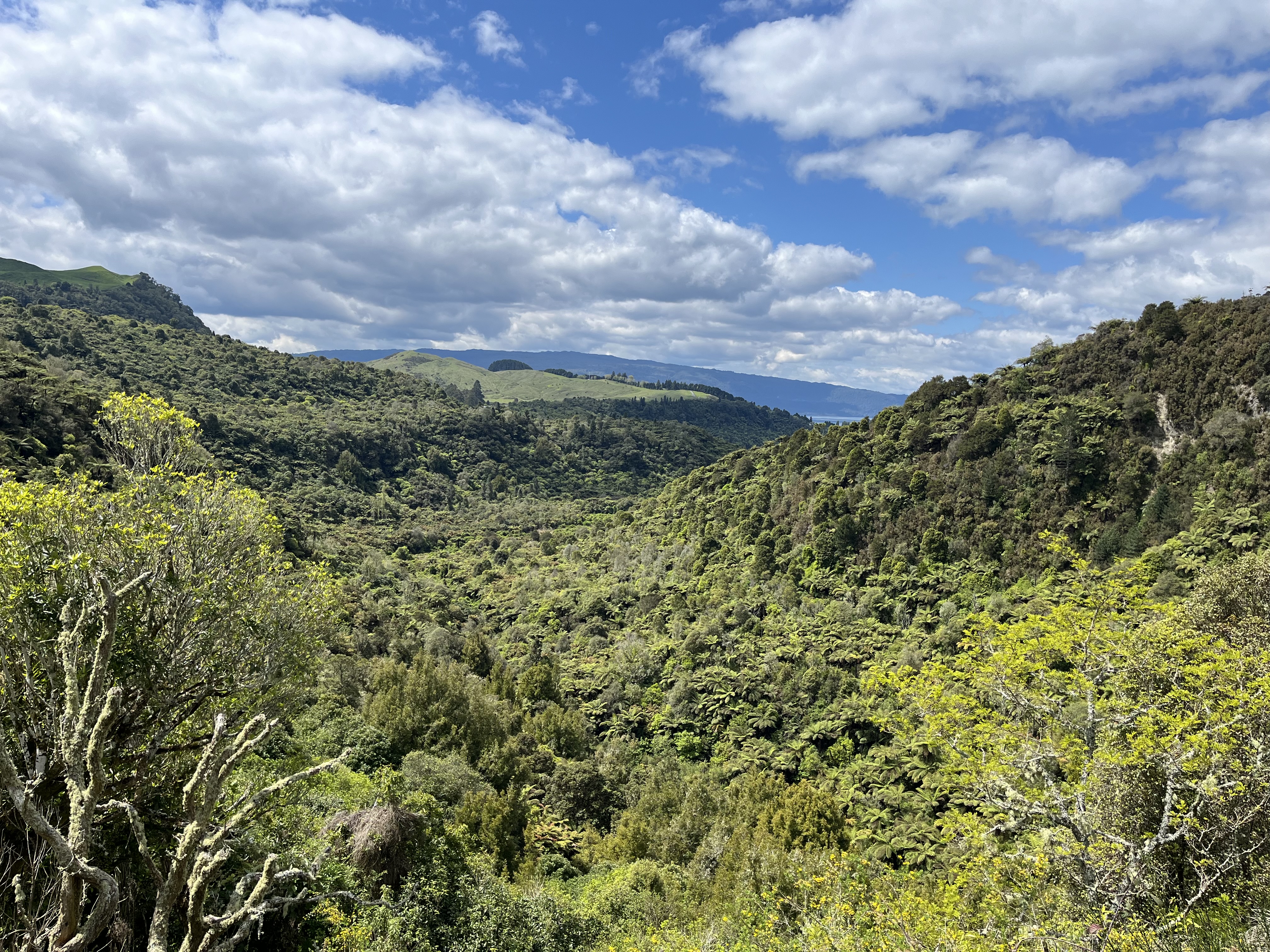
Shortly before midnight the earthquakes began. By 2:30 am craters were starting to open and erupting with larva along an 8 km rift north east towards the lake. A vast column of ash 9.5 km high rose from the direction of Lake Tarawera, there was a freezing wind, roaring and an eerie red glow. By about 3:20 the destruction had spread. Violent steam eruptions (when molten rock encountered water) sent ash and mud into the sky that blanketed the surrounding area. Debris continued to fall until about 6:00 am and when the dust has settled, the villages of Te Ariki, Moura, Tokiniho, Totarariki, Rotomahana and Waitngongongo were either buried completely or had been on the site of active craters, there were no survivors. In Te Wairoa much of the town was buried and 17 people killed, though amazingly most of the people managed to escape. The landscape was was irrevocably changed. Not only were the Pink and White Terraces obliterated, there was a 16 kilometre rift across the mountain from Tarawera that had opened into the Waimangu valley. You can see the valley below, all the vegetation, apart from a few of the larger trees, has grown since the 1886 eruption.

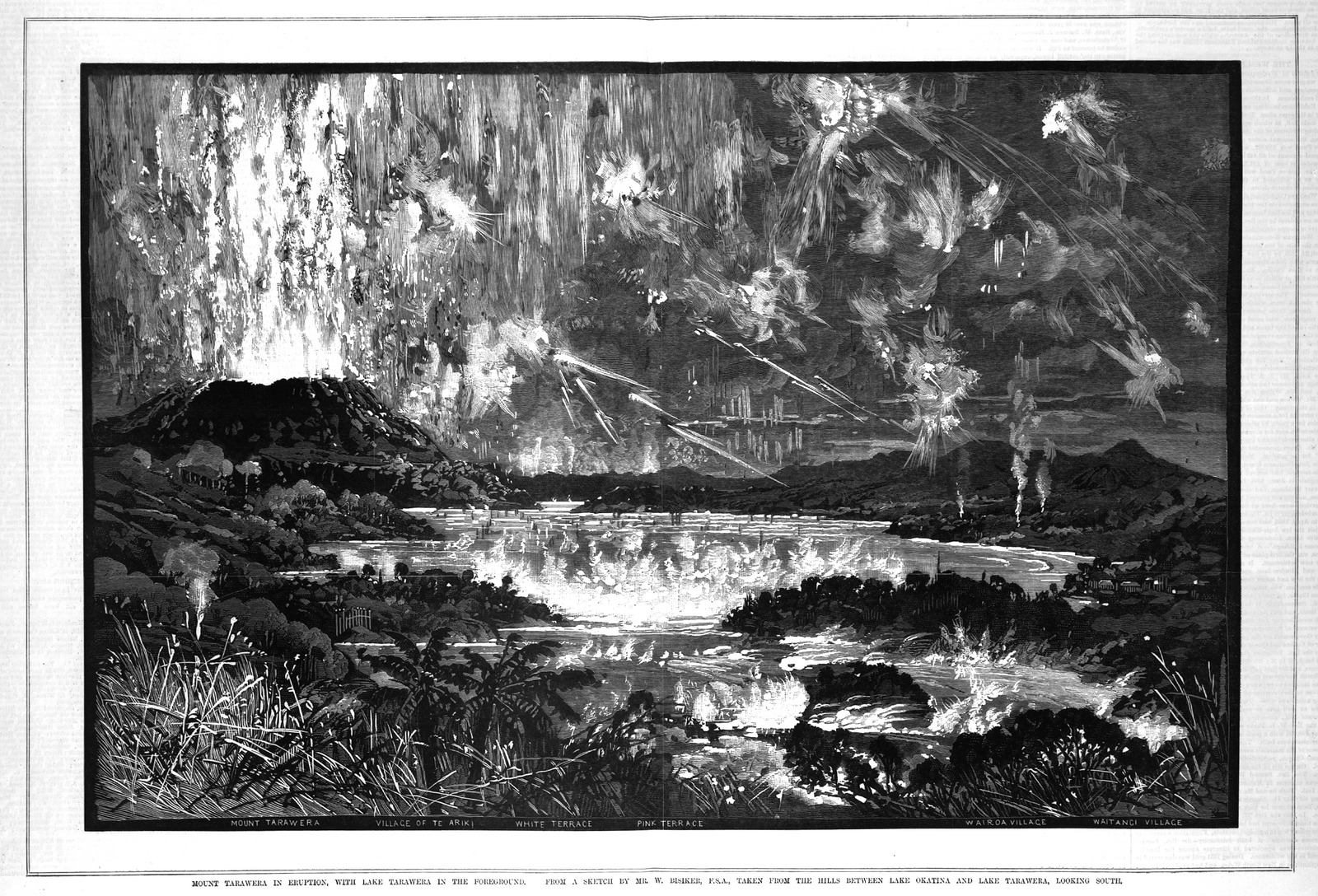
The eruption was felt all over Aotearoa New Zealand. In nearby Rotorua new hot springs opened up, jets of steam issued from the rocks and geysers spurted along the shore edge of Lake Rotorua. Many people thought the world was ending. You can see a near contemporary painting of the eruption below.

It really gives a sense of the extreme violence. More than 150 people were killed in the eruption, as well as kilometres of land devestated. For the local Tuhorangi, Maori, it also meant the destruction of the remains of their ancestors, many of whom had been entombed on the mountain itself. Most of the victims of the eruption were also Maori.

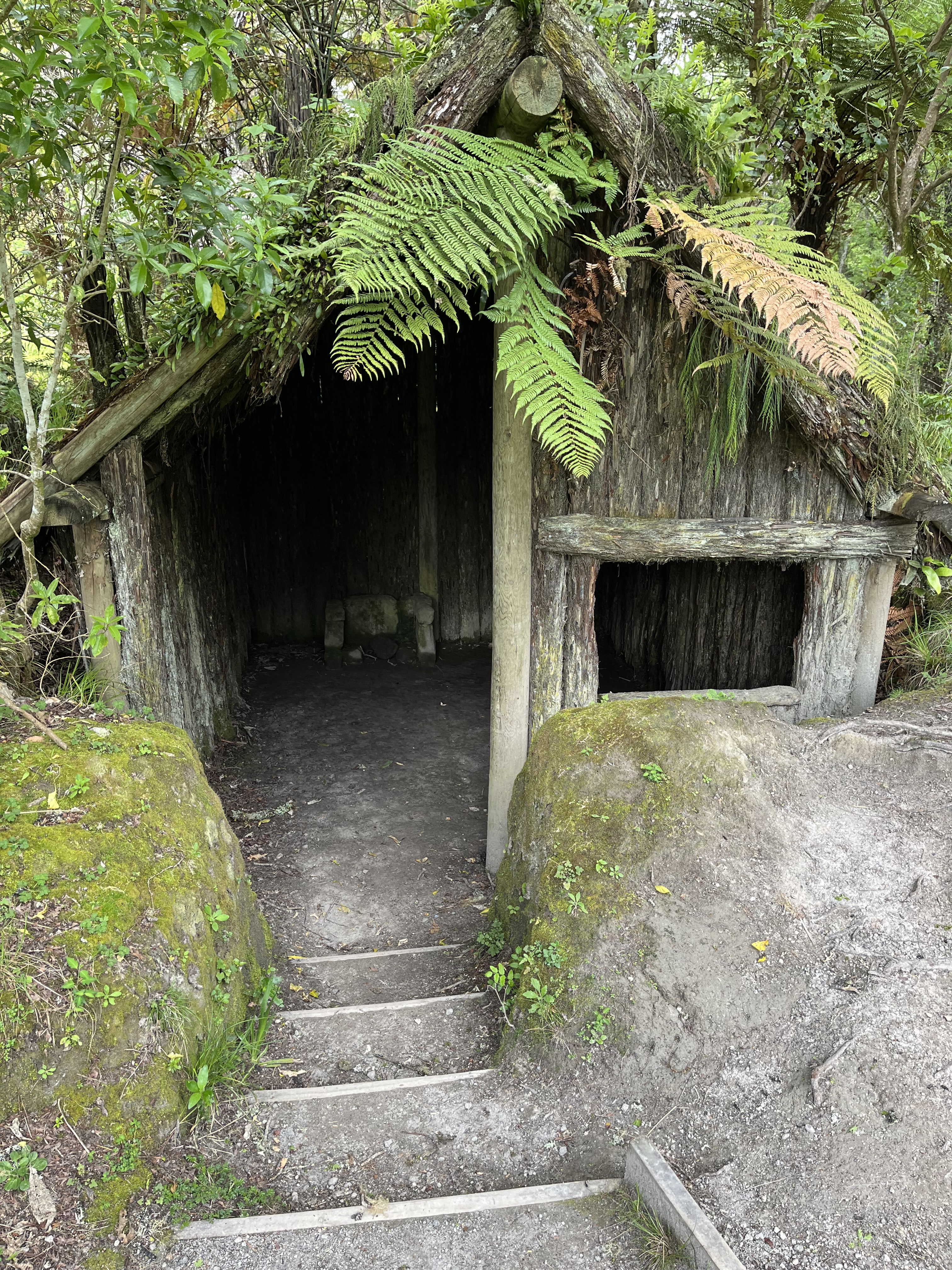
As the eruption settled rescue groups went out from Rotorua and Ohinemutu to try to find survivors, they met with limited success, especially in the towns closest to the eruption. The higher survival rate in Te Wairoa, though most of the town itself was buried, was partly because it was a little further from the eruption so it wasn’t immediately subsumed. About fifty people made it through the flaming debris to Guide Sophia’s whare, the sloped roof meant that the debris slid off rather than collecting like they did on the European houses and hotels. This meant that the whare stayed standing where as the European buildings collapsed under the weight. This was also true of the Hinemihi meeting house. Of the 17 people who died in the town some died outside, either struck by debris or suffocated from the ash, or they died inside collapsed or burnt buildings.

We have some incredible first hand accounts of the eruption, for example Mr McCrae from the Roromahana Hotel described it as. “We saw a sight that no man who saw it can ever forget. Apparently the mount had three craters, and flames of fire were shooting up fully a thousand feet high. There seemed to be a continuous shower of balls of fire for miles around.” McRae and his guest, staff and several other locals made their way to Guide Sophia’s whare, and all, apart from the one tourist Edwin Bainbridge, survived. Bainbridge died when the hotel’s balcony fell on him when they were trying to escape.

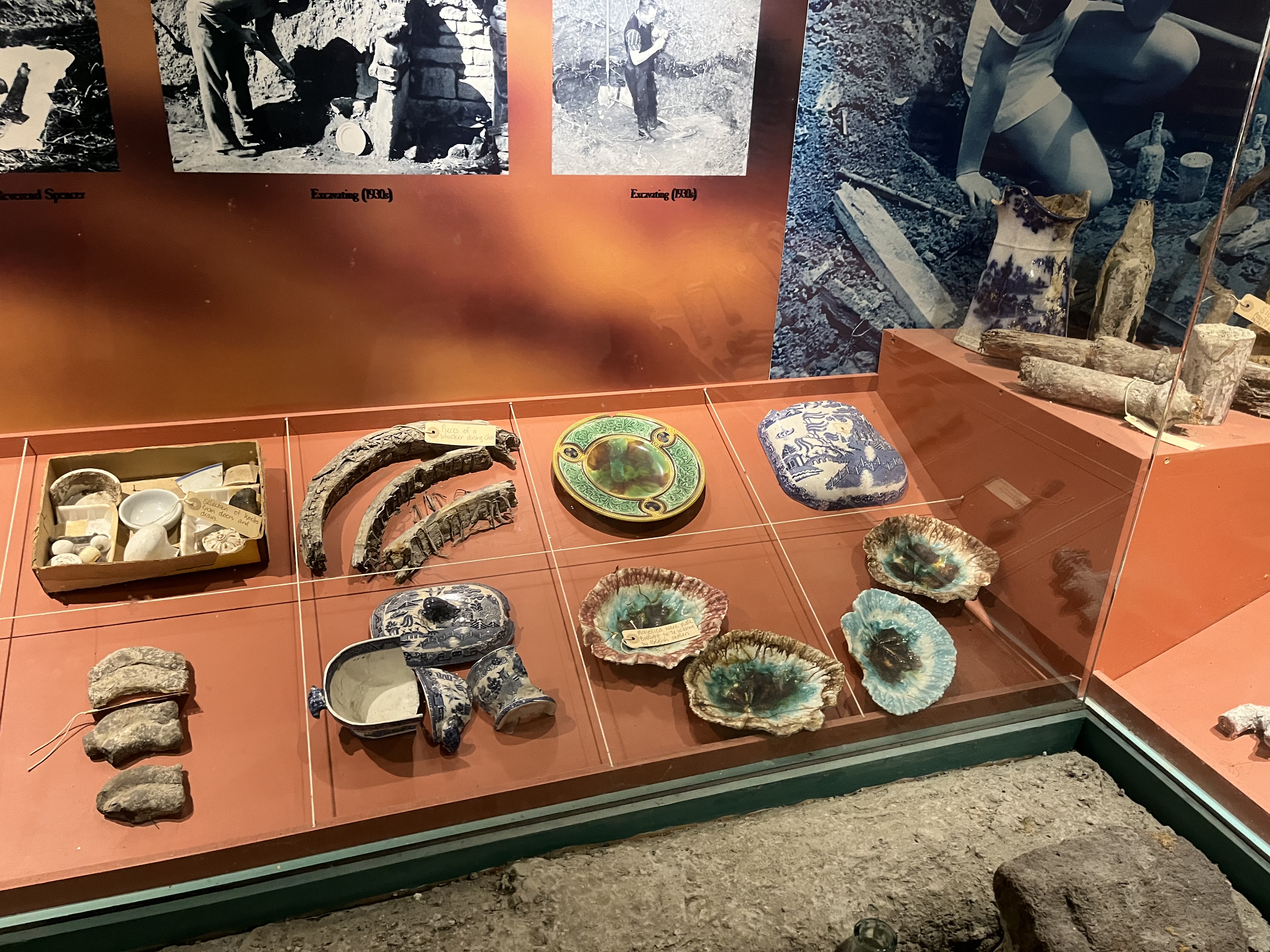
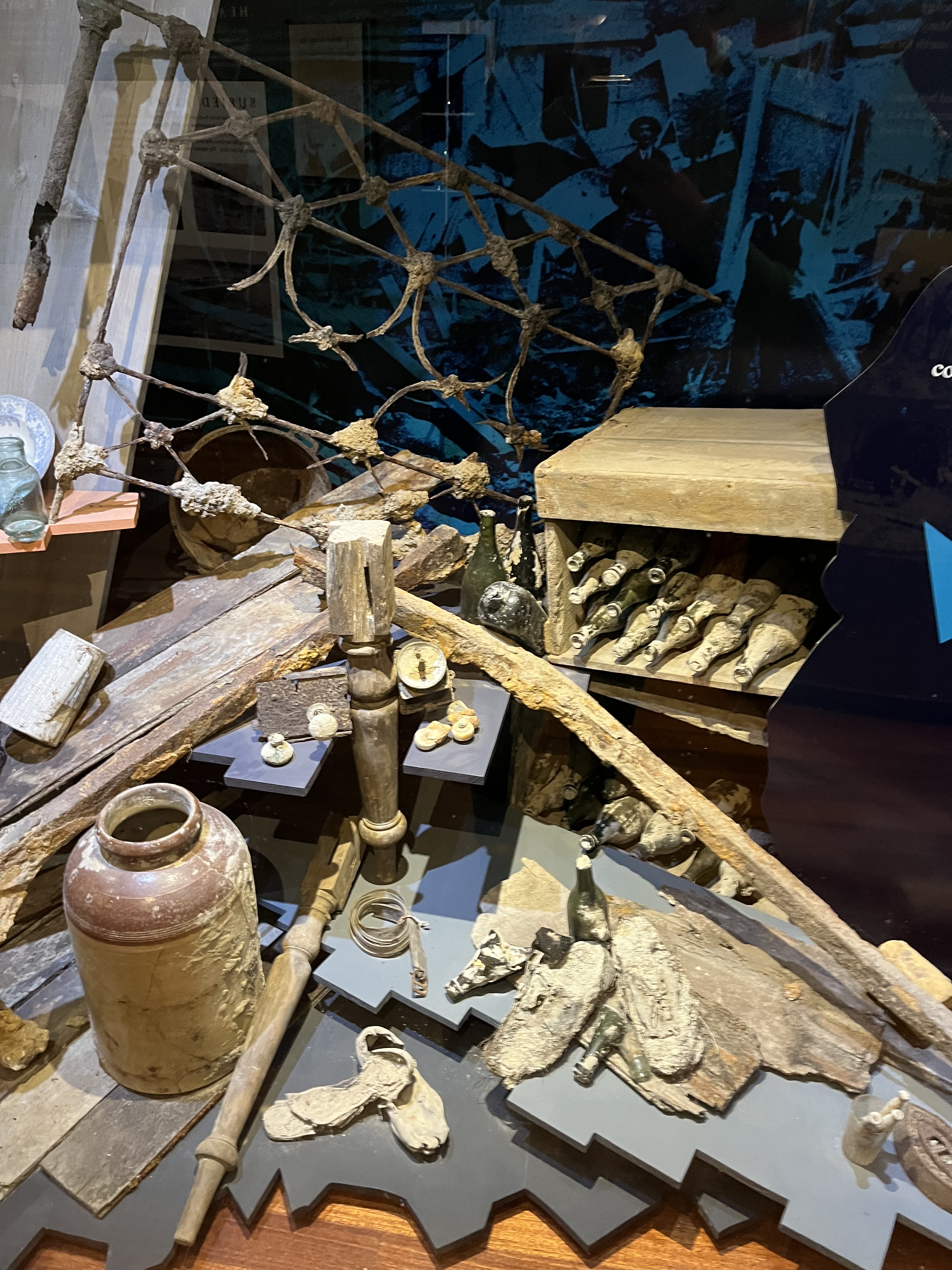
After the eruption no one recieved any government compensation for their destroyed buildings, and insurance companies refused to pay out because people were not covered for volcanic eruption. Ultimately Te Wairoa was abandoned and left buried. It has been the site of a number of archaeological digs over the years, with many 19th century artefacts recovered that paint a picture of life in the lost village.

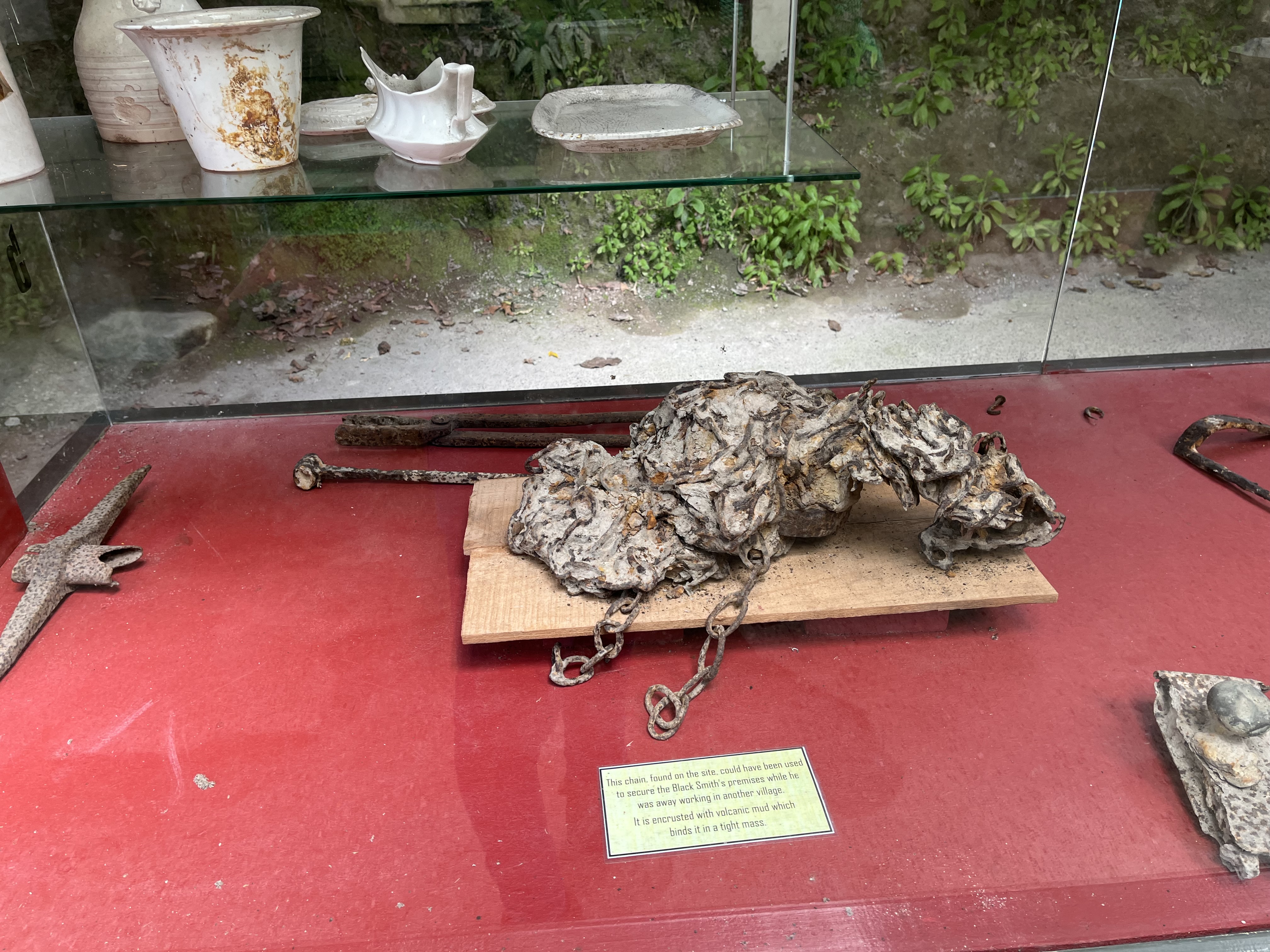
The last image above is testament to the power of the eruption. It’s a chain found on the site that might have been used to secure the blacksmith’s, it is completely encrusted with volcanic mud which has bound it all up into one solid clump

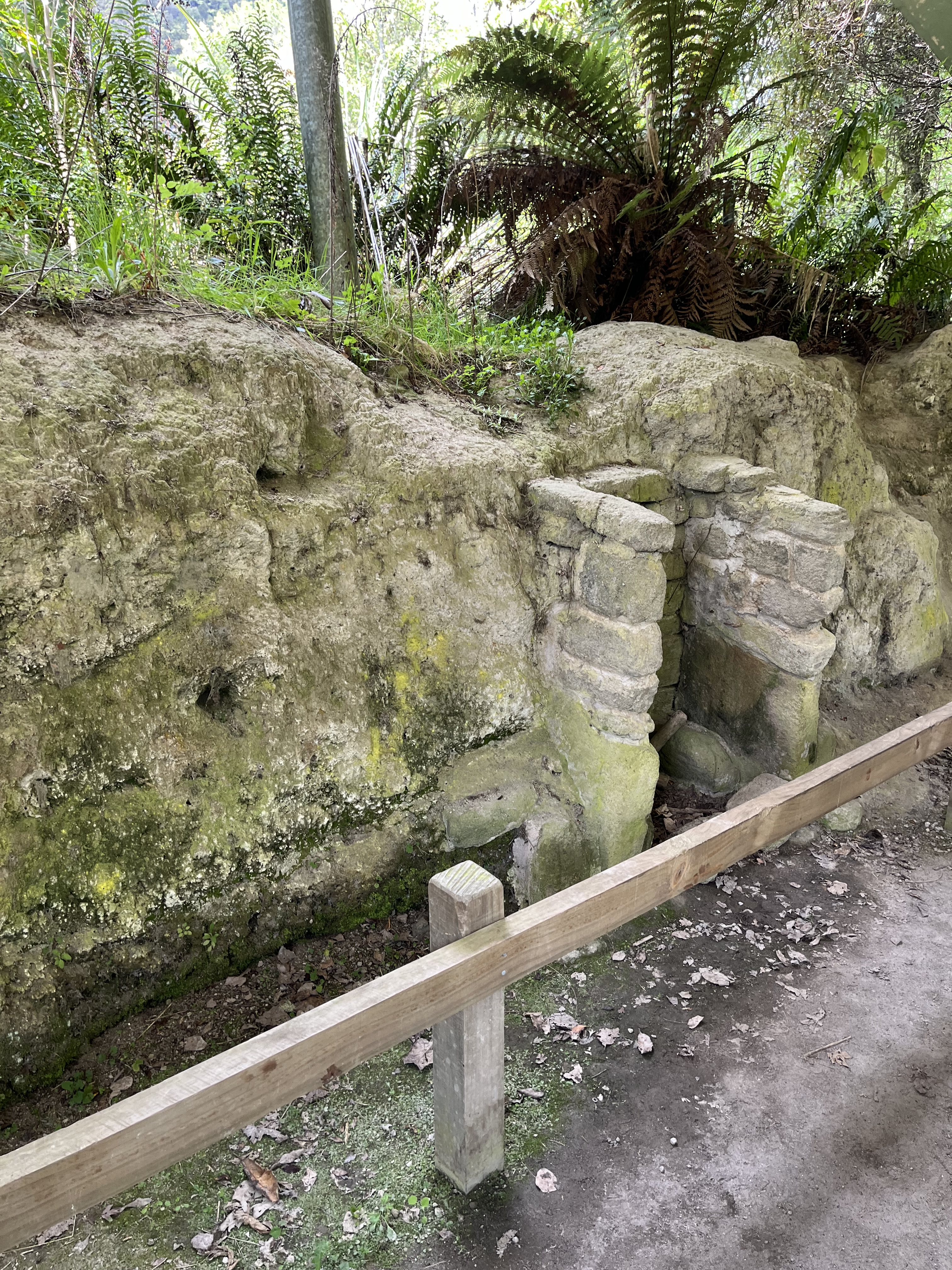
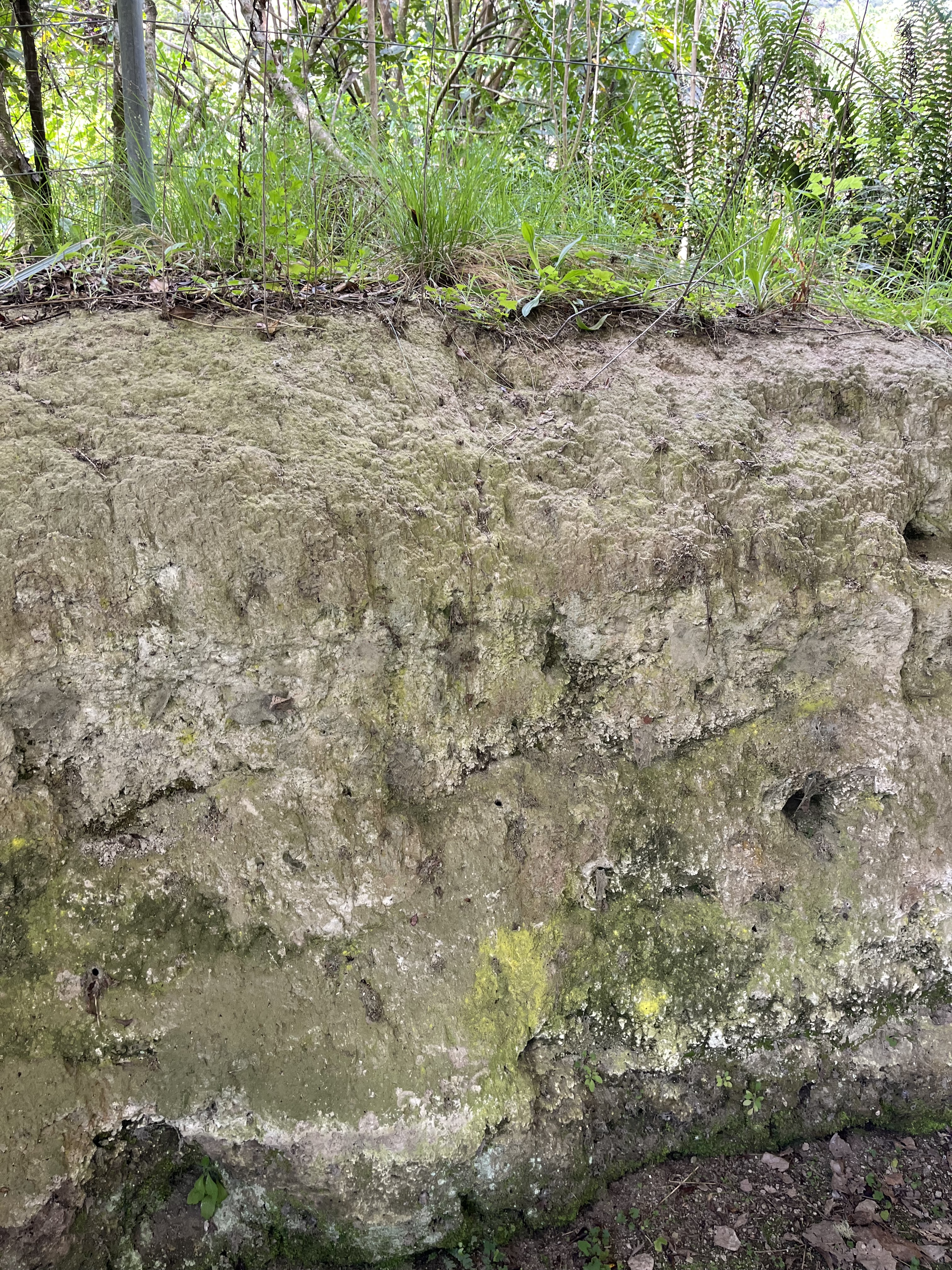
As part of the digs over the years, sections of the village have been unearthed and can also be explored now. What’s most striking about them for me is just how layered and solid the mud is. It’s hard to imagine that it wasn’t always there.

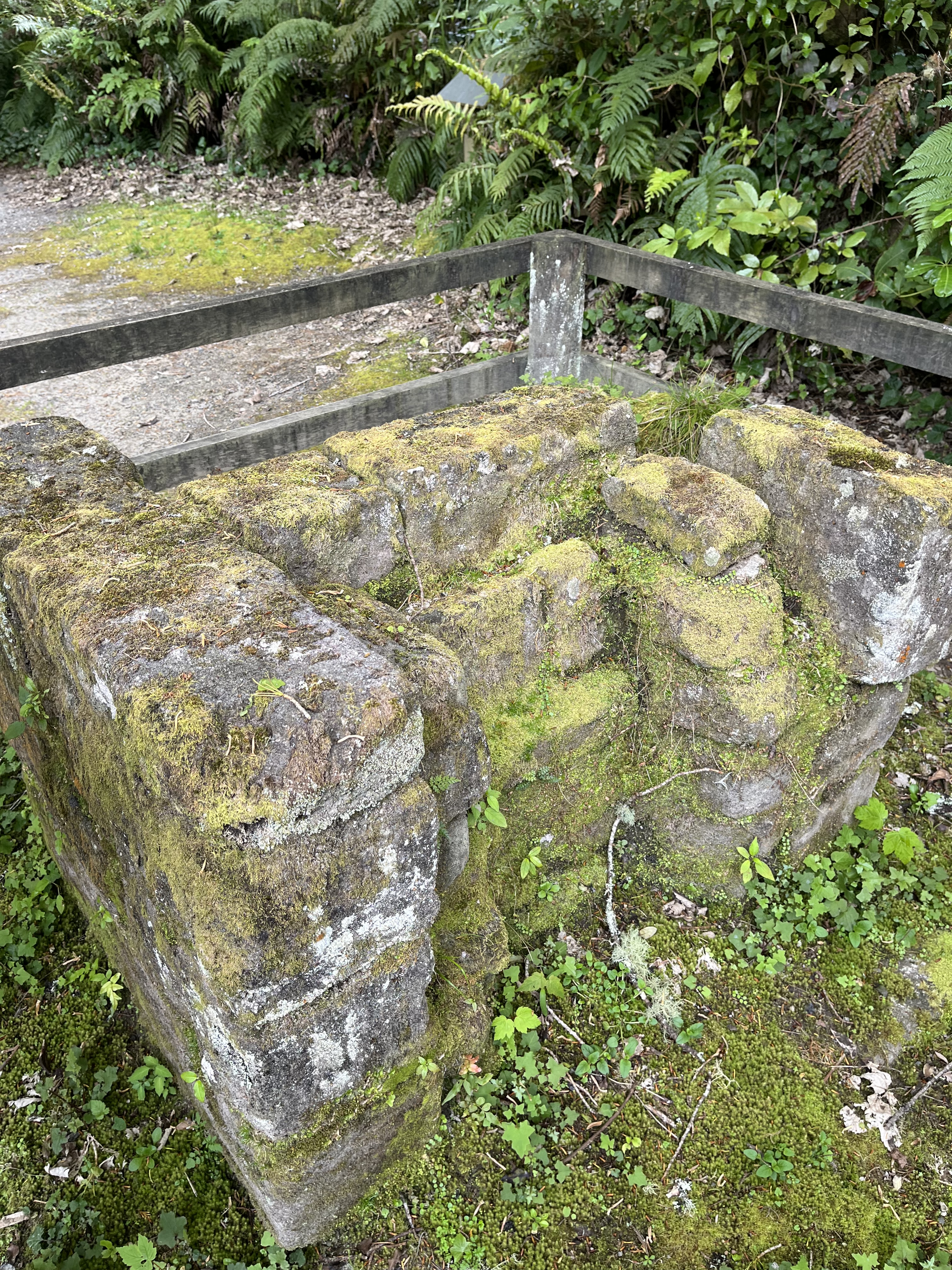
The last two photos are the remains of stone pataka (store house), it would have been lined with ferns and rushes and used to store potatoes and other crops. It was actually one of the first pieces of the village excavated, a woman called Vi Smith was picnicking beside the stream in the early 1930s and she noticed a stone in the bank and scraped back to the mud to reveal one of the carved stones.

The remains of the buried buildings are not the only artefacts that you can see at the Te Wairoa site. There’s other, in some ways, more unsual items. Including the below carronade. It was found in the stream in the 1930s at the bottom of the waterfall (I’ll come back to the waterfalls in a moment). It’s thought it was brought to Te Wairoa from the coast by the Maori as possible defence against another tribe in the 1860s.

Another interesting artefact is the bow section of the waka tuau, which would have been 30 feet originally. It was used originally in the invasion of the Lake District in early 1800s but, after the invasion, it was used for conveying tourists on Lake Tarawera. Its remains were uncovered below the waterfalls in 1927

The final really interesting artefact was the remains of some wooden posts. This might seem like an odd one, but this row of poplar fence posts survived the eruption with just their tops poking out of the mud. The posts then sprouted and, over the next 126 years, 30 to 40 of them grew to roughly 40 metres. The trees sadly began to fall down from 2010 onwards, and were eventually felled in the late 2010s. You can still see the area where they grew though

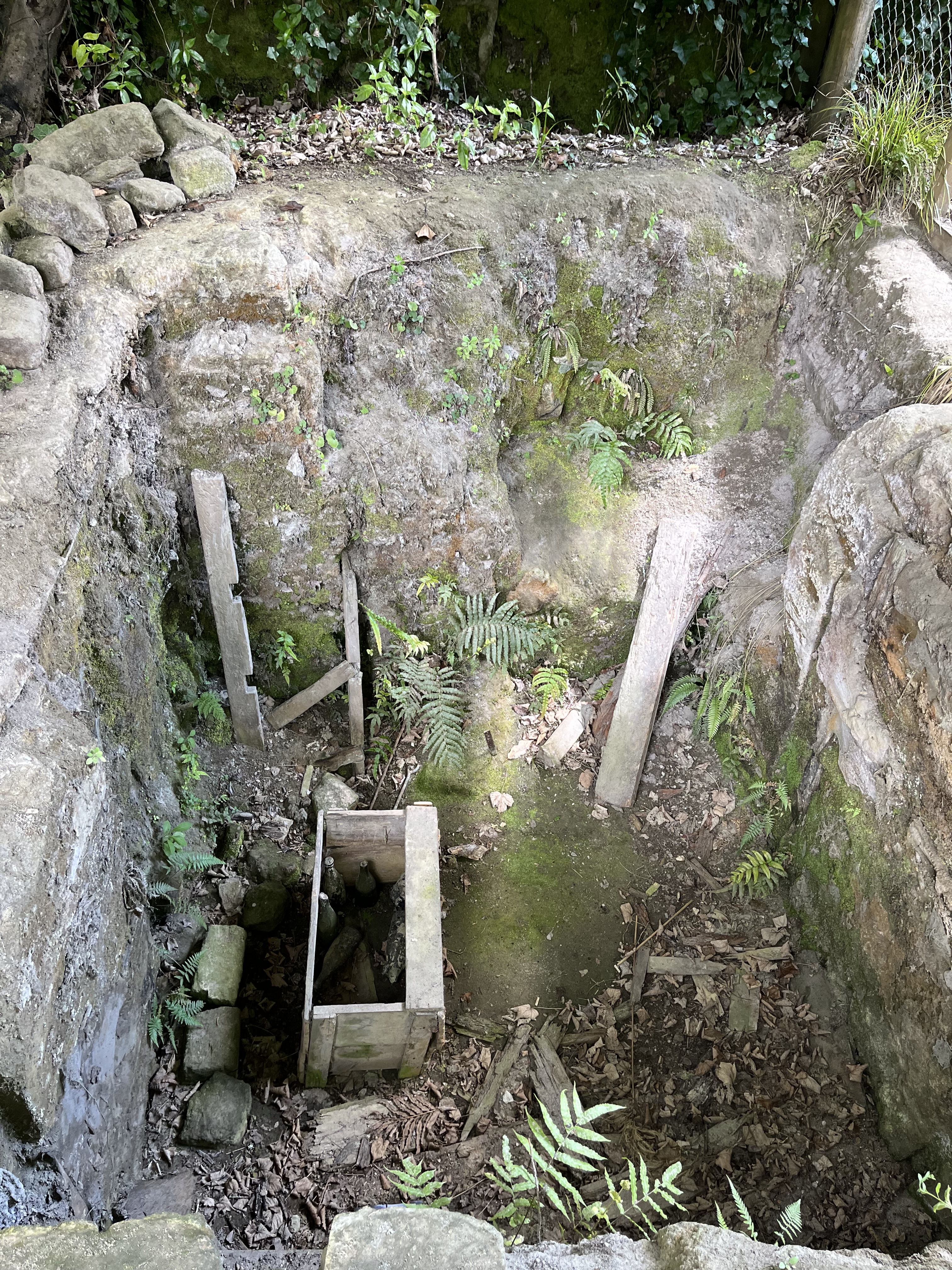
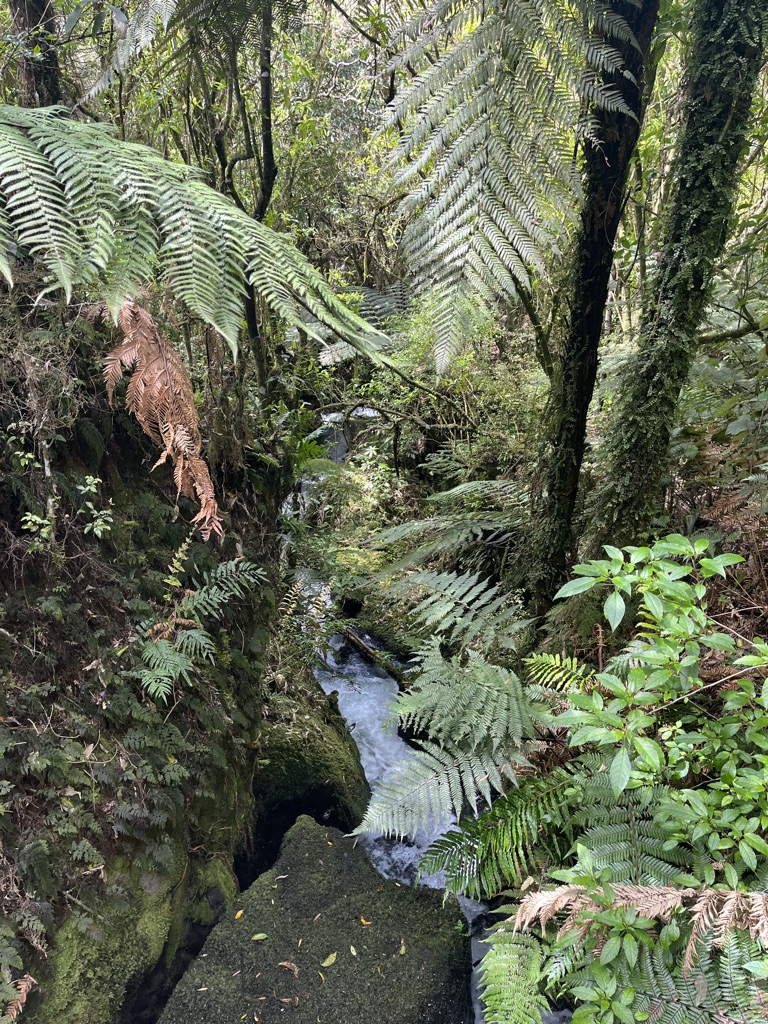
The Tarawera eruption was utterly devastating to the landscape, but what feels almost counter intuitive when you’re visiting is how quiet and lush and peaceful the landscape is now. The native bush has magnificently colonised the ‘new’ landscape created by the eruption. And nowhere is this more evident that around the beautiful waterfalls, you can see on the river walk right next to the remains of Te Wairoa.

The story of Te Wairoa and the Mount Tarawera eruption is not complete. Mount Tarawera is still an active volcano that is part of a very active volcanic landscape. Tarawera has erupted at least five times in the last 20,000 years, and the 1886 eruption was actually small compared to earlier eruptions. There is in fact a high likelihood that there will be another larger eruption, the only question really is when, and it may not be for thousands of years. Scientists monitor the volcano and the area for precursors like earthquakes, ground deformation and new or increasing hot spring flow, but ultimately, as with all volcanoes, if another eruption does happen we are as at the mercy of the volcano now as we were in 1886. It’s a landscape that really makes you think.

References:

Site visit 2024 – a lot of the information has come from the excellent signs in the buried village itself

https://www.buriedvillage.co.nz/

https://www.waimangu.co.nz/history/mount-tarawera/

https://www.newzealand.com/au/feature/mount-tarawera/

https://nzhistory.govt.nz/eruption-mt-tarawera

https://www.nzgeo.com/stories/the-night-tarawera-awoke/

Images:

The photos and video are all mine.

Pink Terraces : State Library of NSW : https://search.sl.nsw.gov.au/permalink/f/1cvjue2/ADLIB110317253

White Terraces: State Library of Victoria

https://find.slv.vic.gov.au/permalink/61SLV_INST/156d4cp/alma9939648455207636

White Terraces with the Pink Terraces in the background: State Library of NSW

https://search.sl.nsw.gov.au/permalink/f/1cvjue2/ADLIB110317254

Pink Terraces demonstrating the colour: National Library of Australia

https://nla.gov.au/nla.obj-134305524/view

Te Wairoa before the eruption : Te Papa

https://collections.tepapa.govt.nz/object/1267698

Mount Tarawera eruption: State Library of Victoria

https://handle.slv.vic.gov.au/10381/258258

I run this blog because I enjoy it, but if you felt able to contribute towards its upkeep I’d appreciate it.

One-Time
Monthly
Yearly

Make a one-time donation

Make a monthly donation

Make a yearly donation

Choose an amount

A$5.00
A$15.00
A$100.00
A$5.00
A$15.00
A$100.00
A$5.00
A$15.00
A$100.00

Or enter a custom amount

A$

Anything helps 🙂

Your contribution is appreciated.

Your contribution is appreciated.

DonateDonateDonate