Advent Calendar of Castles: 19th of December: Caerphilly Castle

caerphilly4caerphilly2caerphilly5caerphilly3

Caerphilly is another Marcher castle, but it is much later in date than the other two on this list. It was begun in 1268 by Gilbert de Clare Lord of Glamorgan in response to Llywelyn the Last’s threats to the area. Gilbert de Clare took the area in which the castle stands in 1266 to try to stop Llywelyn the Last from moving further south. Construction of the castle was halted in 1270 when Llywelyn the Last attacked it. However it began again in 1271 and continued apace. What makes Caerphilly remarkable is that apart from some basic domestic remodelling in the mid 14th century there were no additions or changes to the castle as the years went past. This makes it an extraordinarily complete example of a late 13th century military castle. It is also an excellent example of the cutting edge of military defence at the time.

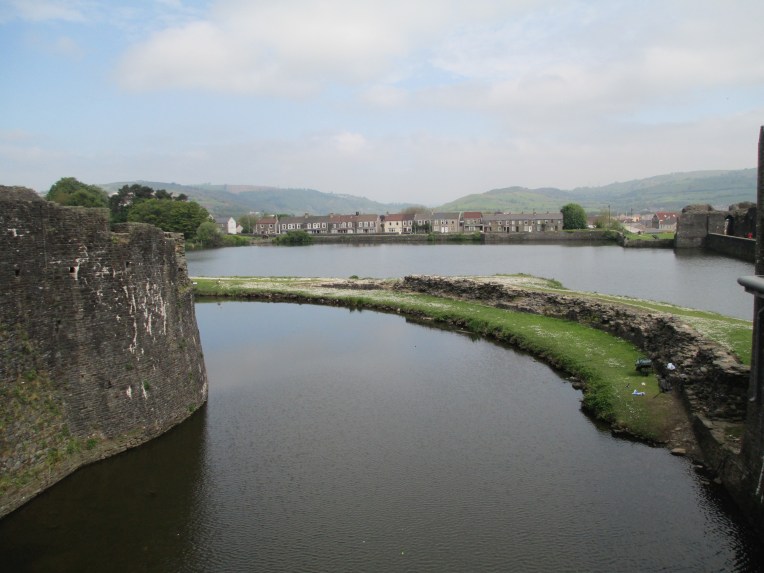
Caerphilly not only has walls with in walls making it the first, as well as arguably the best, concentric castle in Britain (between the outer entrance and the heart of the castle were 3 drawbridges, 6 portcullises and 5 sets of double doors) it also has the best use of water as a defence in a castle of this period. The immense water works are manmade lakes and moats and the waters are held back from the castle by earth dams. Caerphilly boats both an inner moat and an outer moat. Because Caerphilly was built on unused ground Gilbert de Clare was able to use all the modern techniques to create a truly massive castle, it occupies a spectacular 30 acres.

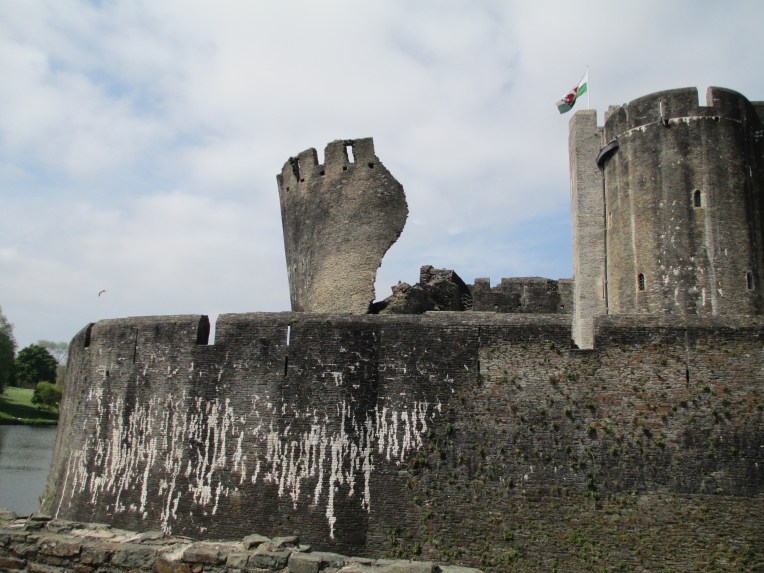
The first thing most people notice about Caerphilly is its precariously leaning tower. This is the south east tower and it currently stands at 15m high and leans an alarming 10 degrees out of line. Locals say it was caused during the Civil War bombardment, but it could also just have been subsidence no one is entirely sure.

The need for Caerphilly was negated by the crushing defeat of the Welsh at the start of the 13th century and after this the castle didn’t see that much use. The last real action it saw was when it was besieged by Isabella queen of Edward II in retaliation towards Hugh Despenser, but Hugh had already been taken and was in fact hanged in 1326. By the 16th century the castle was no longer in use and was falling towards ruin. The castle was saved from complete ruin by the Butes in the late 19th century.

References:

Site visit 2012

http://cadw.gov.wales/daysout/caerphilly-castle/?lang=en

http://www.castlewales.com/caerphil.html

http://www.walesonline.co.uk/news/wales-news/forget-pisa—its-leaning-2239600


The photos are all mine.


Advent Calendar of Castles: December 18th: Chepstow Castle.

chepstow-1chepstow-2chepstow-3chepstow-4

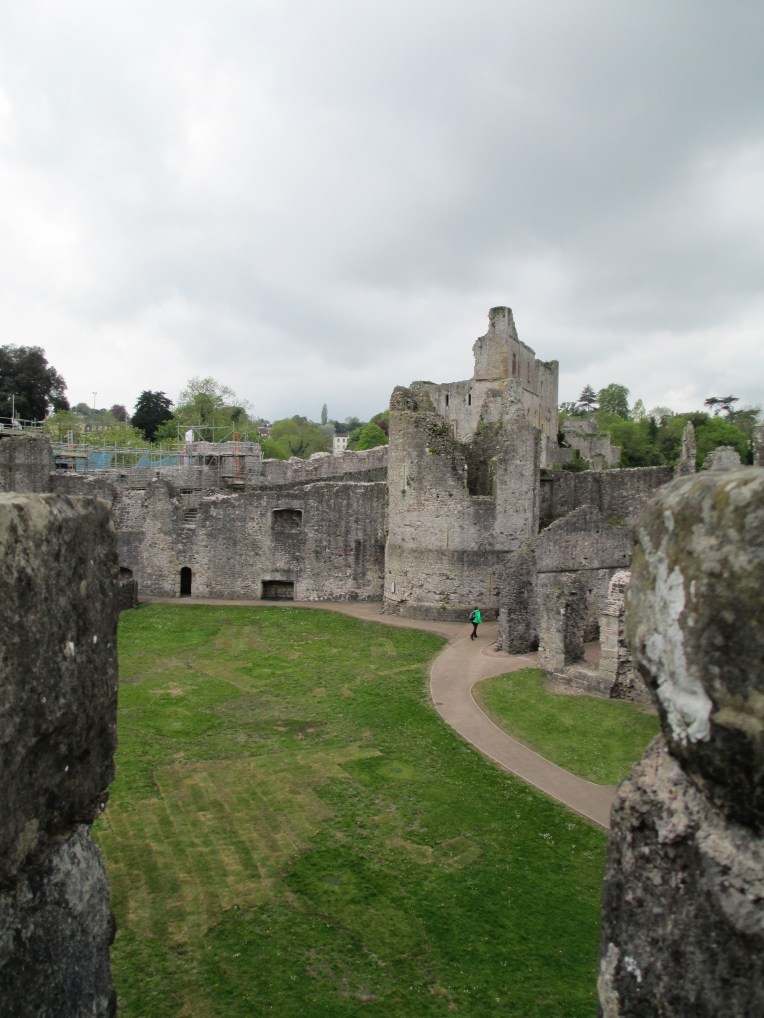
Chepstow is the second of the Marcher castles on this list, it is also the second with real involvement from William Marshal. It sits on a sheer escarpment of carboniferous limestone on the banks of the River Wye. Chepstow is probably my favourite castle and I will write about it in substantially more detail at a later date. I have written about the extraordinary surviving medieval doors before and that post can be found here.

Chepstow, known then as Striguil, was begun originally as a Norman castle. It was constructed by William Fitz Osbern shortly after the Norman conquest of 1066. He was responsible for the beginning of the construction of the castle, but it is unlikely that he had the time to oversee the construction of the Norman great tower before his death in 1071. The great tower is the only substantial surviving part of the Norman castle, though it was extended by the Marshals in the 13th century.

While it will never, of course, be certain it has been argued that the great tower was built under the auspices of William the Conqueror when Chepstow was in royal hands from the 1075 until 1115. The great tower is definitely a Norman building regardless of whether it was built by Fitz Osbern or William the Conqueror, and this makes it one of the oldest dateable surviving stone secular buildings in Britain. It was also impressively built in stone when most other castles were still wood and earth motte and bailey constructions.

Chepstow came into the hands of the Clare family at the start of the 12th century and by 1148 it was in the hands of Richard de Clare, known as Strongbow. Strongbow was the founder of the Norman occupation of Ireland and more can be read about him here. When de Clare died in 1176 all his estates passed to his son Gilbert, who was underage, and when Gilbert died, without ever coming of age, to his daughter Isabel de Clare. Isabel married William Marshal in 1189 and all of her extensive estates came to him. Isabel de Clare was a fascinating woman in her own right and you can read more about her here.

Marshal rebuilt the curtain wall with two round towers and the main gate house. Under the Marshals over the years other parts of the castle were extended and modernized. Chepstow came into the hands of Roger Bigod Earl of Norfolk, by right of his mother who was Marshal’s daughter, in c.1245. The Bigods were responsible for the building of the new hall block inside the castle walls as well as a large new tower in the south east corner of the castle and significant parts of the high walls.

After the death of Roger Bigod in 1306 Chepstow was in royal hands again and after this it passed in and out of various families over the centuries. It was modified by the Tudors and during the Civil War the it fell twice to parliamentary canon before it was refortified. Its final outing on the main stage of history was when Bigod’s tower was used as a prison, albeit a relative comfortable one, for Henry Marten one of the signatories of the death warrant of King Charles I. He was held in the tower at the order of Charles II, who spared his life, for roughly 20 years until his death at Chepstow in 1680.

After the Civil War and the Restoration Chepstow slowly crumbled into a picturesque ruin. It came into Cadw hands in 1984.

There is much more to write about Chepstow, not the least the absolutely fascinating well, but that is for another time.

References:

Site visit 2012

Chepstow Castle: Its history and buildings 9781904396529

Wales Castles and Historic places: 9781850130307

http://www.berkshirehistory.com/bios/hmarten.html

http://cadw.gov.wales/daysout/chepstow-castle/?lang=en

The photos are all mine.

Advent Calendar of Castles: December 17th: Pembroke Castle

IMG_5478

IMG_5435

IMG_5427IMG_5475


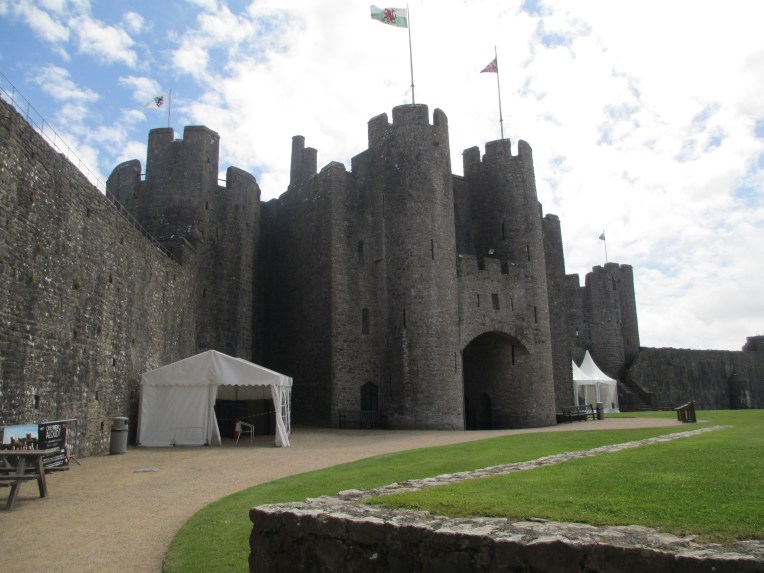
Pembroke is the first Marcher castle on my list. While it is arguable whether Pembroke actually stands in the Marches it was certainly owned and built by the men who were or became Marcher lords, including one of my favourites William Marshal. As this is a castle I have written extensively about before, I thought I’d provide a link to my previous post rather than a new potted history.

https://historicalragbag.com/2015/11/15/pembroke-castle/

The photos are all mine.

Advent Calendar of Medieval Quotes 4th of December

A description from Roger of Hoveden of the demise of The White Ship in 1120.

“To his son and all his retinue he [Henry I] had given a ship, a better one than which there did not seem to be in all the fleet, but as the event proved, there was not one more unfortunate ; for while his father preceded him, the son followed somewhat more tardily, but with a still more unhappy result. For the ship, when not far from land, while in full sail, was driven upon the rocks which are called Chaterase, and being wrecked, the king’s son, with all who were with him, perished on the sixth day before the calends of December, being the fifth day of the week, at nightfall, near Barbeflet. In the morning, the king’s treasures which were on board the ship, were found on the sands, but none of the bodies of those lost.There perished with the king’s son, his illegitimate brother, earl Eichard, together with the king’s daughter, the wife of Rotrou ; Richard, earl of Chester, with his wife, the king’s niece, and sister of earl Tedbald, the king’s nephew. There also perished Othoel, the governor of the king’s son, Geoffrey Riddell, Robert Maldint, William Bigot, and many other men of rank ; also several noble women with no small number of the king’s children ; besides one hundred and forty soldiers, with fifty sailors and three pilots. A certain butcher was the only person who made his escape, by clinging to a plank of the wrecked vessel. The king having had a fair voyage, on reaching England, thought that his son had entered some other port ; but on the third day he was afflicted with the sad tidings of his death, and at first, from the suddenness of the calamity, fainted away, as though a person of weak mind; but afterwards,concealing his grief, in contempt of fortune he resumed his kingly spirits. For this son being the only one left him by lawful wedlock, he had named him heir to the kingdom in succession to himself.”

From: The Annals of Roger of Hoveden Volume I pgs 213-214

https://archive.org/details/annalsofrogerde01hove