The Burial Places of England’s Kings and Queens

This post began as an attempt to visit as many of the burial places of the kings and queens of England as I could. I was intending to photograph each of the burial places and put them into this post. I have now made it to the vast majority as you can see from this list that I’ve been ticking off. There is one typo, George II is Westminster not Windsor. IMG_1113   The only ones I’m missing are: Henry I, Stephen, John, Edward II, James II and George I. With Henry I, I have been to Reading but not to the Abbey as I was just going through the train station and didn’t have time for the detour. Unfortunately significant numbers of the burials are in St George’s Chapel Windsor and Westminster Abbey neither of which would let me take photographs. So this post has become somewhat denuded. Nevertheless I thought it was still worth posting because at worst it is a list of the burial places of the kings and queens and there are some nice photos of the ones that let me take photographs. This list begins with William I and go through to George VI.  I hope you find it interesting.
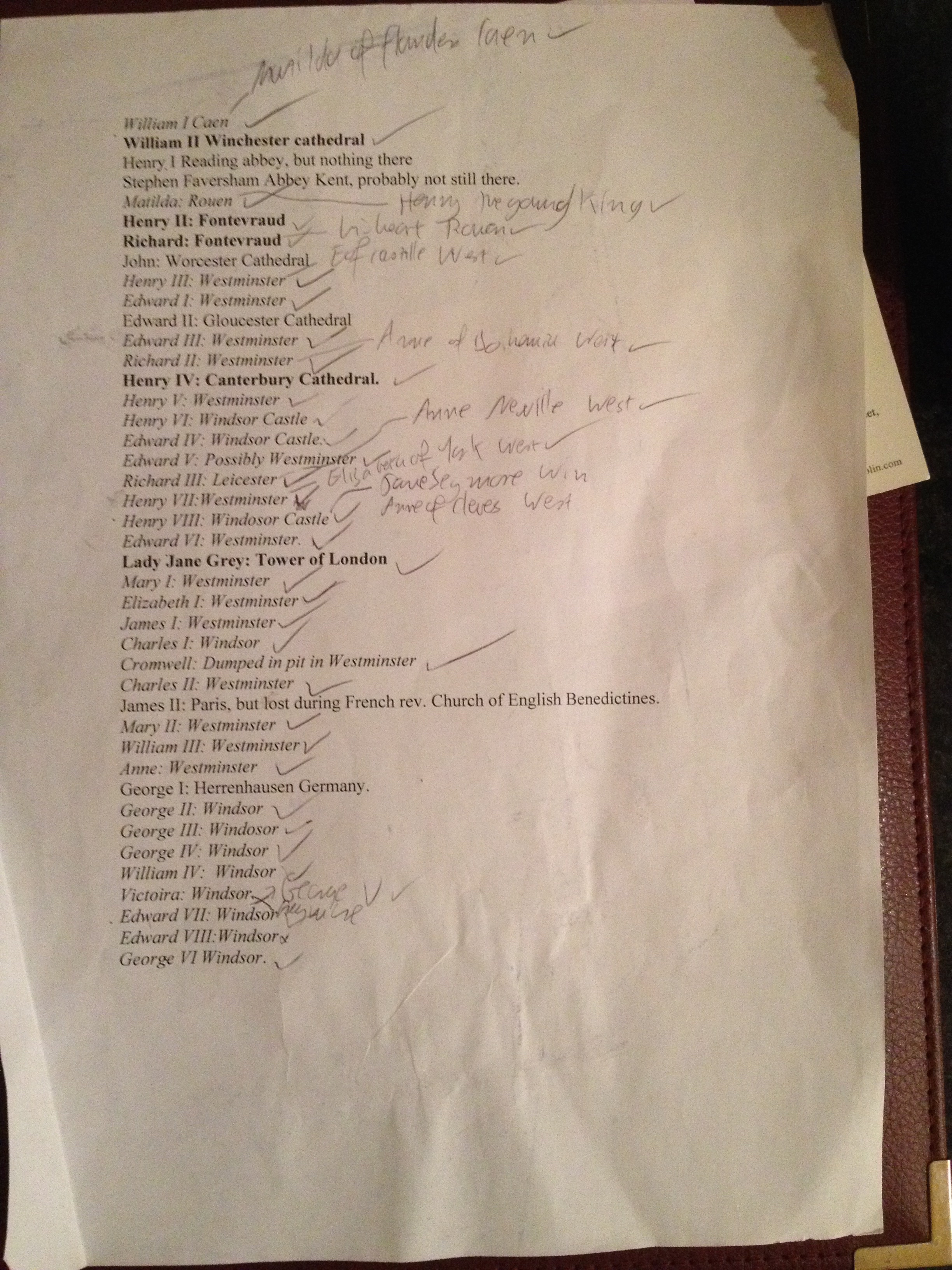
1. William I

b. c. 1028 d. 1087 Reigned: 1066-187 Buried Caen

IMG_7063

2. William II

b. c. 1056 d. 1100. Reigned 1187-1100 Buried Winchester Cathedral. William’s bones are said to be part of the mortuary chests seen on top of the screen, King Canute is also supposed to be entombed there.

IMG_4320

3. Henry I

b. 1086 d. 1136

Reigned 1100-1134

Buried Reading Abbey, there are no remains of his tomb.

4. King Stephen/ Empress Matilda.

King Stephen: b. c. 1092 d. 1154

Reigned 1135-1154

Buried Faversham Abbey, there are no remains of his tomb.

Empress Matilda: b. c. 1102 d. 1167

Reigned: For various parts of Stephen’s reign she was ruling significant proportions of the country, she controlled most of it for a time after King Stephen was captured at the battle of Lincoln in 1141. However she was never actually crowned.

Buried at Bec abbey but she was reburied in Notre Dame Cathedral in Rouen. The inscription reads: “Here lies Henry’s daughter, wife and mother; great by birth, greater by marriage, but greatest in motherhood.”

IMG_7239

5. Henry II

b. 1133 d. 1189. Reigned 1154-1189 Buried Fontevraud Abbey. His wife Eleanor of Aquitaine,  c.1124- 1204, lies beside him. henry and eleanor

5.1 Henry the Young King.

b. 1155 d. 1183

Reigned 1170-1183. A note on this. He was crowned during his father’s lifetime and died before he could ever rule in his own right. For more information see Henry the Young King blogspot

Buried Rouen Cathedral. The effigy is not contemporary.

IMG_7222

6. Richard I

b. 1157 d. 1199

Reigned 1189-1199.

Buried Fontevraud Abbey. He lies with his parents and next to Isabelle of Angouleme the wife of his younger brother King John.
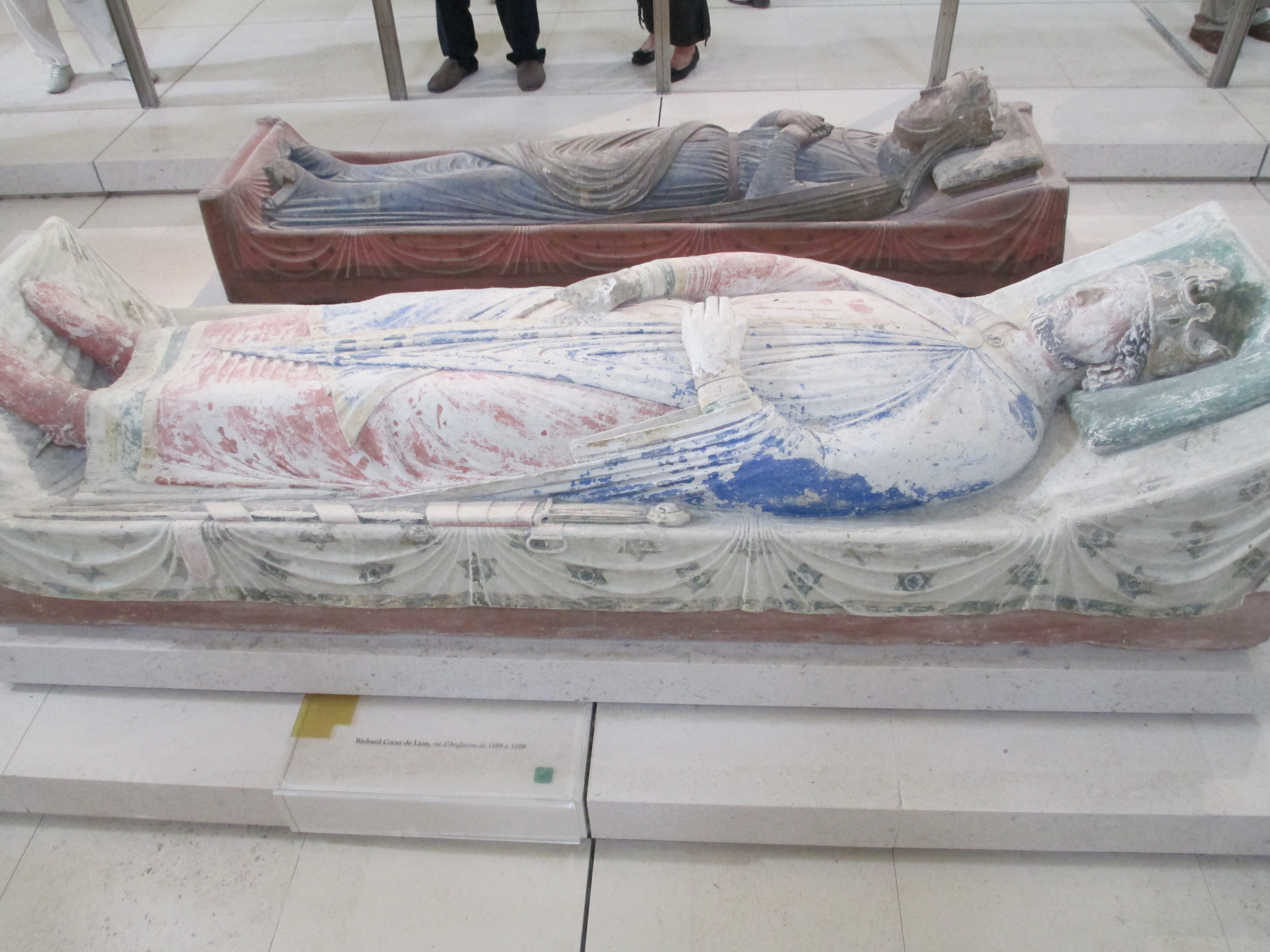
Richard I

7. John

b. 1166 d. 1216

Reigned 1199-1216

Buried Worcester Cathedral. Unfortunately I haven’t been there. This is a copy of his effigy which is currently on display at the Temple church in London.

IMG_5993

8. Henry III

b. 1207 d. 1272

Reigned 1216-1272

Buried Westminster Abbey

9. Edward I

b. 1239 d. 1307

Reigned 1272-1307

Buried Westminster Abbey

10. Edward II

b. 1284 d. 1327

Reigned 1307-1327 with interruptions for more information

Buried  Gloucester Cathedral.

11. Edward III

b. 1312 d. 1377

Reigned 1327-1377

Buried Westminster Abbey

12. Richard II

b. 1367 d. c. 1400

Reigned 1377-1399, he was deposed before he died more information

Buried originally at King’s Langley, but moved to Westminster Abbey by Henry V.

13. Henry IV

  b. 1367 d. 1413 Reigned 1399-1413 Buried Canterbury Cathedral. Henry is buried with his wife Joan of Navarre c. 1370-1437. IMG_3952

14. Henry V

b. 1387  d. 1422

Reigned 1413-1422

Buried Westminster Abbey

15. Henry VI

b. 1421 d. 1471

Reigned 1421-1471 there were significant proportions of this time where he wasn’t actually king. For more information.

Buried originally in Chertsey Abbey but moved to St George’s Chapel Windsor by Richard III

16. Edward IV

b. 1442 d. 1483

Reigned 1460-1483, again there was a disruption in his reign for more information

Buried St George’s Chapel Windsor

17. Edward V

b. 1470 d. c. 1483, possibly.

Reigned April 1483 to June 1483 c. One of the ‘Princes in the Tower’ no one is sure what happened to him and his younger brother. For more information

Buried. Unknown but skeletons, at the time thought to be his and his brother’s, were found in 1674 and buried in Westminster Abbey. This is spurious.

18. Richard III

b. 1452 d. 1485

Reigned 1483-1485

Buried originally in Greyfriars in Leicester reinterred in March 2015 in Leicester Cathedral after his bones were found.
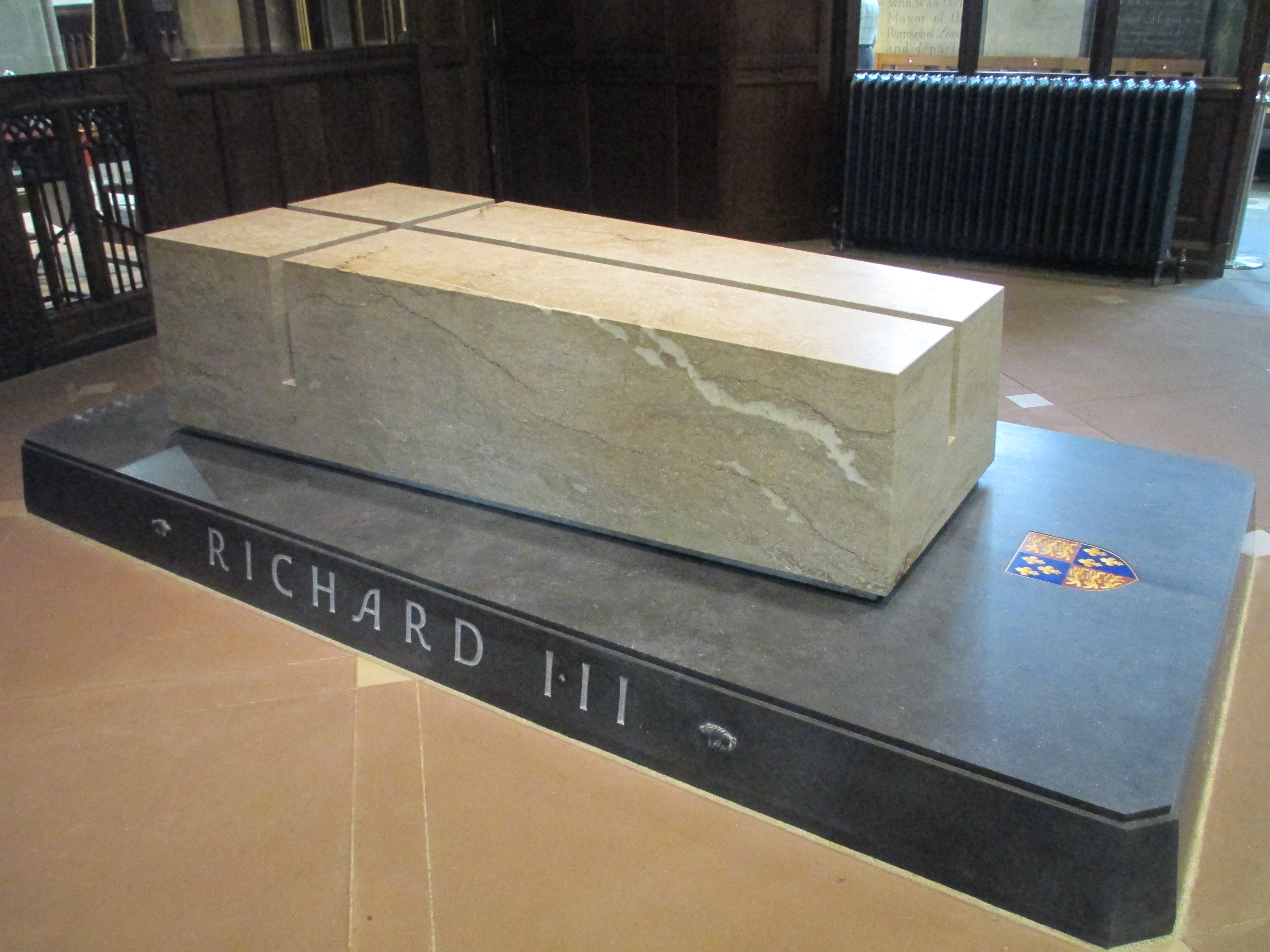
IMG_5872

19. Henry VII

b. 1457 d. 1509

Reigned 1485-1509

Buried Westminster Abbey.

20. Henry VIII

b. 1491 d. 1547

Reigned 1509-1547

Buried St George’s Chapel Windsor

21. Edward VI

b. 1537 d. 1553.

Reigned 1547-1553

Buried Westminster Abbey.

21.1 Lady Jane Grey

b. 1537 d. 1554

Reigned 10th of July 1553-19th of July 1553

Buried Church of St Peter ad Vincula Tower of London. I unfortunately don’t have a photo of the Church of St Peter ad Vincula, I’m not sure why I didn’t take one, but the photo below is of the monument that stands roughly in the place where Lady Jane, along with Anne Boleyn and Catherine Howard and others, was executed.

  IMG_3650

22. Mary I

b. 1516 d. 1588

Reigned 1553-1558

Buried Westminster Abbey

23. Elizabeth I

b. 1533 d. 1603

Reigned 1558-1603

Buried Westminster Abbey

24. James I

b. 1566 d. 1625

Reigned 1602-1625

Buried Westminster Abbey

25. Charles I

b. 1600 d. 1649

Reigned 1625-1649

Buried: St George’s Chapel Windsor

25.5 Oliver Cromwell

b. 1599 d. 1658

Lord Protector 1653-1658

Buried Westminster Abbey

26. Charles II

b. 1630 d. 1685

Reigned 1660-1685

Buried Westminster Abbey

27. James II

b. 1633 d. 1701

Reigned 1685-1688

Buried Church of the English Benedictines Paris, his tomb was looted during the French Revolution.

28. William III Mary II

William

b. 1650 d. 1702

Reigned, as King of England, 1689-1702

Buried Westminster Abbey

Mary

b. 1662 d. 1694

Reigned 1689-1694

Buried Westmister Abbey

29. Anne

b. 1665 d. 1714

Reigned 1702-1714

Buried Westminster Abbey

30. George I

b. 1660 d. 1727

Reigned 1714-1727

Buried Hanover Germany

31. George II

b. 1683 d. 1760

Reigned 1727-1760

Buried Westminster Abbey

32. George III

b. 1738 d. 1820

Reigned 1760-1820

Buried St George’s Chapel Windsor

33. George IV

b. 1762 d. 1830

Reigned 1820-1830

Buried St George’s Chapel Windsor

34. William IV

b. 1765 d. 1837

Reigned 1830-1837

Buried St George’s Chapel Windsor

35. Victoria

b. 1819 d. 1901

Reigned 1837-1901

Buried Frogmore Windsor

36. Edward VII

b. 1841 d. 1910

Reigned 1901-1910

Buried St George’s Chapel Windsor

37. George V

b. 1865 d. 1936

Reigned 1910-1936

Buried St George’s Chapel Windsor

38. Edward VIII

b. 1894 d. 1972

Reigned Jan 1936 to Dec 1936

Buried Frogmore Berkshire

39. George VI

b. 1895 d. 1952

Reigned 1936-1952

Buried St George’s Chapel Windsor

Round Towers of Ireland

These structures have always fascinated me.

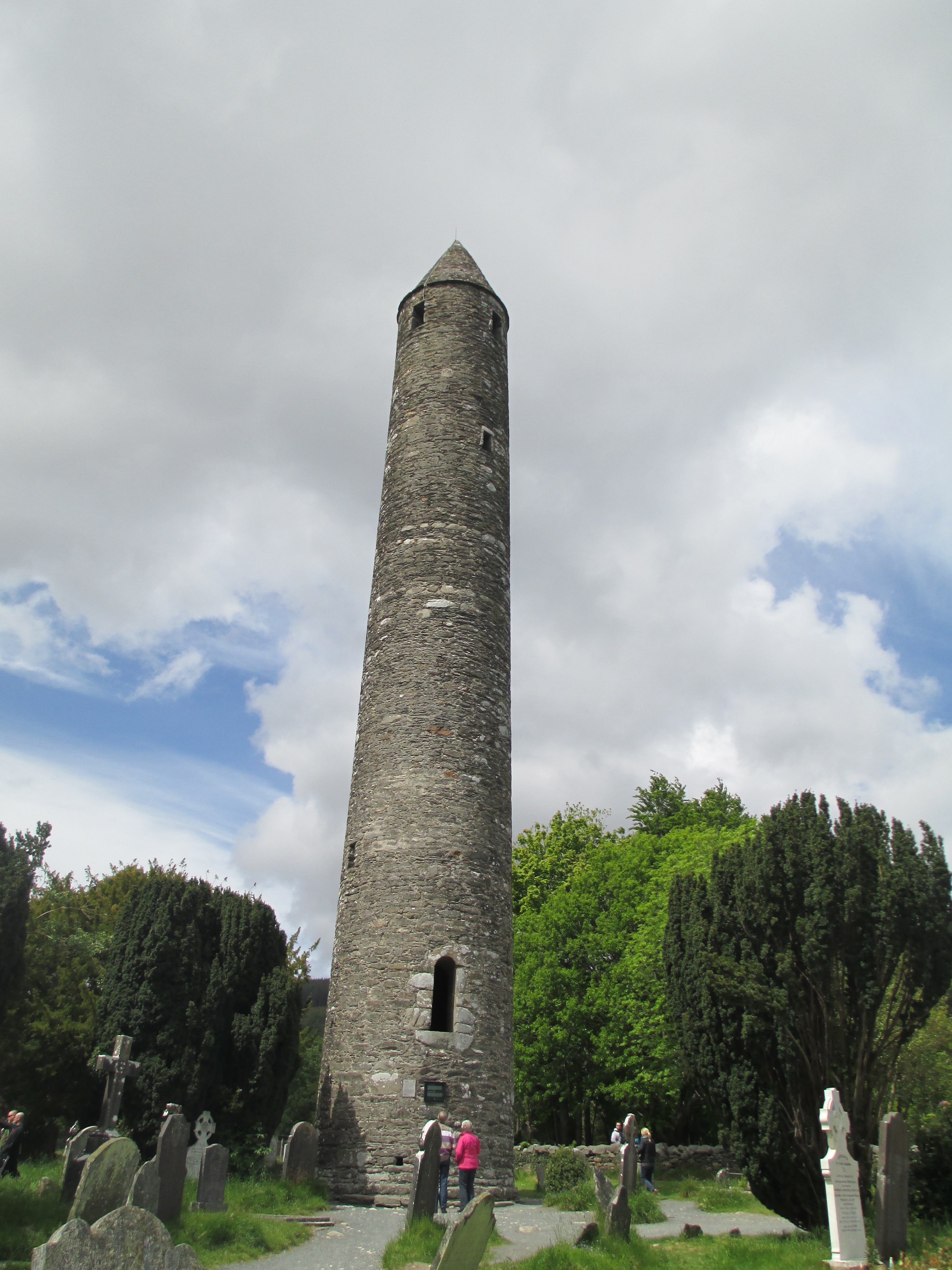
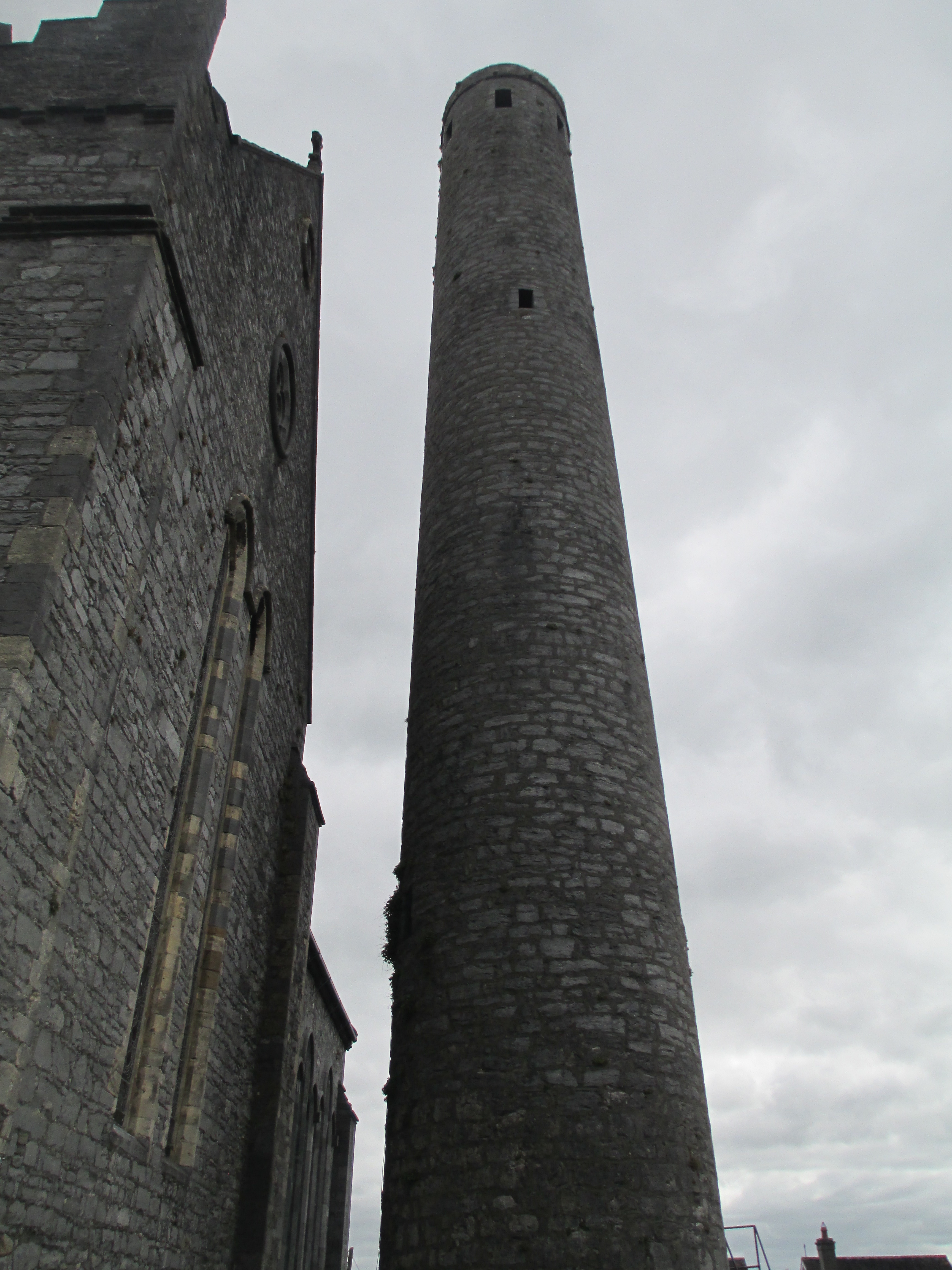
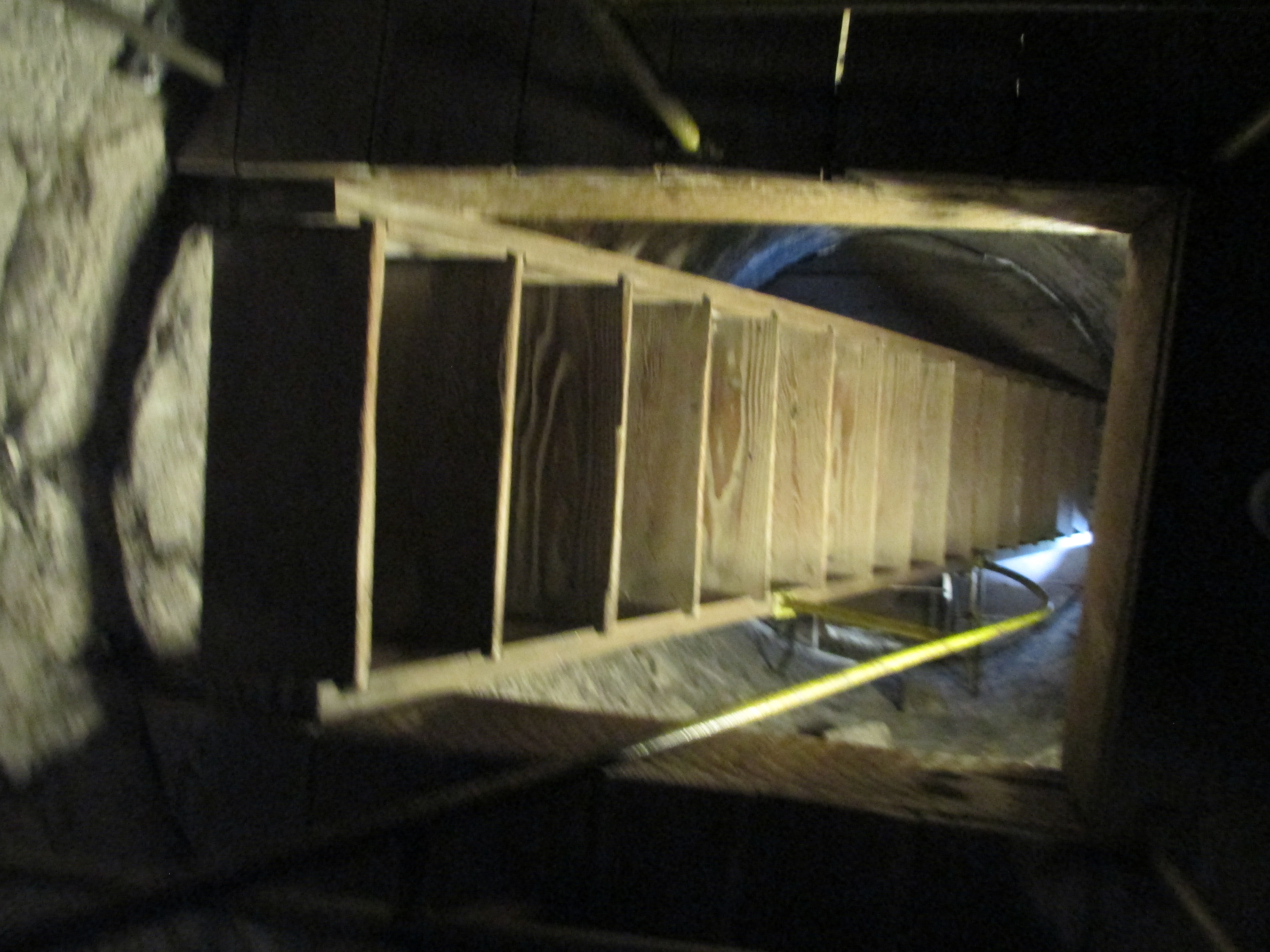
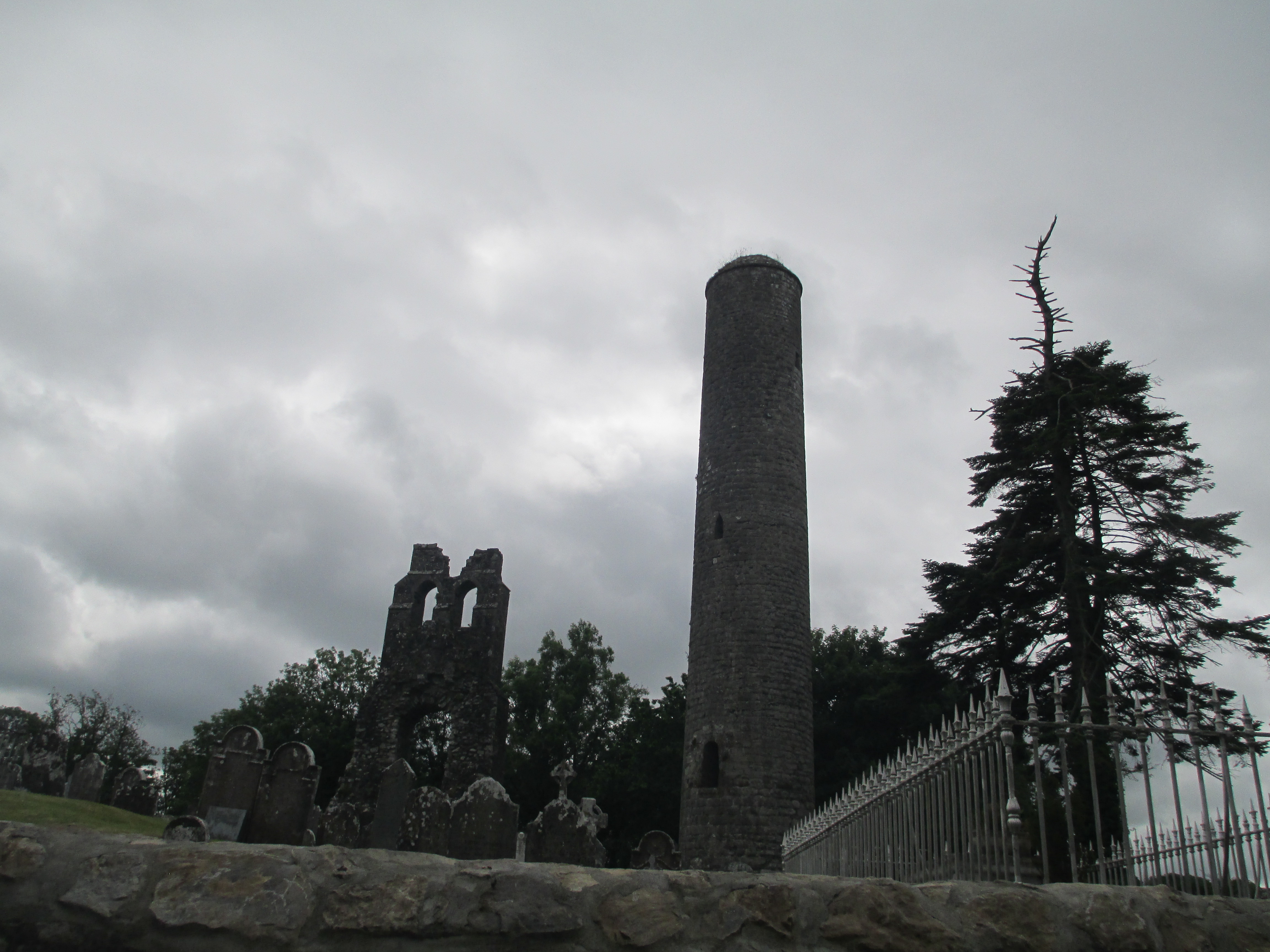
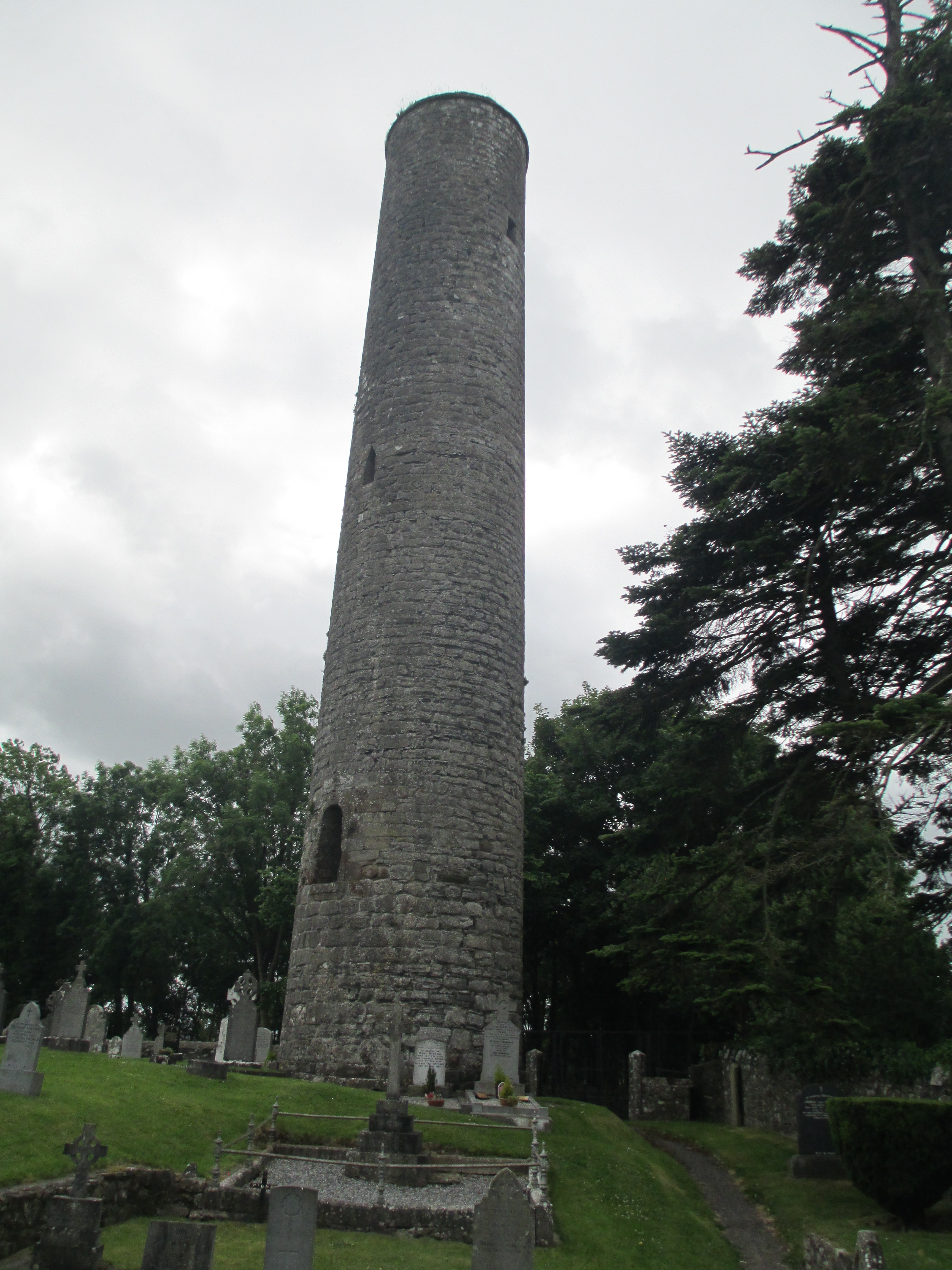
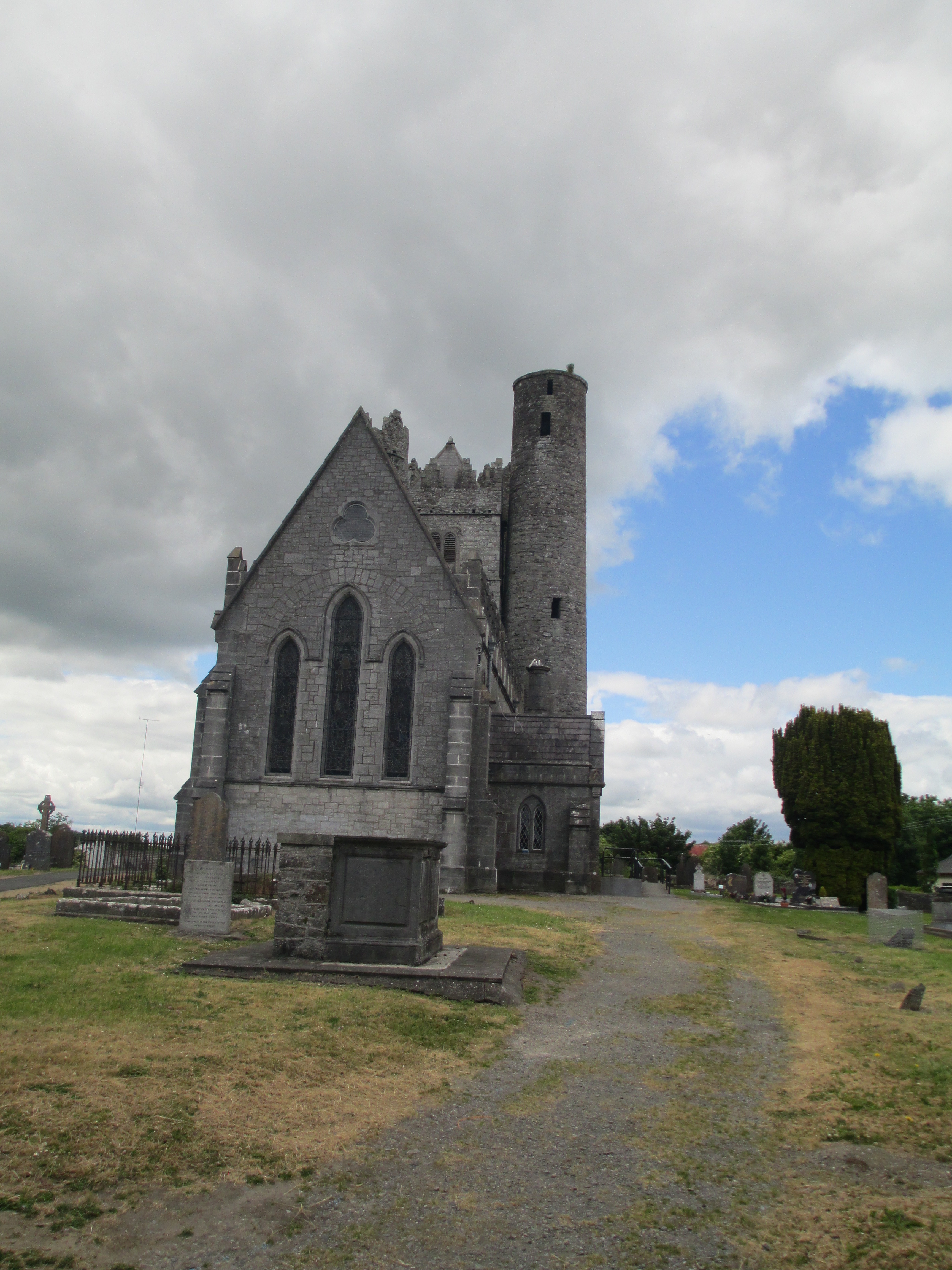
They were usually built sometime between the 9th and 12th centuries. They were generally part of monasteries and while they were built to stand alone some have been incorporated into later buildings. They are surprisingly uniform in design with circumferences at the base usually between 14 and 17 m and wall thickness from 0.9m and 1.7m. They also almost all have doors raised above the ground at least 3 m and they have at least four windows at the top, each of which often faces a cardinal point, along with more windows at lower levels in the tower. Most stand at close to 100 feet. There is a possibility that the dimensions were determined by the role of certain numbers in christian theology. They also had several levels connected by ladders. Additionally it is worth noting that the surviving conical tops were often reconstructed in later time periods.

Debate still continues as to their purpose. It is possible that they were simply bell towers, part of the system of the call to prayer with the height made necessary by the size of the ecclesiastical sites. They may have also been symbols reaching towards the glory of God and illustrating the importance of the ecclesiastical site, conveying messages of spiritual and temporal power. There is also an argument, though currently thought of as a little less likely, that they were watch towers and were part of defence systems. They may have been built partly as a response to Viking and other attacks. The monks would have been able to climb in, store their treasures, burn the stairs to the door, keep the raiders out and possibly ring bells from the top of the tower to call for assistance. Essentially no one is absolutely certain as to their purpose. It is also plausible that there were multiple purposes, combinations of the possibilities listed above.

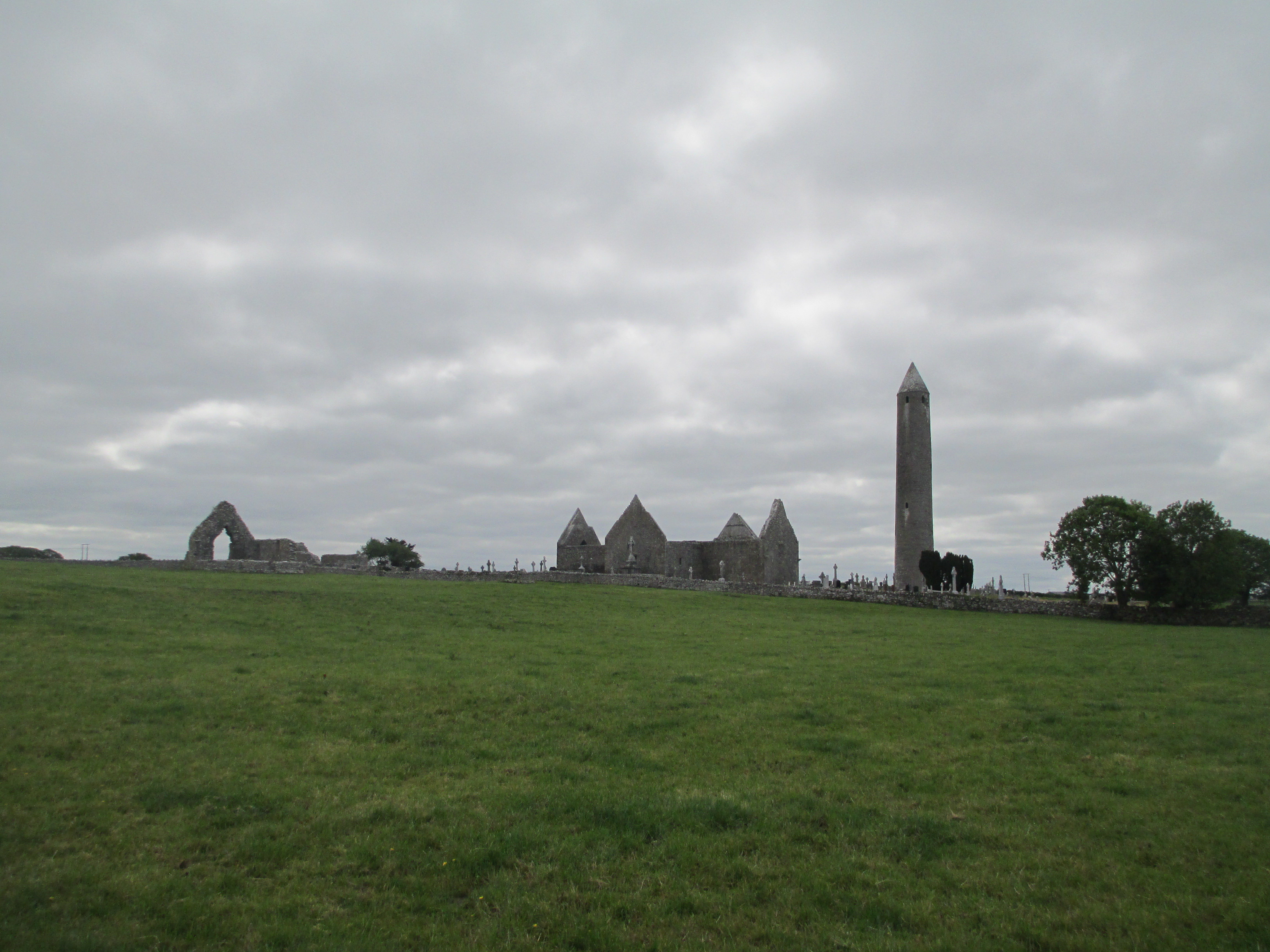
They are immense structures though, the tallest at Kilmacduagh stands at 102 feet and is on a slight lean. They are beautiful and a testament to the ability of their builders as there are over thirty still standing in varying states of repair across Ireland.

Below you can see examples from all around Ireland of these beautiful and truly intriguing buildings.

IMG_1767

Glendalough Round Tower built between 900 and 1200.

IMG_1804

Glendalough Round Tower.

IMG_2122

St Canice’s Cathedral and Round Tower. Built c. 1111.

IMG_2138

View from St Canice’s  Round Tower.

IMG_2152

Interior of St Canice’s  Round Tower. It’s one of the only Round Towers you can climb.

IMG_3419

Kilmacduagh Round Tower c. 10th century.

IMG_3445

Kilmacduagh Round Tower.IMG_3586

The taller of Clonmacnoise’s two Round Towers c. 12th century.

IMG_3603

The taller of Clonmacnoise’s two Round Towers.

IMG_3608

The shorter of Clonmacnoise’s two Round Towers c. 12th century.

IMG_4117

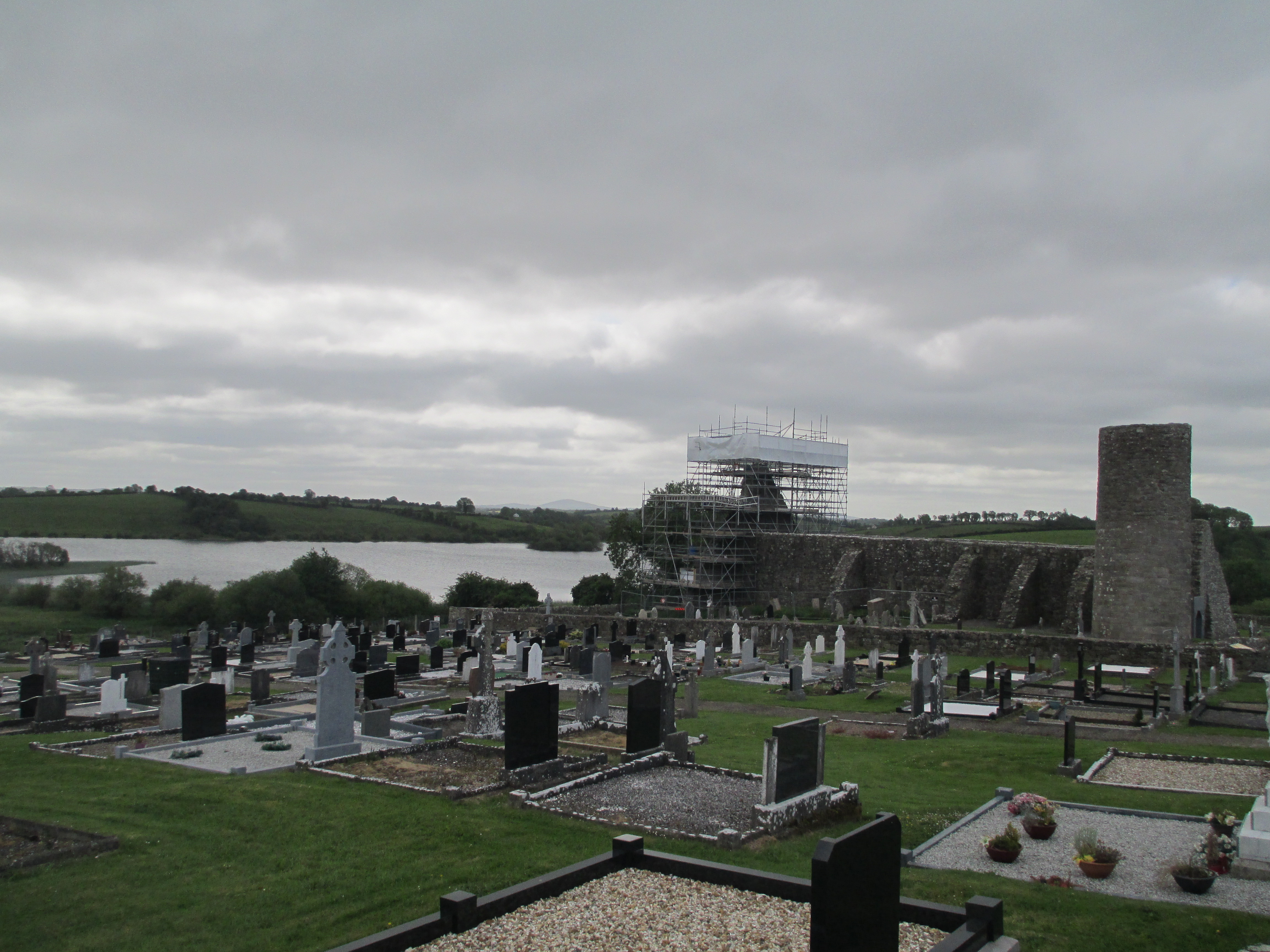
Round Tower at Drumlane Abbey c. 10th- 11th century with c. 15th century additions.

IMG_4118

Round Tower at Drumlane Abbey.

IMG_4253

Kells high cross and Round Tower. The Round Tower dates to 10th century.

IMG_4218

Kells Round Tower.

IMG_4585

Monasterboice Round Tower 10th century.

IMG_4594

Monasterboise high cross and Round Tower.

IMG_4767

Donaghmore church and Round Tower 11th-12th century.

IMG_4768

Donaghmore Round Tower

IMG_4813

Lusk church and Round Tower c. 11th century.

IMG_4817

Lusk Round Tower

IMG_5914

Cashel Round Tower c. 11th century.

IMG_5917

Cashel Round Tower.

You can see the astounding similarity in all these towers. They truly stand as a testament to the immense skill of their builders and will, I’m sure, continue to fascinate people well into the future.

For more information see

This truly excellent article by Russell Ó Ríagáin which also investigates the possible influences in the building of the round towers.

https://www.academia.edu/399978/The_Round_Towers_of_Ireland_Date_Origins_Functions_and_Symbolism

For some more general information

http://www.roundtowers.org/

http://www.catholicireland.net/irelands-round-towers/

all the photos are mine.

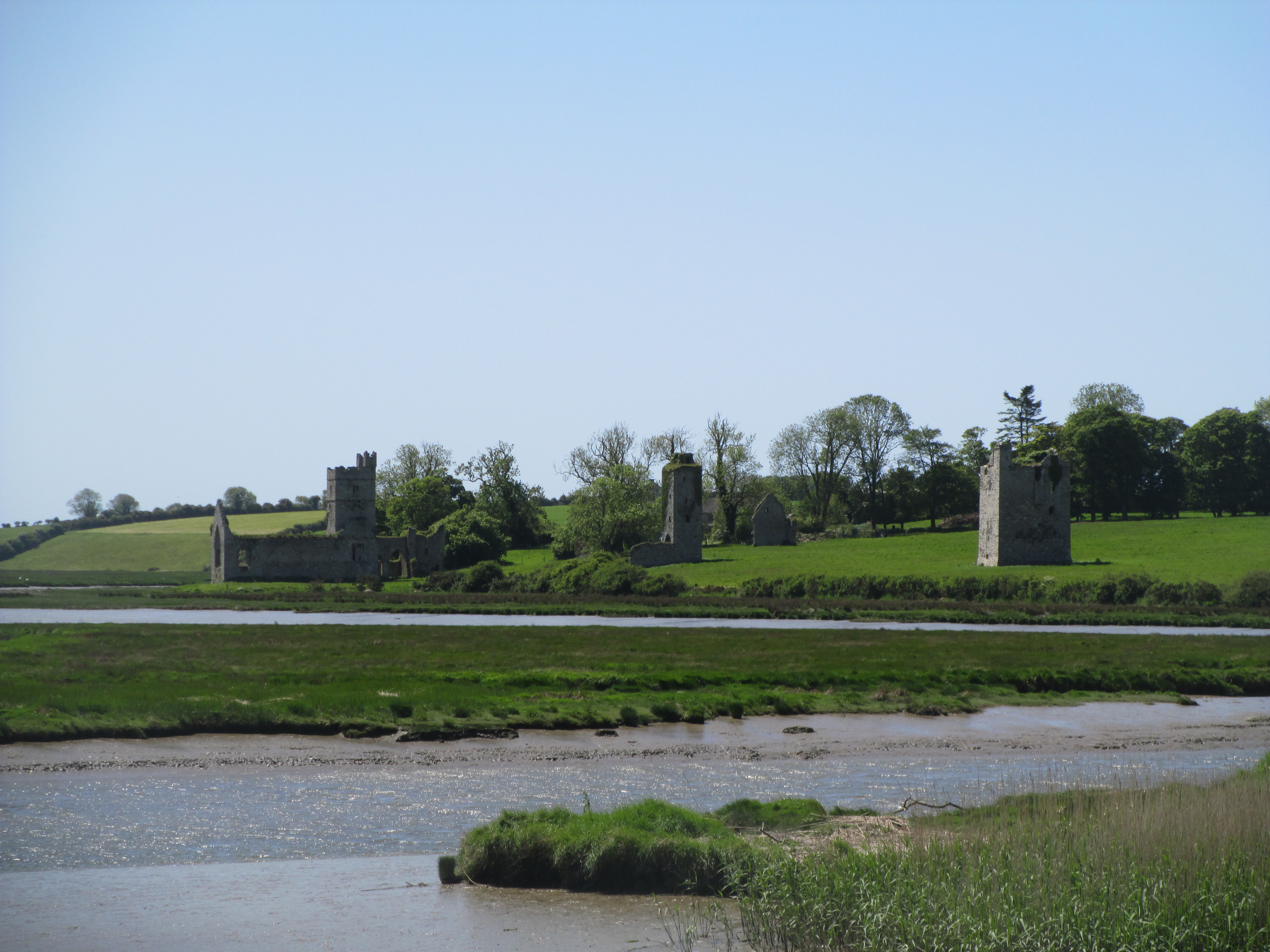
Clonmines Medieval Town

IMG_1917

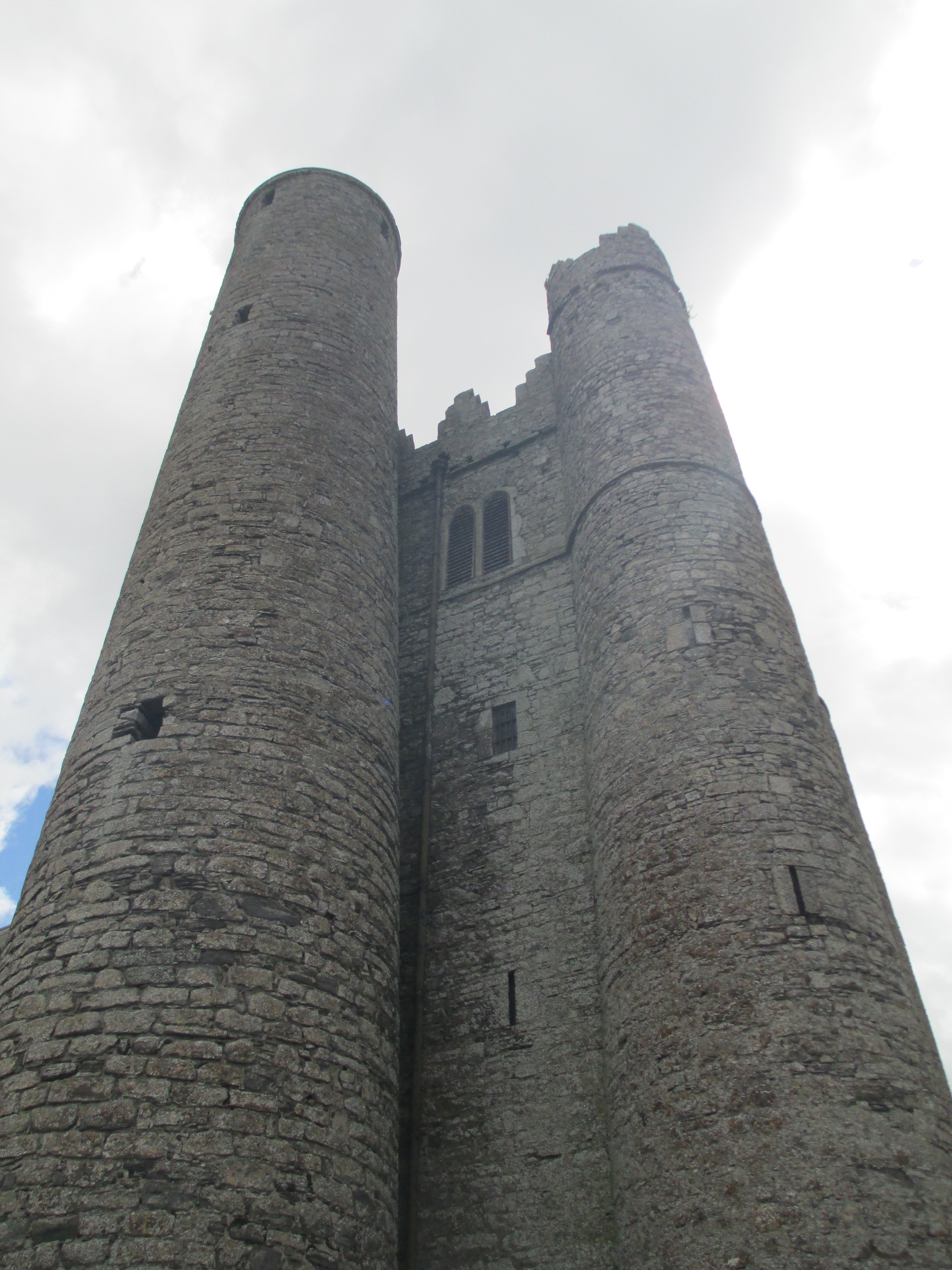
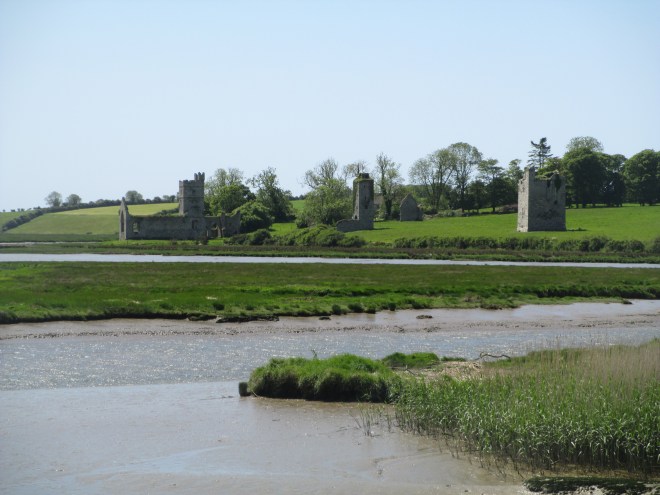
One of the more interesting medieval sites that not that much is known about. Clonmines is the remains of an abandoned town with the ruins of two churches, three tower houses and an Augustinian Priory. The town was a port that may have been connected with New Ross in the early 1200s. It was an important town. In the 1300s justice was dispensed from there and the road between Wexford and Clonmines was considered a main road. Unfortunately the town was abandoned in the 1600s when its harbour silted up, but there were Augustinians there still into the 1700s. Clonmines also maintained a political presence into the 1800s with the final MPs leaving in 1801.   
IMG_1919 IMG_1920

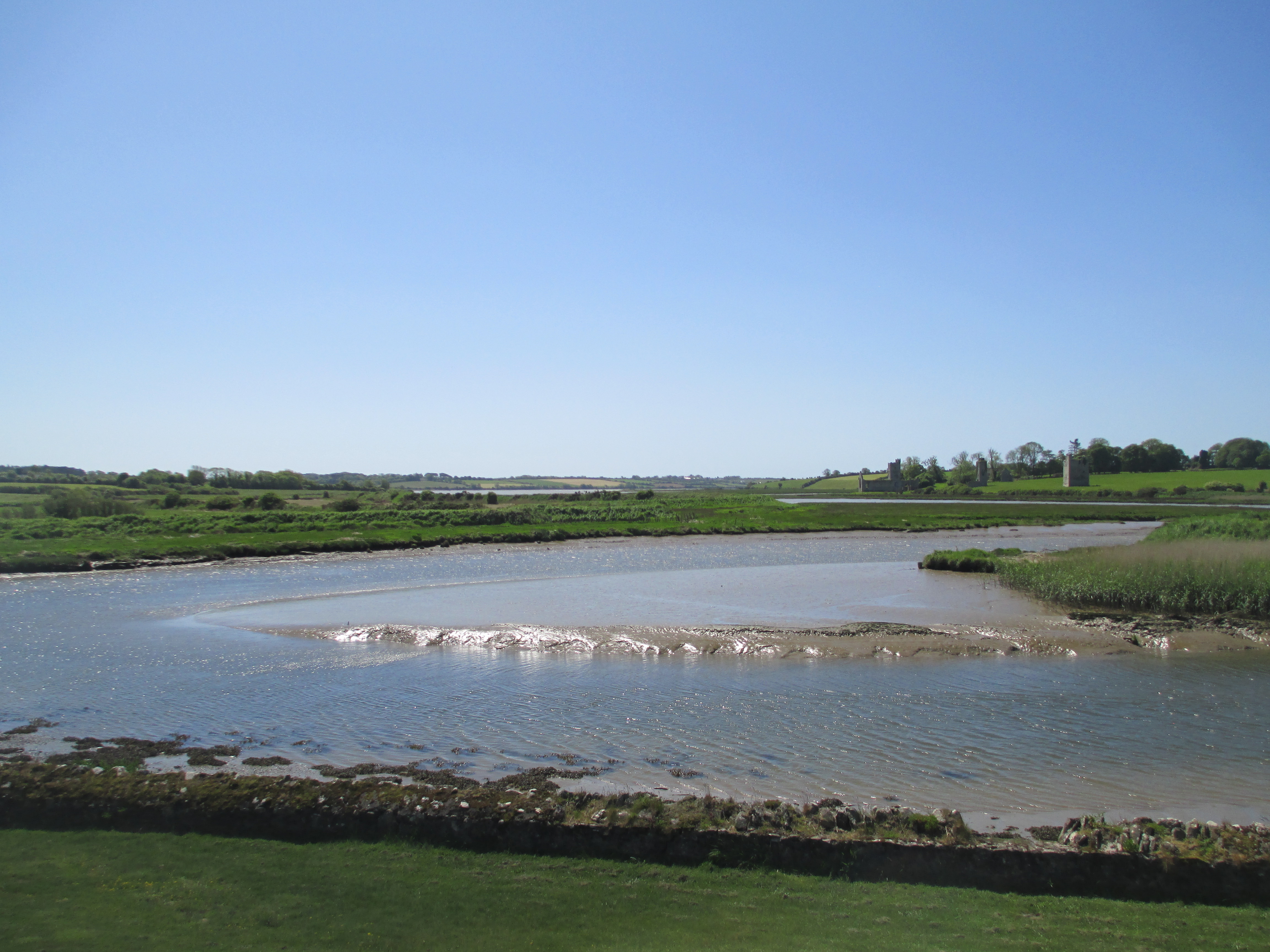
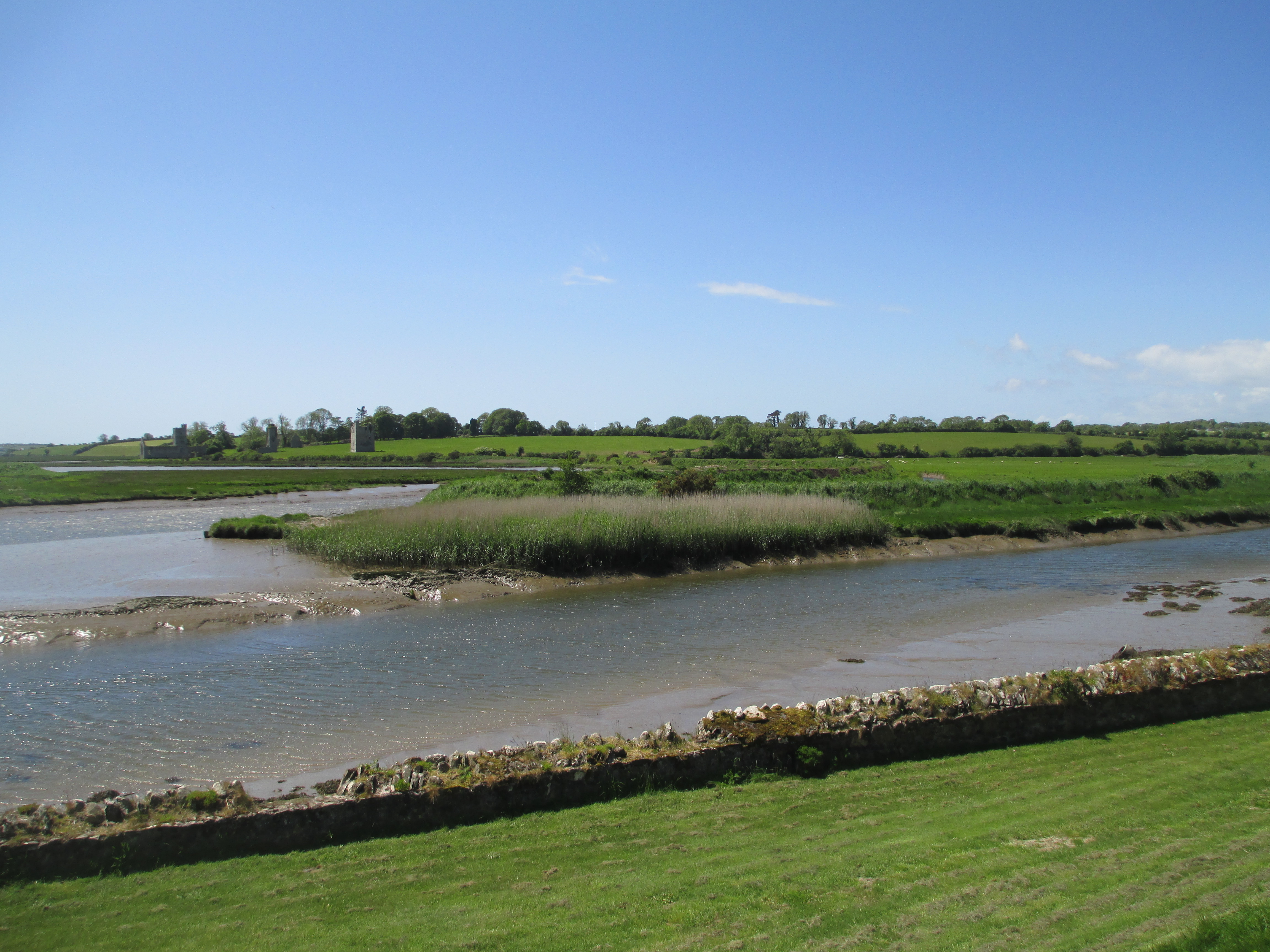
Clonmines today is on private land so access isn’t possible, but the view across the river is staggering.

IMG_1918

For more information

http://www.bannowhistory.ie/journal-2-bannow-historical-society/

Bayeux Tapestry

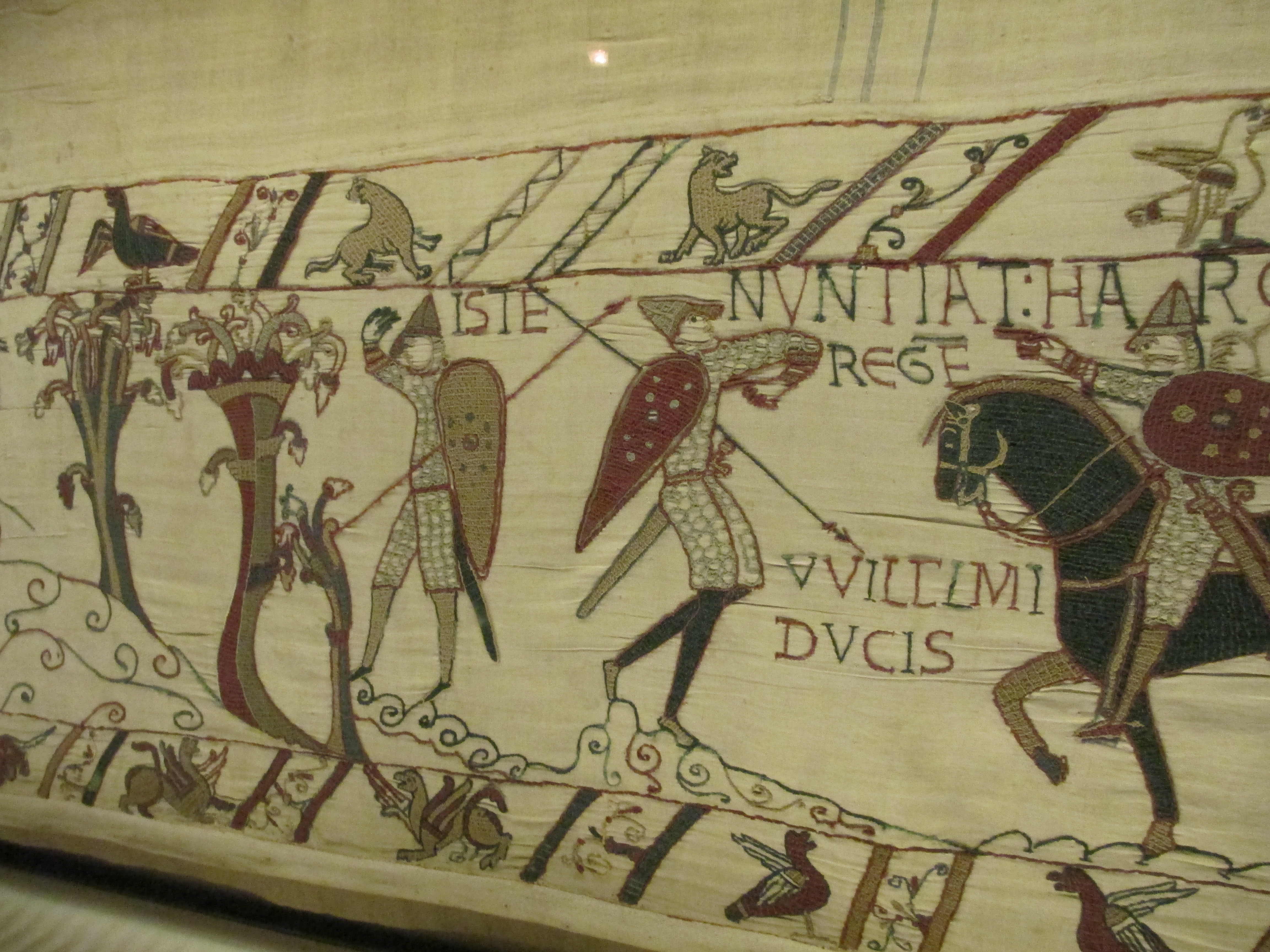
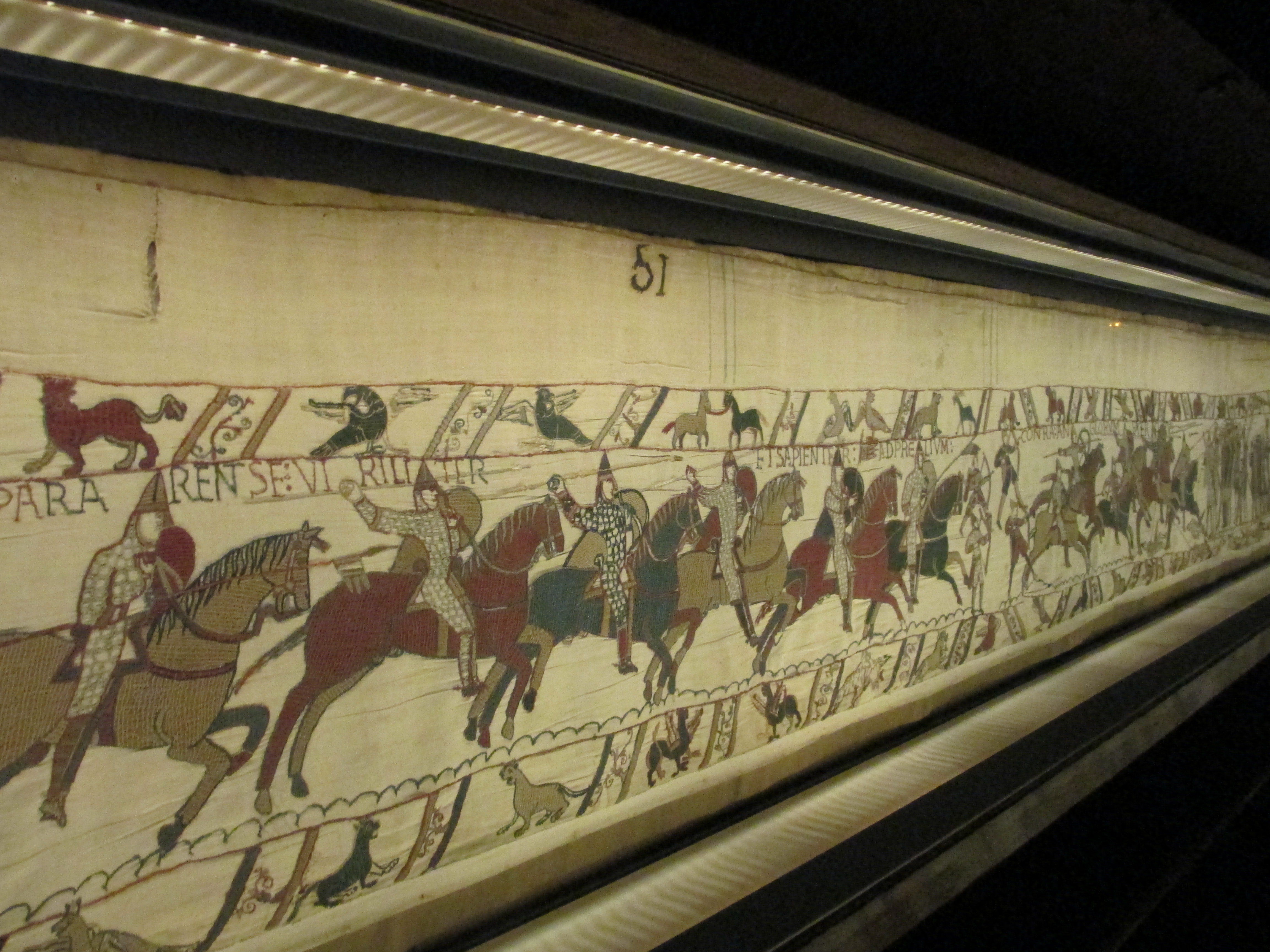
The Bayeux Tapestry. Probably the world’s best known embroidery, it covers the lead up to and the immediate aftermath of the Battle of Hastings, one of the most important battles in English history. You can see a video of the tapestry below.

The Bayeux Tapestry.

Sorry about the heads in the way and the speed. I had to film around the tourists. It does give you a really good idea of how long the tapestry is though.

This post is going to be a combination book preview, I haven’t done one for a while, because I have two lovely and quite different books on the Bayeux Tapestry.

IMG_1245

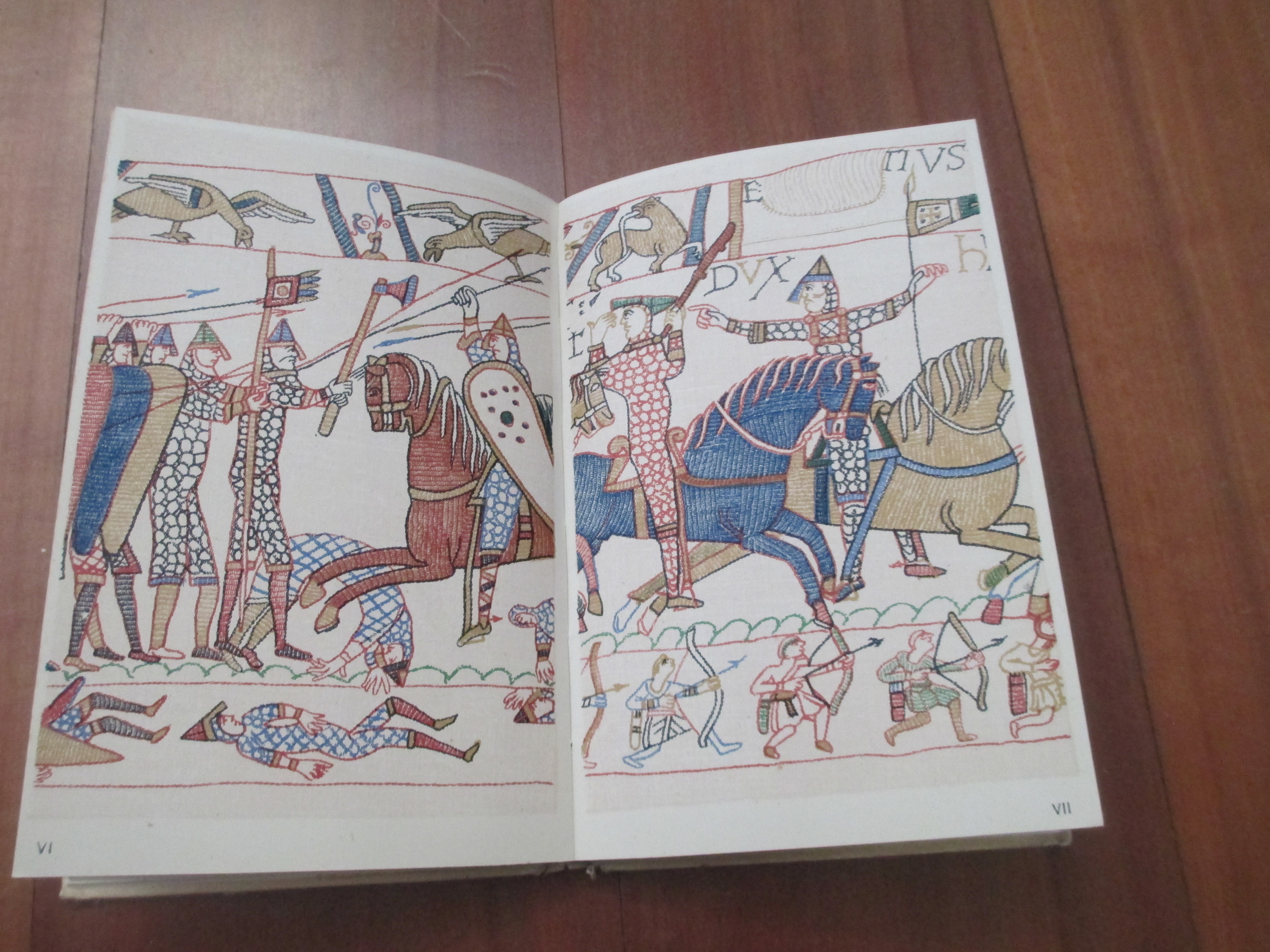
The book on the left is The Bayeux Tapestry and the Norman Invasion by Lewis Thorpe published in 1973. The book on the right is The Bayeux Tapestry by Eric Maclagan CBE (Director and secretary V&A) published 1943. Both books give an historical background to the tapestry, though Thorpe’s has more detail. Both also have analysis of each scene of the tapestry though Maclagan’s is more detailed. Maclagan’s focus is very specific to the tapestry while Thorpe takes a broader view. Thorpe also includes a translation of one part of William of Poitiers work History of William Duke of Normandy and King of the English.

Both books are also second hand and Maclagan’s has some extra information in the front cover. Pasted there is a newspaper article discussing another tapestry.

 IMG_1246

The article is from the early fifties and outlines the plan by Miss Sandell of Southampton to make a tapestry, inspired by the Bayeux Tapestry, of Southampton’s Town Quay at the Dday landings. This led me to do some research and I found what I think is the same tapestry. It was completed in 1953 and now hangs in the civic building in Southampton. [1] Unfortunately I have not yet been able to find a photo.

As I said both books depict the scenes of the tapestry. They do it a little differently though. Two examples can be seen below. The first is a depiction of the famous scene that may or may not illustrate, it depends who you ask, King Harold getting shot in the eye with an arrow. [2] The second is a depiction of William the Conquerer showing his face to his men to prove he isn’t dead.

IMG_1248 IMG_1247

The first picture is Thorpe’s book, and as you can see it provides a translation of the latin embroidery below each picture. The second picture is Maclagan’s and it depicts the whole image alone, he provides a summary of the events in an earlier section. Maclagan only covers a handful of the scenes in colour where as Thorpe does all of them.

There isn’t a great deal new to write about the tapestry, I’m not offering any fantastic revelations, but it is an abidingly interesting story depicted in threads. So I thought I’d narrate that here. To begin with though, it isn’t a tapestry. It’s an embroidery.

I wanted to start with a little background about both the history behind the tapestry and about the physical tapestry itself. The tapestry was embroidered on coarse linen and two different kinds of woollen thread, including eight colours, can be seen. The Bayeux Tapestry is 70.34 m in length and 50cm wide, but it is made up of half a dozen or more pieces of linen. It has also been ‘fixed’ at various times throughout its life. (Maclagan, p.16-17). [3] The tapestry depicts the lead up to the invasion and the invasion of England by William the Conquerer. It was most likely commissioned by Bishop Odo, William the Conquerer’s brother, for the consecration of his cathedral in Bayeux in 1077. It was then probably stitched by two teams of women. (Thorpe, p. 24).[4] Though it is thought that the design was probably drawn on sections of the linen background by one master craftsman. Each scene is captioned in latin and it was designed to hang around a wall, probably Bayeux Cathedral

IMG_7081

Bayeux Cathedral.

After its creation and dedication ceremony, probably in 1077, there is not much record of the tapestry. In 1476 it is specifically listed in an inventory of Bayeux Cathedral. It is then mentioned in a paper in 1724 and in 1728 Dom Bertrand de Montfaucon, a Benedictine from Saint-Maur, took an interest in it and 12 months later sent someone to examine it. The drawings made of it at this time was published in Montfaucon’s book Monument de la Monarchie Francais. There were several attempts to destroy it or to use it ignobly during the French Revolution. For example it was almost used as a protective tarpaulin before a last minute reprieve.[5] It was exhibited in the Musee de Napoleon in Paris by Napoleon. During Napoleon’s reign a comet was sighted. Although it wasn’t Halley’s Comet, which is depicted in the Bayeux Tapestry, it was thought that it was a good omen for an invasion of England. Napoleon changed his mind though and in 1804 it was returned to Bayeux where it has hung pretty much ever since, apart from a short period of time during the Franco Prussian War. Also during WWII it was spirited away to stop it being sent to Germany with other significant French art. It was also briefly exhibited in the Louvre in 1944 after the liberation of France. (Lewis, pp. 58-59).

So in some ways it is somewhat of a miracle that the tapestry still exists.

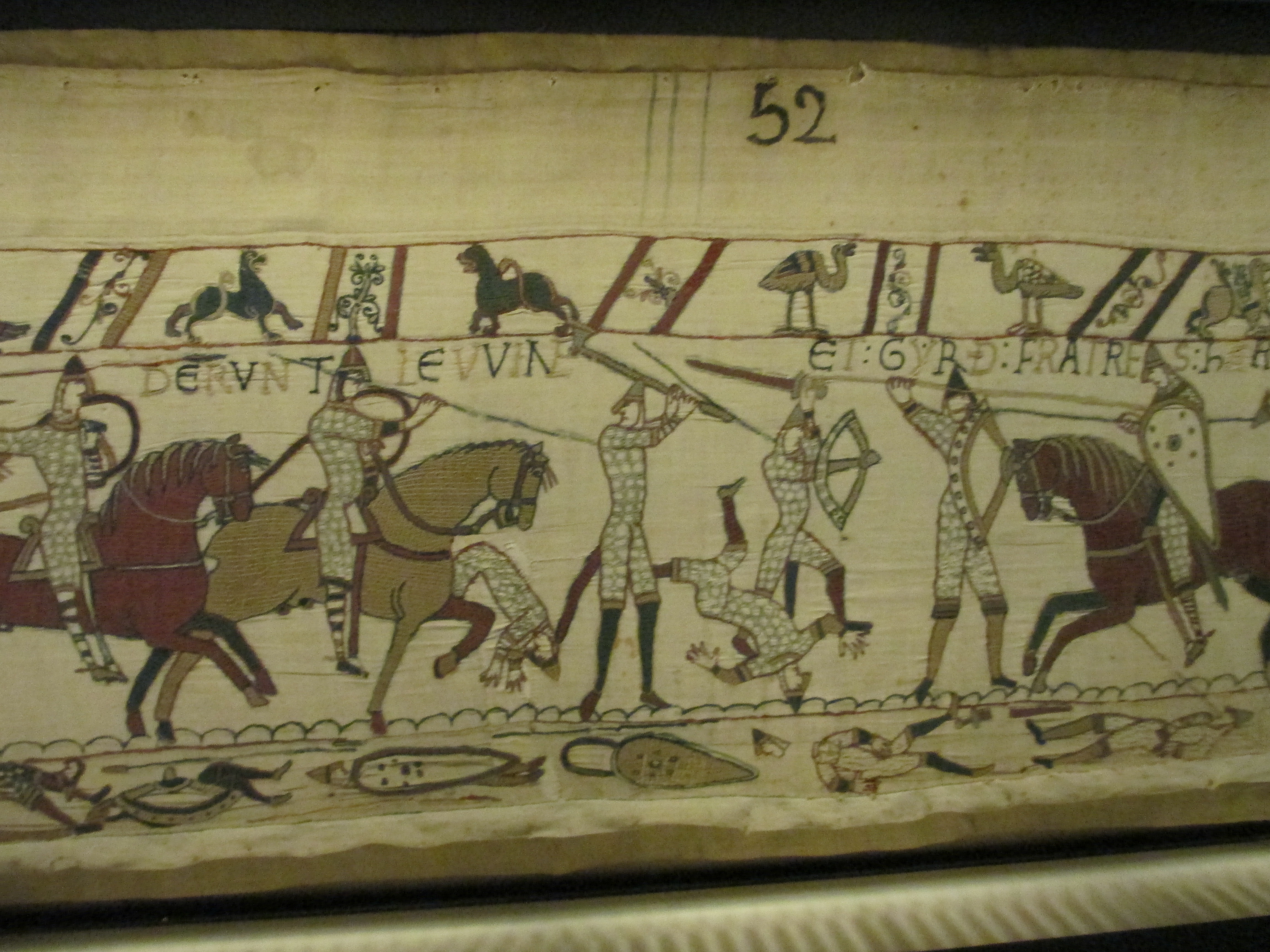
The story it depicts is very much from the Norman perspective but is still of great interest. I will now set the scene for the story of the tapestry. Edward the Confessor was King of England but he had no direct heir. There were several contenders. William Duke of Normandy and Harold Godwinson were the primary claimants as far as the tapestry is concerned. However the tapestry leaves out other contenders including Edgar the Aethling who had the best hereditary claim being descended from England’s older kings, but he was quite young and no one seemed to seriously consider him until after the Battle of Hastings. The tapestry also doesn’t depict Harald Hardrada King of Norway who made a spited attempt to claim the throne, though unsuccessfully, but more on Harald Hardrada later. William of Normandy was related to Edward the Confessor as Edward’s mother had been Emma of Normandy who was the daughter of William of Normandy’s great grandfather. William also claimed that Edward offered him the throne in 1051. Harold Godwinson’s claim to the throne was not one of blood but rather one of power, he was the son of Earl Godwin Earl of Wessex and his sister was the wife of Edward the Confessor. Earl Godwin died in 1053 and Edward and his brothers Tostig Earl of Northumbria, Gyrth Earl of East Anglia and Leofwine , who ruled the area of the south east, wielded an immense amount of power in England. During the last 13 years of Edward’s life they were virtually ruling England. (Lewis, pp.7-8). This is the situation when the Bayeux Tapestry begins.
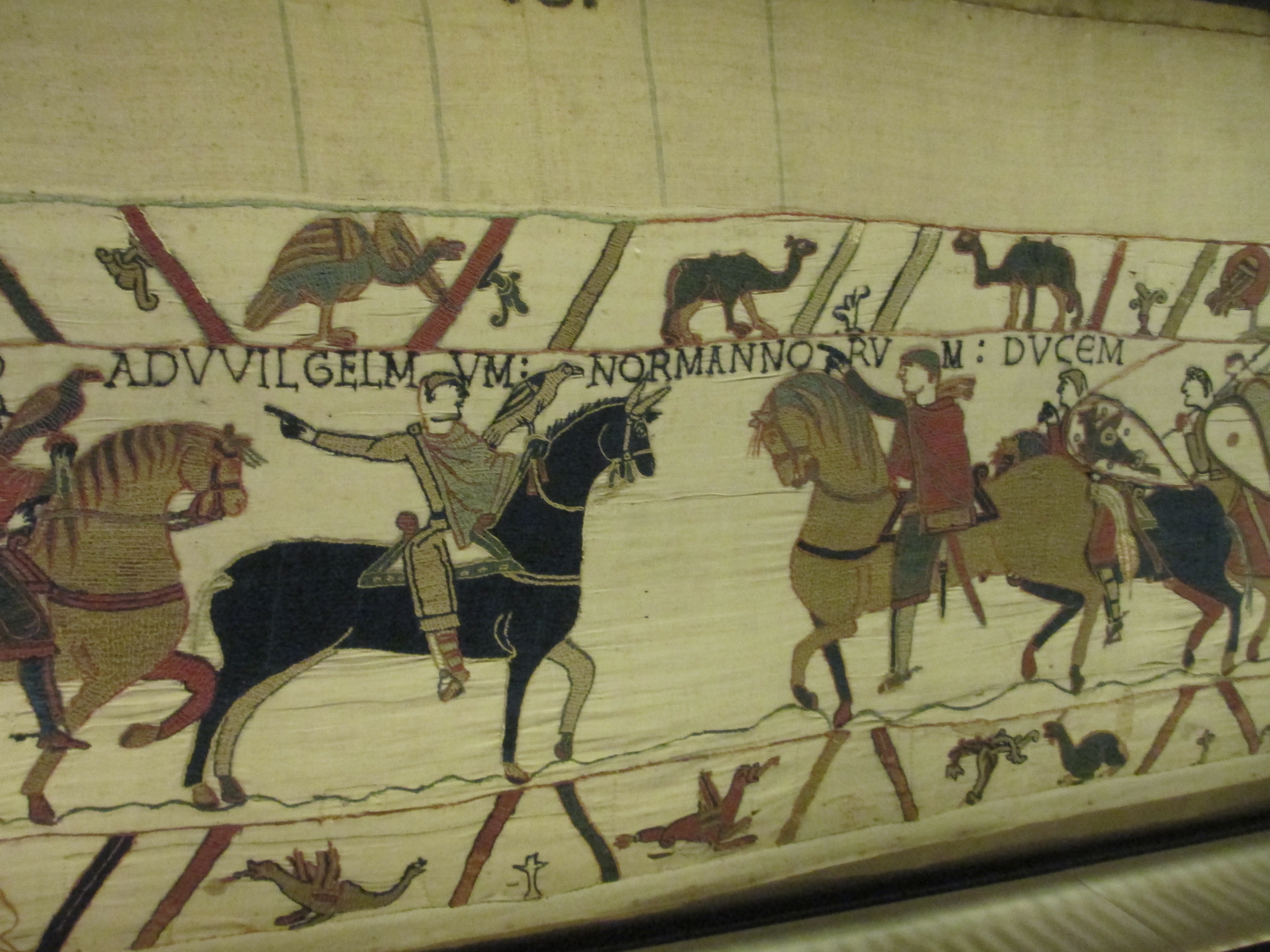
I have photos of most of the tapestry, but there are a few panels I missed when trying to photograph it around people. The photos below give a good general idea though.

The story begins with an image of Edward the Confessor talking to Harold Godwinson. Bayeux Tapestry 1

Harold is then sent to Normandy and he can be seen crossing the sea.

Bayeux Tapestry 2

When he lands he is seized by Count Guy of Ponthieu.

Bayeux Tapestry 3

And he is taken to Beaurain Castle where Harald and Guy talk.

Bayeux Tapestry 4

Duke William finds out about Harold’s capture.

Bayeux tapestry 5

Duke William sends envoys to Guy.

Bayeux tapestry 6

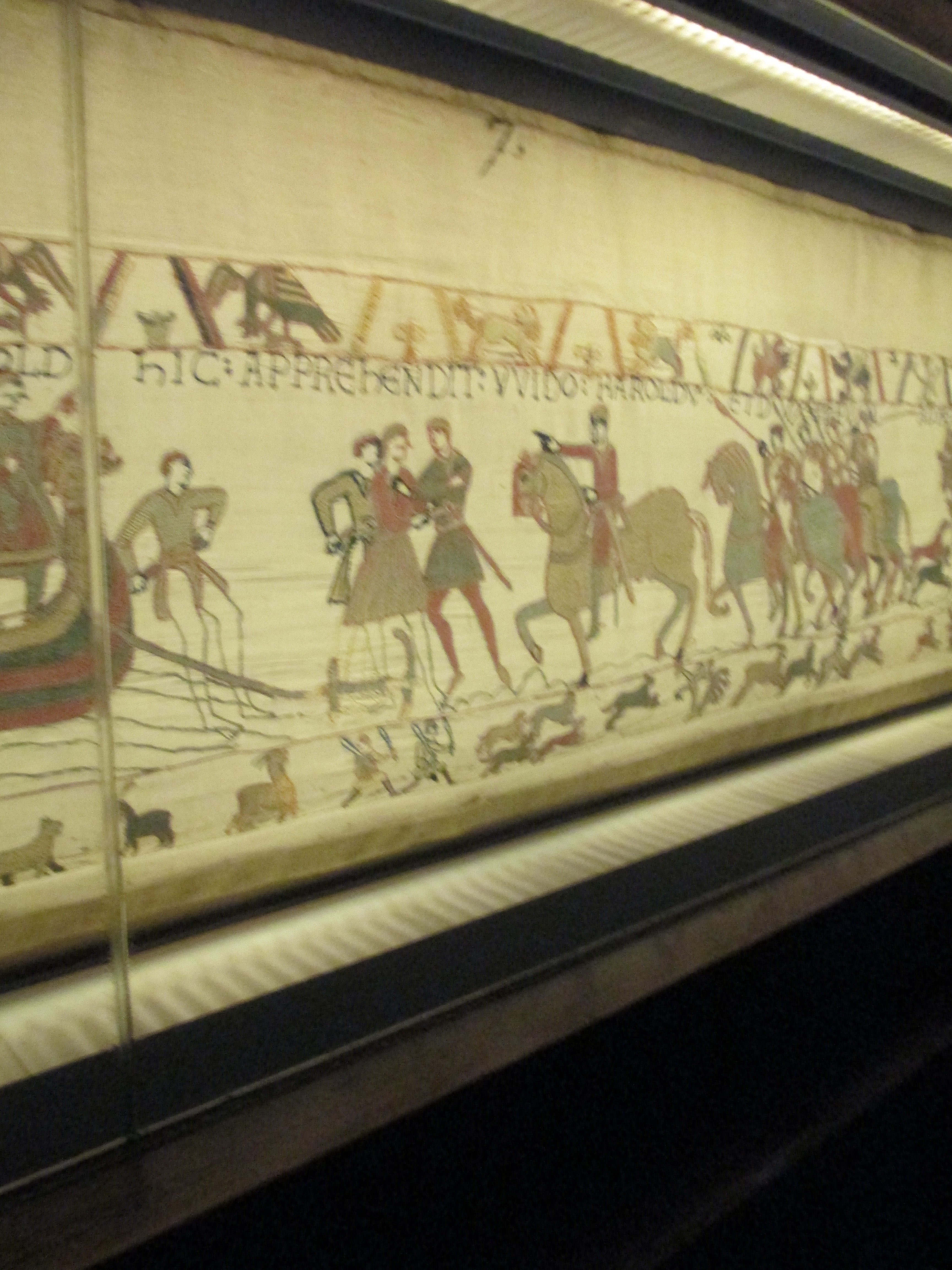
Harold is taken to Duke William, you can see Duke William below on the black horse.

Bayeux Tapestry 7JPG

They go to Duke William’s palace.

Bayeux Tapestry 8

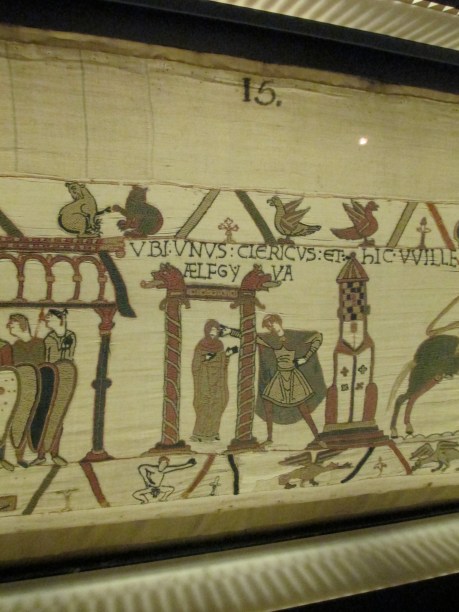
A churchman and Aelfgyva were at the palace. Aelfgyva was a woman who’s identity is unknown to the historical community, though there is much debate.

Bayeux tapestry 9

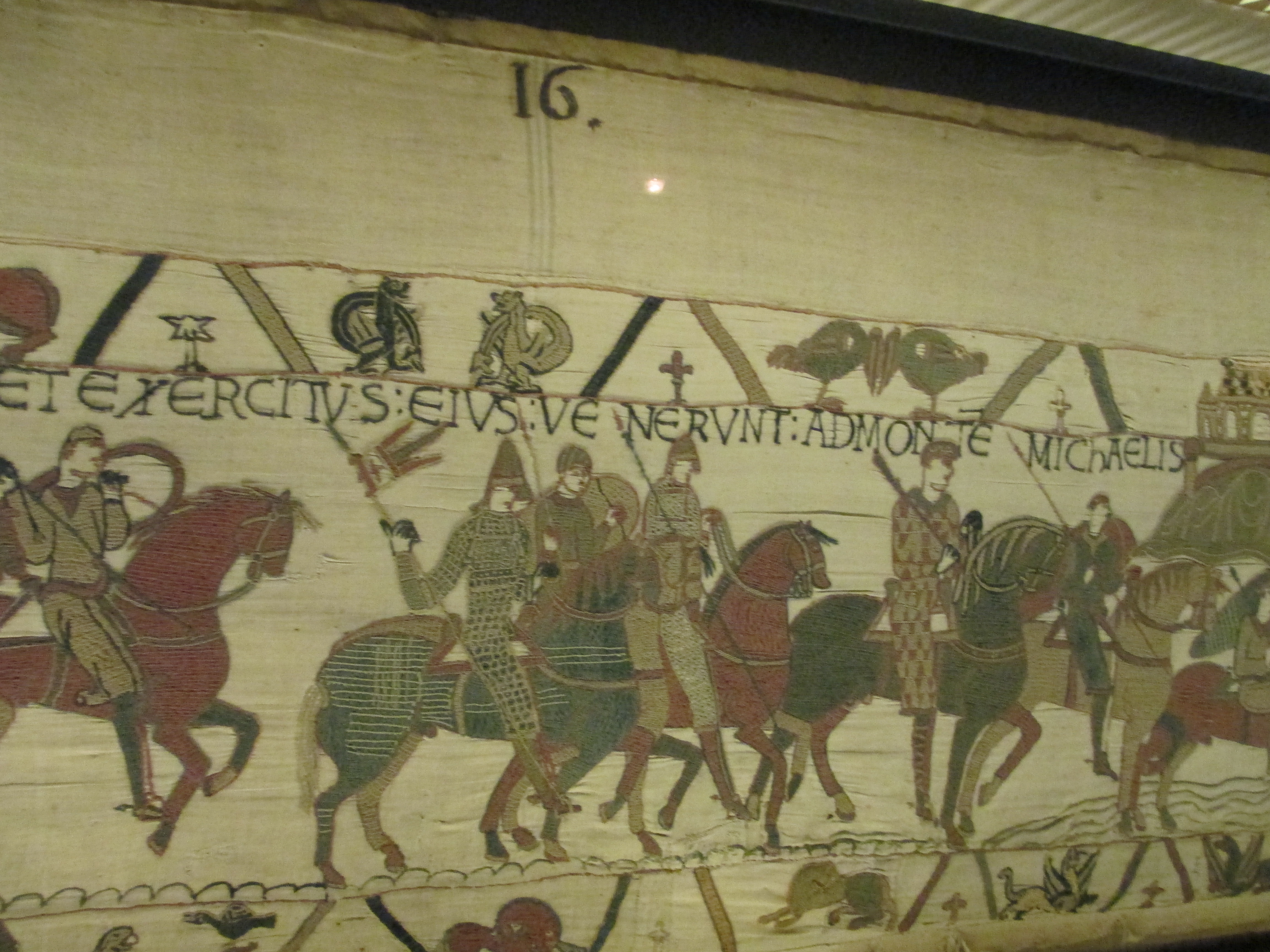
Then Duke William, Harold and Duke William’s army go to Mont Saint Michel. This is an account of Duke William’s campaign in Brittany.

Bayeux Tapestry 10

They cross the river Couesson.

Bayeux tapestry 11

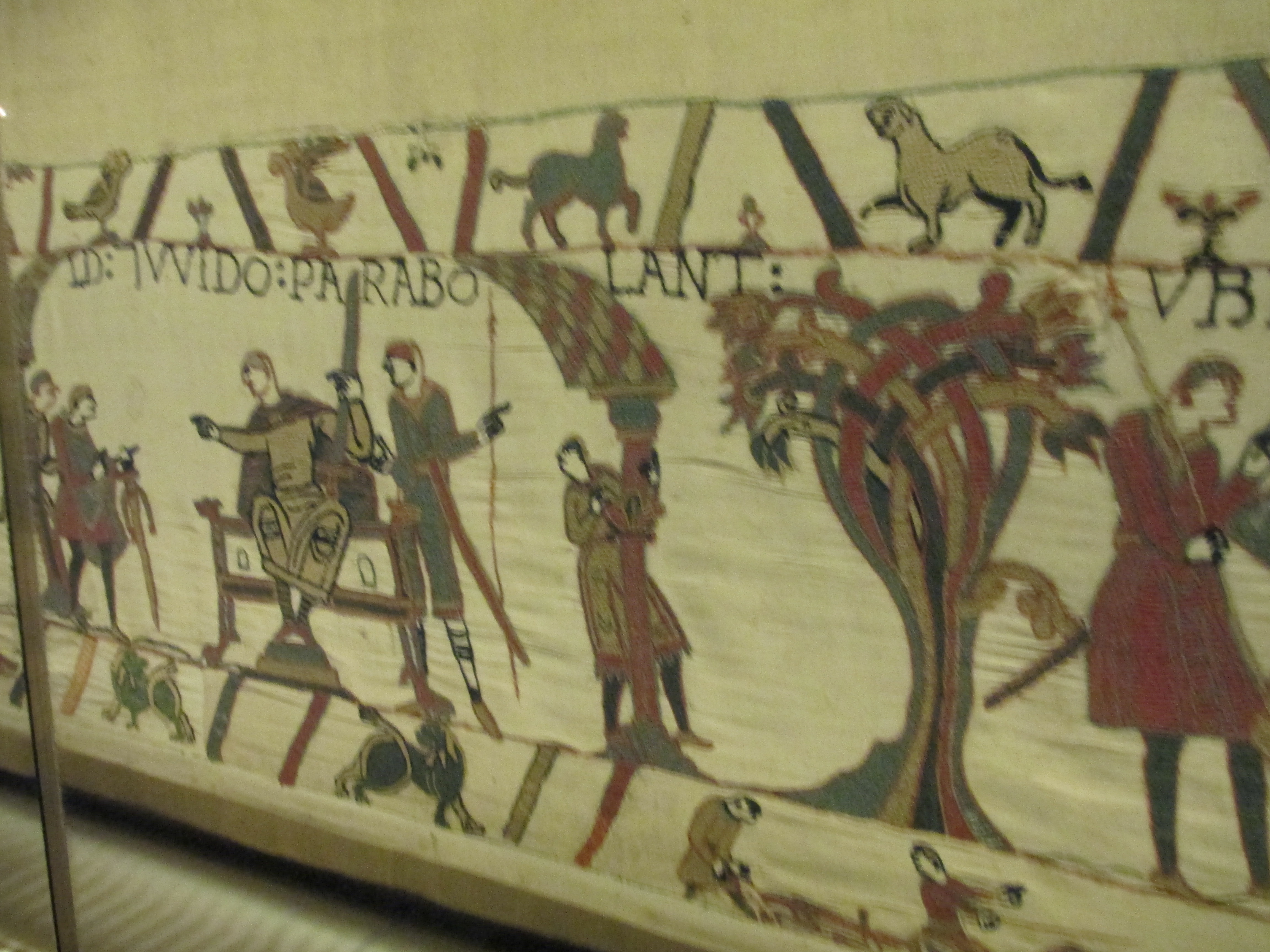
 They arrive at Dol and Duke Conan of Brittany flees. You can see him doing it on the left.

Bayeux Tapestry 12

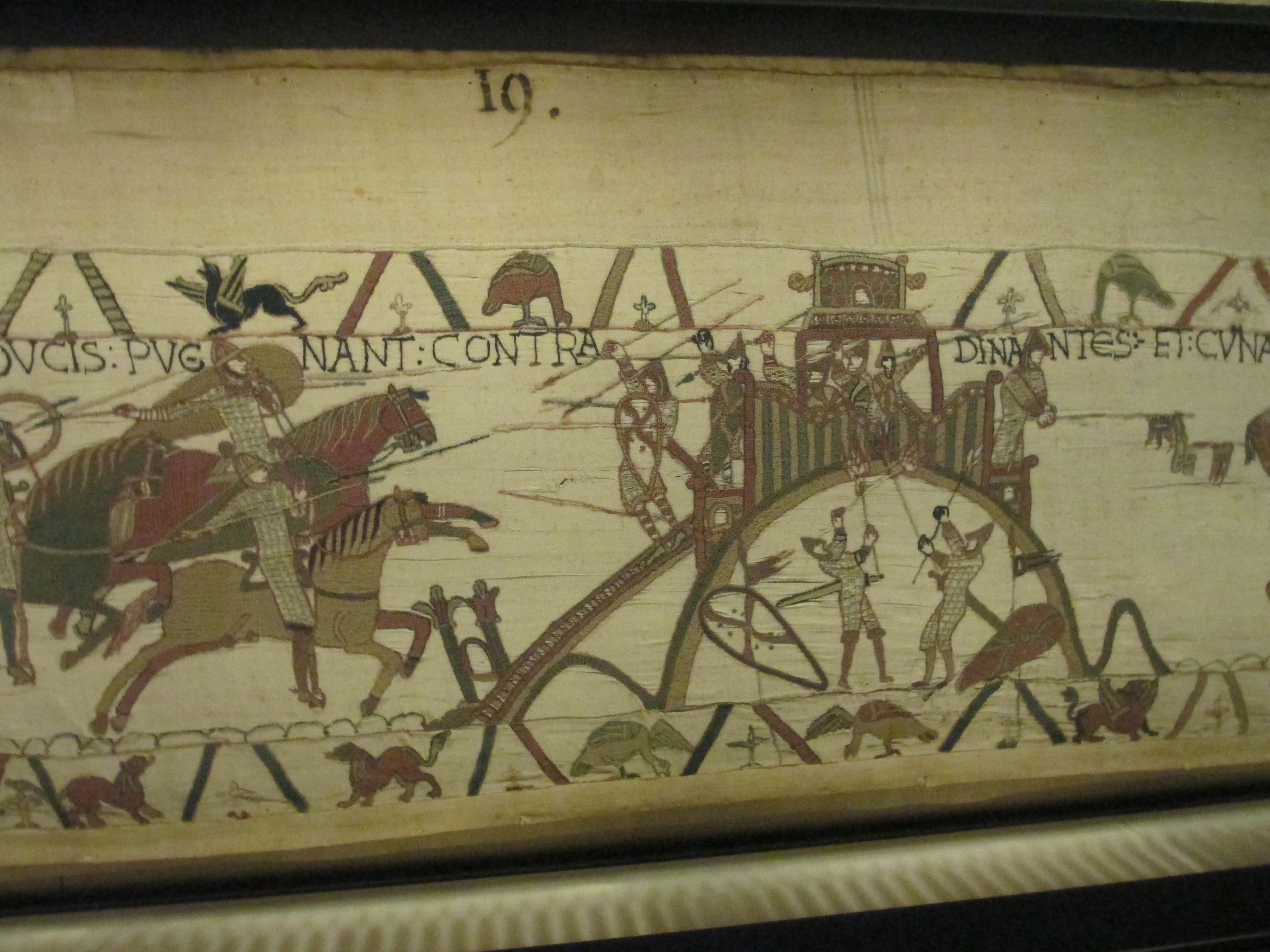
They then attack Rennes and are fighting against the men of Dinian.

Bayeux Tapestry 13

Conan hands over the keys to William, no photo, and Harold and William arrive at Bayeux, no photo, where Harold makes an oath to back Duke William. You can see him swearing on the holy relics on the right.

Bayeux Tapestry 14

Harold returns to England, no photo, to find that King Edward is dying.

Bayeux Tapestry 15

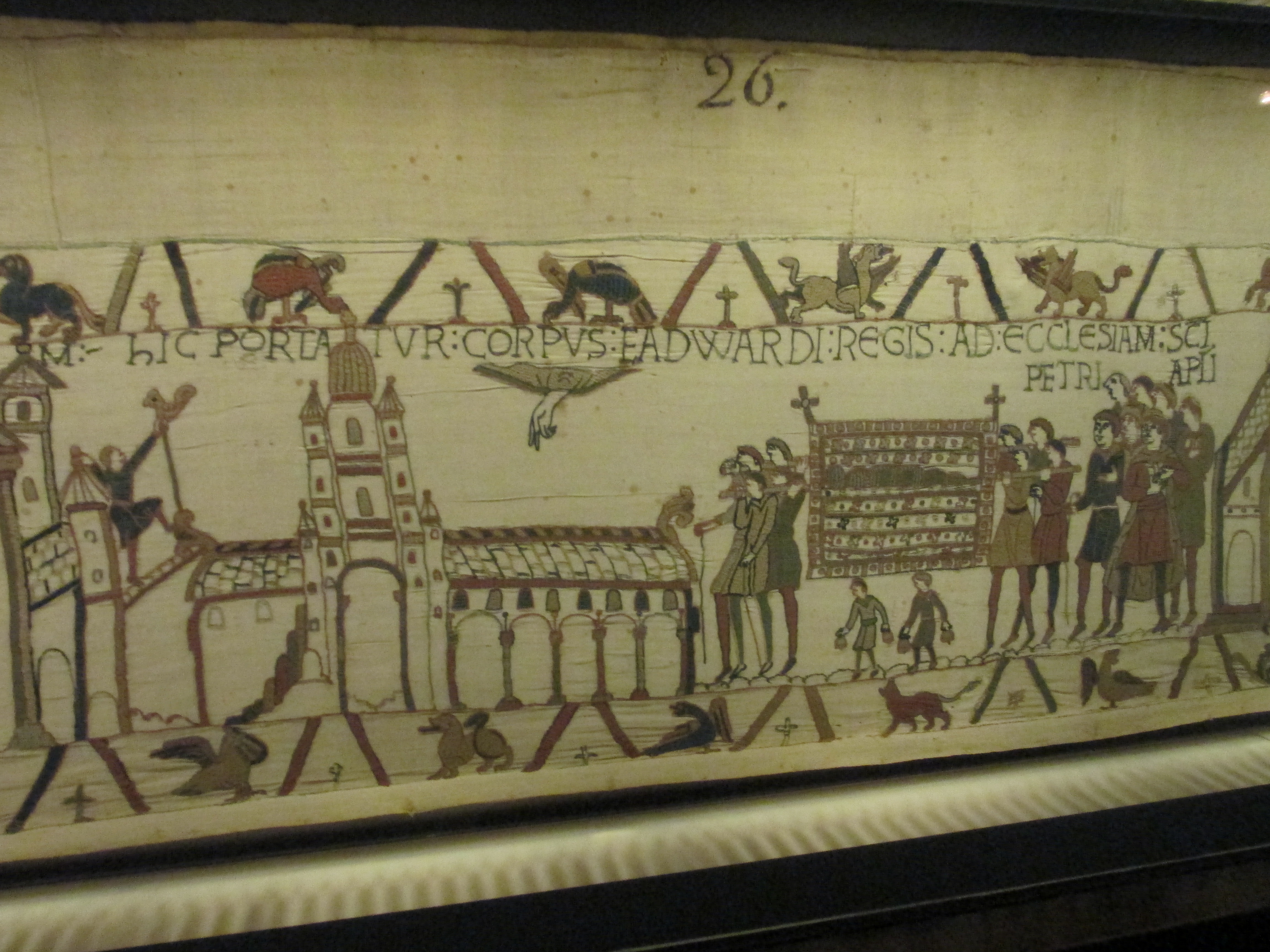
The Hand of God is pointing at the very new Westminster Abbey and King Edward’s body is carried off.

Bayeux Tapestry 16

King Edward is shown addressing his faithful servants before his death.

Bayeux Tapestry 17

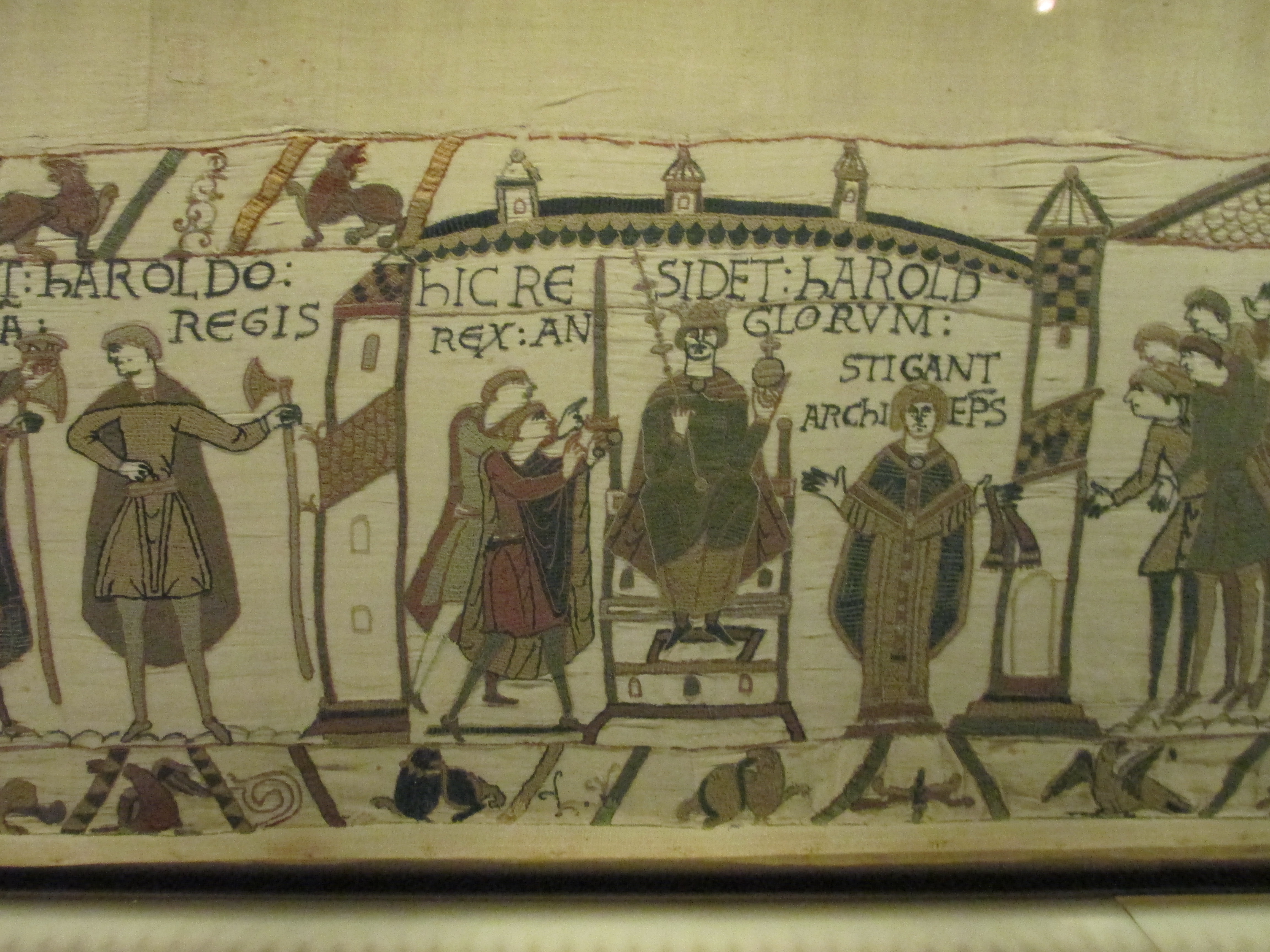
Harold is named King.

Bayeux Tapestry 18

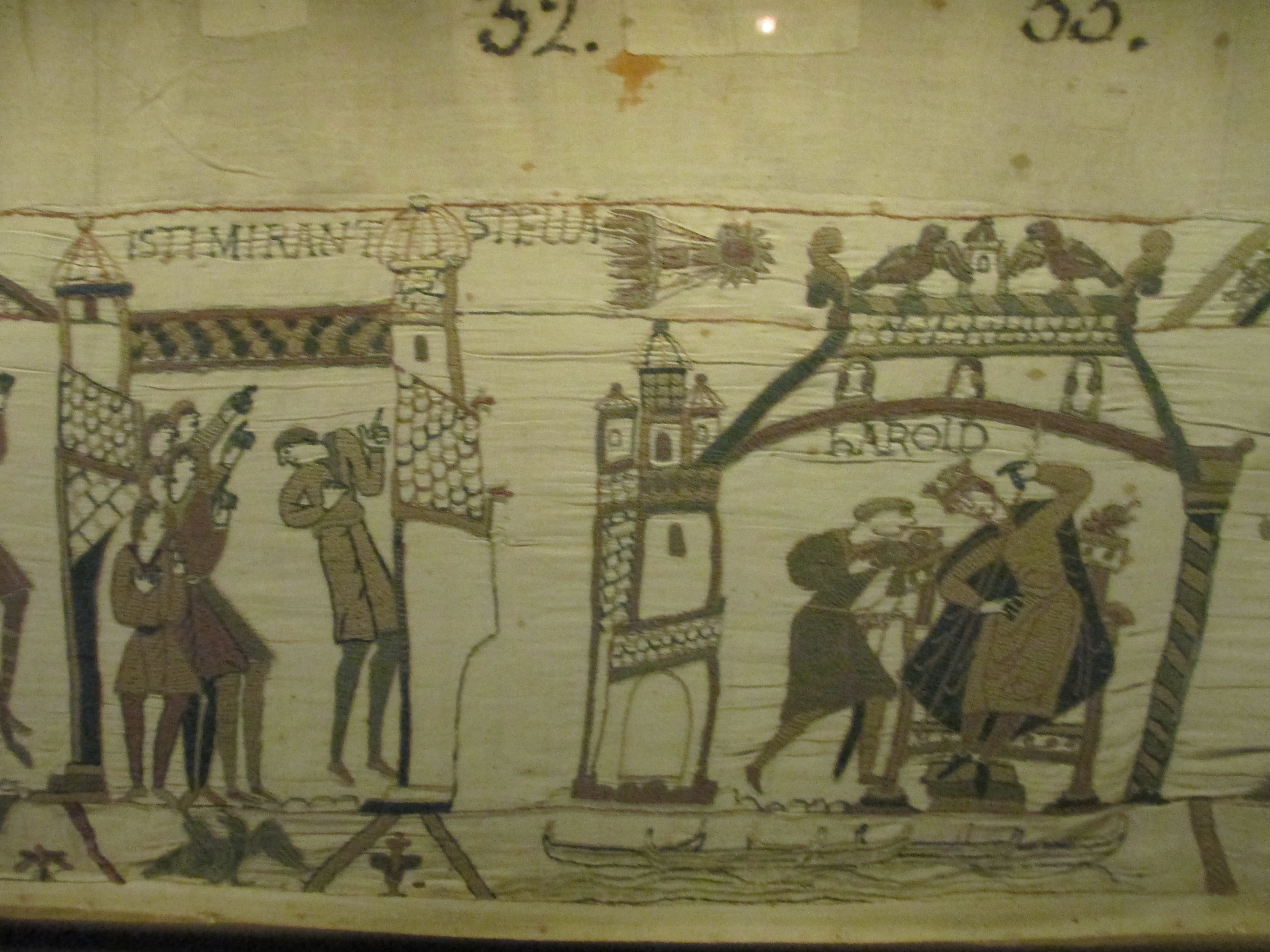
The men marvel at a star, which is Halley’s Comet. One of them comes to tell Harold about it. You can see shadowy ships in the bottom border, which could be taken as an omen.

Bayeux Tapestry 19

Duke William is told of what he sees as Harold’s treachery.

Bayeux Tapestry 20 JPG

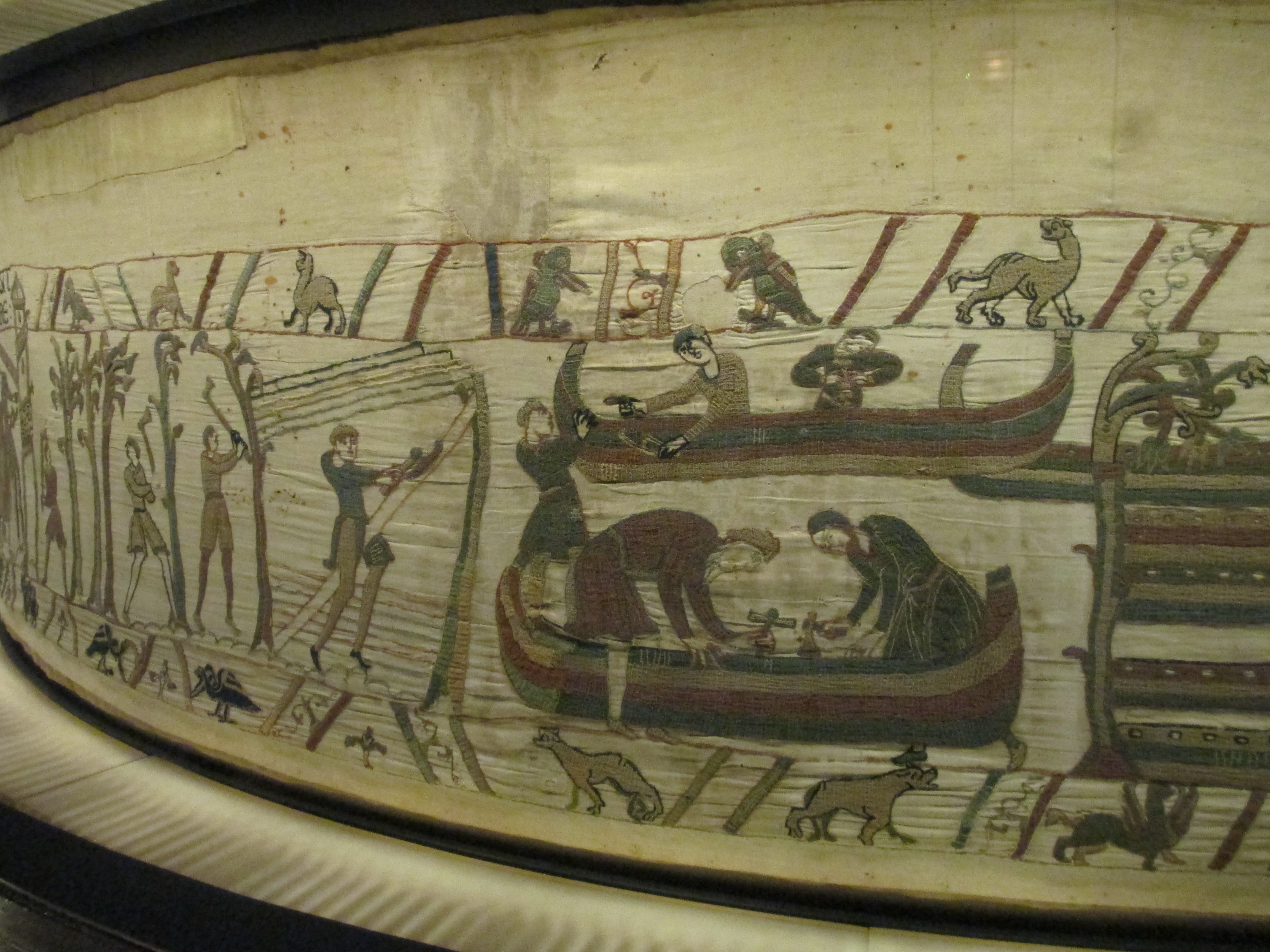
Duke William’s men are ordered to chop down trees to make ships and the ships are built.

Bayeux Tapestry 21

The ships are dragged to the sea, no picture, and loaded with weaponry and food and wine.

Bayeux Tapestry 22

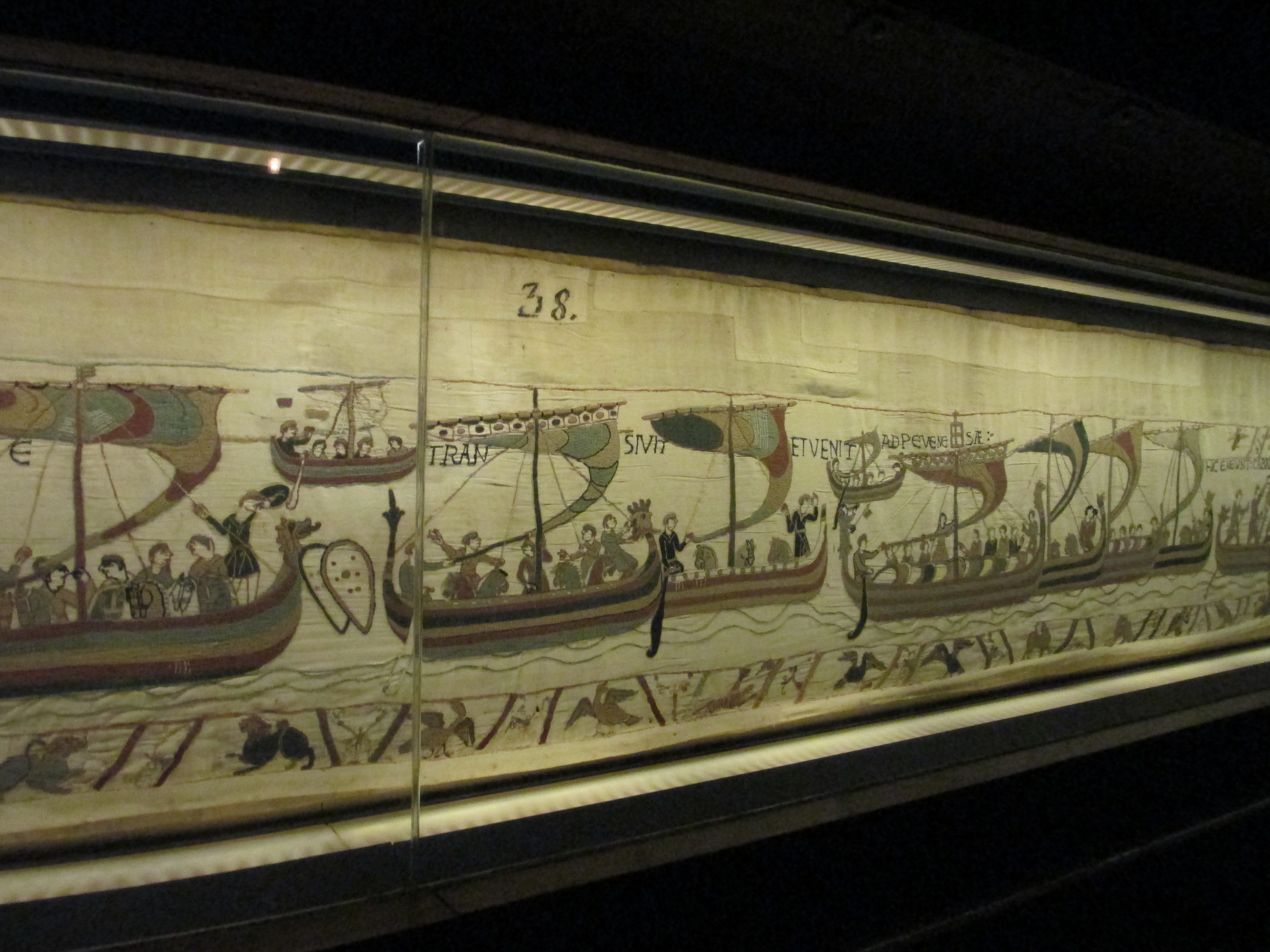
They set sail.

Bayeux Tapestry 24

Bayeux Tapestry 23

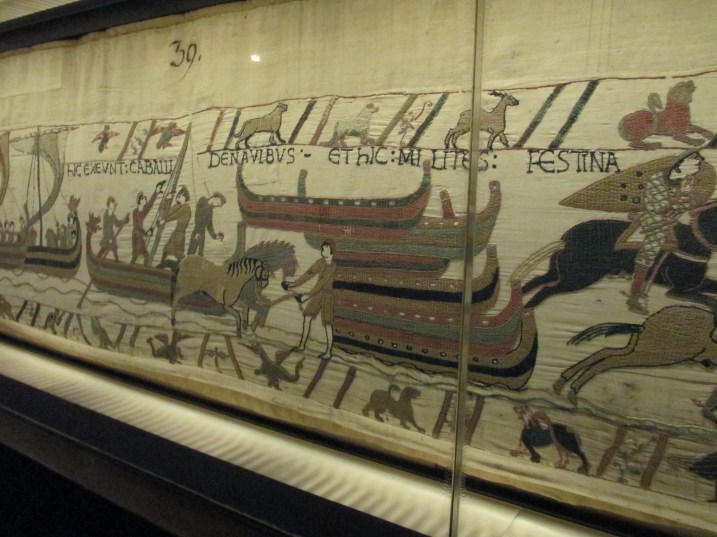
They arrive at Pevensey, unload the horses and the knights hurry off. They can be seen hurrying on the right.

Bayeux Tapestry 25

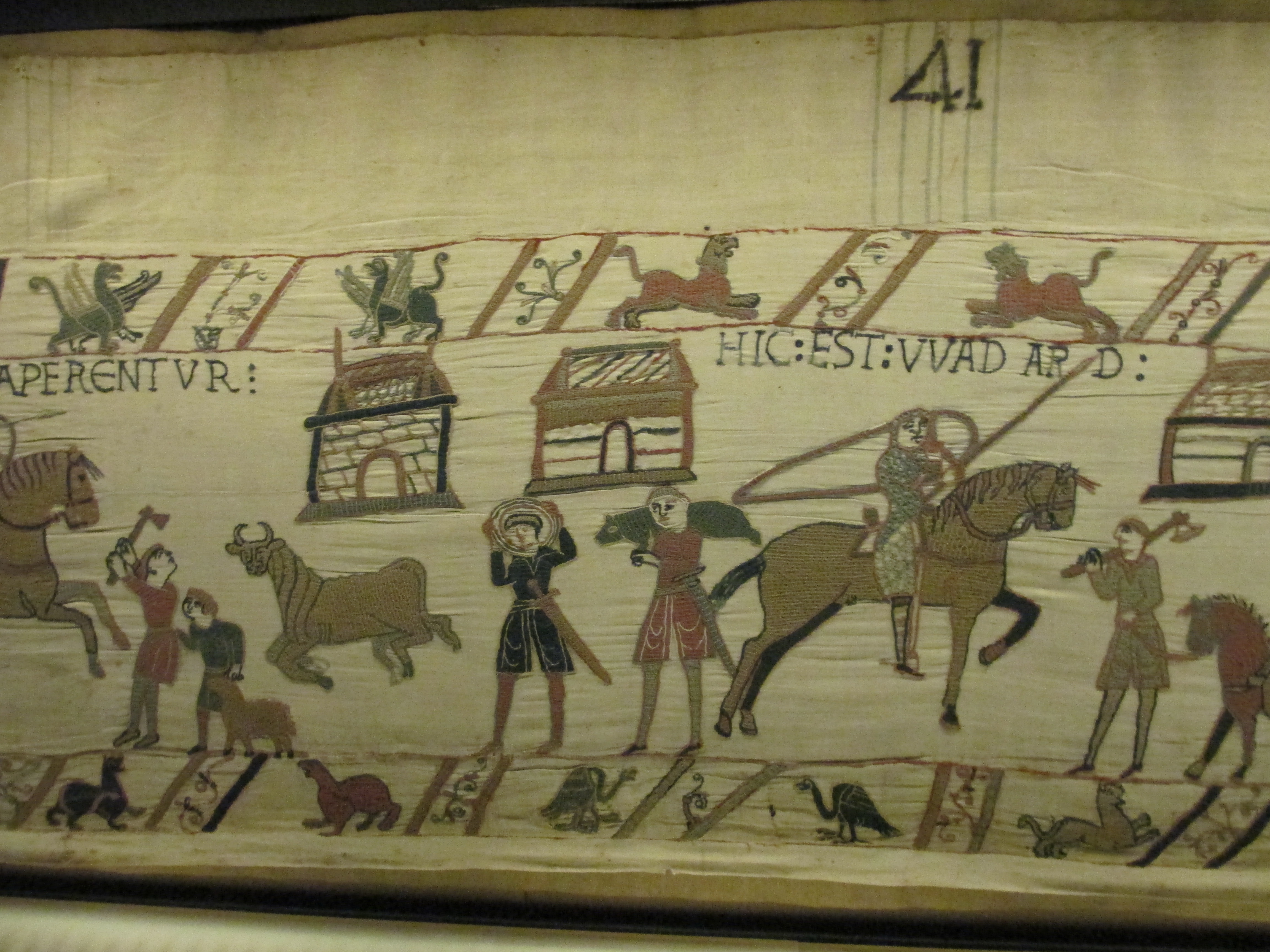
They head for Hastings so they can forage for food, no pictures, they then arrive and meet Waddard, probably a vassal of Odo’s.

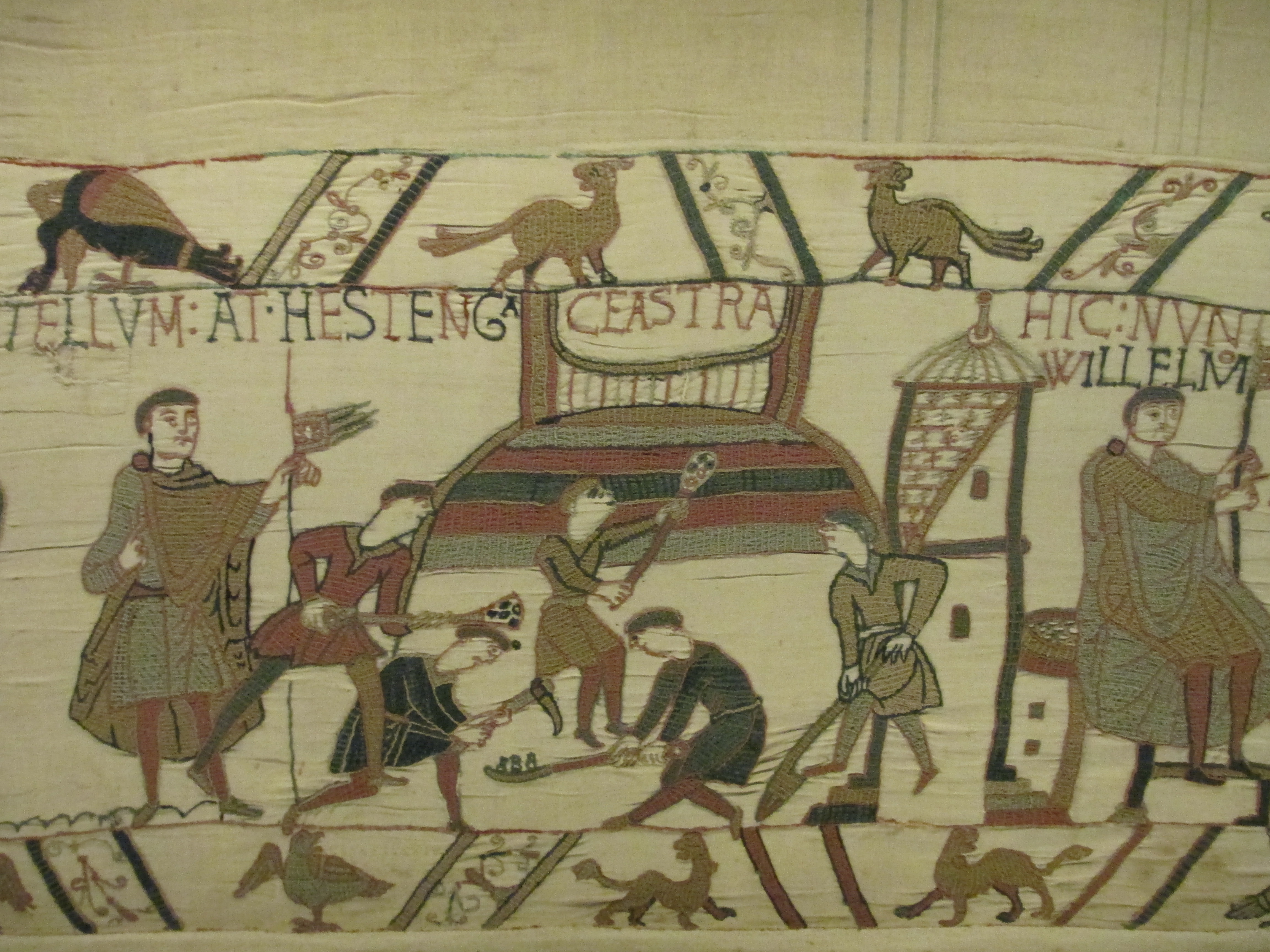
Bayeux tapestry 26

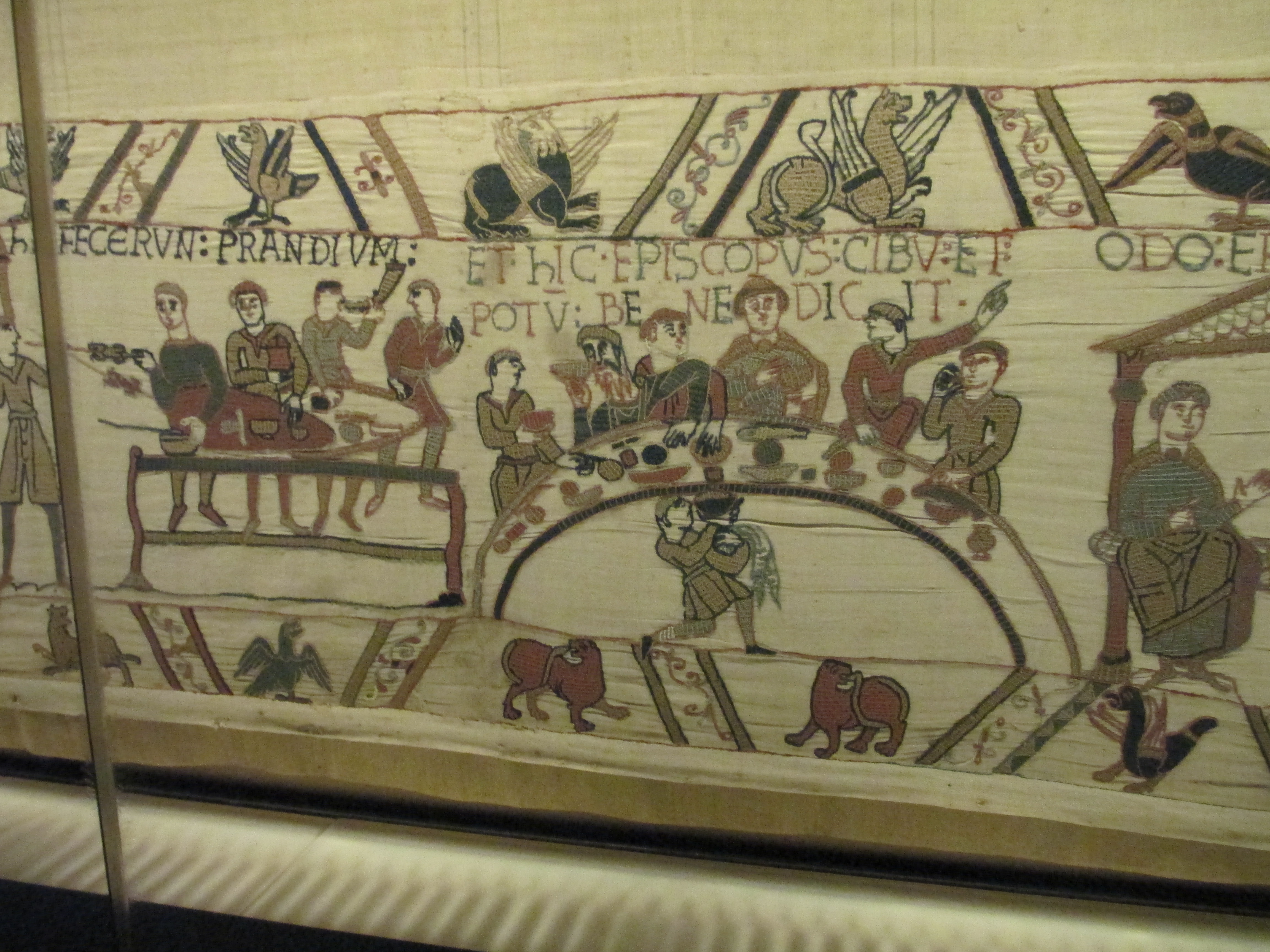
Meat is cooked and served by servants, no picture. They have a large meal and the bishop blesses the food.

Bayeux Tapestry 27

Duke William talks to his two half brothers Bishop Odo and Robert of Mortain, no picture, the order is then given for a fortification to be dug at Hastings.

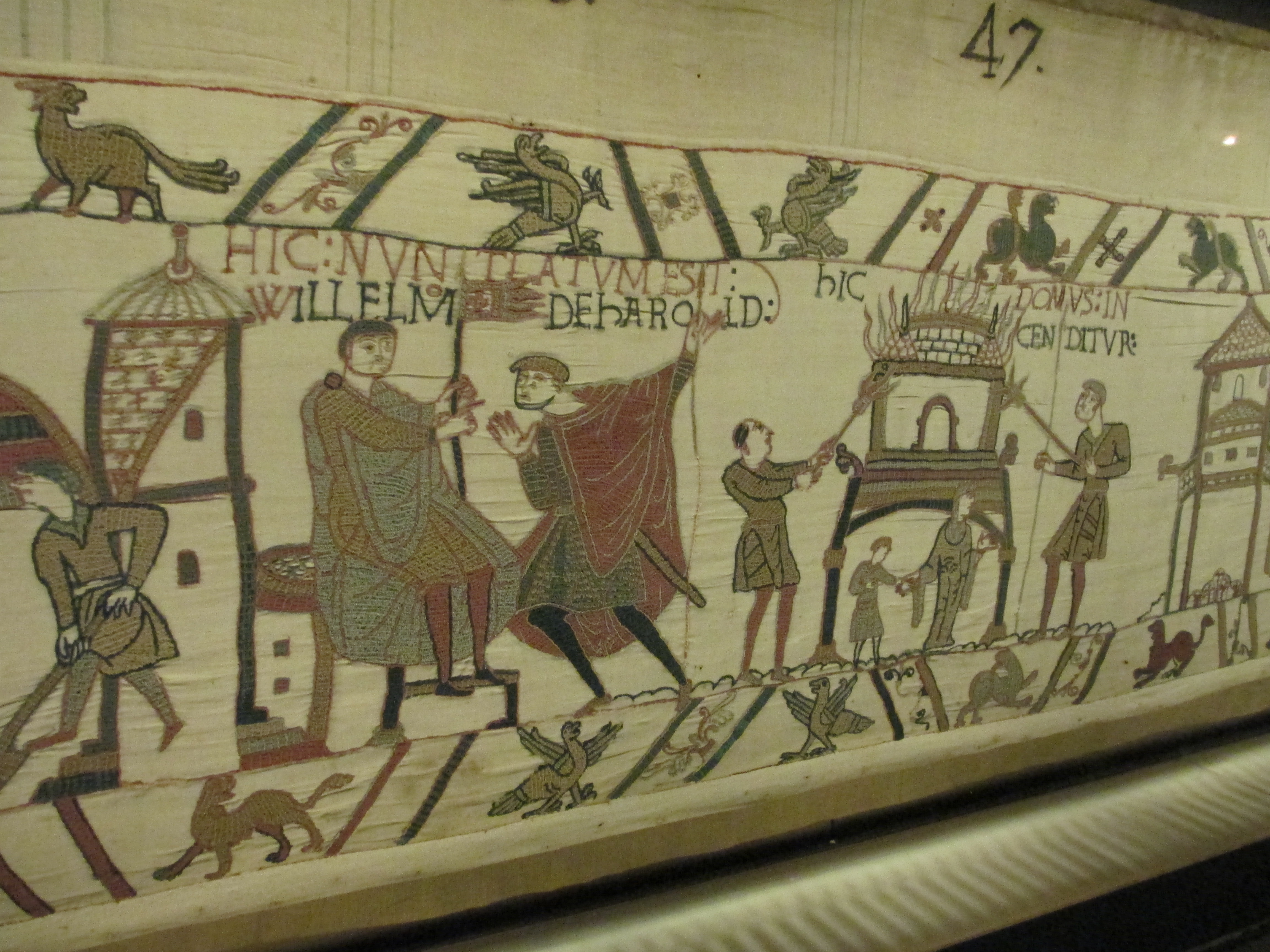
Bayuex Tapestry 28

News about Harold is brought to Duke William and a house is burnt, possibly an indication of the countryside being ravaged to provoke battle.

Bayeux Tapestry 29

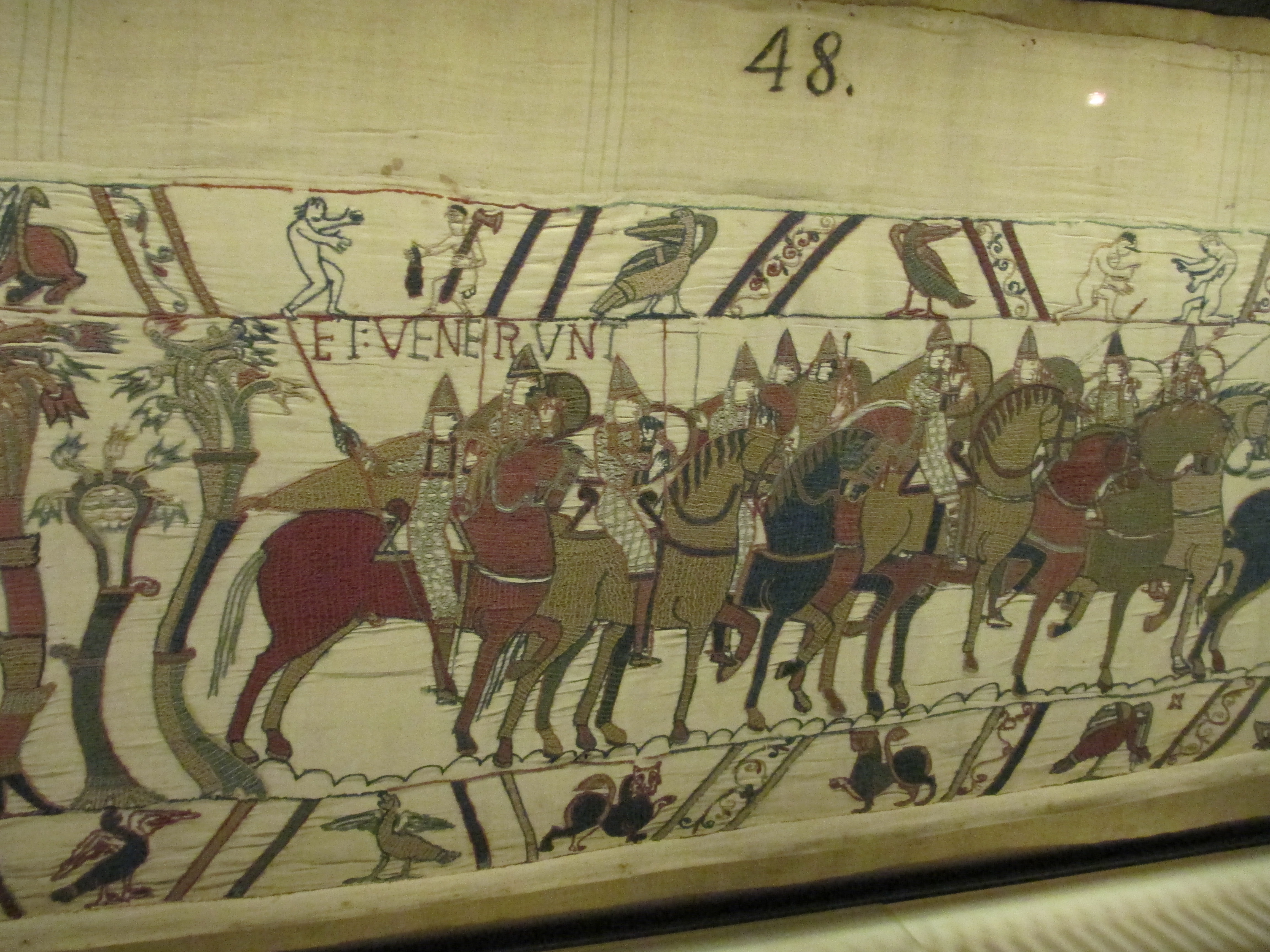
The knights set out from Hastings, no picture, and reach the battle against Harold.

Bayeux Tapestry 30

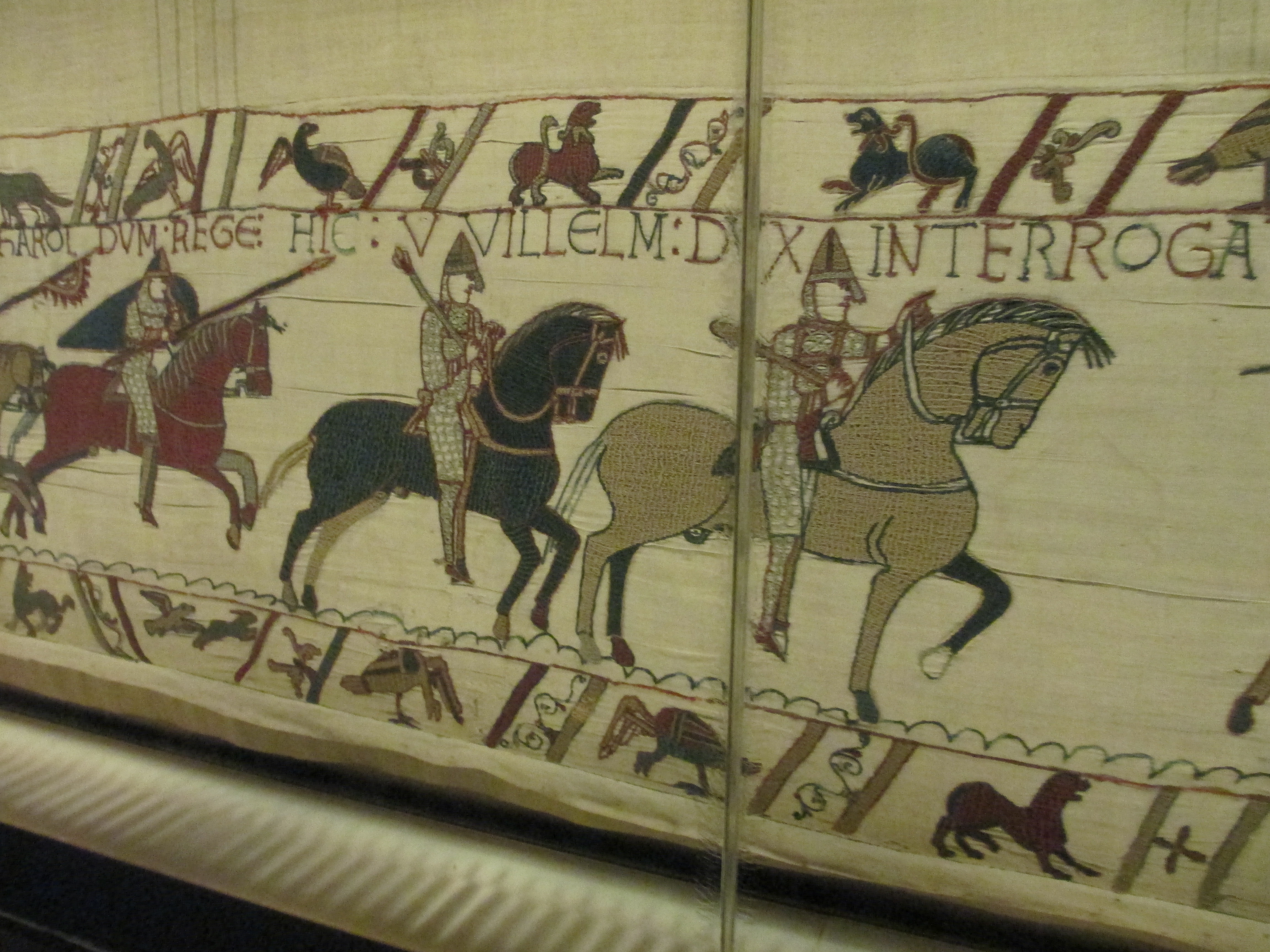
Duke William questions Vital, who was probably Odo’s vassal and has been scouting, if he has seen Harold’s army.

Bayeux Tapestry 31

It is worth pausing the story here to say that at this point King Harold has ridden and marched his army from Stamford Bridge, just out of York. Where after a forced march of more than 200 miles King Harold’s forces had defeated the army of Harald Hardrada the King of Norway and Tostig, King Harold’s brother who he’d been forced to exile some months earlier. Harald Hardrada had sailed at Tostig’s request to claim the English Crown for himself. He’d sailed with a fleet of some 200 ships, not including the supply ships. King Harold won the day, the Norwegians were annihilated and Hardrada and Tostig were both killed. So few survived that only approximately 24 ships were needed to carry them home. Oderic Vital wrote seventy years later that “To this day a great congeries of skeletons of those who died still lies there, as evidence of the wholesale slaughter of two peoples.” (Thorpe, p.15). News of Duke William’s landing probably reached Harold while he was in York and he turned around and marched south from just out of York to face Duke William, he left London on the 12th of October and The Battle of Hastings was fought on the 14th of October 1066. The image below on the left is King Harold receiving news of Duke William’s army before the battle begins and on the right you can see Duke William exhorting his troops.

Bayeux Tapestry 32

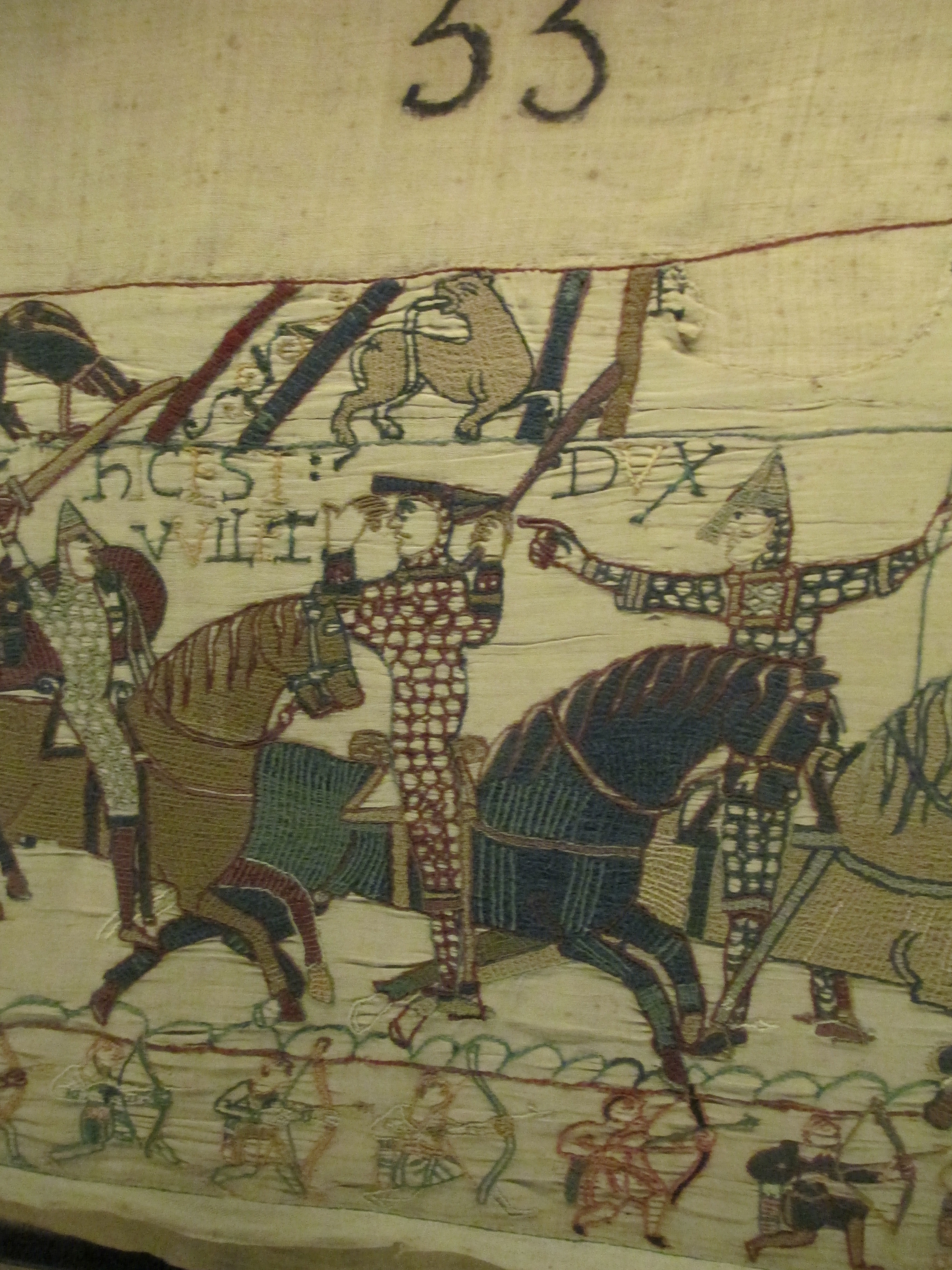
The battle then commences. Bayeux Tapestry 33 Bayeux Tapestry 34

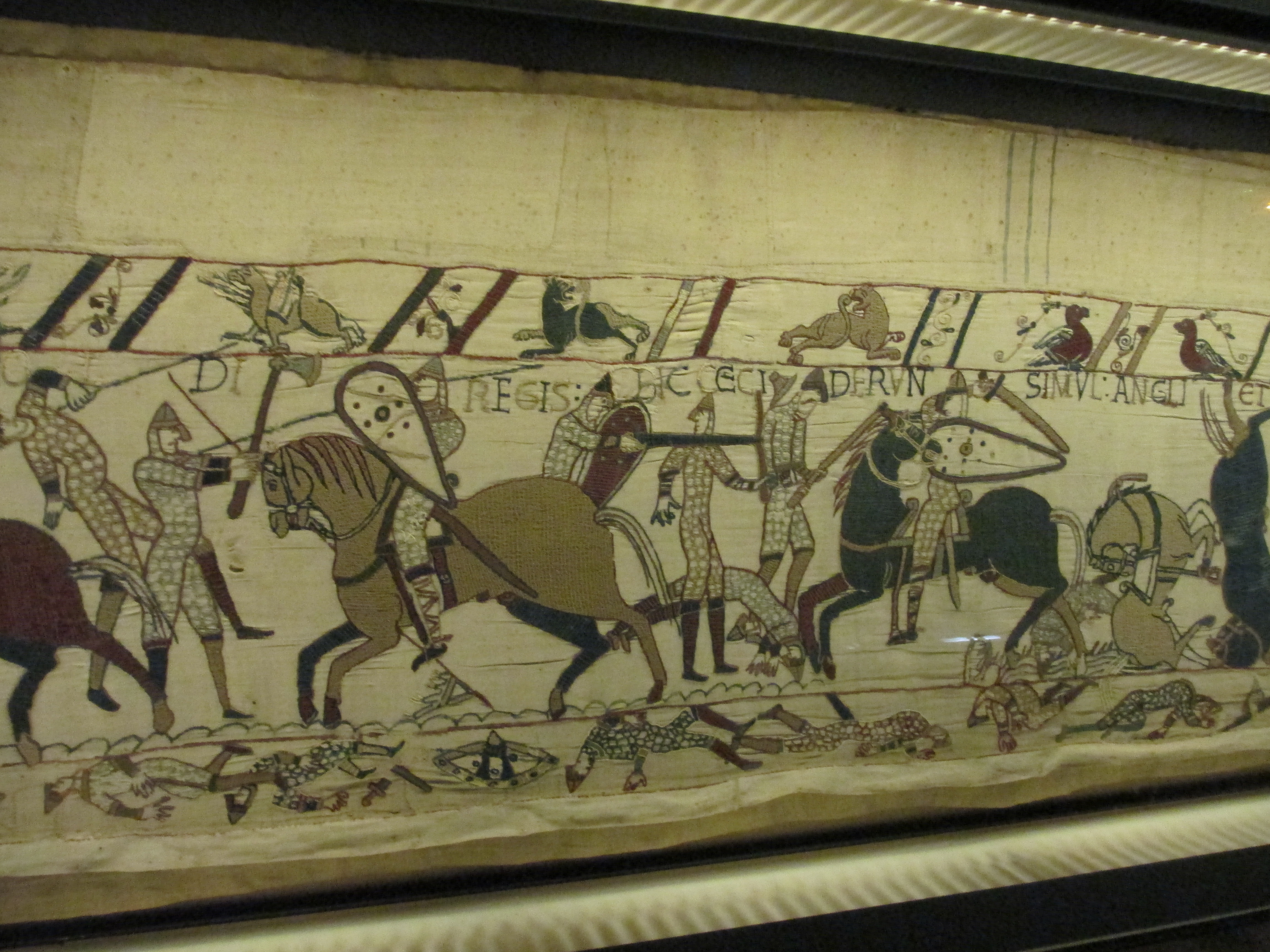
King Harold’s brothers, Leofwine and Gyrth, fall.Bayeux Tapestry 35 Bayeux Tapestry 36

The Battle continues.

Bayeux Tapestry 37

Bayeux Tapestry 38

There is concern that Duke William has been killed. You can see him showing his face below to prove that he isn’t dead.

Bayeux Tapestry 39

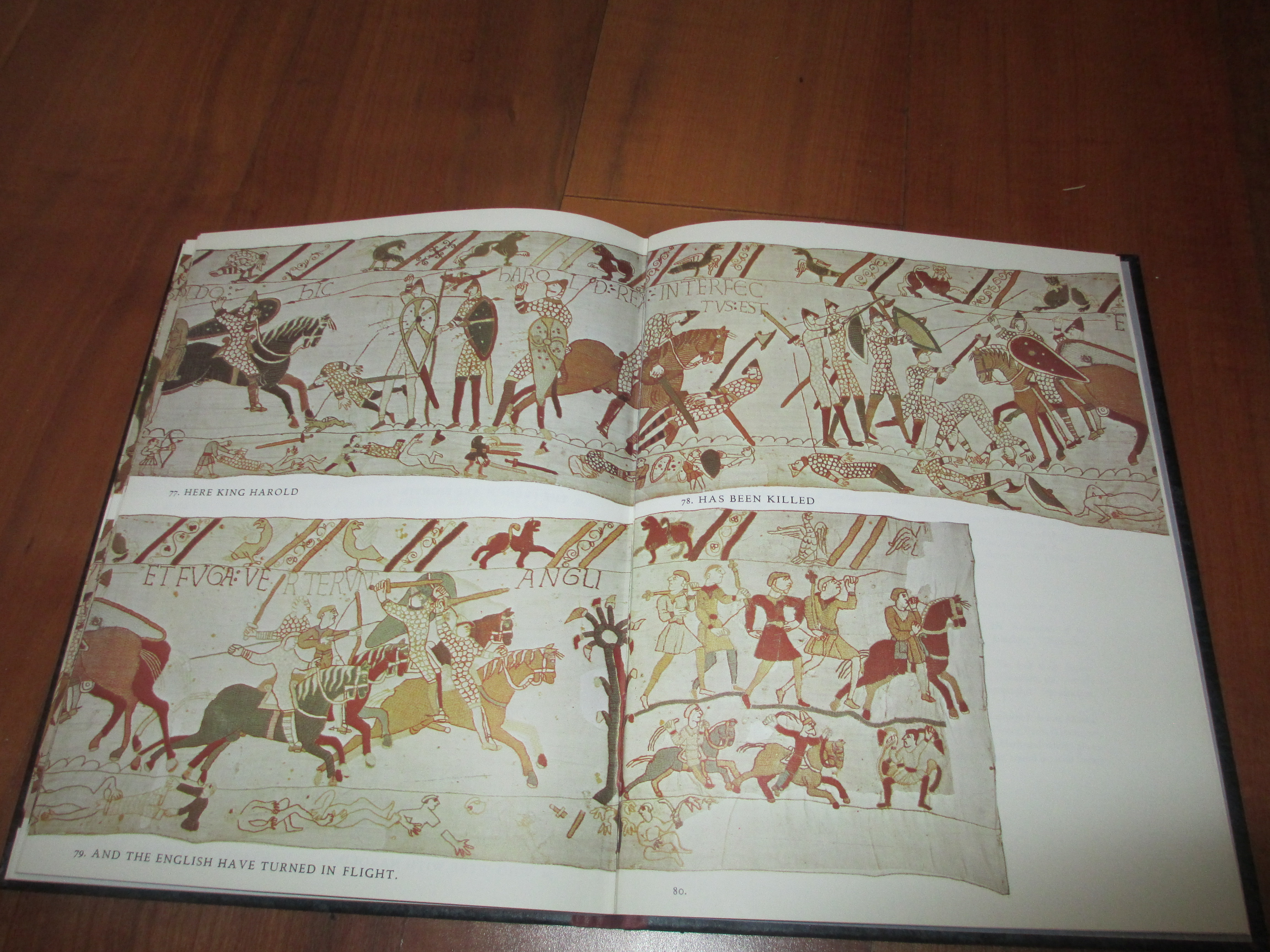
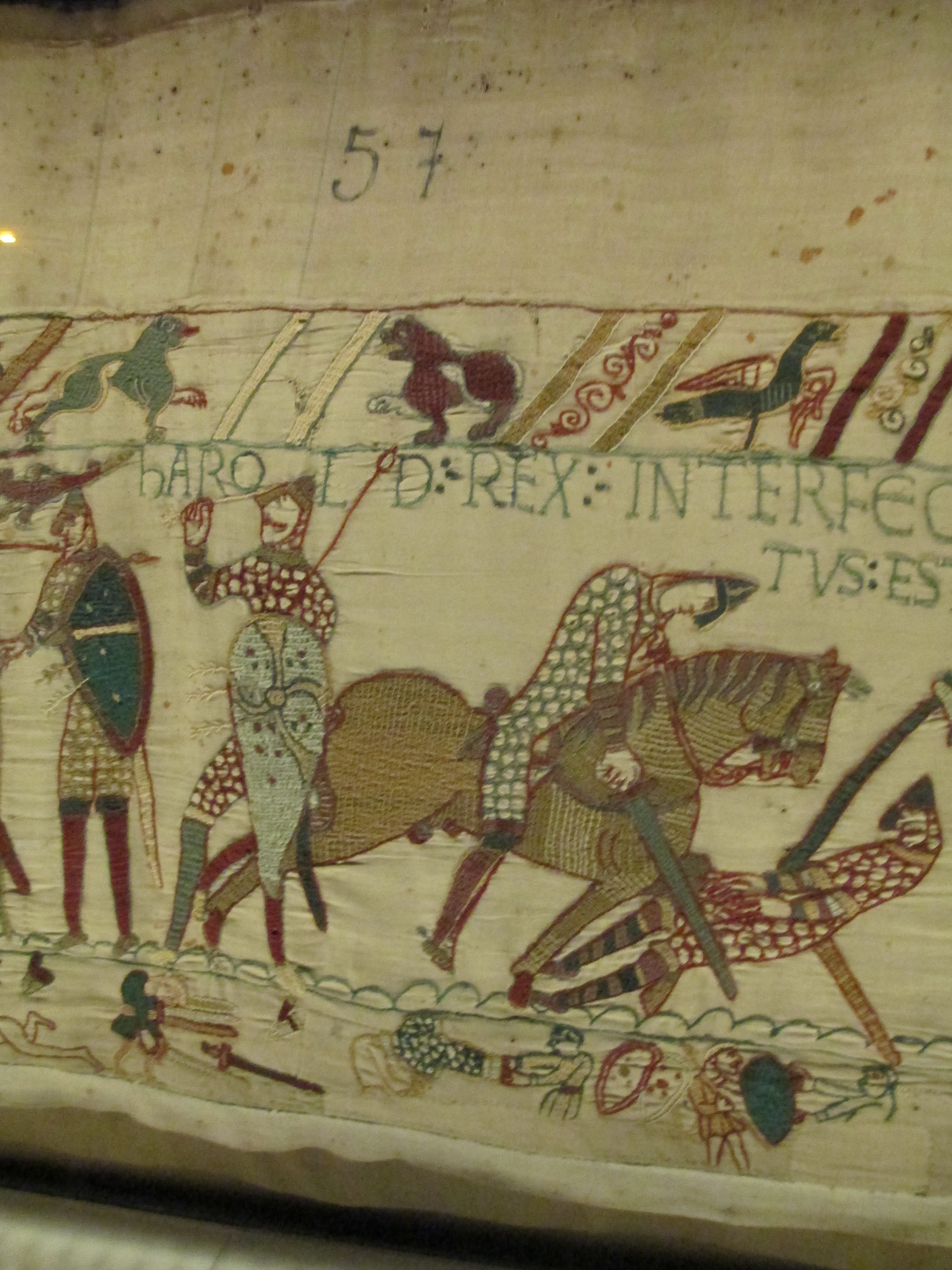
There is more fighting, no photos,  and then King Harold is killed. You can see latin below. Harold Rex interfectus est. Which translates as here King Harold has been killed. See above for the discussion as to how he died.

Bayeux Tapestry 40

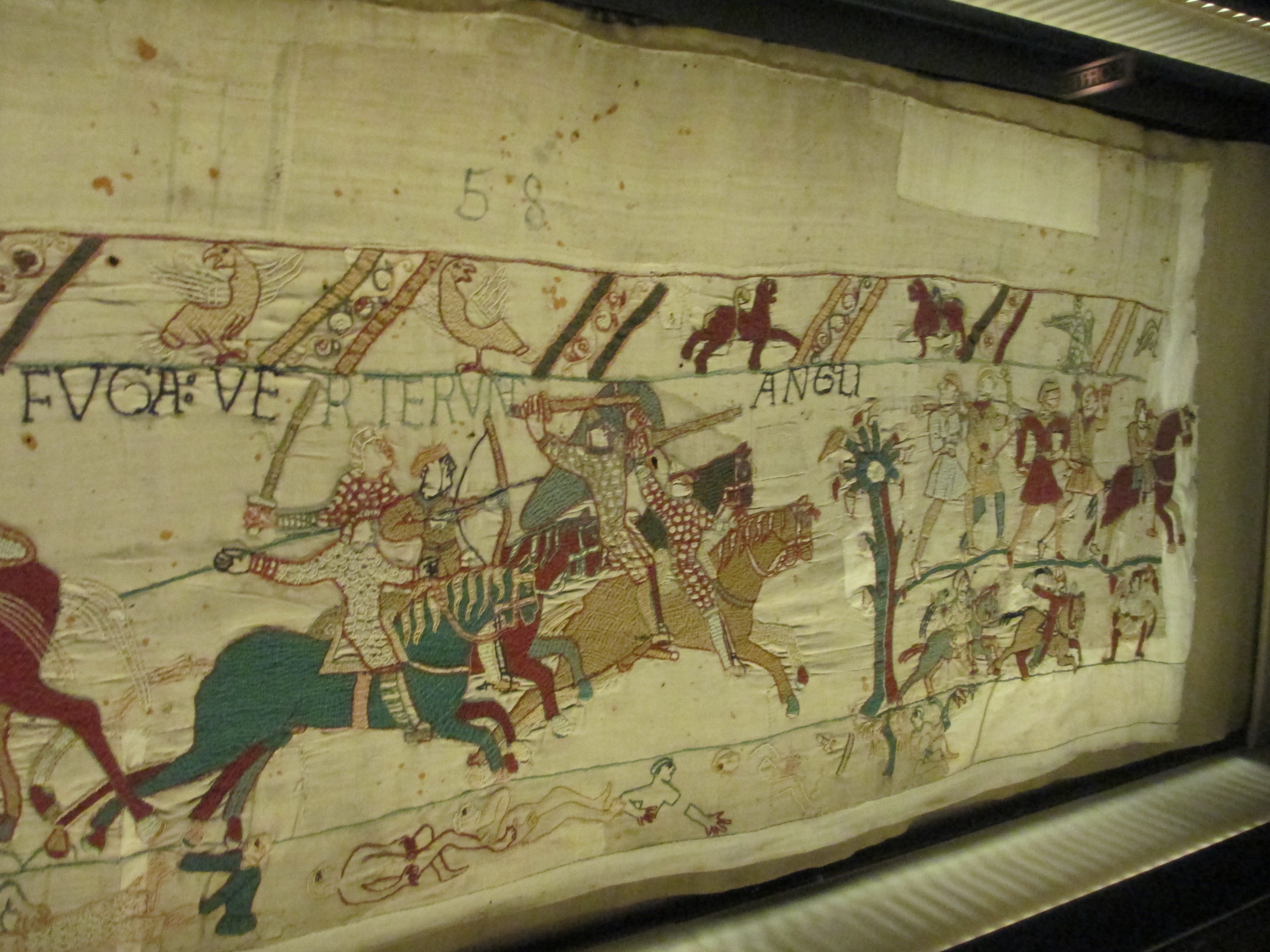
And the English flee.

Bayeux Tapestry 41Bayeux Tapestry 42

And that is the end of the tapestry.

It is by no means the end of story as Duke William still had to establish dominance over a reasonably hostile country. But that is a story for another post.

The photos are all mine as is the video.

[1] http://www.watchashore.org.uk/southampton

[2] http://www.history.org.uk/file_download.php?ts=1254494939&id=3946. This is a link to a discussion about whether or not King Harold was shot in the eye. While the author draws the conclusion that he was not and I don’t believe this can be said absolutely definitively the article outlines the problems with the argument that he was shot in the eye with an arrow. There are absolutely arguments on both sides, but this is not the place to go into detail.

[3] The Bayeux Tapestry by Eric Maclagan. published 1943 by Penguin Book Limited: London and New York.

[4] The Bayeux Tapestry and the Norman Invasion by Lewis Thorpe. Published 1973 by the Folio Society.

[5] http://www.britannica.com/EBchecked/topic/56821/Bayeux-Tapestry

Favourite Castle Results

I ran a poll a couple of weeks ago on favourite castles. Thanks to everyone who voted and thanks to all who put in ‘other’ options. I now have more castles to go and visit. I figure you’ve all had enough time to vote now so here are the results.

5th Place:

Doune.

Ferns.

4th Place:

Peveril.

Conwy.

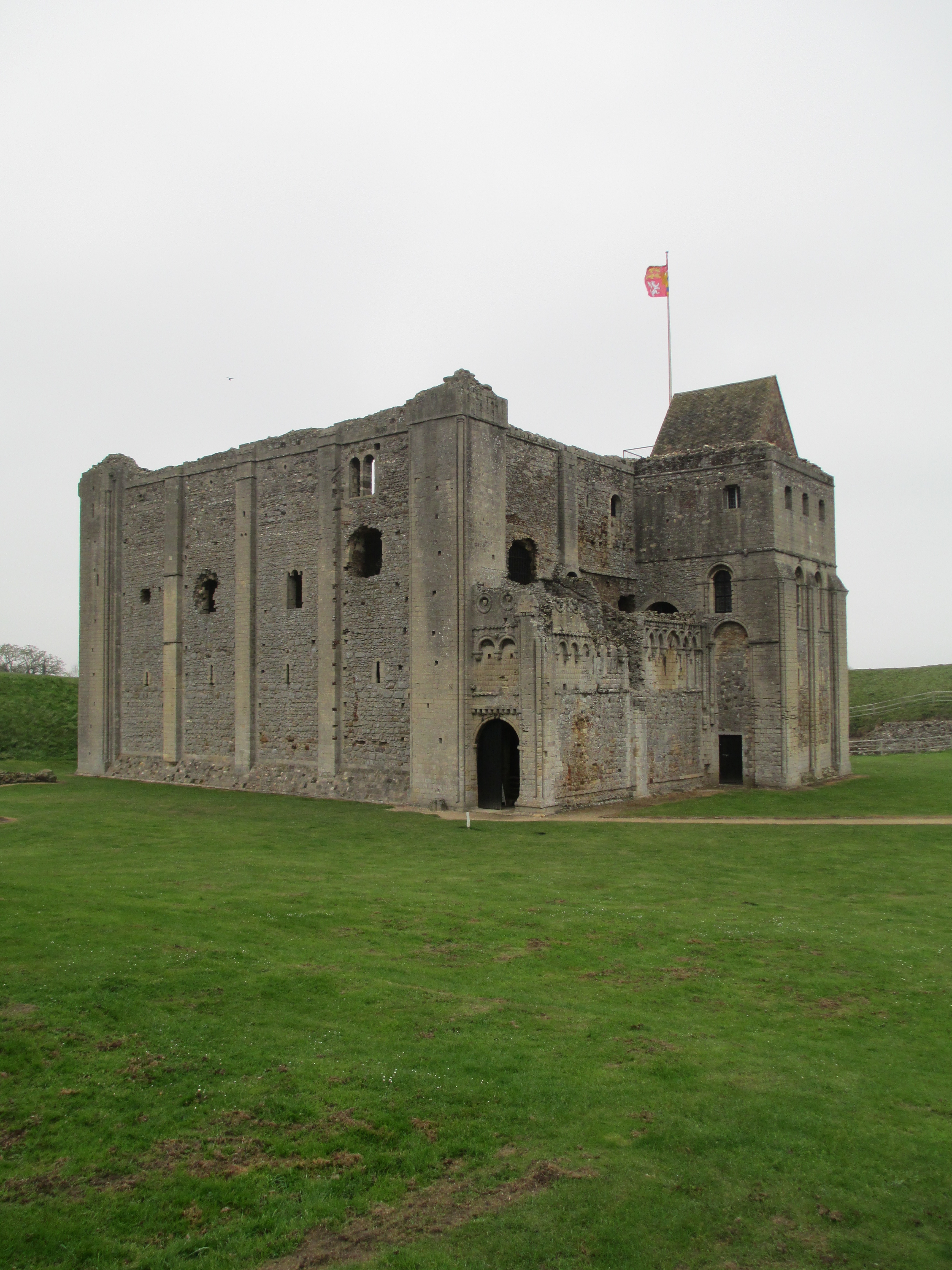
Castle Rising.

Carrickfergus.

Alnwick.

Sandal.

Peel Castle Isle of Man.

Caerphilly.

Third Place: 

Foix

IMG_9125

2nd Place:

Pembroke

pembrokeMiddleham.

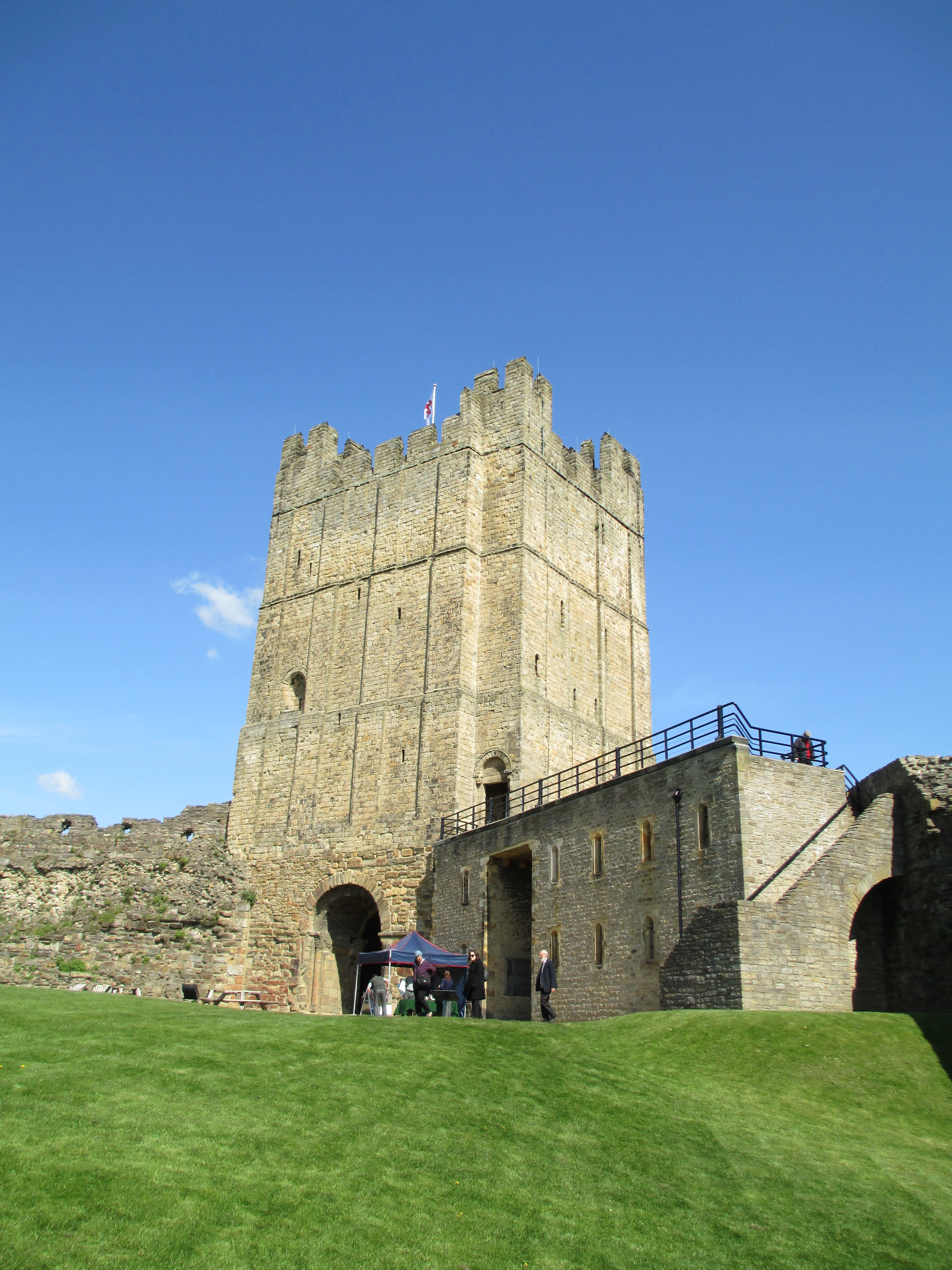
IMG_1241Richmond

IMG_1147


In 1st place is:

Chepstow

Chepstow Castle Wales

Chepstow Castle

I have to say I am quite pleased with this result as Chepstow is one of William Marshal’s castles. Thanks again to everyone who voted and please feel free to let me know if you think there are others that should be on the list. I might do an open poll in a couple of months.


St Patrick’s Day: The Rock of Cashel.

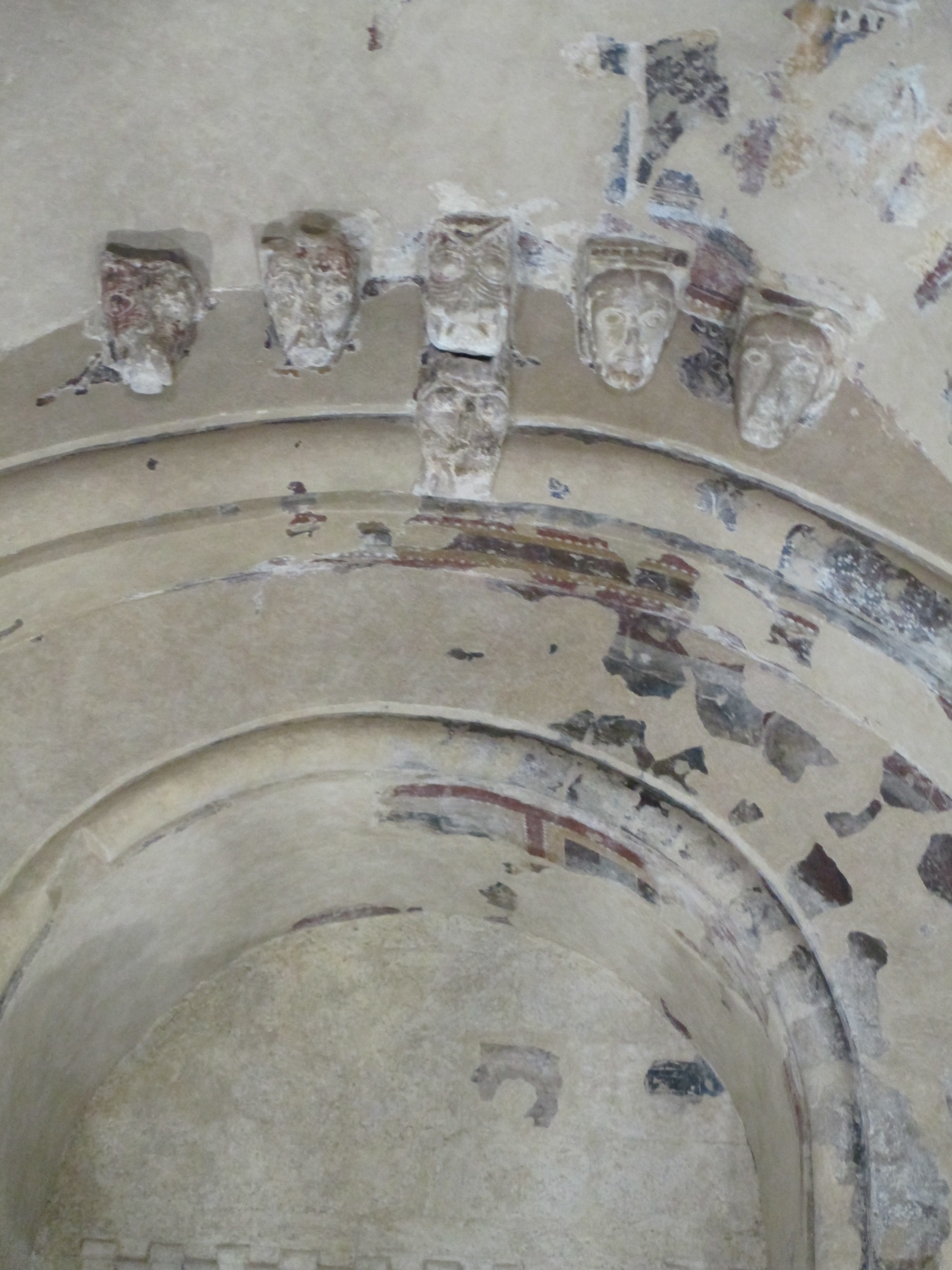
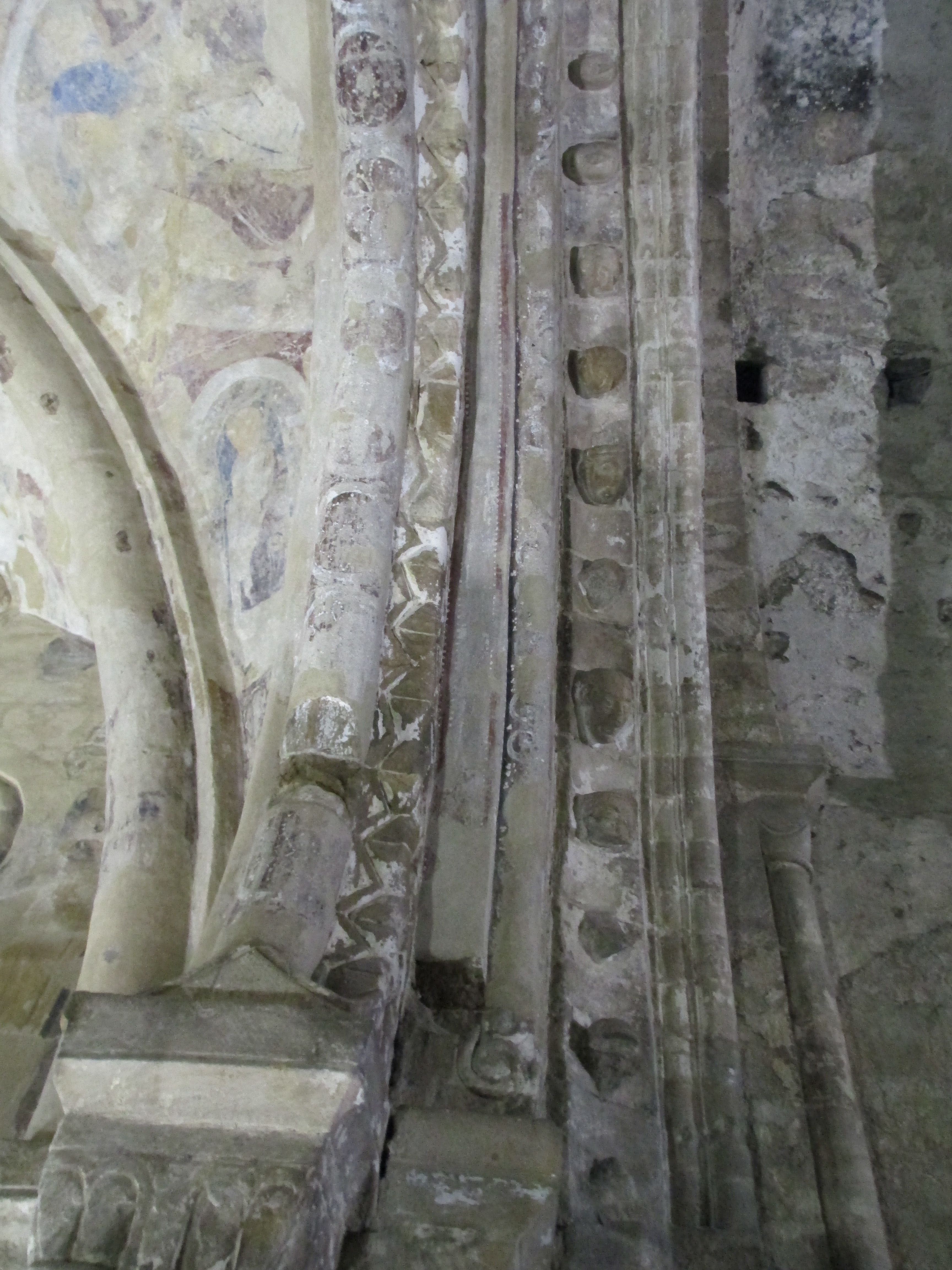
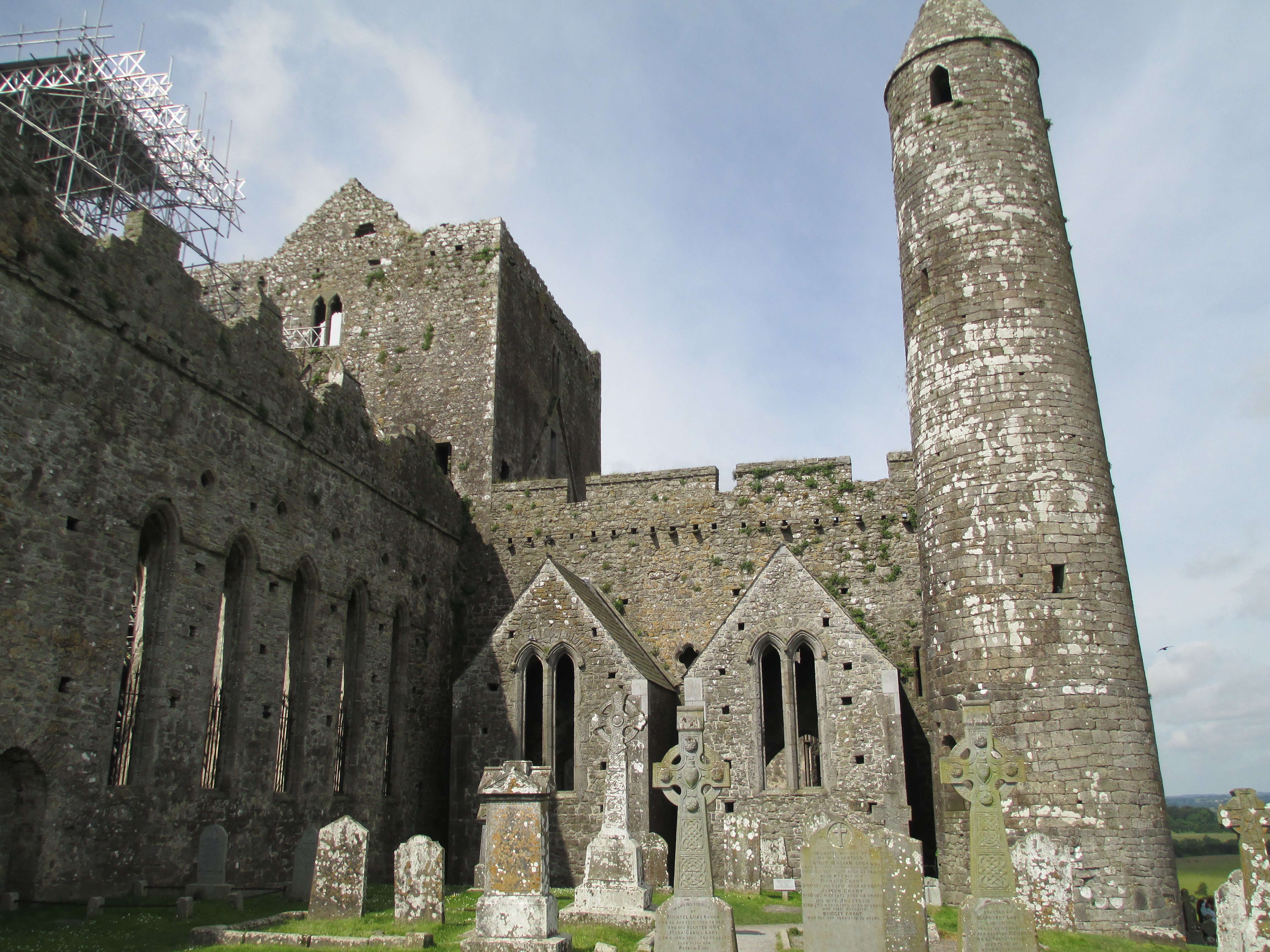
Seeing as it is St Patrick’s Day… The Rock of Cashel, also known as St Patrick’s Rock, is one of Ireland’s most historic and most spectacular sites. Rock of Cashel It is home to a myriad of history: The 12th century Cormac’s Chapel with truly spectacular surviving wall paintings.cormac's wall painting cashel3 cormac's wall painting cashel4 cormac's wall painting cashel2 cormac's wall painting cashel1 The 13th century Cathedral of St Patrick.   cathel cathedral cashel cathedral A very early 12th century round tower. The inhabitants would hide inside if they were raided. They would take all their valuables into the tower and burn the steps. round tower cashelround tower cashel correct The 15th century Hall of Vicar’s Choral.cashel hallcahsel hall 3cashel hall 2And the 12th Century Cross of St Patrick. There have been repeated stories that the stone at the bottom of the cross was the inauguration stone of the Kings of Cashel. This is, however, unlikely as it is clear that the base stone matches the rest of the cross.  St Patrick's cross The Rock of Cashel was the ancient home of the Kings of Eóganacht and it was there that, according to tradition, St Patrick baptised the grandsons of the King. According to legend St Patrick accidentally put the point of his crozier through the foot of Óengus, one of the grandsons, but Óengus thought it was part of the ritual so he stayed silent. The Eóganacht lost Cashel to the Dál Cais in the 10th century and in 1101 Muircheartach Ua Briain, King of Cashel gave the Rock to the Church. This succeeded in both confirming his position as a true son of the Church as well as ensuring that the Eóganacht could never reclaim their ancestral home. The Rock of Cashel is a beautiful place that is inextricably linked with St Patrick. There is an immense concentration of history on the one rock. However when I was there, dodging the bus loads of tourists, it is Cormac’s Chapel in particular that truly stood out. The wall paintings are amongst the finest I have seen anywhere. For more information see. http://www.heritageireland.ie/en/media/NEW%20Rock%20of%20Cashel_3.pdf The photos are all mine.

What is your favourite castle

Just a very short post. I was wondering what everyone’s favourite castles are. I have listed a few of mine in the poll below, but please feel free to add your own answers or to chose one of mine. Also I’d love to hear some of the reasons in the comments.

For inspiration here are photos of the castles I’ve listed.


IMG_1147Richmond Castle

Chepstow Castle Wales

Chepstow Castle

pembroke

Pembroke Castle

IMG_0548

Peveril Castle

IMG_2041

Conwy Castle

ferns castle irland

Ferns Castle

IMG_0363

Castle Rising. 

IMG_1488

Doune Castle. Yes I have a soft spot for Doune because of its Monty Python connections.

IMG_9125

Foix Castle

Historic Buildings, Modern Art.

In many cases historic buildings are finding a new meaning in an increasingly technological world as canvases for modern art. Whether it is as a cinema, or a projection space or as a place for installations. This sort of repurposing brings new life and new significance to historic buildings.

There are many examples, but I thought I’d just discuss a few. I’d like to begin with some I have previously mentioned in an earlier post.

Fontevraud is an abbey in France that was founded in the 11th century. Various parts of it have been used for artistic installations. Font art The Cloister. You can walk on this sculpture, creating whole new ways of seeing an ancient building.Font DormThe dormitory. You are able to lie in these boats, simulating the experience of the sleeping monks.

The two installations in Fontevraud both work with the history of the building to give alternative ways of experiencing it.

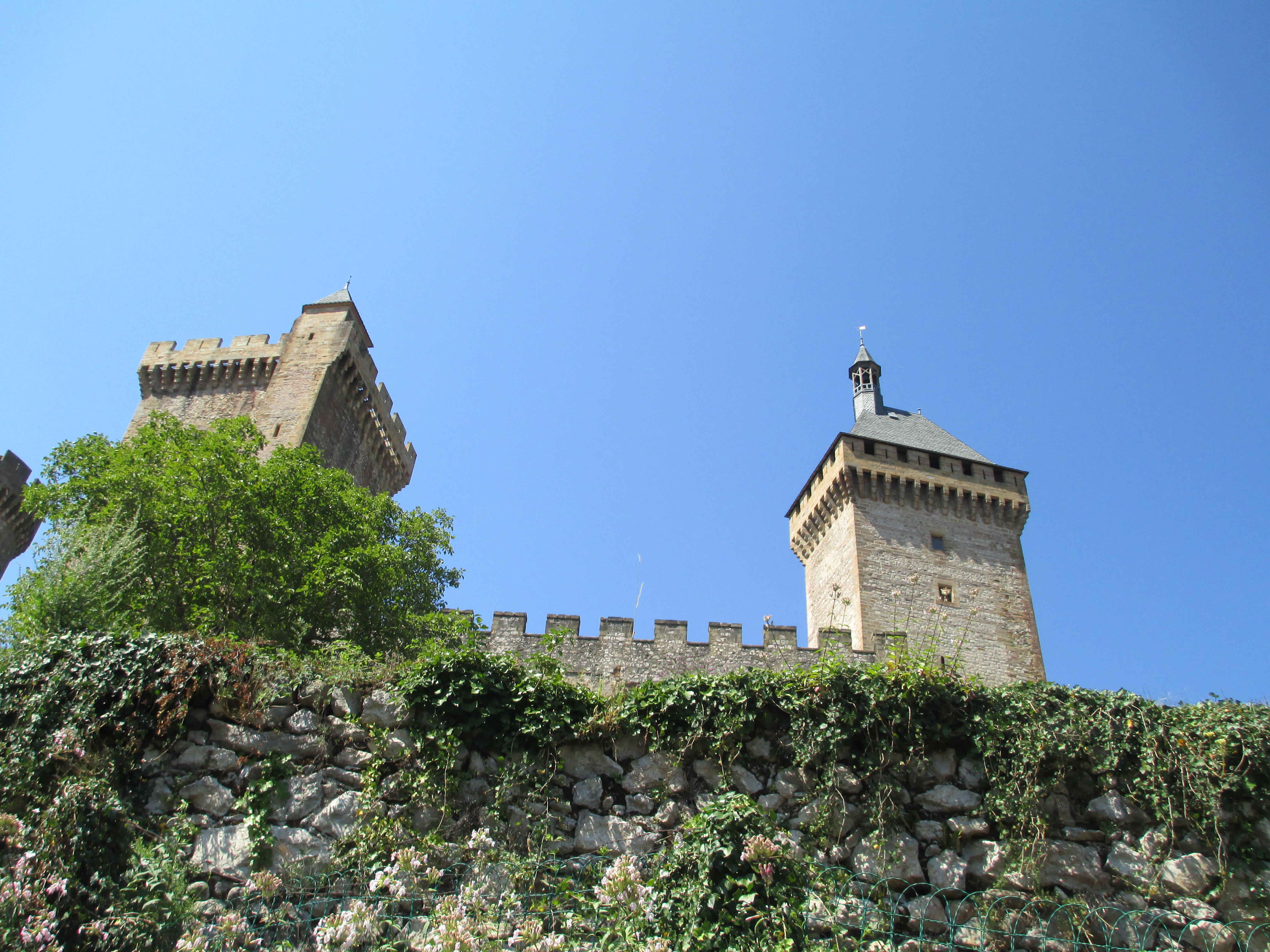
Another example from France is Foix Castle not that far from Toulouse.  You can see the castle below. It is perched on a a lump of carboniferous limestone and parts of the castle itself date from the 11th century. It was involved in the Albigensian Crusade and was part of an area of known Cathar sympathisers.

IMG_9125 IMG_9037

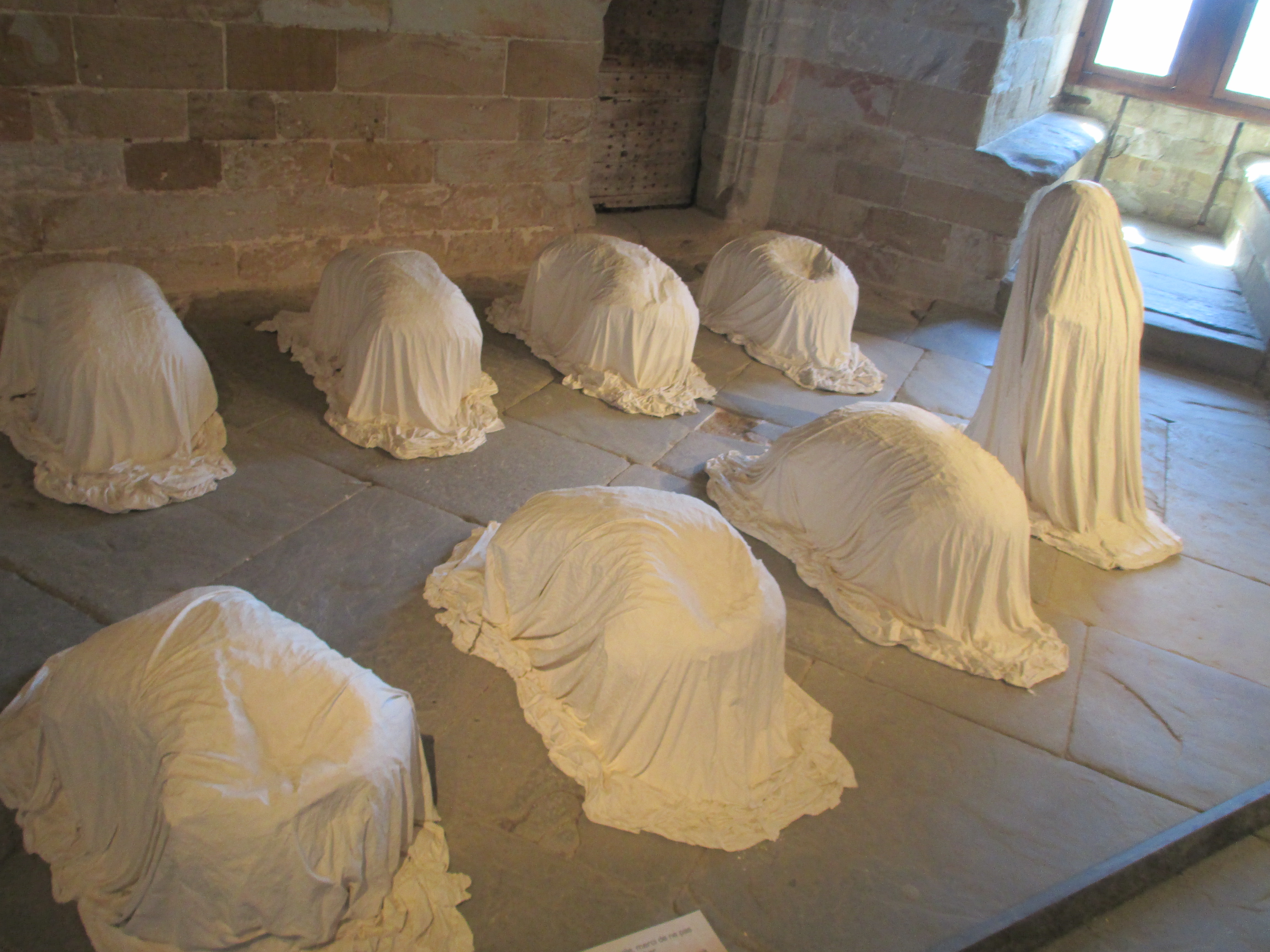
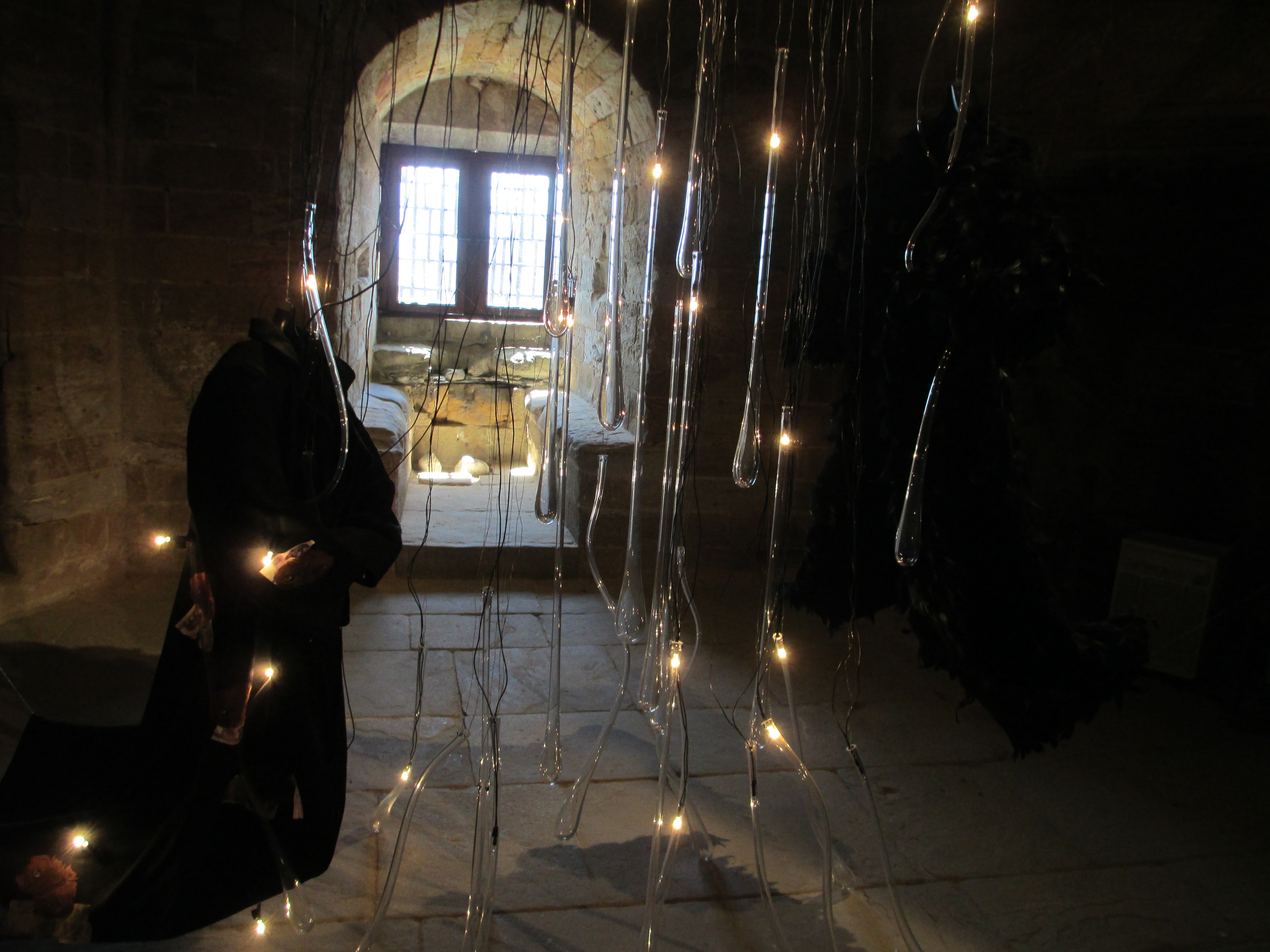
The installations below could be found inside and were both representations of people at prayer. Again repurposing an old building and using its own history for art.

IMG_9095

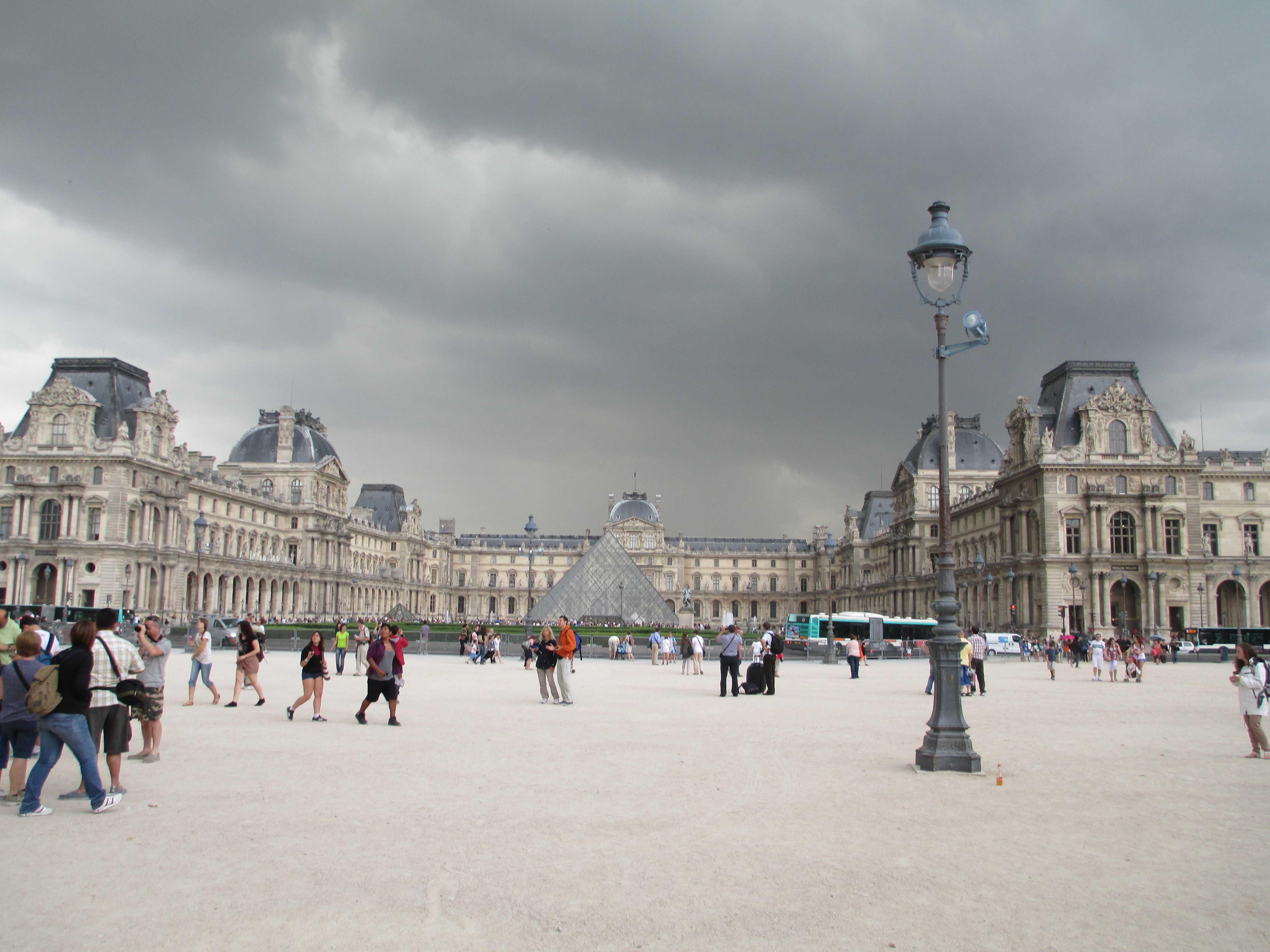
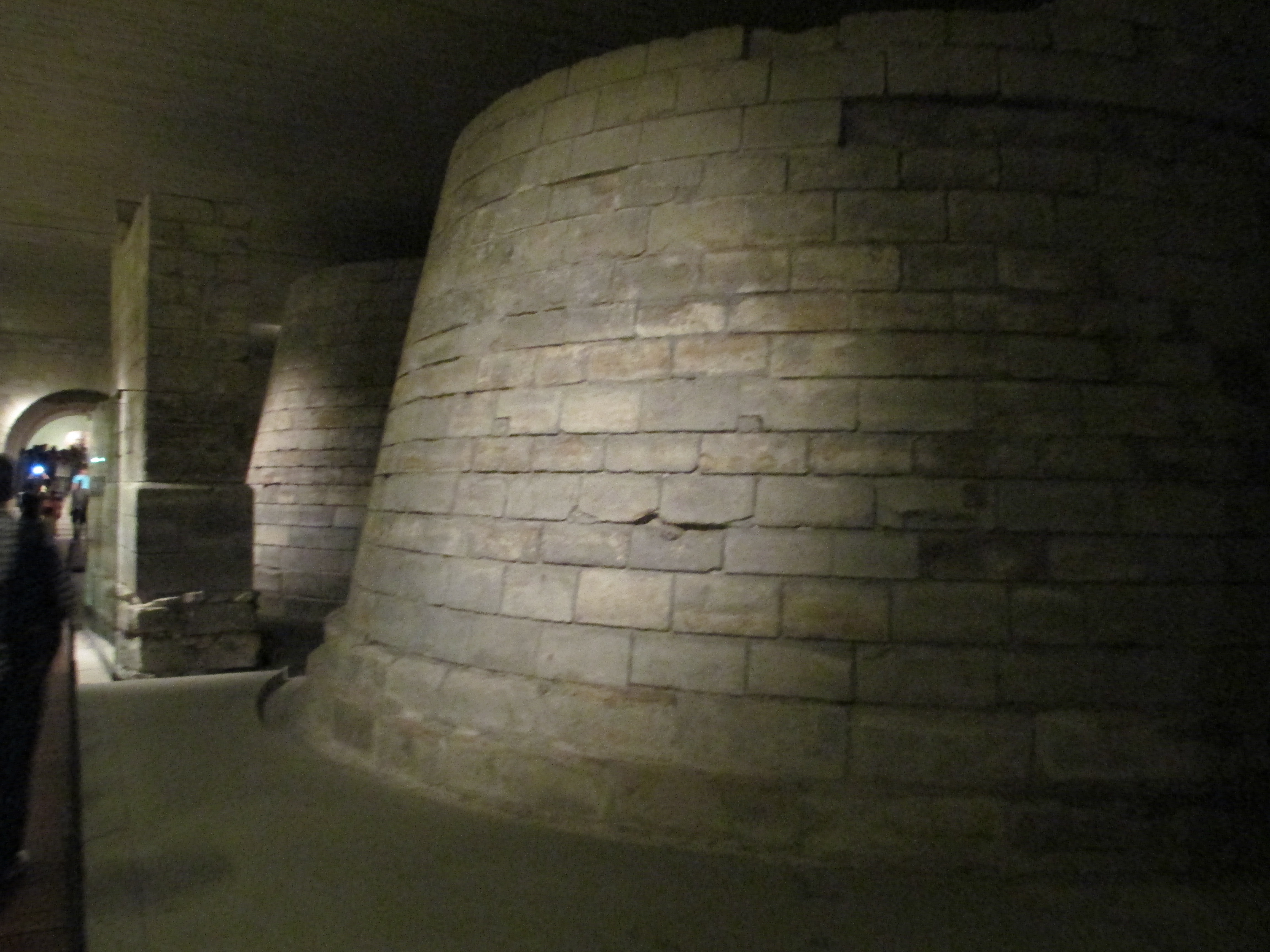
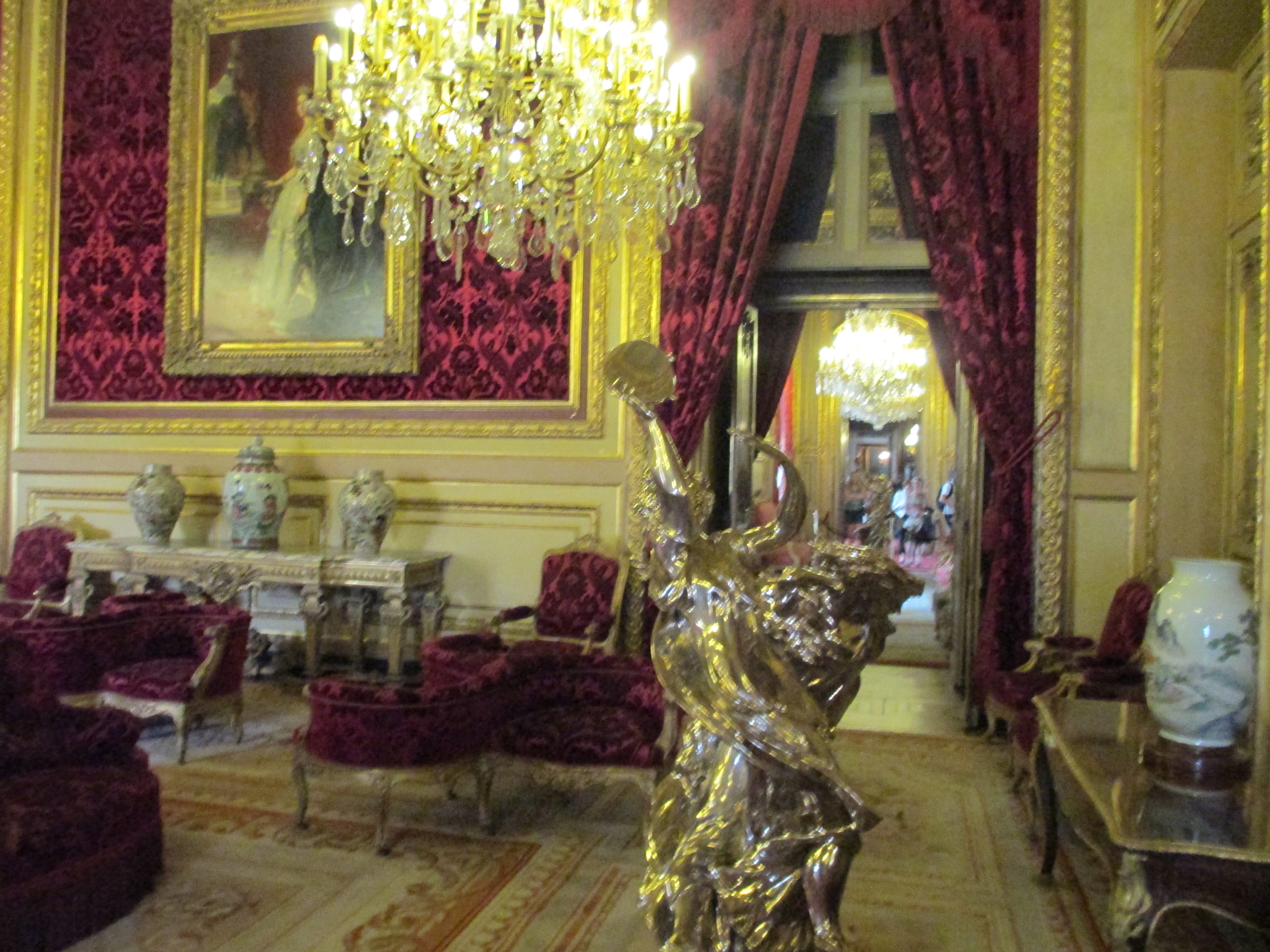
IMG_9103Fontevraud and Foix notwithstanding, probably the best known historic building repurposed for art is The Louvre itself in Paris. IMG_7023It is an ancient palace and castle and now one of the most famous art galleries in the world.  As you can see from its foundations, incidentally one of my favourite parts of The Louvre, it has been there for a long time. In fact it began its life as a fortress commissioned by Phillip Augustus to protect Paris in c. 1190. This fortress was large even for its time, with a keep measuring roughly 15m diameter and 30m in height. IMG_6997Within the Louvre itself you also have the repurposing of rooms, such as Napoleon III’s apartments, for the display of modern art. In this particular case they were integrated to simultaneously blend in with the overt opulence and to reflect it. IMG_6944 IMG_6939 IMG_6937IMG_6929

Historic buildings are not just used for static art. They are also used for performances, such as the Vivaldi concert in the stunning Sainte Chapel you can see below.  Sainte Chapel was commissioned by Louis IX, later Saint Louis, and was originally built to house his collection of holy relics. It is one of the few survivors of the full colour that would have been present in many of the larger churches and cathedrals. It also has one of the largest collections of 13th century stained glass. IMG_7918IMG_7930 IMG_7922

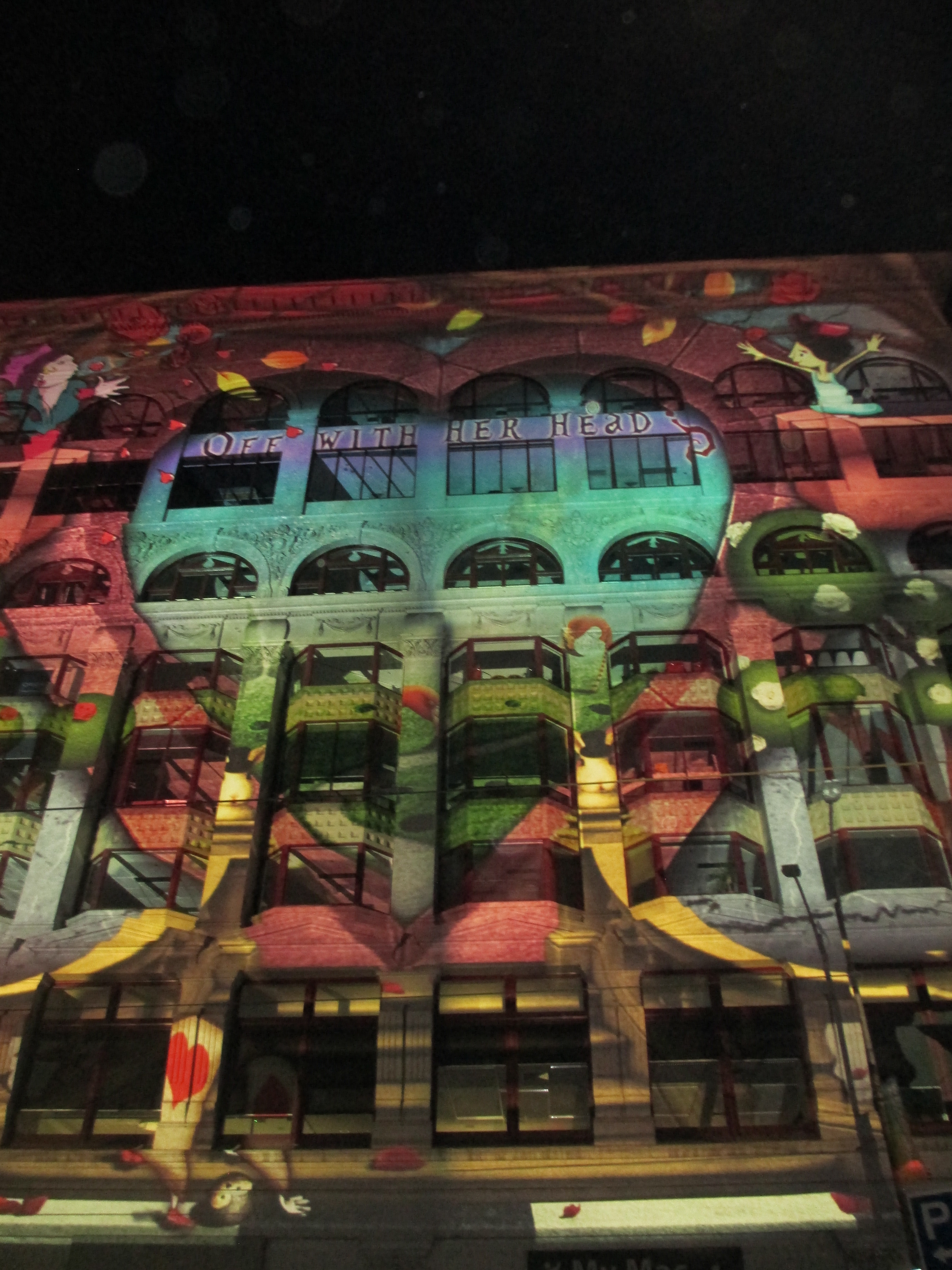
Aside from music and art installations historic buildings are becoming canvasses in their own right. This often happens in festivals such as the recent Melbourne White Night. Melbourne has many historic buildings, by historic in Melbourne I mean 1800s and early 1900s not medieval, and on White Night several come alive with astounding light and sound displays.

The State Library of Victoria is one of my favourite buildings in Melbourne. The SLV has been on its site, though in a smaller building, since it opened in 1856. The founders wanted to create a place of learning for all Victorians and a place to preserve Victoria’s heritage. It is not one building. It is actually made up of 23 individual buildings that have been repurposed and integrated over the years. In the SLV my favourite room is the Latrobe domed reading room which was opened in 1913. The dome itself is 114 feet in diameter and 114 feet high. It is a wonderful place to study or write. During a normal day it looks like this. lobBut on White Night this year, this happened.

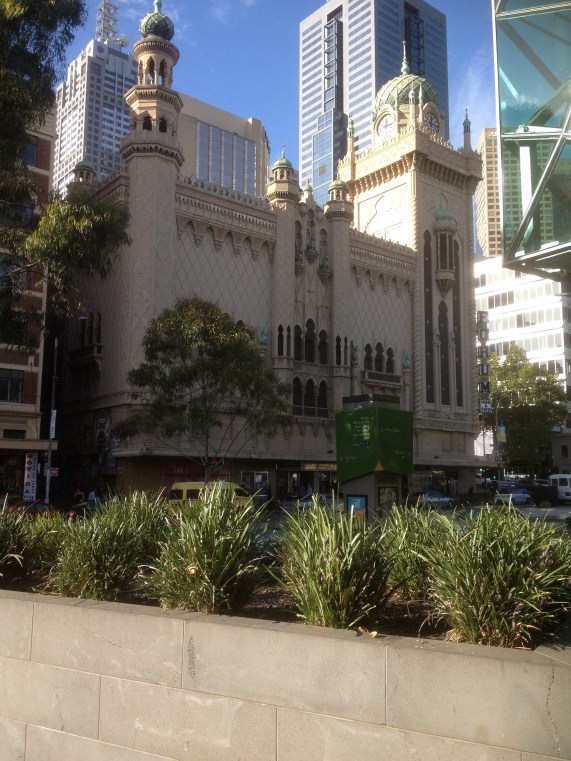
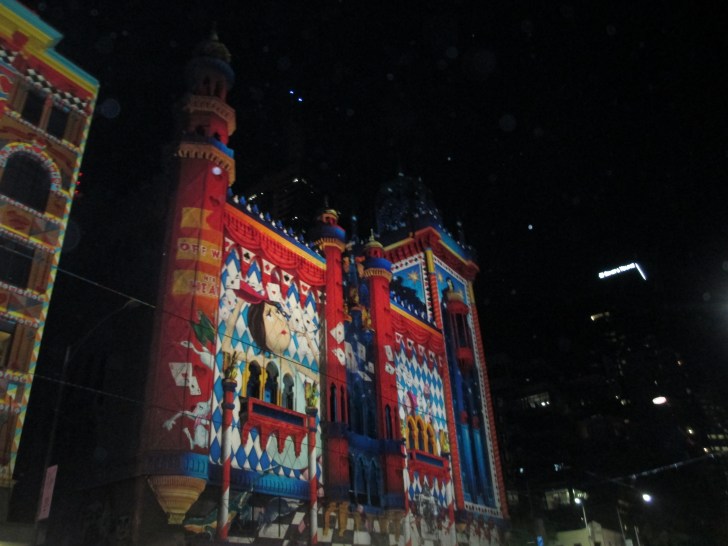
Other buildings were illuminated externally. Such as the Forum Theatre. The Forum opened in 1929 and is slightly insane in its own right even without illumination.  It was built as an immersive theater and the interior has a large number of greek and roman statues as well as a blue sky with stars. This is what is looks like normally.

Interior

IMG_0943Exterior

And this is what it and its surrounding buildings look like when they’re lit up. IMG_1186

IMG_1187IMG_1181IMG_1182 IMG_1183

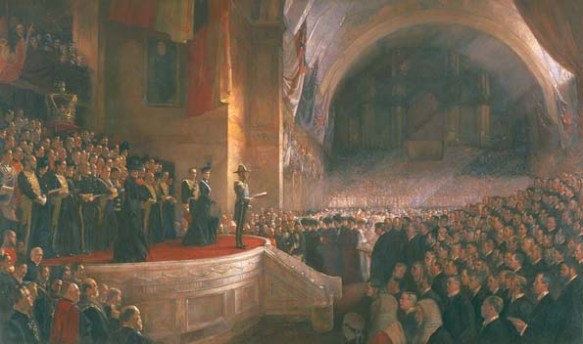
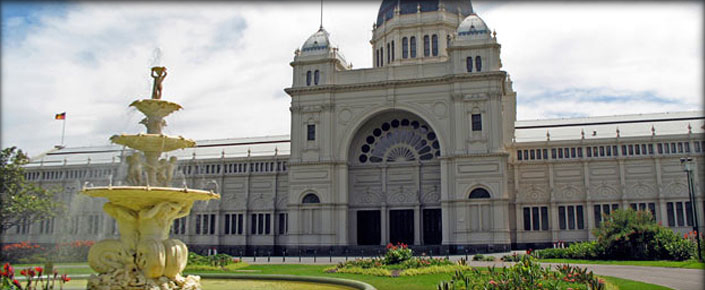
The final building I wanted to look at is in some ways the most spectacular and the most important historically. The Royal Exhibition Building in Carlton Gardens was completed in 1880 for Melbourne’s first international exhibition. It is one of the world’s oldest examples of exhibition pavilions. It was also the site of Australia’s first parliament in 1901.  The Argus described the event as.

The atmosphere was radiant and illuminated the vast spaces of the building and the great sea of faces with a bright Australian glow. A sight never to be forgotten was the assemblage which, in perfect order but with exalted feeling, awaited the arrival of the Duke and Duchess in the great avenues which branch out from beneath the vast dome of the Exhibition Building. (Argus 10 May 1901)

And it was depicted in the famous Tom Roberts painting below.

PA0013

This is what the Exhibition Building looks like during the day, a beautiful example of exhibition architecture. promo-reb-thebuilding

Below is the truly stunning work of moving modern art it became on White Night. Sorry about any talking in the background.

Historic buildings have their own story and their importance and purpose is fundamental to what they are. Integrating modern art allows whole new interpretations of the past, new ways of viewing history and art and the ability to bring these buildings to brand new audiences.

For more information see…

http://museumvictoria.com.au/reb/

http://www.aph.gov.au/Visit_Parliament/Parliament_House_Art_Collection/Tom_Roberts_Big_Picture

http://www.forummelbourne.com.au/history.php

http://www.slv.vic.gov.au/search-discover/history-our-building

http://guides.slv.vic.gov.au/content.php?pid=405532&sid=3319092

http://www.grands-sites-ariege.fr/fr/chateau-de-foix/detail/34/presentation-2

http://www.louvre.fr/en/history-louvre

The photos and videos are all mine apart from:

The inside of the Forum, which can be found at http://www.tripadvisor.com/LocationPhotoDirectLink-g255100-d258068-i46387954-Forum_Melbourne-Melbourne_Victoria.html#85255678

The Exhibition Building which can be found at http://museumvictoria.com.au/reb/

The Tom Roberts painting which can be found at http://www.aph.gov.au/Visit_Parliament/Parliament_House_Art_Collection/Tom_Roberts_Big_Picture

Medieval Crossword

Hello

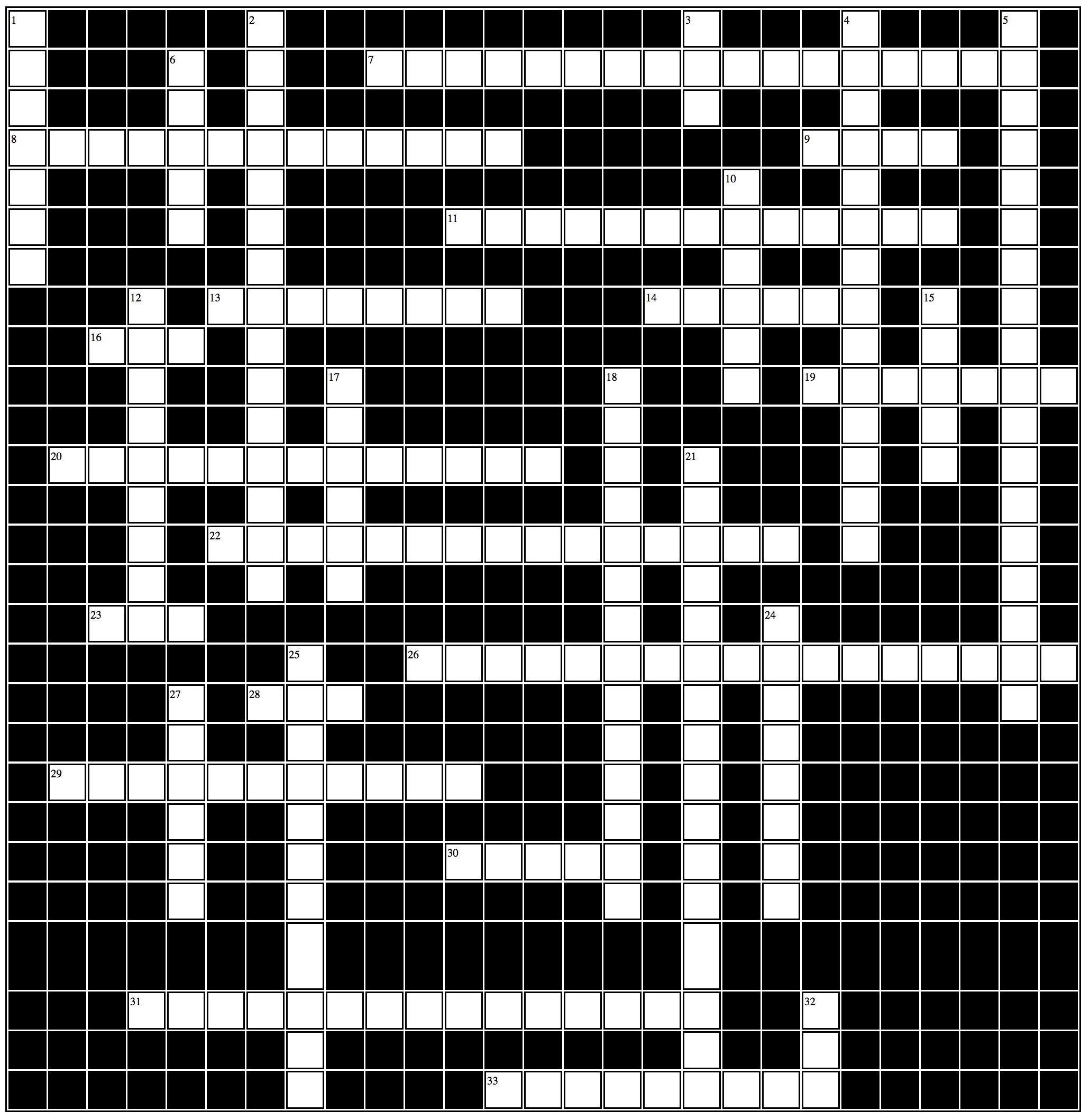
I had some free time yesterday and I was in the mood for making a puzzle, so I’ve made this medieval crossword. I just thought it could be interesting. If anyone wants to have a go and gets stuck on any of the answers, a few can be found on this blog, then just leave a comment and I’ll let you know what the answer is.

Hope you enjoy it.

Ellen

Medieval Crossword 33

Across
7. The Founder of Fontevraud. (6, 2, 9)
8. Jocelin de Brakelond wrote the chronicle of where? (4, 2, 7)
9. “To his …, her …: may we be in one … for a long time.” Heloise to Abelard. (4)
11. The granddaughter King Diarmait of Leinster who was one of her time’s greatest heiresses. (6, 2, 5)
13. The medieval name from Chepstow (7)
14. One of the names for a small gallery situated in the front of a glacis. It enabled miners to listen for noises of enemy miners.(6)
16. Catherine of Sienna sucked what from the sores of the sick. (3)
19. Who was Regent of England from 1216-1219. (7)
20. The man who was King of Jerusalem during the disastrous Battle of Hattin in 1187. (3, 2, 8)
22. An alternative name for the King of England who first invaded Ireland. (5, 10)
23. In the singular Ely derives its name from what? (3)
26. The son of Henry II who died in 1183. (5, 3, 5, 4)
28. Richard of Cornwall was what to Henry III (3)
29. Alternative name for the battle which occurred in 1217 and saw the beginning of the expulsion of Louis VIII from England. (7, 4)
30. Archbishop of Ardbraccan who died in c. 657 (5)
31. The victor of Stamford Bridge (6, 9)
33. The castle situated on the River Medway whose keep was built in c. 1127 by William of Corbeil (9)
Down
1. Lanchei was the name given in the Domesday Book for what which is now an area of London. (7)
2. First Earl of Hereford. (5, 10)
3. One of the substances that could have been poured from a murder hole (3)
4. Hereditary castellan of Lincoln Castle who died in c.1230. (6, 2, 2, 4)
5. The only woman to be Queen of England and Queen of France on separate occasions. (7, 2, 9)
6. An alternative spelling of a city in Tunisia occupied by the Normans from c. 1148-1160. (5)
10. An alternative spelling for legislative or judicial gatherings in Anglo Saxon England. (6)
12. The site of the signing of the Magna Carta. (9)
15. An alternative c.14th century adjective for having leprosy. (5)
17. In the singular what did the paternoster guilds make? (6)
18. Outlaw who died in the battle of Sandwich. (7, 3, 4)
21. Which battle is seen to be the beginning of the end for King John holding significant portions of what is now France. (6, 2, 8)
24. A Derbyshire castle that was built by the Peverel family and became property of the crown in 1155. (8)
25. The wife of Llywelyn Fawr and daughter of King John. (4, 2, 5)
27. The name of the violet dye obtained from a specific lichen. Used for dyeing cloth and in illuminated manuscripts
32. “I have no claim to anything here save through….” The History of William Marshal. (3).