Medieval Quotes Advent Calendar 15th of December

A short one today, but with a fascinating back story.

It is a rare surviving example of a king demanding knight service from one of his retainers. In this case Henry II asking William Marshal to bring forces. He requested that Marshal come “to [him] fully equipped as soon as may be, with as many knights as [Marshal] can get, to support [Henry II] in [his] war.” It went on to add, “You have ever so often moaned to me that I have bestowed on you a small fee. Know that if you serve me faithfully I will give you in addition Châteauroux with all its lordship and whatever belongs to it.”

David Crouch, The English Aristocracy 1072-1272, A Social Transformation, Yale: Yale University Press, 2011, p. 29.

Châteauroux was a pivotal fortress in the disputed region of Berry, south-east of Tours in France, and was in the hands of the French at the time so Henry II was offering Marshal a castle he would have had to fight to take possession of. In normal circumstances Henry could not have offered it at all, however its lady was the underage Denise of Châteauroux who was probably not more than 15 and who was most likely under Henry’s guardianship at the time. This meant that Henry could offer Châteauroux to Marshal by offering marriage to Denise. This marriage never came about because Henry II died in 1189 and in that year Richard I, Henry’s son and heir, gave Marshal the even wealthier heiress Isabel de Clare.

The document dates to 1188 and it’s remarkable survival is discussed in the excellent article below.

http://deremilitari.org/2014/08/william-marshal-king-henry-ii-and-the-honour-of-chateauroux/

Medieval Quotes Advent Calendar 13th of December

A letter from Henry III to the people of Ireland regarding the institution of the Magna Carta. It was unlikely to have been written by him, as it was still during William Marshal’s regency.

“The King to all archbishops, bishops, abbots, earls, barons, knights, free tenants and all our faithful subjects settled throughout Ireland, greetings.

With out hearty commendation of your fidelity in the Lord, which you have ever exhibited to our lord father and to us in these our days are to exhibit our pleasure is, that in token of this your famous and notable fidelity, the liberties granted by our father and by us, of our grace and gift to the realm of England shall in our kingdom of Ireland be enjoyed by you and your heirs forever.

Which liberties distinctly reduced to writing by the general council of all our liege subjects we transmit to you sealed with the seals of our Lord Gualon, legate of the apostolical see and our trusty earl William Marshal, our governor and governor of our kingdom because as yet we have no seal. And the same shall in the proceeds of time and on fuller council  receive the signature of our seal.

Given in Gloucester on the 6th day of February.”

Dr Thomas Leland, History of Ireland from the Invasion of Henry II, London, 1773, p. 203.


Medieval Quotes Advent Calendar 12th of December

A letter from Eleanor of Aquitaine when she was still Queen of France.

In the name of the holy and individual Trinity. Amen.
I, Eleanor, by the grace of God queen of the Franks and duchess of the Aquitainians. We wish to make known to all the faithful, future as well as present, that we, for the redemption of our soul and [that] of our ancestors and for the redemption of the souls of the ancestors of Louis, king of the Franks and duke of the Aquitainians, our husband, have given and granted in eternity to God and the knights of the Temple present and future who were established for the defense of holy Christianity against the unfaithful pagans, the mills which I had at La Rochelle and which Isembert of Castre Julie held in his lifetime and which Gangan of Taunac reclaimed from the gift of the count of Poitou and that Gangan gave them to the said knights of the Temple. Besides that we have given and granted in eternity to the knights of the temple the houses which they had at La Rochelle, occupied by them, that is within their enclosures utterly free and immune from all custom, infringement and legal exaction and tallage and violence of our ministers except our toll. Whoever should wish to give to those knights of the Temple anything from our fief by which we do not lose the service of our men, that we wish and grant. Also we have given and granted to said knights of the Temple that all the possessions of those knights throughout our land may go and come securely and freely without any custom and without any charge/tax either by land or by water. That this deed/charter may obtain the perpetuity of stability, we have commended it to writing and strengthened it with the authority of our seal and the writing of our name.
Enacted publically at Lorrez-le-Bocage, in the thousand thirty-ninth year of the incarnation of the Lord, the third of our reign, with those prsent in our palace whose names and signs are inscribed below.
The sign of Ralph count of Vermandois and our seneschal.
S[ign] of William, butler.
S., of Matthew, chamberlain.
S., of Matthew, constable.

https://epistolae.ccnmtl.columbia.edu/letter/891.html

Medieval Quotes Advent Calendar 11th of December

From the Anglo Saxon Chronicle

A.D. 1137. This year went King Stephen over sea to Normandy, and there was received; for that they concluded that he should be all such as the uncle was; and because he had got his treasure: but he dealed it out, and scattered it foolishly. Much had King Henry gathered, gold and silver, but no good did men for his soul thereof. When the King Stephen came to England, he held his council at Oxford; where he seized the Bishop Roger of Sarum, and Alexander, Bishop of Lincoln, and the chancellor Roger, his nephew; and threw all into prison till they gave up their castles. When the traitors understood that he was a mild man, and soft, and good, and no justice executed, then did they all wonder. They had done him homage, and sworn oaths, but they no truth maintained. They were all forsworn, and forgetful of their troth; for every rich man built his castles, which they held against him: and they filled the land full of castles. They cruelly oppressed the wretched men of the land with castle-works; and when the castles were made, they filled them with devils and evil men. Then took they those whom they supposed to have any goods, both by night and by day, labouring men and women, and threw them into prison for their gold and silver, and inflicted on them unutterable tortures; for never were any martyrs so tortured as they were. Some they hanged up by the feet, and smoked them with foul smoke; and some by the thumbs, or by the head, and hung coats of mail on their feet. They tied knotted strings about their heads, and twisted them till the pain went to the brains. They put them into dungeons, wherein were adders, and snakes, and toads; and so destroyed them. Some they placed in a crucet-house; that is, in a chest that was short and narrow, and not deep; wherein they put sharp stones, and so thrust the man therein, that they broke all the limbs. In many of the castles were things loathsome and grim, called “Sachenteges”, of which two or three men had enough to bear one. It was thus made: that is, fastened to a beam; and they placed a sharp iron [collar] about the man’s throat and neck, so that he could in no direction either sit, or lie, or sleep, but bear all that iron. Many thousands they wore out with hunger. I neither can, nor may I tell all the wounds and all the pains which they inflicted on wretched men in this land. This lasted the nineteen winters while Stephen was king; and it grew continually worse and worse. They constantly laid guilds on the towns, and called it “tenserie”; and when the wretched men had no more to give, then they plundered and burned all the towns; that well thou mightest go a whole day’s journey and never shouldest thou find a man sitting in a town, nor the land tilled. Then was corn dear, and flesh, and cheese, and butter; for none was there in the land. Wretched men starved of hunger. Some had recourse to alms, who were for a while rich men, and some fled out of the land. Never yet was there more wretchedness in the land; nor ever did heathen men worse than they did: for, after a time, they spared neither church nor churchyard, but took all the goods that were therein, and then burned the church and all together. Neither did they spare a bishop’s land, or an abbot’s, or a priest’s, but plundered both monks and clerks; and every man robbed another who could. If two men, or three, came riding to a town, all the township fled for them, concluding them to be robbers. The bishops and learned men cursed them continually, but the effect thereof was nothing to them; for they were all accursed, and forsworn, and abandoned. To till the ground was to plough the sea: the earth bare no corn, for the land was all laid waste by such deeds; and they said openly, that Christ slept, and his saints.

http://avalon.law.yale.edu/medieval/ang12.asp

Medieval Quotes Advent Calendar 8th of December

Henry of Huntingdon on the marriage of Henry I to Adela (Also known as Adeliza) of Louvain in 1120.

“At Christmas, King Henry was at Brampton with Theobold, count of Blois, and after this, at Windsor, he married Adela, daughter of the duke of Louvain, because of her beauty. After the king had been at Berkeley for Easter, he wore his crown in London at Whitsun, with his new queen. Then in the summer, as he went with his army to Wales, the Welsh humbly came to meet him, and agreed to everything that the majesty of his pleasure desired. But on Christmas Eve, an extraordinary wind demolished not only houses but stone towers. I have spoken in elegiacs of the beauty of the said queen.

o queen on the English, Adela, the very muse who prepares to call to mind your graces is frozen in wonder. What to you, most beautiful one, is a crown. What to you are jewels? A jewel grows pale on you, and a crown does not shine. Put adornment aside, for nature provides you with adornment, and a fortunate beauty can not be improved. Beware ornaments, for you take no light from them; they shine brightly through your light. I was not ashamed to give my modest praise to great qualities, so be not ashamed, I pray, to be my lady.”

From: Henry of Huntingdon. The History of the English Speaking People. ISBN: 9780199554805

Medieval Quotes Advent Calendar 7th of December

A description of the ships on which Richard I was sailing to the Holy Land for the 3rd crusade.

“The ships which the king found already prepared on the shore were one hundred in number, and fourteen busses, vessels of great magnitude and admirable swiftness, strong vessels and very sound, whereof this was the equipage and appointment. The first of the ships had three spare rudders, thirteen anchors, thirty oars, two sails, three sets of ropes of all kinds, and besides these double whatever a ship can want, except the mast and the ship’s boat. There is appointed to the ship’s command a most experienced steersman, and fourteen subordinate attendants picked for the service are assigned him. The ship is freighted with forty horses of value, trained to arms, and with arms of all kinds for as many horsemen, and forty foot, and fifteen sailors, and with an entire year’s provisions for as many men and horses. There was one appointment for all the ships, but each of the busses received a double appointment and freight. The king’s treasure, which was very great and inestimable, was divided amongst the ships and busses, that if one part should experience danger, the rest might be saved.”


From: The Chronicle of Richard of Devizes Translated by J.A Giles. pg 13

http://www.yorku.ca/inpar/devizes_giles.pdf

Advent Calendar of Medieval Quotes 4th of December

A description from Roger of Hoveden of the demise of The White Ship in 1120.

“To his son and all his retinue he [Henry I] had given a ship, a better one than which there did not seem to be in all the fleet, but as the event proved, there was not one more unfortunate ; for while his father preceded him, the son followed somewhat more tardily, but with a still more unhappy result. For the ship, when not far from land, while in full sail, was driven upon the rocks which are called Chaterase, and being wrecked, the king’s son, with all who were with him, perished on the sixth day before the calends of December, being the fifth day of the week, at nightfall, near Barbeflet. In the morning, the king’s treasures which were on board the ship, were found on the sands, but none of the bodies of those lost.There perished with the king’s son, his illegitimate brother, earl Eichard, together with the king’s daughter, the wife of Rotrou ; Richard, earl of Chester, with his wife, the king’s niece, and sister of earl Tedbald, the king’s nephew. There also perished Othoel, the governor of the king’s son, Geoffrey Riddell, Robert Maldint, William Bigot, and many other men of rank ; also several noble women with no small number of the king’s children ; besides one hundred and forty soldiers, with fifty sailors and three pilots. A certain butcher was the only person who made his escape, by clinging to a plank of the wrecked vessel. The king having had a fair voyage, on reaching England, thought that his son had entered some other port ; but on the third day he was afflicted with the sad tidings of his death, and at first, from the suddenness of the calamity, fainted away, as though a person of weak mind; but afterwards,concealing his grief, in contempt of fortune he resumed his kingly spirits. For this son being the only one left him by lawful wedlock, he had named him heir to the kingdom in succession to himself.”

From: The Annals of Roger of Hoveden Volume I pgs 213-214

https://archive.org/details/annalsofrogerde01hove


Advent Calendar of Medieval Quotes 3rd of December

3rd of December

From Roger of Wendover. A description of happenings immediately after the death of Henry II.

I would like to point out that I am not including these quotes as examples of definitive facts. All medieval chroniclers need to be taken with a large grain of salt.

“He died on the octaves of the apostles St. Peter and St. Paul, after a reign of thirty-four years,seven months,and five days. On the morrow,as they were carrying him to be buried, arrayed in his royal robes, his crown, gloves, shoes, ring, sceptre, and sword, he lay with his face uncovered; and when Richard, hearing the news of his death, came to meet the convoy, blood flowed from the nostrils of the deceased, as if he was indignant at the presence of one who was believed to have caused his death.”

From Roger of Wendover Flowers of History Volume II. Pg 76

https://ia800503.us.archive.org/35/items/rogerofwendovers02roge/rogerofwendovers02roge_bw.pdf


Pembroke Castle

IMG_5435

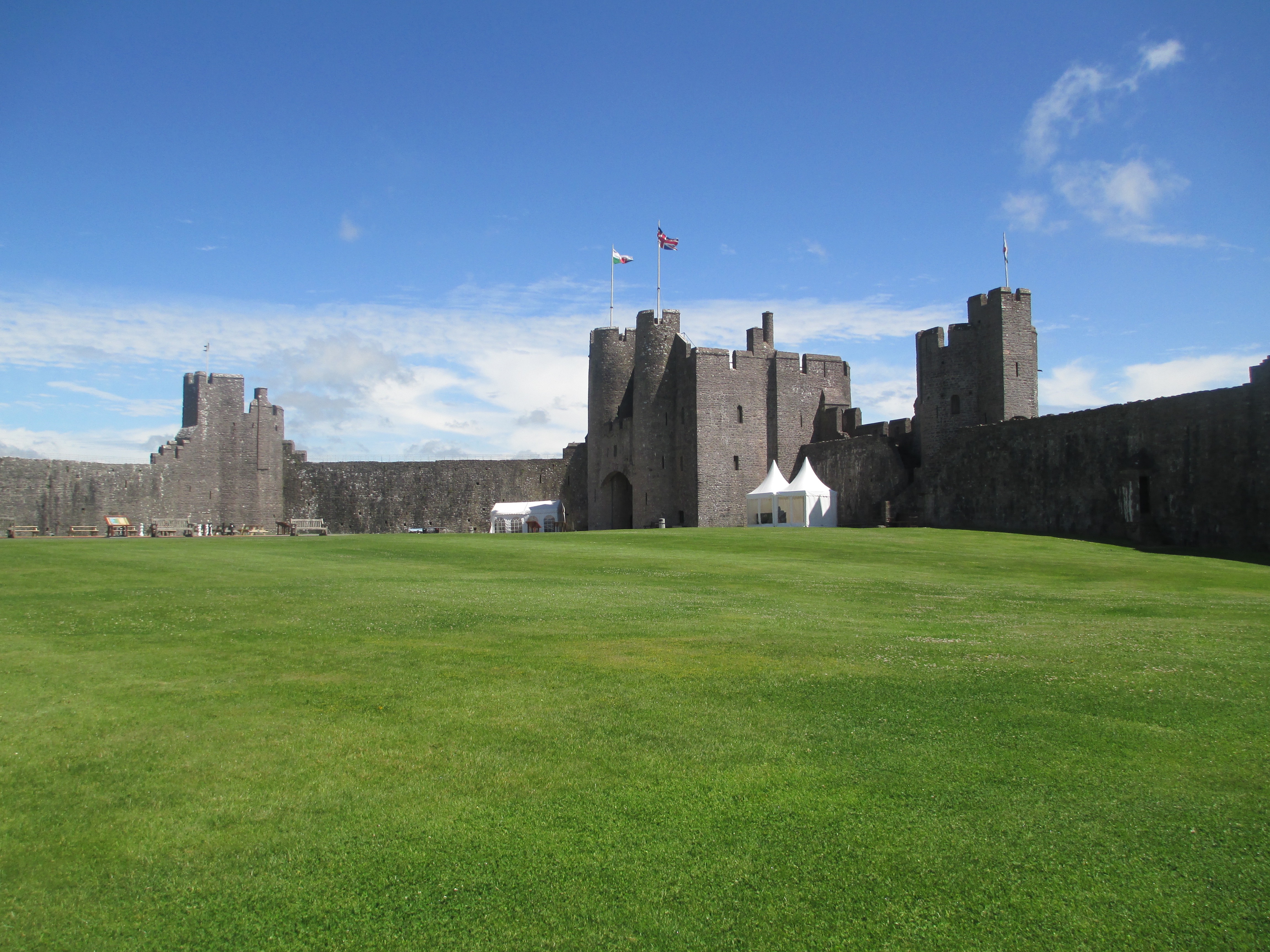
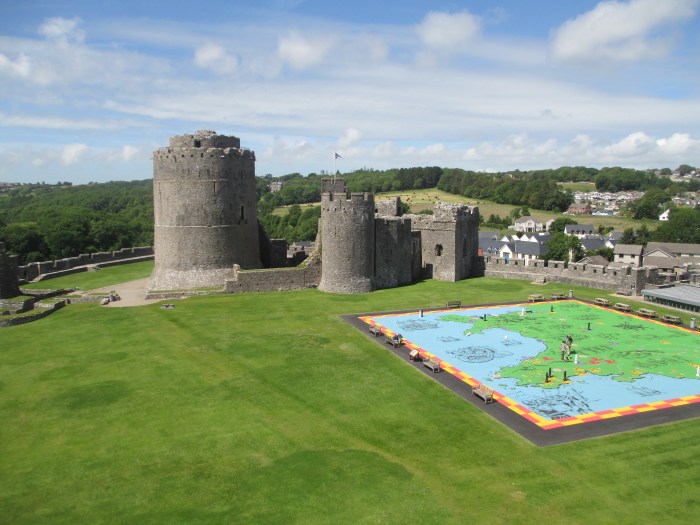
Pembroke Castle in South West Wales is one of the most impressive castles on Welsh soil. I hesitate to say Welsh castle, because it wasn’t built by the Welsh. The building of Pembroke Castle was begun by Arnulph de Montgomery in c. 1093 as a key part of the Norman subjugation of this portion of Wales.

This first castle was nothing like the imposing fortress we see today jutting out into the Cleddau Estuary.

IMG_5478

Gerald of Wales, albeit writing in the late 1100s, described Pembroke as originally being “a slender fortress of stakes and turf.” But it was in an immensely strategic position and as such soon became an important fortress.

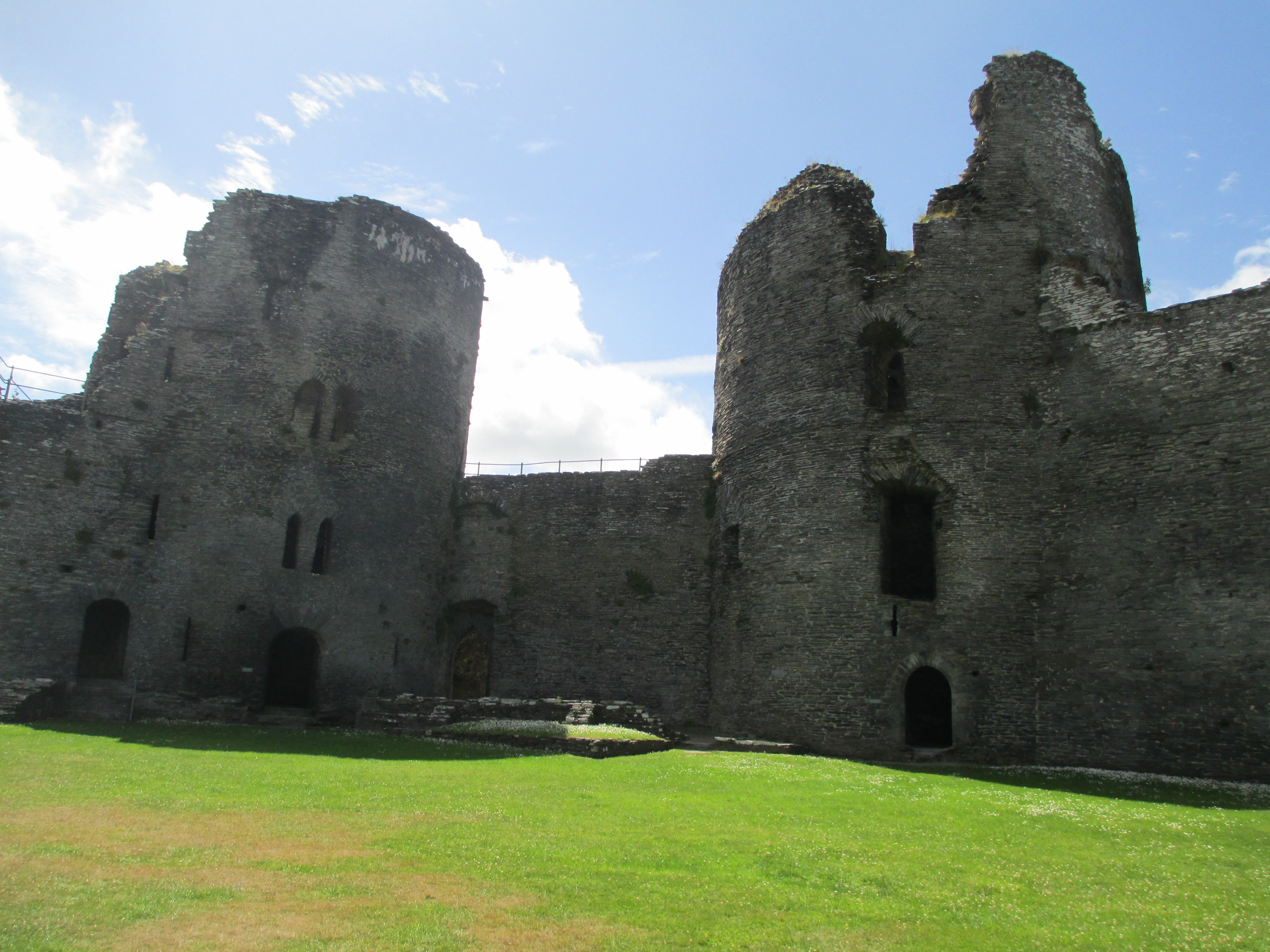
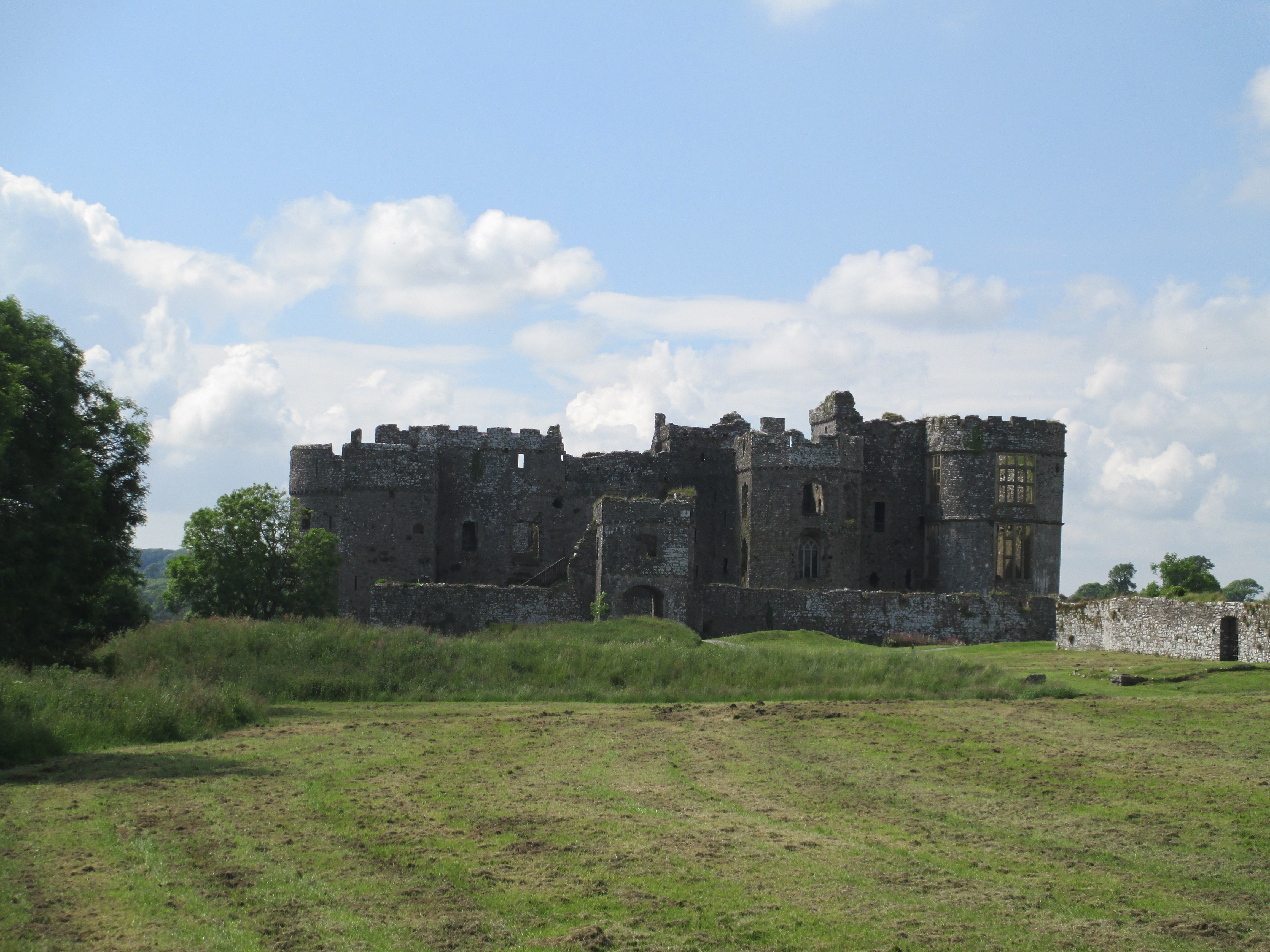
Pembroke was besieged by the Welsh is 1094 and in 1096, but both times it was held by the Normans led by Gerald de Windsor who was the custodian of the castle for Arnulph de Montgomery.  However by 1102 Arnulph had been implicated in a revolt against Henry I and was forced to flee and Pembroke castle and the lands around it were escheated to the crown. By 1105 Gerald de Windsor was custodian again, this time in the name of the crown, and he married the Welsh princess Nest. Nest is one of the most fascinating women of the period and much has been written about her. But in brief she was the daughter of the Welsh Prince Rhys ap Tewdwr, thus an important marriage prize as Rhys’ former kingdom made up much of what was now the lands of Pembroke. Nest was most likely the mistress of Henry I before she married Gerald and probably bore him illegitimate offspring. She was said to have been a great beauty and would have been very young, in her teens, when she was the king’s mistress. She was then married off to Gerald at least partly to lend credence to Gerald’s position as a royal officer and person in charge of Pembroke. She was then abducted, there is debate over whether it was willing or not, from  either Cilgerran Castle or Carew Castle both of which Gerald had begun to build

IMG_5709

Cilgerran Castle

IMG_4974

Carew Castle

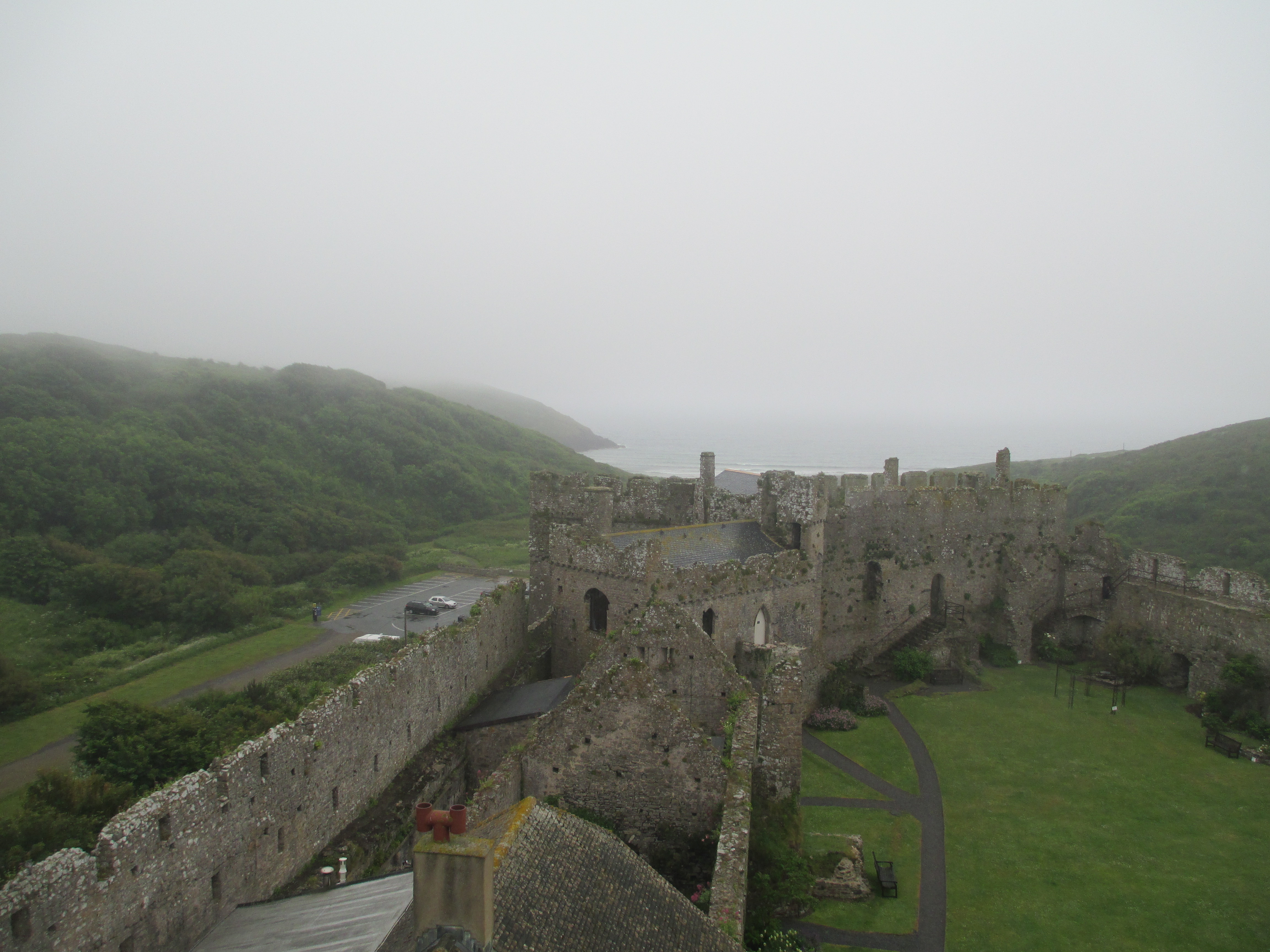
She was abducted by Owen son of Cadwgan, another Welsh Prince. Owen came into Nest and Gerald’s chamber and Gerald hid or escaped, depending on which version you read, down the privy shoot and Owen abducted Nest, two of Nest’s children and possibly some castle treasure.  After much unrest Nest was eventually returned to Gerald and Owen ultimately died in rebellion against Gerald. Nest married again after Gerald died in the 1120s and had children from that marriage as well. Nest ended up with some important descendants including Gerald of Wales, who was descended from her and Gerald de Windsor. Gerald of Wales is one of the more prolific writers of the late 1100s and is responsible for works on both the people of Ireland and the people of Wales. He was born at the nearby Manorbier Castle.

IMG_5292

Manorbier Castle

Leaving Nest aside. After Gerald de Windsor died the castle remained in crown hands until the reign of King Stephen. The Earldom of Pembroke was officially created in 1138 and the de Clare family were the beneficiaries of its creation with Gilbert de Clare appointed as the ruler of the territory. There was also a small town growing up around the castle and we know that it had liberties and freedoms from fairly early on because there is a surviving charter from Henry II which discusses them. It reads, in one translation.

“Henry by the Grace of God, King of England, Duke of Normandy and Aquitaine and Count of Anjou to the Archbishops, Bishops, Abbots, Earls of Justices, Barons and Sheriffs, and to all his faithful people of all England, Wales, Ireland, Normandy, Brittany, Anjou, Poitou, Gascony, and to all his men, whether dwelling on this side or beyond the seas greetings. Know that I have given and granted, and by this my present Charter, have confirmed in my burgesses of Pembroke all their liberties, immunities and free customs as freely and fully as they had them in the time of King Henry, my grandfather.”

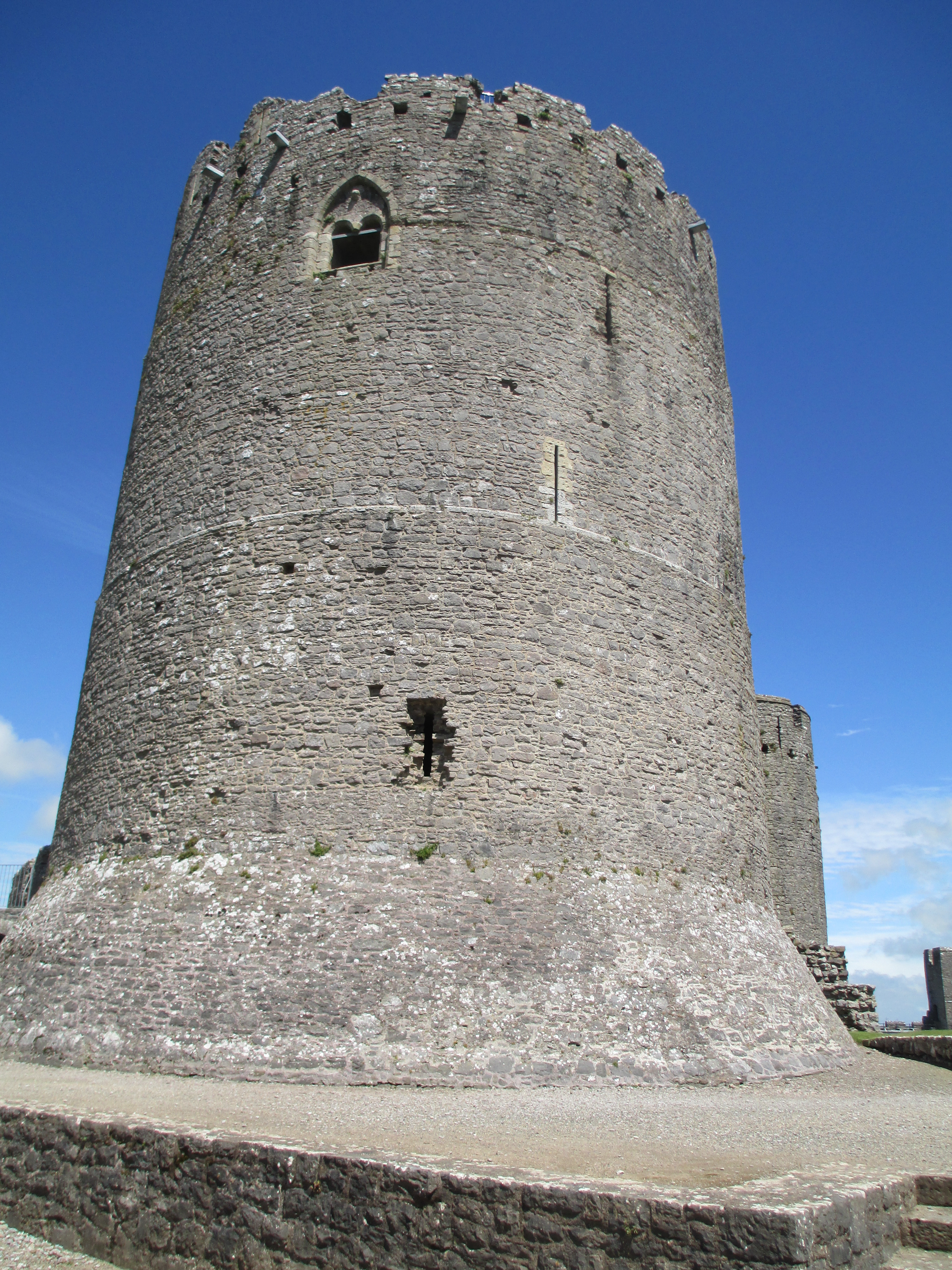
Gilbert de Clare died in 1148 and was succeeded by his son Richard de Clare, known as Strongbow. I’ve written more about Strongbow and especially the role he played in the Norman conquest of Ireland earlier and it can be found here.  Strongbow died in 1176 and King Henry II retained all his lands and the wardship of his daughter Isabel de Clare. Isabel became the heir to all of Strongbow’s lands including Pembroke when her brother Gilbert died as a minor in 1185. Isabel married William Marshal at the behest of Richard I in 1189 thus making Marshal one of the most powerful men in the country as Isabel held other lands in England, Ireland and France as well as those in Wales. Marshal wasn’t actually invested with the title of Earl of Pembroke until 1199 when King John came to the throne.  Marshal had the iconic Great Keep at Pembroke Castle built.
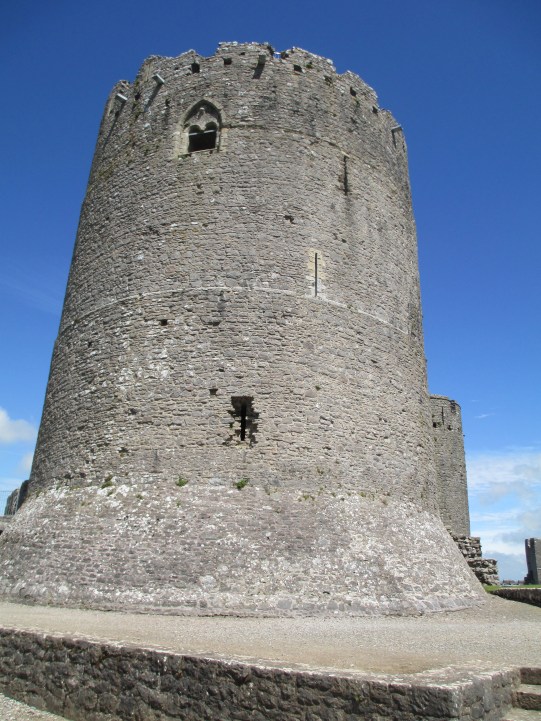
IMG_5423

Great Keep Pembroke Castle

IMG_5365

Inside the Great Keep of Pembroke Castle.

The Great Keep was built in c. 1200 in a time when square keeps were much more common. It stands at 75 feet high with walls approximately 20 feet thick at its base.  When William Marshal died the castle was inherited by his son William Marshal II. Marshal had five sons each of whom died childless. So when the last Marshal son, Anselm, died in 1145 all of Marshal’s extensive lands were divided up amongst the descendants of his five daughters. Pembroke Castle went to his daughter Joan’s descendants, she was married to Warine de Munchery. It was their son in law William de Valance who retook some of the surrounding lands that had been lost to the Welsh over the years. De Valance died in 1296 and the Earldom of Pembroke and thus the castle entered into a fairly quiet period. Until the death of Earl John Hastings in 1389 when the castle returned to the hands of the King in this case Richard II. Henry IV declared his son John to be Earl of Pembroke in c.1399 and later the castle bounced back and forth between sides in the War of the Roses. Its greatest claim to fame in this period is that Henry Tudor, later Henry VII was born there in 1456. 

IMG_5427You can see the tower he was most likely born in on the far right of the photo.

The physical buildings that can now be seen in Pembroke are products of various stages of its history. I’m not going discuss all of them, but I will mention a few.

The oldest part is the Norman Hall which was built probably under the rule of Richard Strongbow c. 1150-1170 when the defences would still have been made of timber.

IMG_5389

Norman Hall.

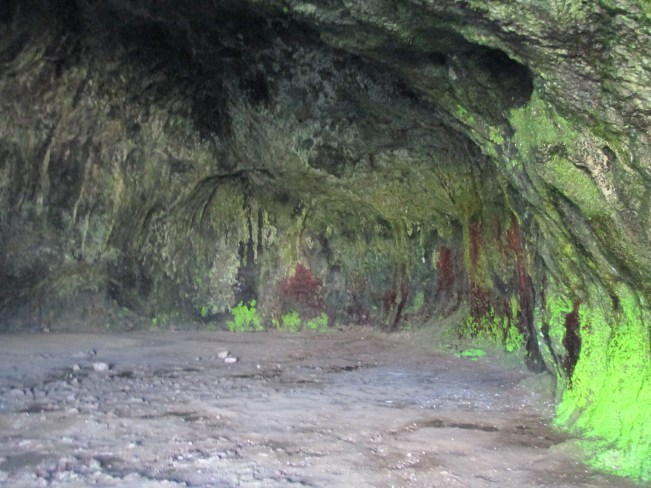
For me the most fascinating part of Pembroke Castle, apart from the Great Keep, was actually not built by any of the castle’s inhabitants. Wogan’s Cavern beneath the Norman Hall is a naturally occurring cavern. There have been tools dating back to the middle stone age found in it along with Roman coins. This suggests that the Cavern has been used for shelter for thousands of years. When the castle was built the cavern was used for storage and the entrance was protected as part of the defensive plan. It is one of the most surprising things I’ve ever seen in a castle. Largely because of its sheer immensity.

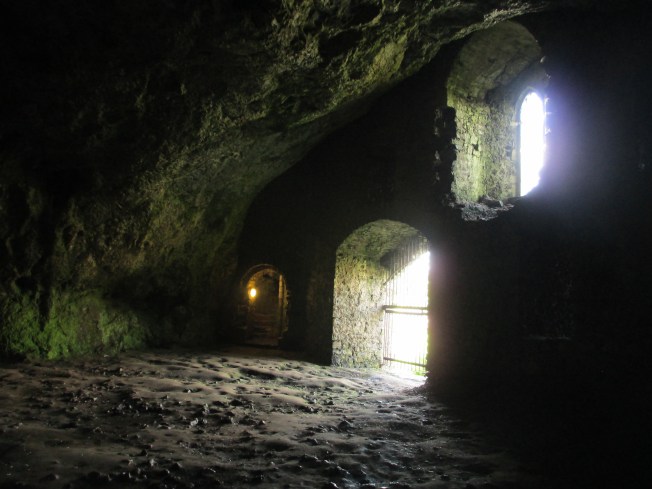
IMG_5397

IMG_5408 IMG_5396

Wogan’s Cavern

Pembroke Castle is very much a stronghold. It has played a part in most important eras of British History and is in and of itself a dramatic and imposing castle. I went there originally because of its connection to William Marshal. But I went back because it is a spectacular castle, a testament to the strength of its builders. It commands the Cleddau Estuary and you can see why it has been so formidable for so many years.

IMG_5353

References.

Pembroke for King and Country: Phil Carradice. ISBN: 09521092

and

http://www.theguardian.com/commentisfree/2007/dec/21/britishidentity.uk

and

Two visits to Pembroke Castle.

All the photos are my own.