Cemeteries: Melbourne General Cemetery.

IMG_1063

Cemeteries are always a really interesting lens through which to view the history of a city. In the case of Melbourne is has several old cemeteries as well as the more modern ones. I thought I’d start with the Melbourne General Cemetery as it is one of the oldest and I believe the biggest.

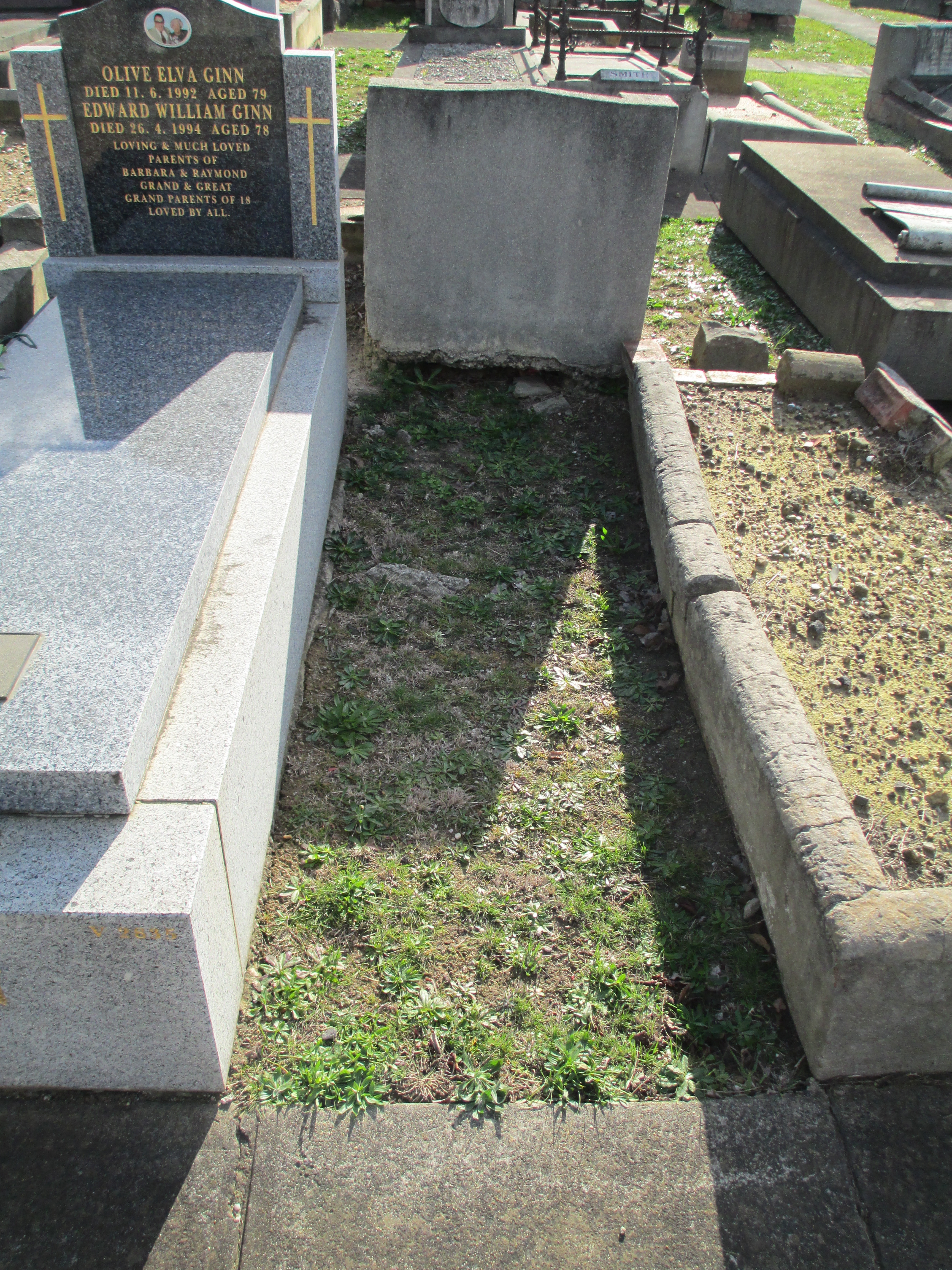
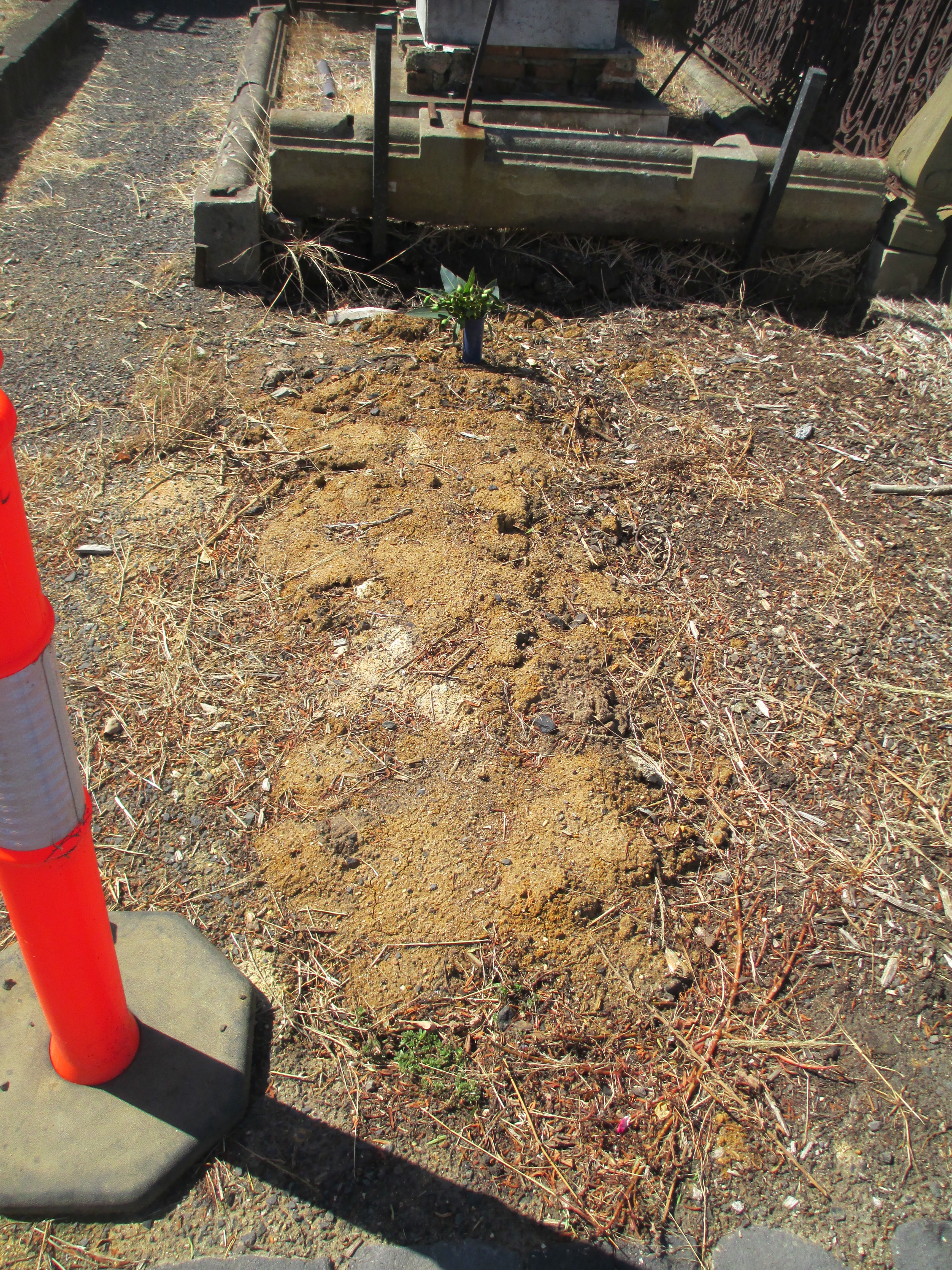
I first went to the Melbourne General Cemetery a year or so ago when I found that my great great great grandfather Robert Henry Woodward was buried there. He was one of the first of my ancestors to come to Australia so I was interested to see where his grave was. Unfortunately it is no longer marked. You can see where he is buried in between the two other graves in the photo below. IMG_9755

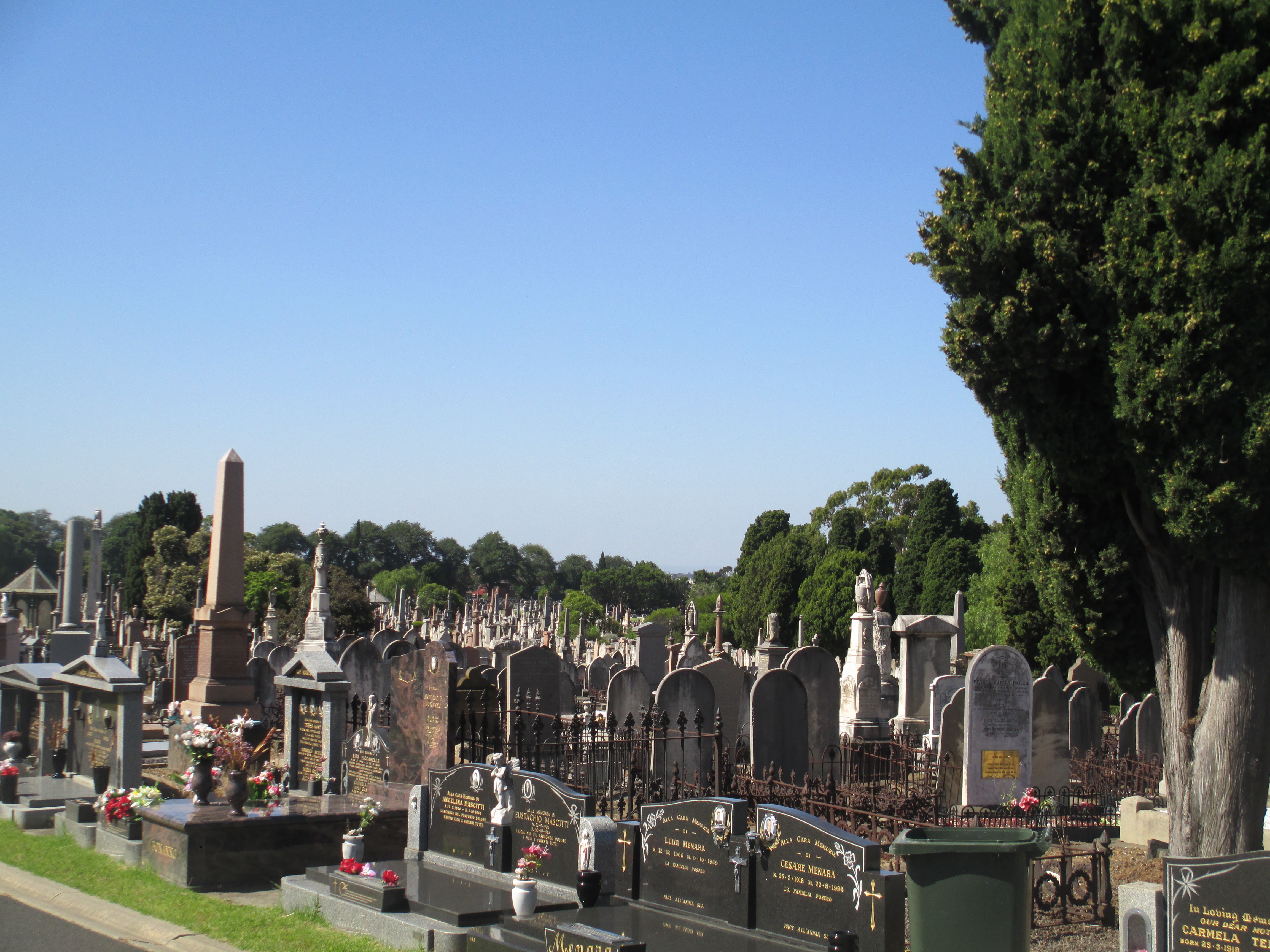
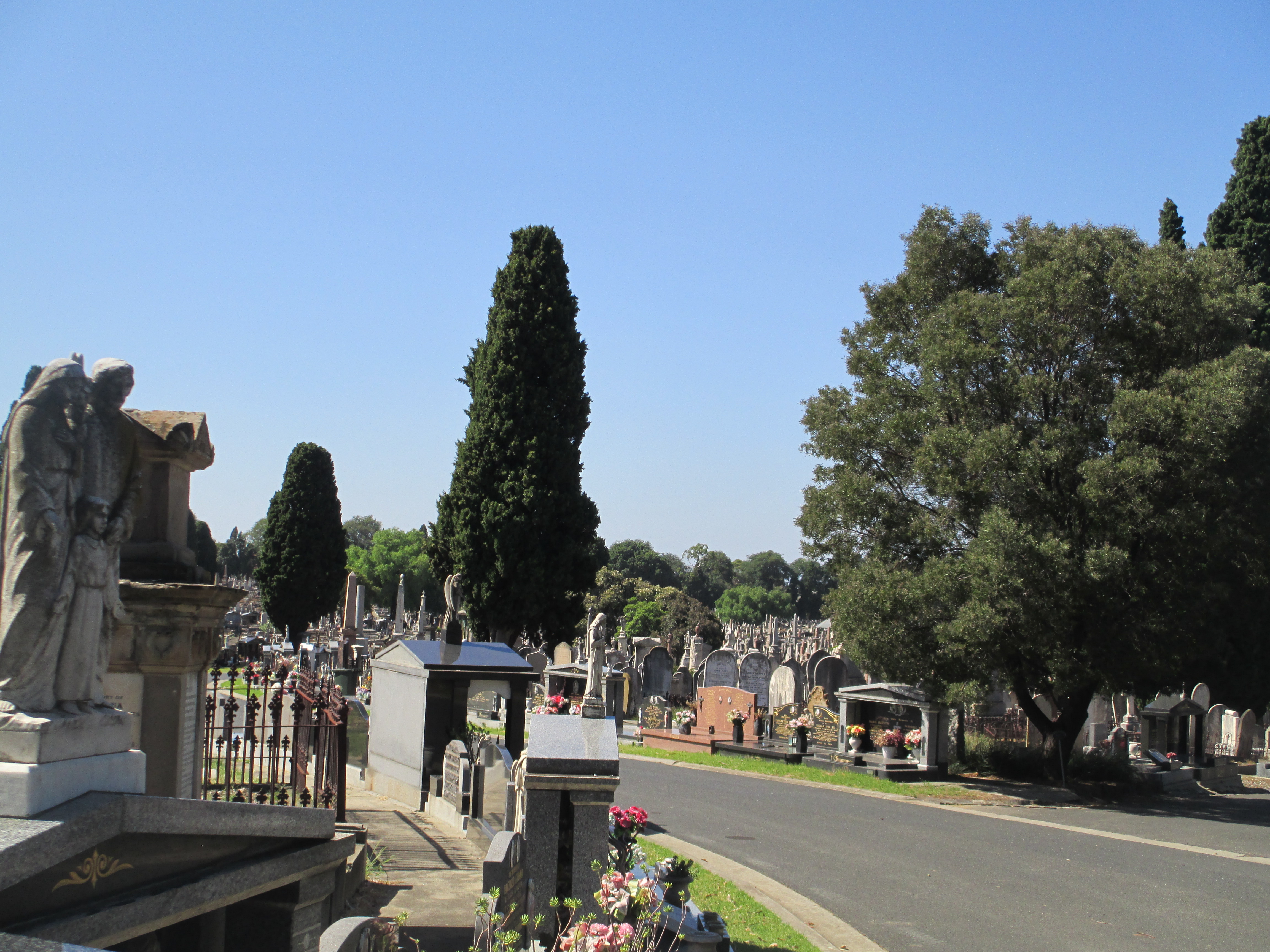
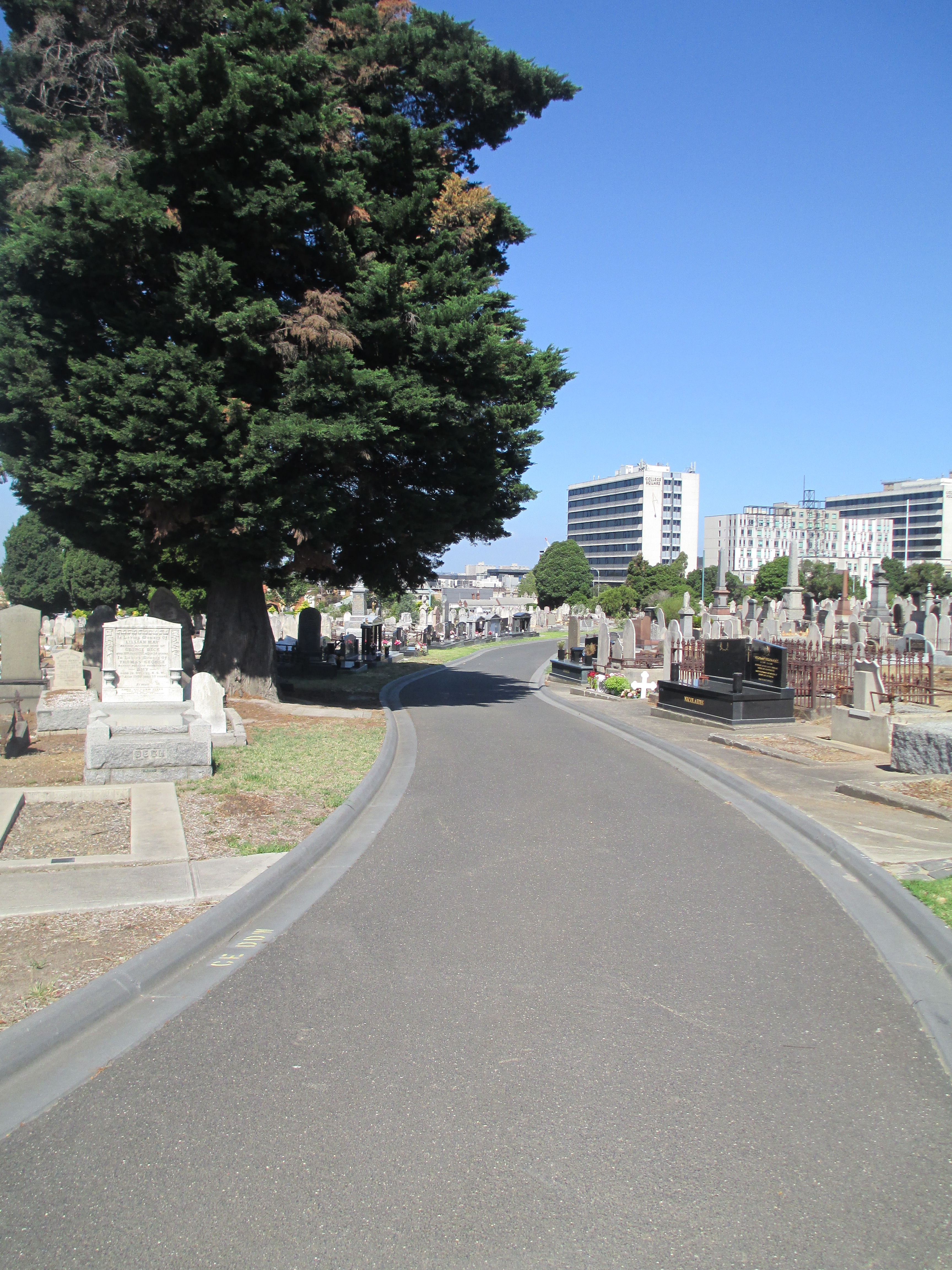
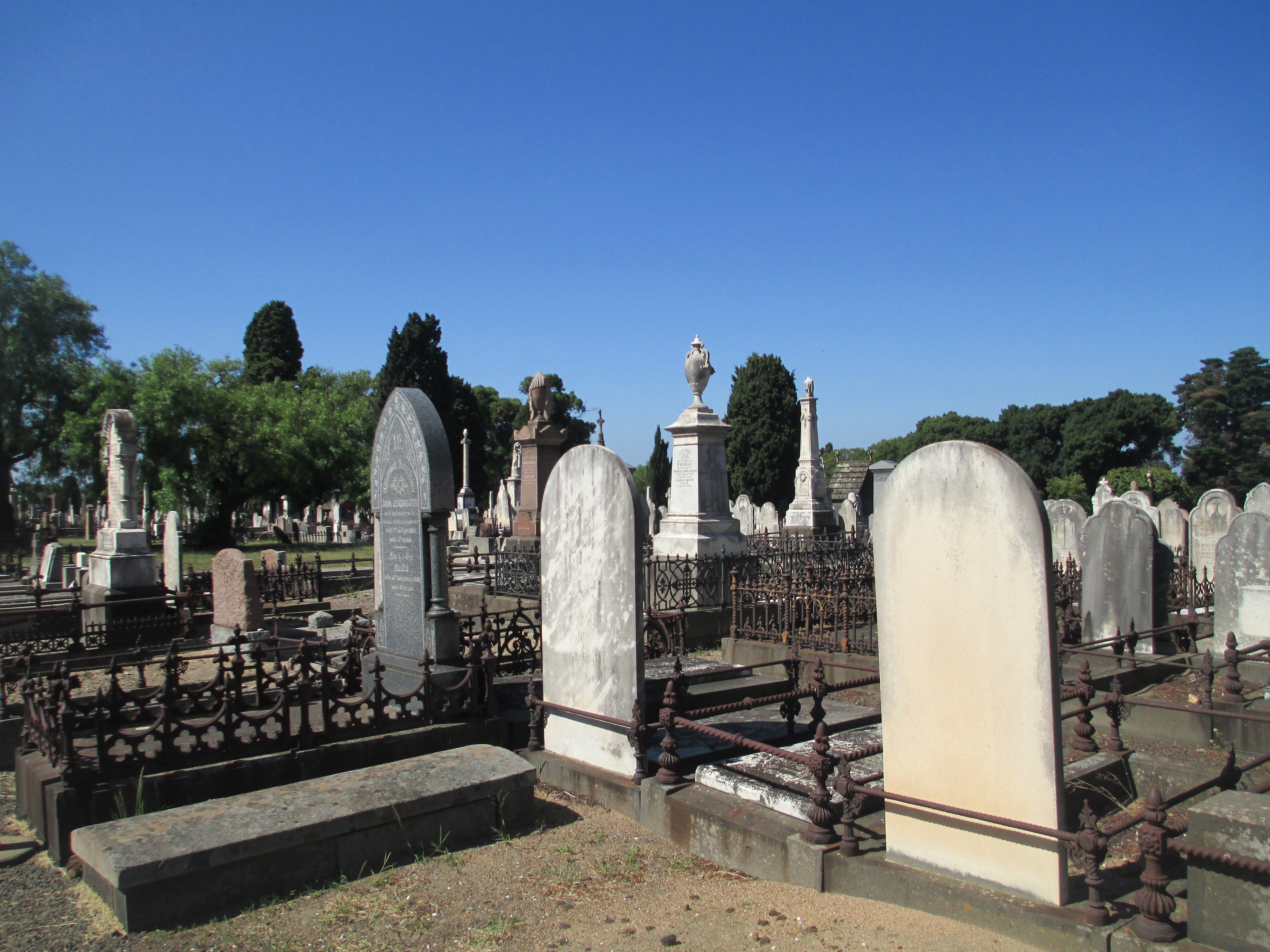
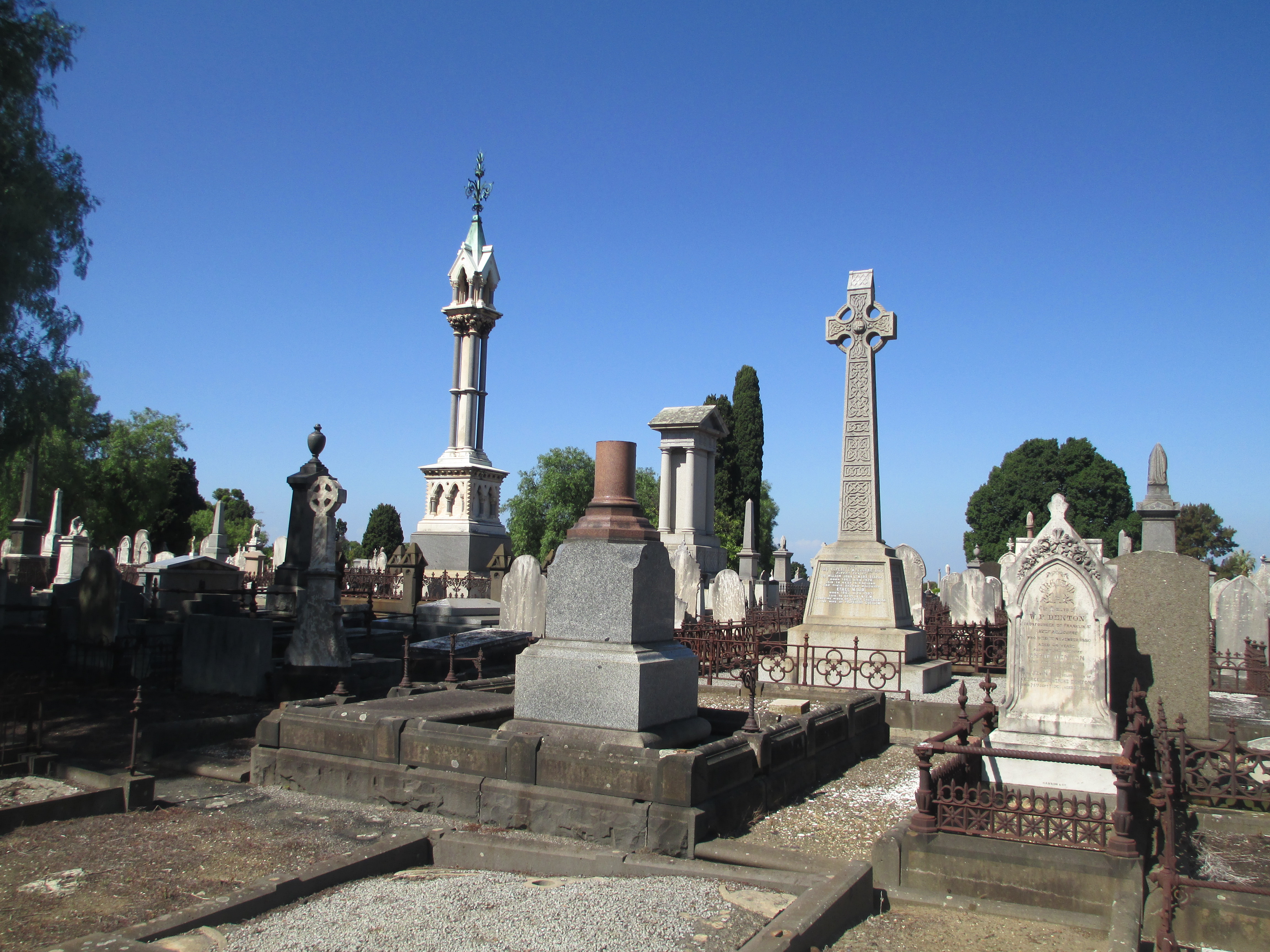
Robert Henry’s is not the only grave that is unmarked in the cemetery because, while the records of those buried survive not all the headstones do. Robert Henry is only one of the approximately 300 000 people buried in the Cemetery since 1853 and their graves can be seen covering a staggering 106 acres. The Cemetery is truly vast. IMG_1115 IMG_1116IMG_1108 IMG_1107Some  burials date even earlier than 1853 though, as a portion of the burials removed from the Old Melbourne Cemetery were re-interred in the Melbourne General Cemetery. The Old Melbourne Cemetery is an interesting story in itself because it stood on the land that now houses the Queen Victoria Market.

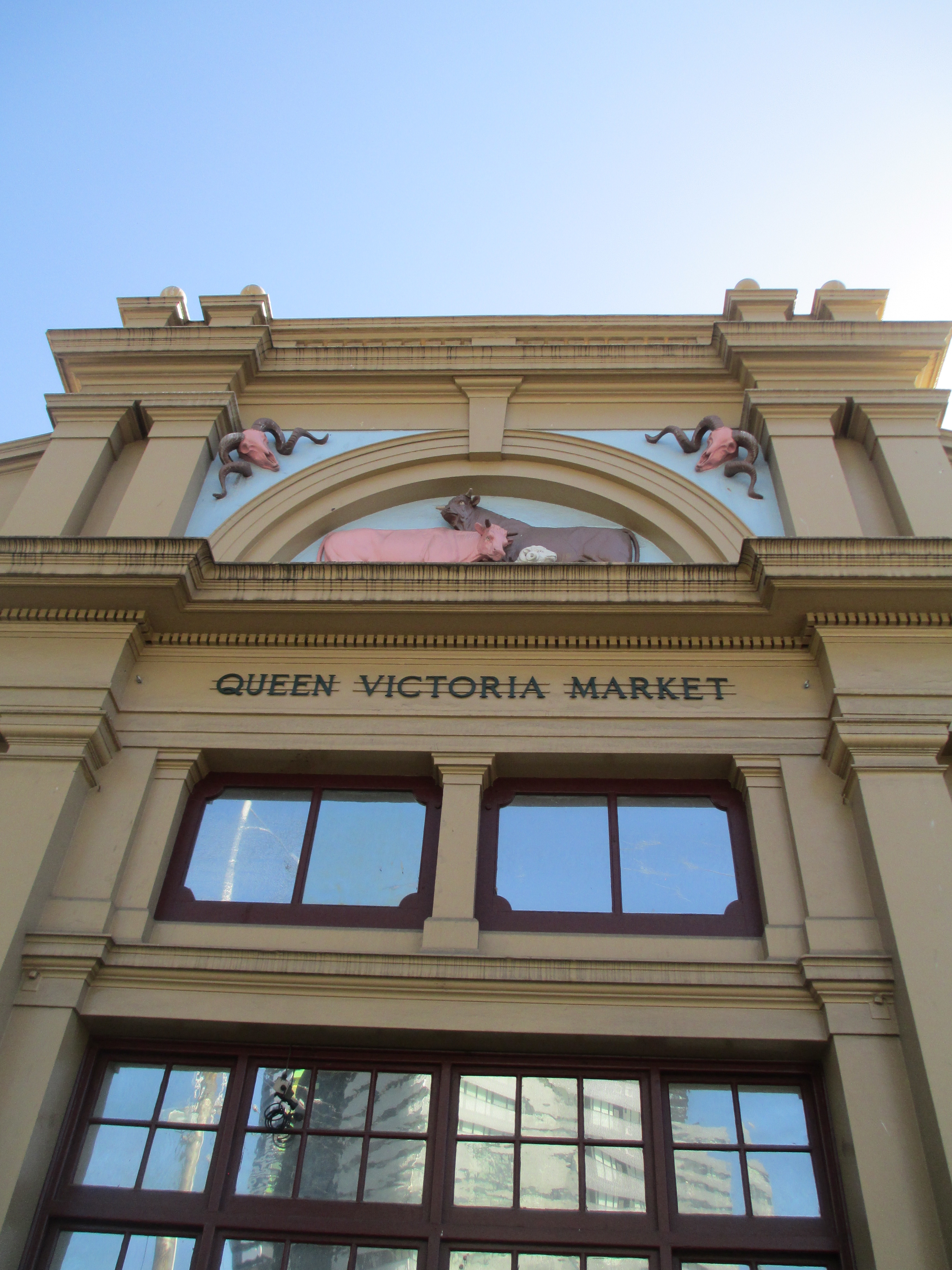
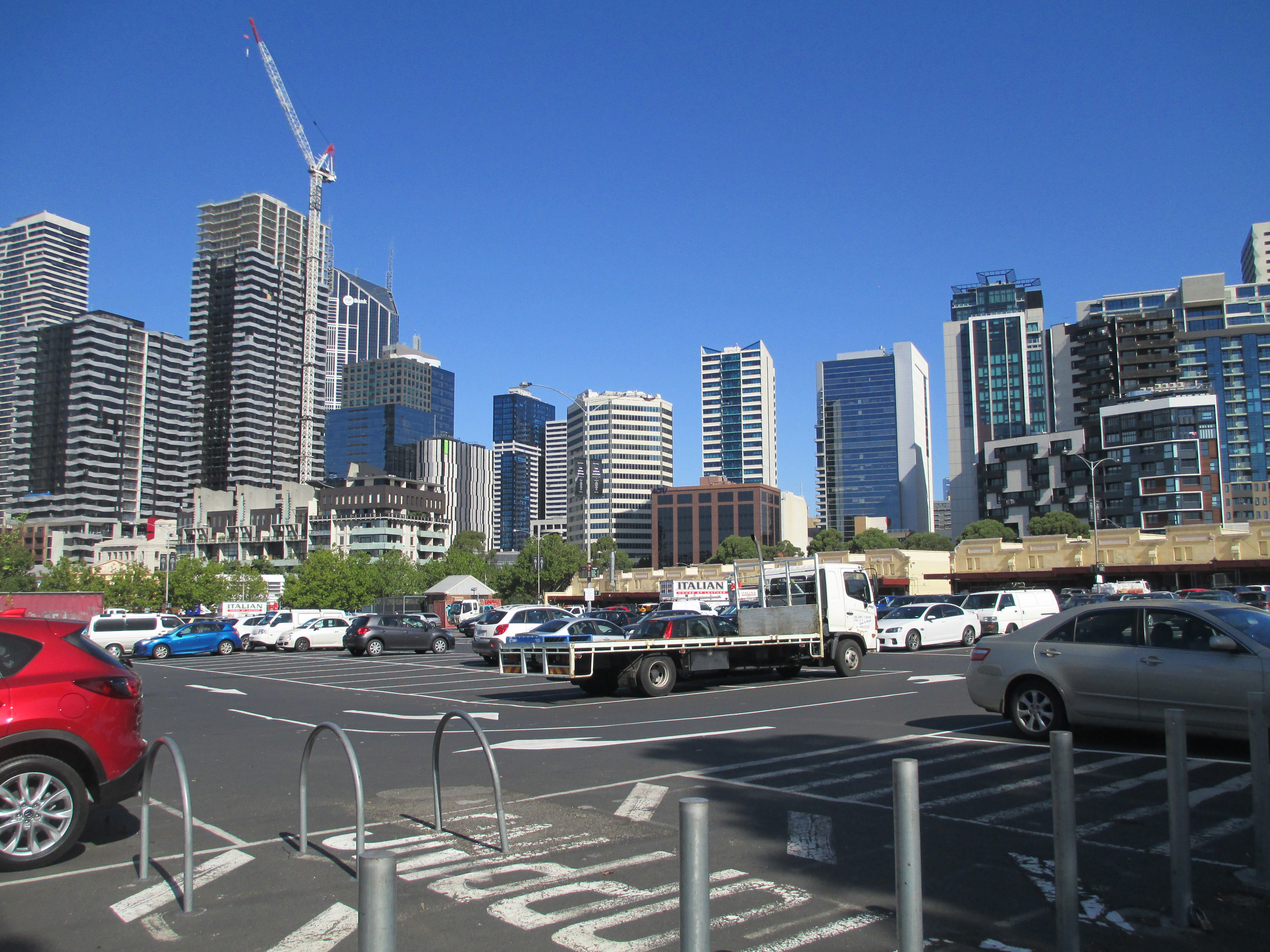
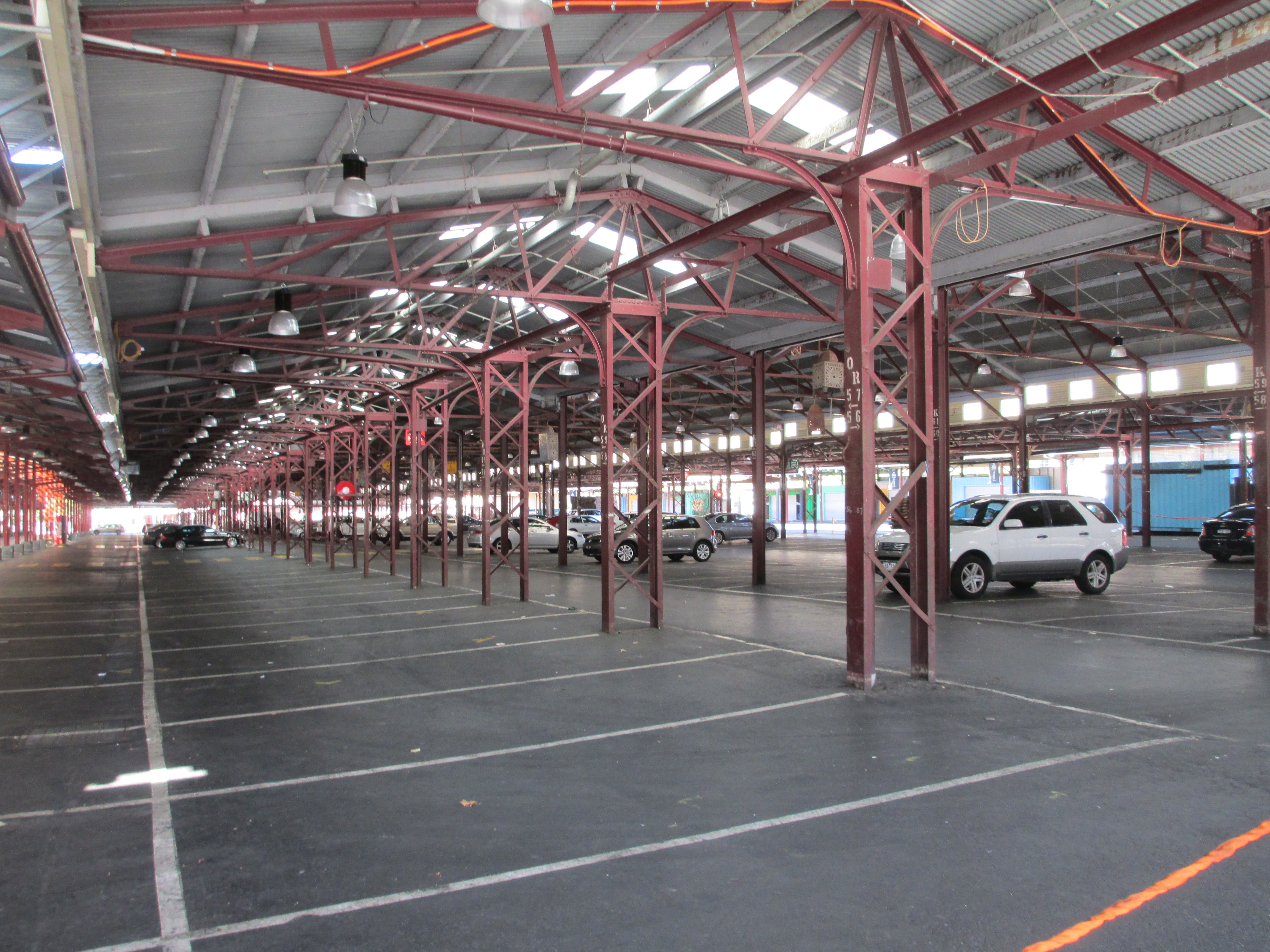
IMG_1133The Old Melbourne Cemetery was closed in the 1850s and many of the red gum headstones were stolen for firewood. An estimated 10 000 people were buried there, including many indigenous burials and John Batman the ‘founder’ of Melbourne. When the Queen Victoria Market expanded in 1917, 914 bodies were re-interred in other cemeteries including the Melbourne General Cemetery. However there are still thousands of bodies beneath the Queen Victoria Market and its car park today. IMG_1144 IMG_1143 IMG_1142The market does not have a multi story car park because, due to all the bodies buried there, you can’t go underground. Unfortunately there is no record of those interred in the Old Melbourne Cemetery as the official records were destroyed during a fire in the Melbourne Town Hall. The only sign of the thousands still beneath the earth is a memorial to John Batman, in the car park, and a memorial called Passage, dedicated to those still buried beneath the market and its car park. IMG_1146 IMG_1147 IMG_1151Passage

Many of the burials in The Melbourne General Cemetery have interesting origins as well. The cemetery itself is quite varied. As you can see below it is divided into a number of sections.

Melbourne Cemetry_V3_DPMG - FINAL

IMG_1099IMG_1070IMG_1121

The Cemetery was also designed specially like a public park with winding roads, separate religious rotundas and a large number of evergreen trees and shrubs.

IMG_1114 IMG_1109 IMG_9753

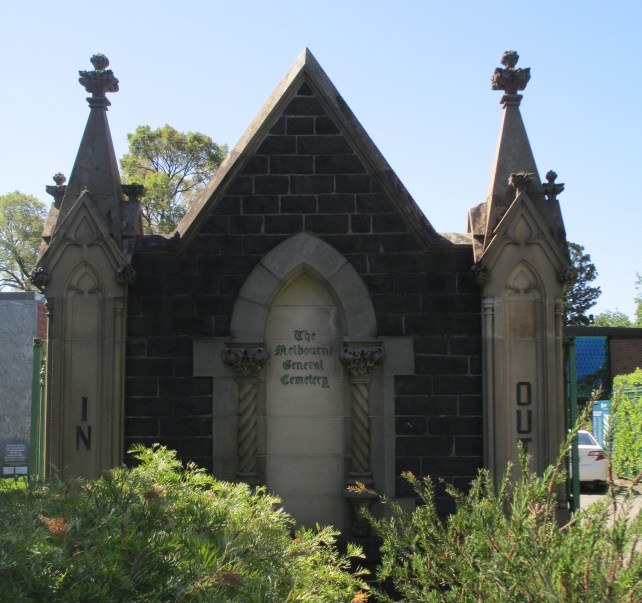
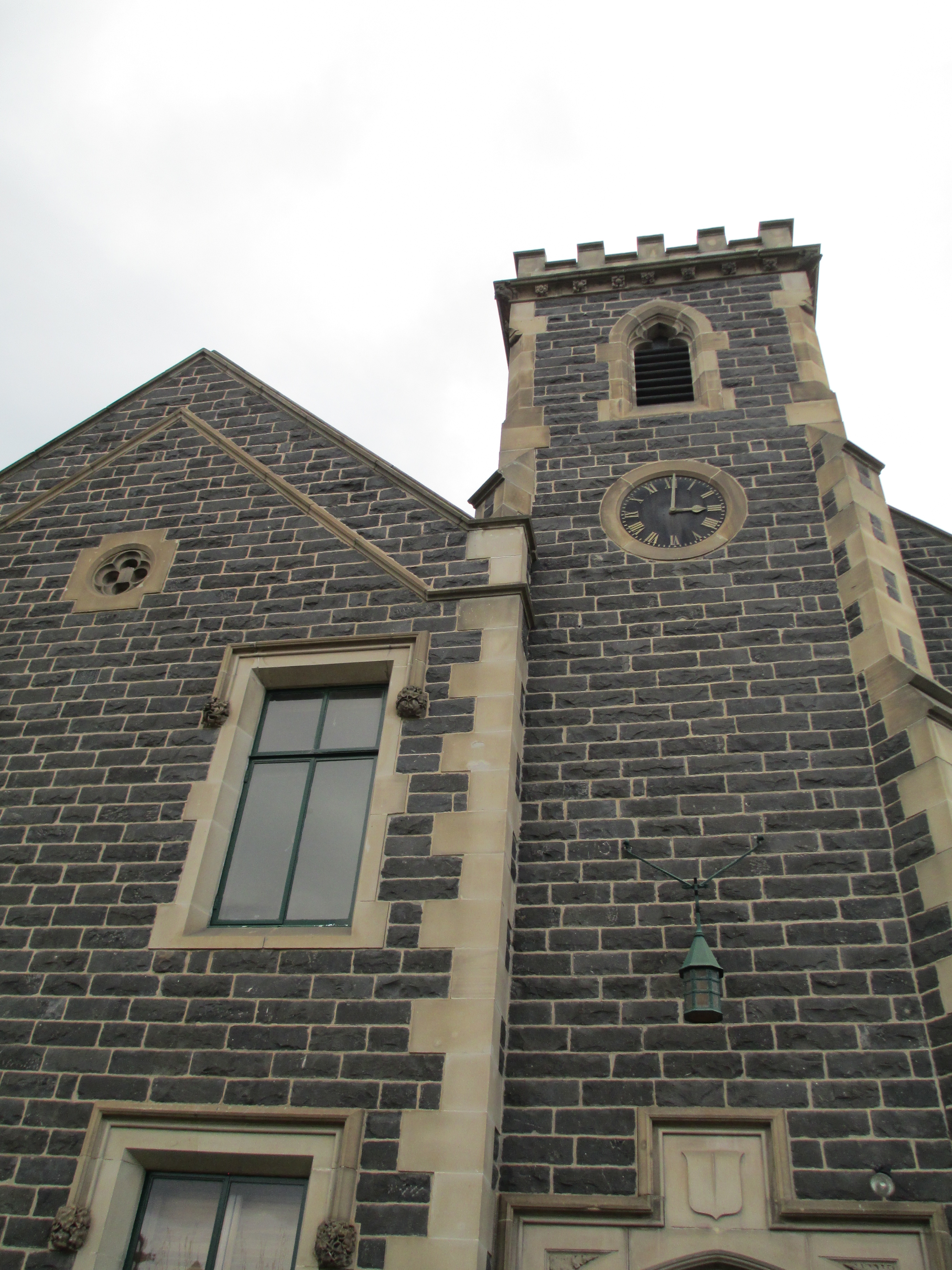
There are a number of buildings on site as well, including the heritage listed gatehouse that was rebuilt in the 1930s. The oldest building is the Jewish Chapel which dates to 1854.

.IMG_9757

The Gatehouse.

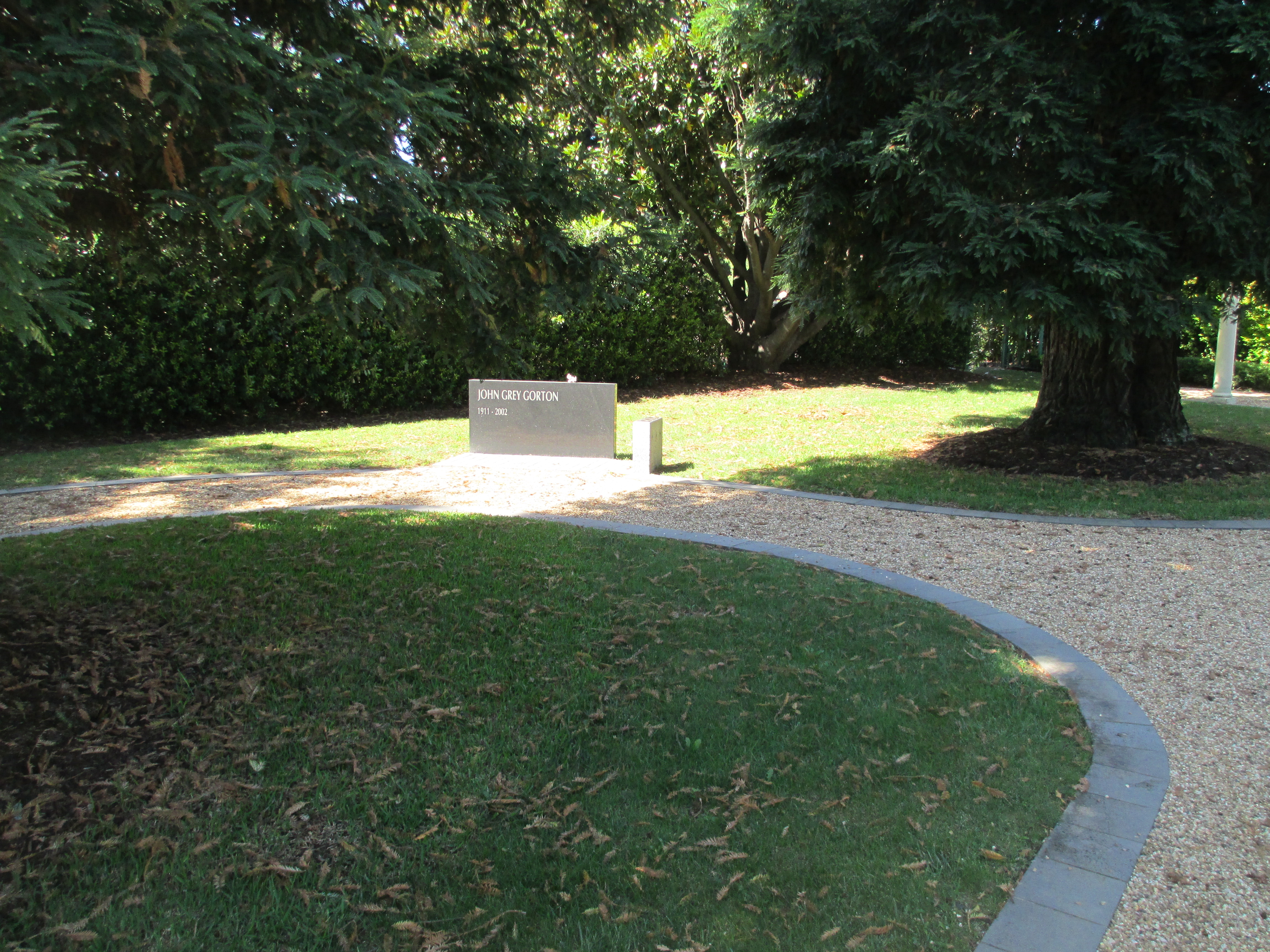
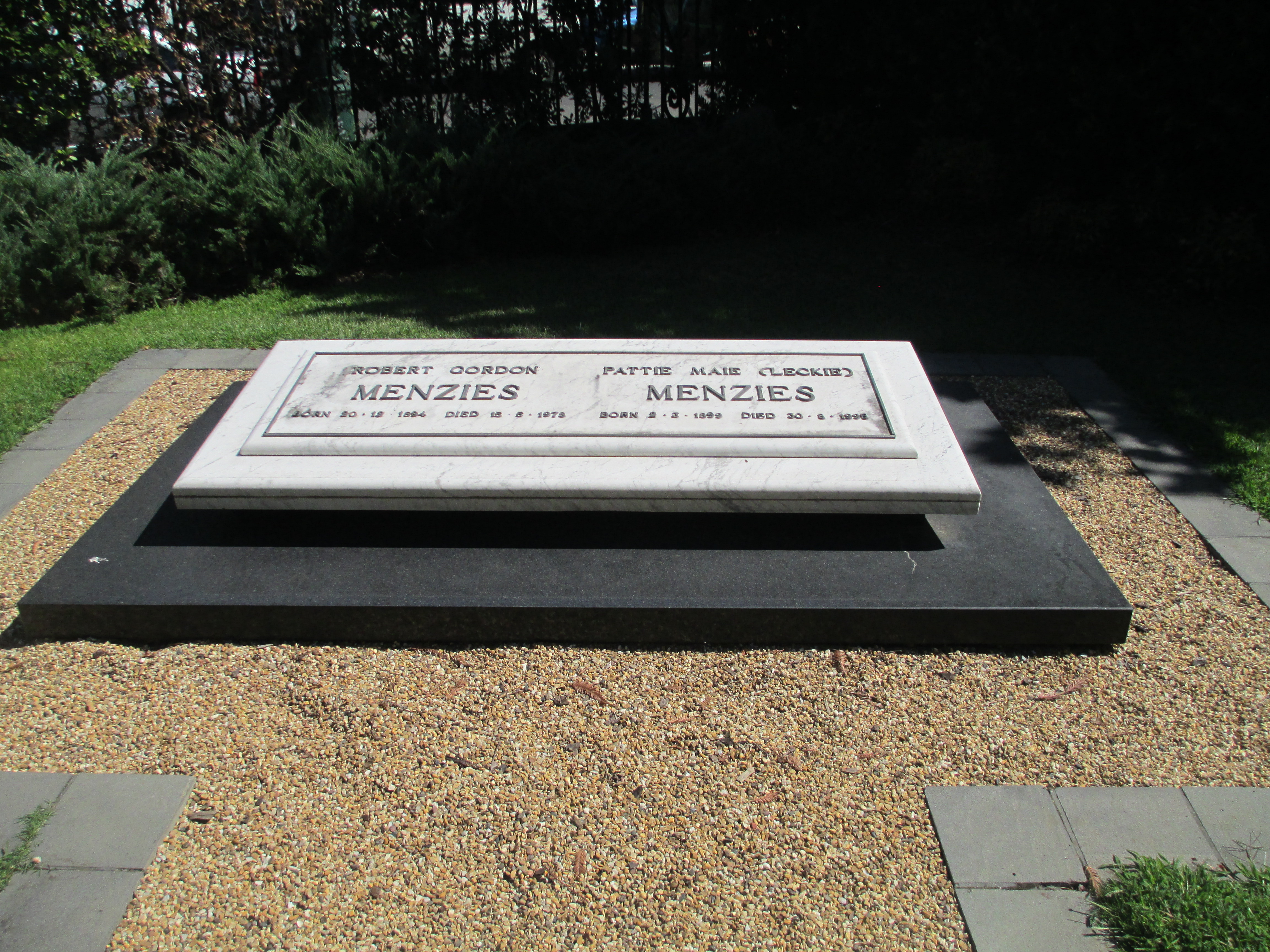
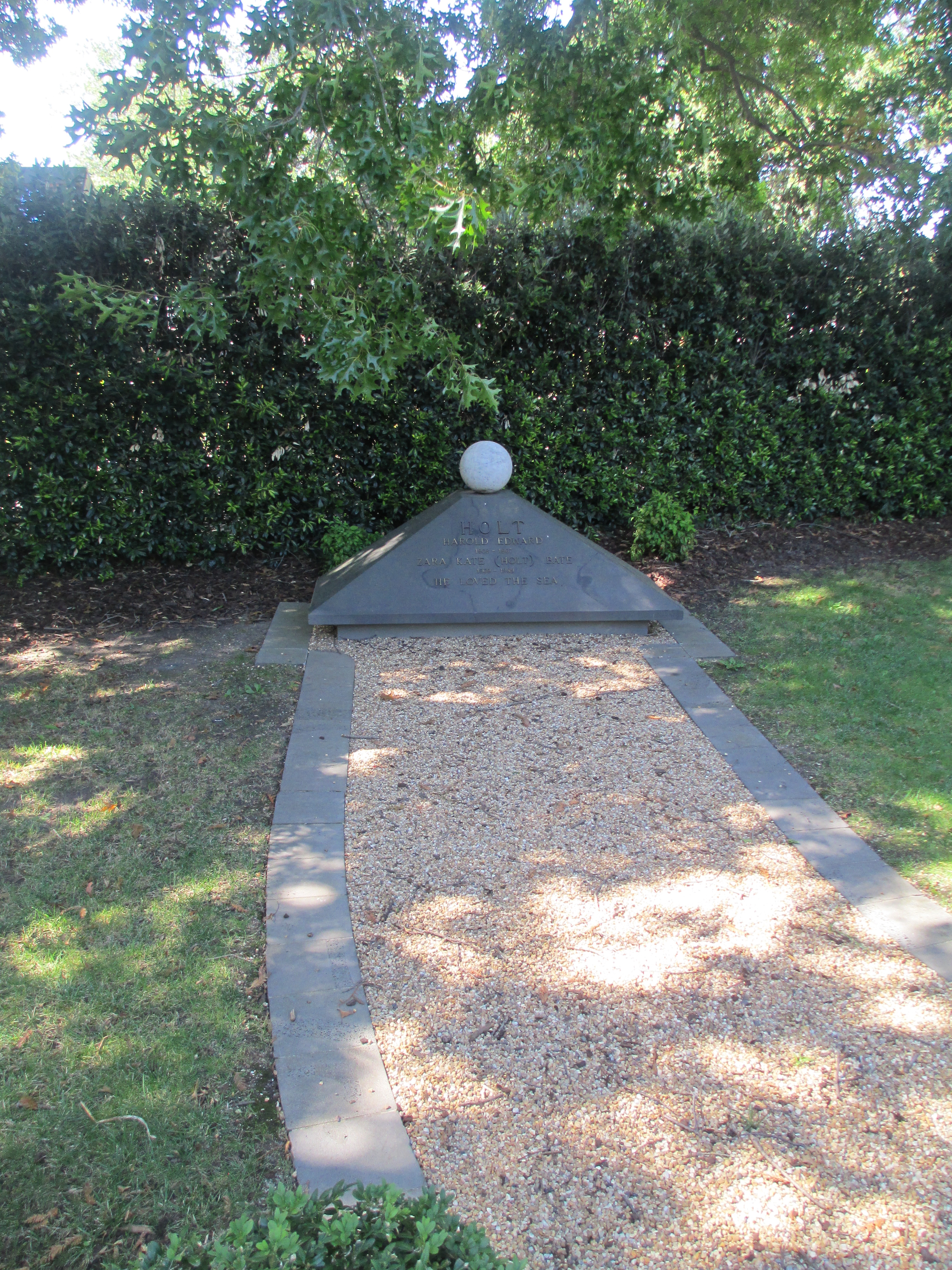
There are also a number of significant people buried there. Including several Prime Ministers.

IMG_1068John Gorton

IMG_1067Robert Menzies and Pattie Menzies

IMG_1066

A memorial to Harold Holt who disappeared while swimming at Cheviot Beach on Point Nepean.

IMG_1069

This is a memorial wall to Australia’s Prime Ministers, not everyone listed in dead.

There are some very interesting individual memorials as well. Including the monument below which is dedicated to indigenous man Derrimut whose timely action saved early settlers from a massacre. IMG_1119 IMG_1120

Other memorial monuments include:

A memorial dedicated to Elvis.

IMG_1127

A memorial dedicated to Burke and Wills and their expedition force.

IMG_1077

And a memorial dedicated to Hungarian Freedom Fighters.

IMG_1123

IMG_1124

 There is also a wide range of funerary monuments such as:

Unmarked graves.

IMG_1088

Whole families in one place.IMG_1105

Decorative towers.

IMG_1103 IMG_1102Small buildings.

 IMG_1104

Towering plinths.

IMG_1090 IMG_1087 IMG_1084

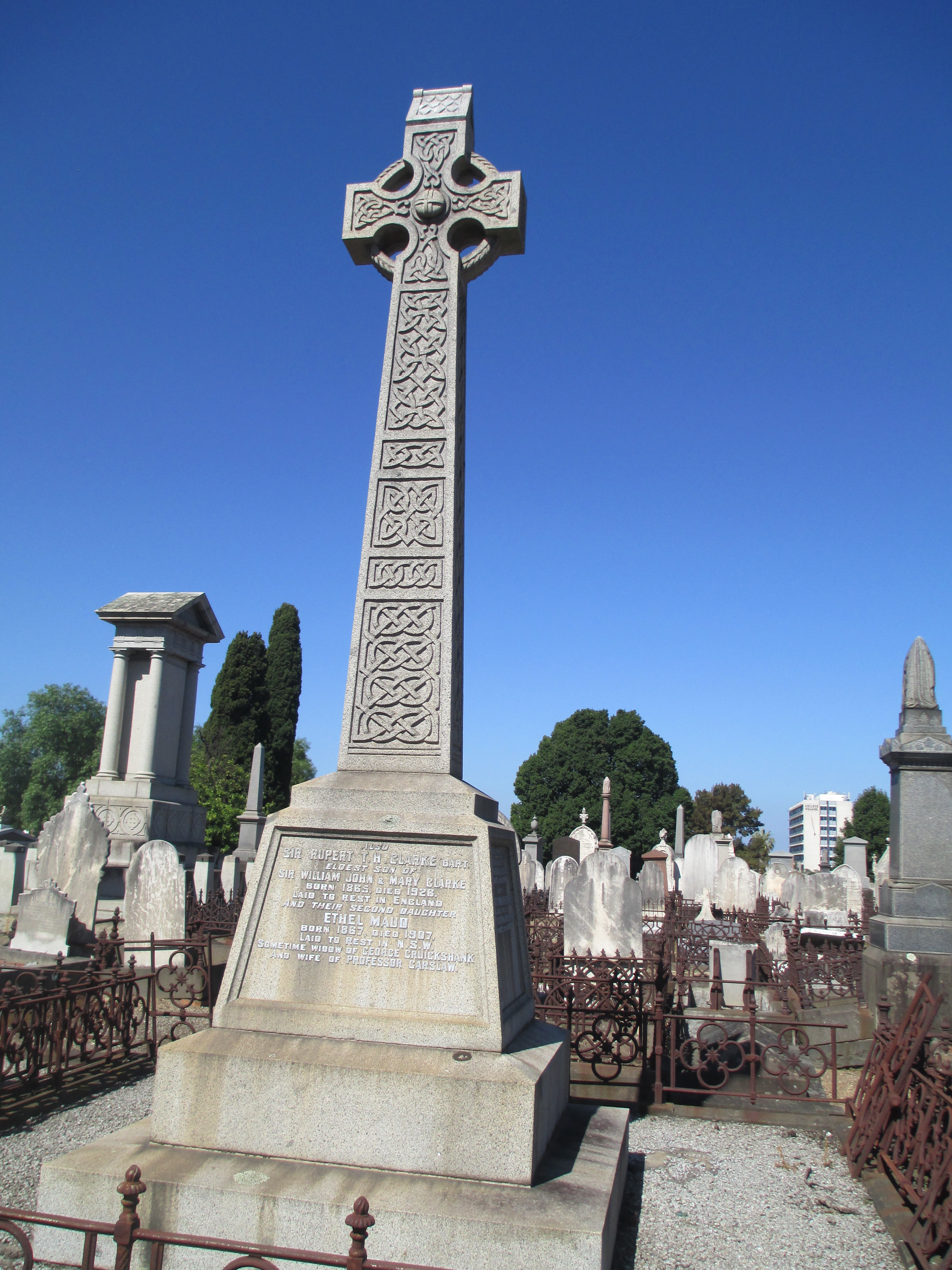
 High Crosses.

 IMG_1085

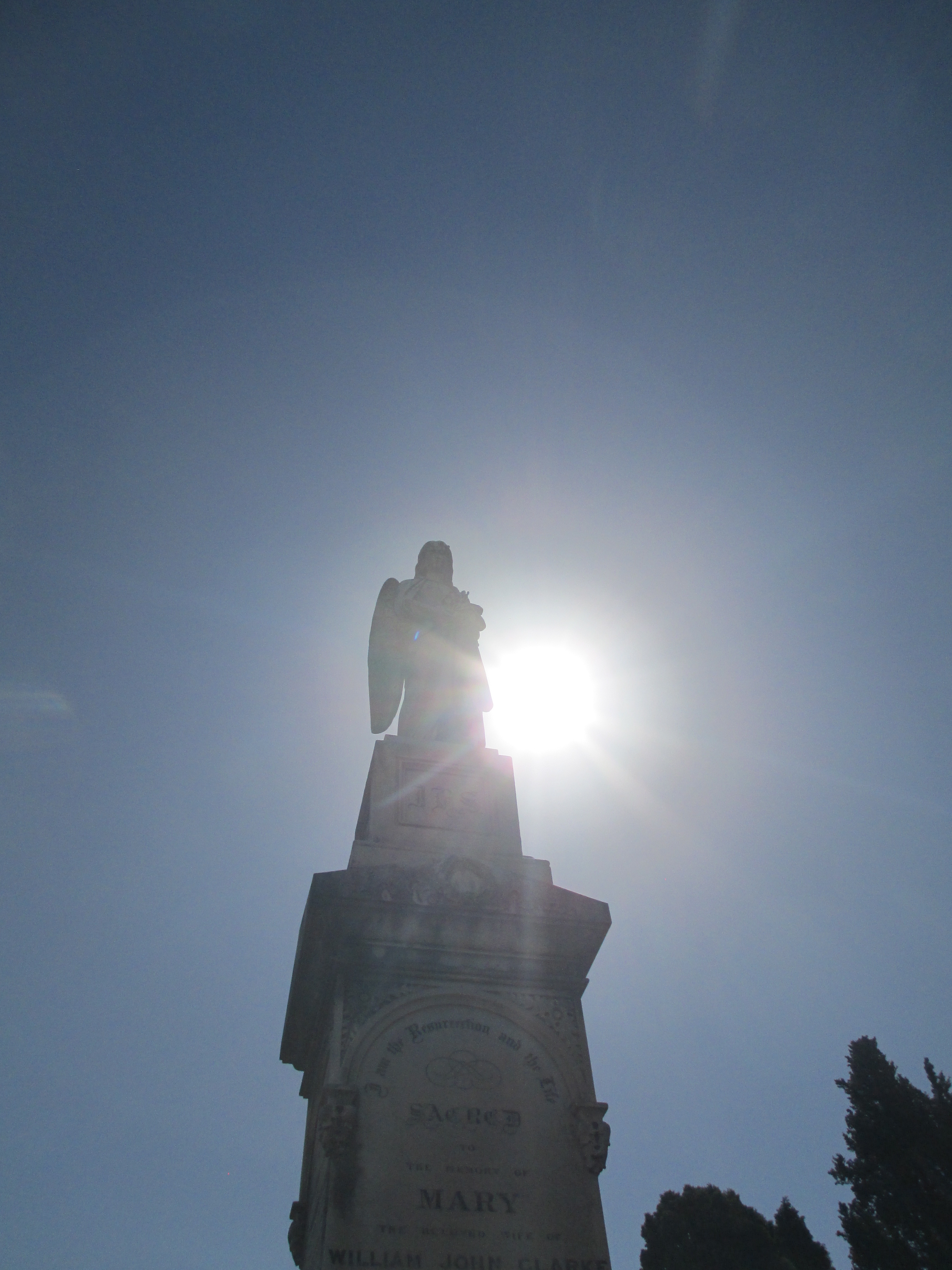
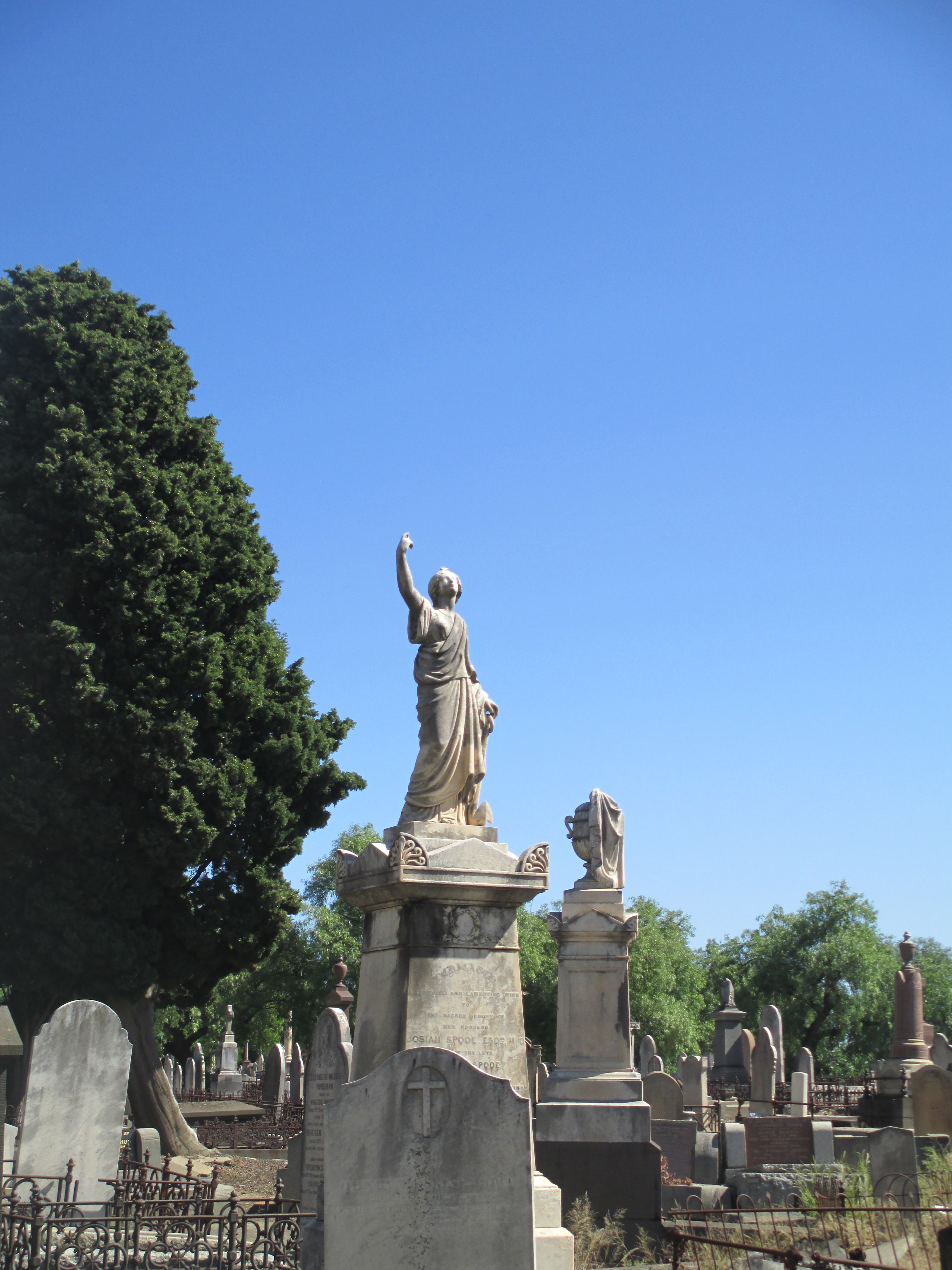
Angels and angel like figures.
IMG_1089 IMG_1112

Simple grave stones.

IMG_1093 IMG_1097 IMG_1072 IMG_1071

Modern mortuary chapels.

IMG_1125

And plaques in the rose garden.

IMG_1131

The Melbourne General Cemetery is a fascinating, if overwhelming and slightly haphazard, look into Melbourne’s past. It is also a working cemetery so it will continue to be part of Melbourne’s heritage in years to come. It is well worth visiting not only as a place with a fascinating history, but also somewhere that is surprisingly beautiful and very peaceful.

IMG_1092 IMG_1091

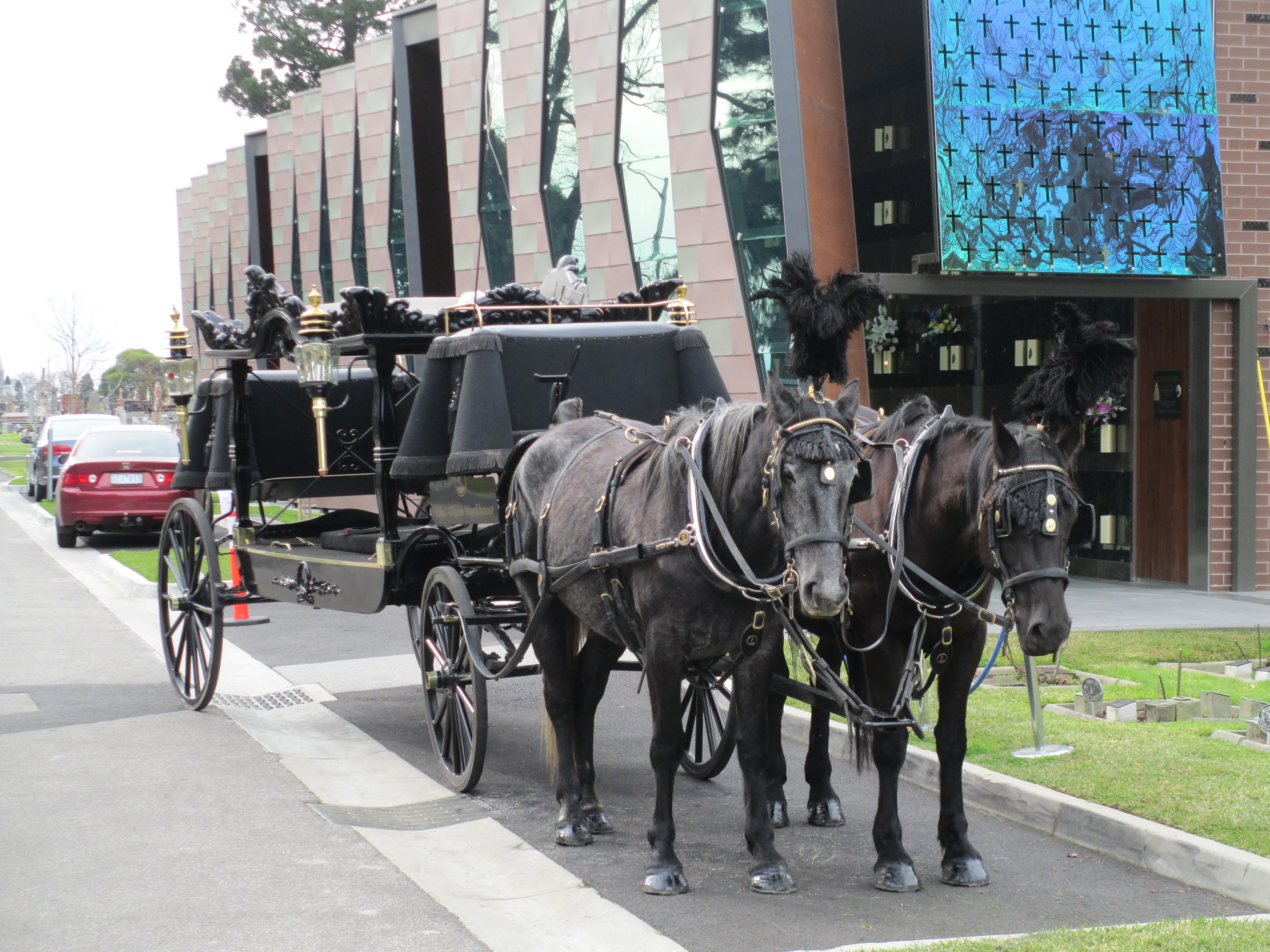
Also if you make it there during Melbourne Open House, you might get to see the vintage hearse.

IMG_9751

For more information

http://mgc.smct.org.au/about-our-cemetery/

http://www.qvm.com.au/about/history/

All the photos are mine apart from the plan of the cemetery which can be found at.

http://mgc.smct.org.au/Assets/Files/Melbourne%20Cemetry_V3_DPMG%20-%20FINAL.pdf

Icons

Religious icons are something that I have come across over the years and have always liked, but they’ve never been something I’ve known much about. This changed when I saw the truly outstanding exhibit of a selection of orthodox Christian icons at the Ballarat Art Gallery.

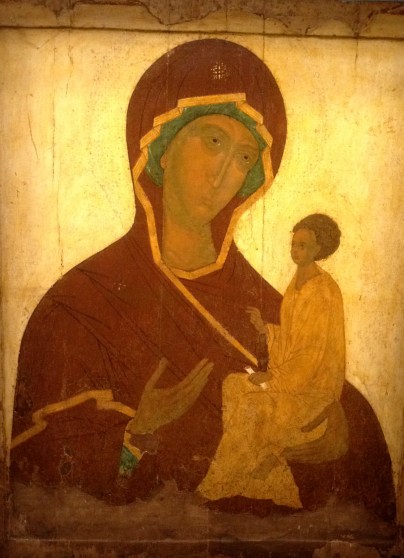
Icon larger mother of god

 Mother of God Tikhvinskaya.  circa 1560.

Icons were never intended to be accurate representations of the people they are depicting, nor were they ever designed to be venerated in and of themselves. They were intended to be a point of communication. Icons were windows to heaven.

They developed over centuries as  Christianity evolved.  Geographically icons usually originate primarily in Byzantium, Russia, Greece and surrounding areas. These are the centres of orthodox christianity. They became the provence of orthodox Christianity when it split with western Christianity following the Great Schism of 1054. This was the parting of the ways of east and west when a representative of the pope and the Patriarch of Constantinople excommunicated each other. Icons also survived, in one form or another, several iconoclastic regimes.

I’m going to briefly consider a handful of the icons that are on display at the Ballarat Art Gallery. Essentially I’ve chosen the ones I liked the most and which I think are most interesting.

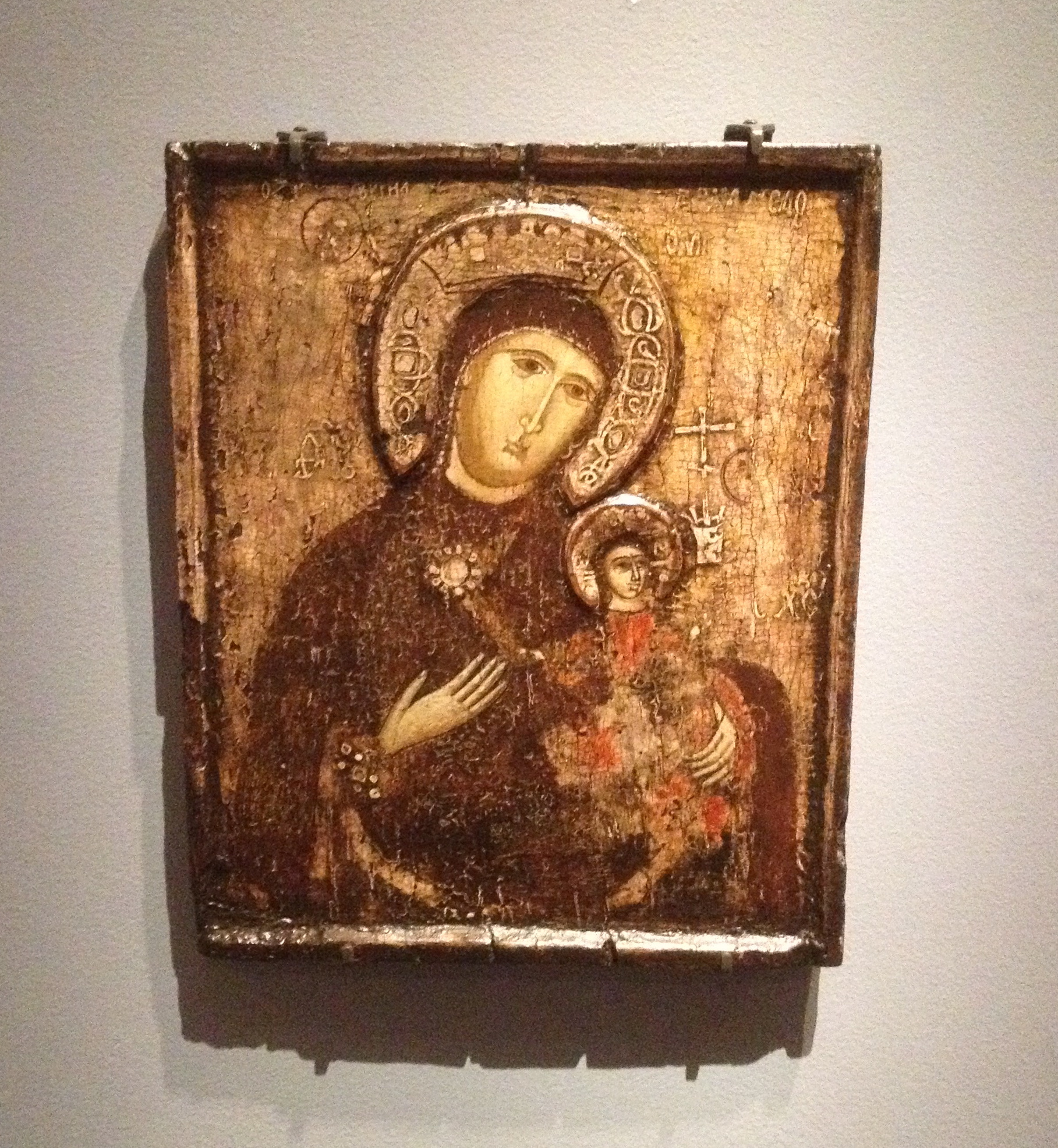
Icon Mother of God of the passion

Mother of the God of the Passion c. 1300

This is one of the earliest icons in the exhibit and you can really see the difference in the styles when compared with later icons. The images are more stylised and less realistic. It is known as the God of the Passion because Jesus can be seen gazing backwards at what would have been a jar containing the unguents used at Jesus’ burial, the nails from the cross and an image of the cross itself, the outline can still be seen. So Jesus is literally gazing at the instruments of His Passion.  This icon is an early example of this particular type. A later and better known example is the Lady of Perpetual Succour.

Icon St George

Saint George and the Dragon c. 1700

This is a slightly naive version of the St George and the Dragon, but all the elements are there. The princess can be seem standing off to the right and her parents watch her rescue from the balcony. This is not a work intended for great palaces, it was created in a workshop that makes no pretence of particular finesse. However I think it is actually one of the most dynamic of the icons, it was certainly one of the ones that drew me in immediately and it has an almost undefinable presence.

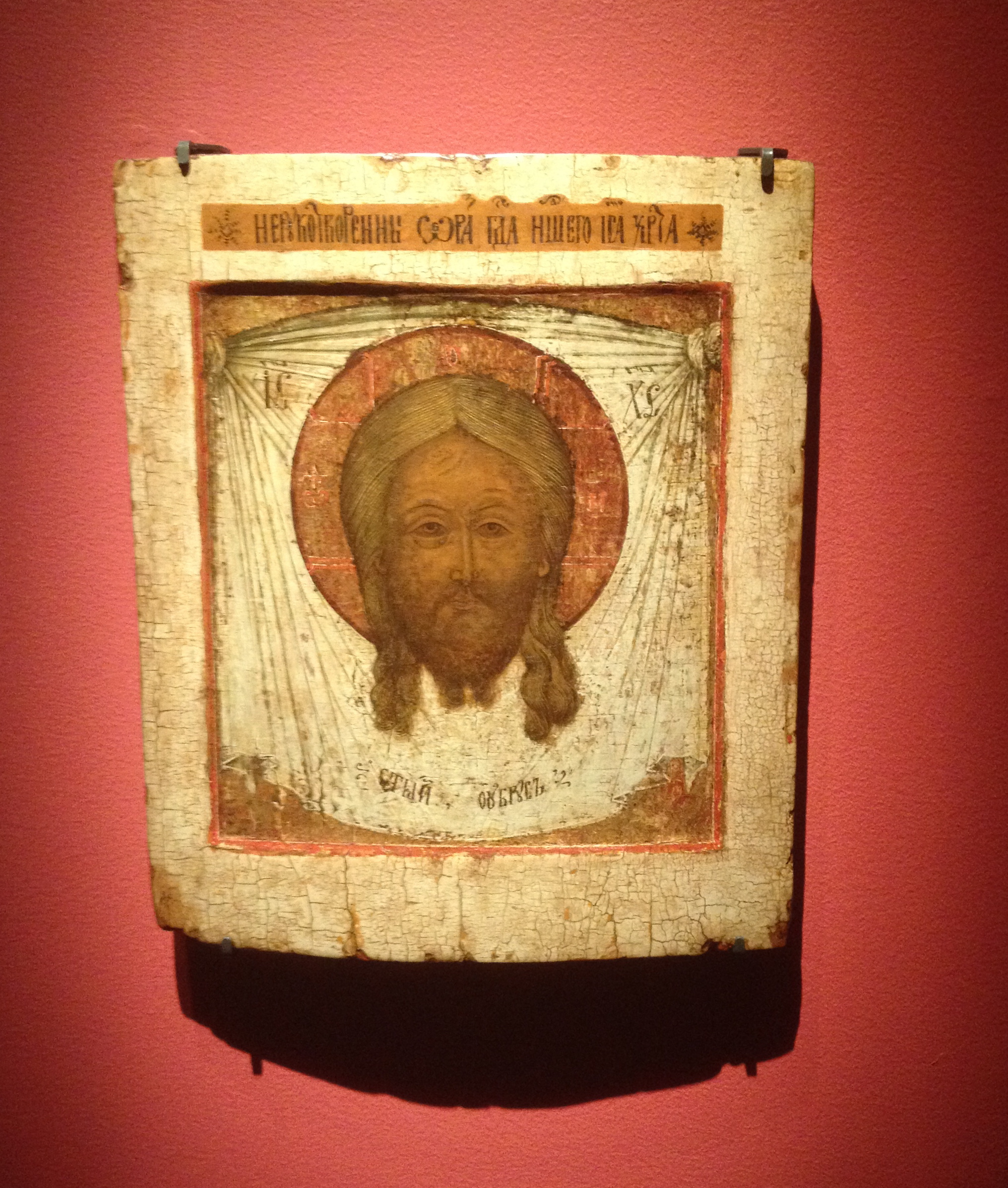
Icon image not made by human hands

The Image not made by Human Hands: also known as the Mandylion or the Holy Face of Edessa.

This icon is a much later version of what can be considered the icon of icons. It is the impression of the facial features of Christ which He is said to have made in His last days. The original Mandylion had been in Muslim hands since 638 but the Byzantines recovered it when they besieged Edessa in 944. It stayed in Constantinople until the western christians took the city during the fourth crusade of 1204. By then however it had been copied and disseminated all over the orthodox world.

Icon Mother of God

Mother of God c. 1600

This is a work of high quality and the fact that she is alone and looking down suggests that it might be one of a triptych. The sorrow on her face is truly compelling and you can see how much more detailed and realistic it is than the earlier Mother of the God of the Passion.

Icon St Nic

 Saint Nicholas the Wonderworker 16th century

This is a depiction of Saint Nicholas who was one of Russia’s most beloved saints. He was bishop of Myra in Asia and was known for being the friend of the common people and showing generosity and compassion towards the poor. He was the patron of many cities and trades in Russia and is the orgin of our modern Santa Claus.

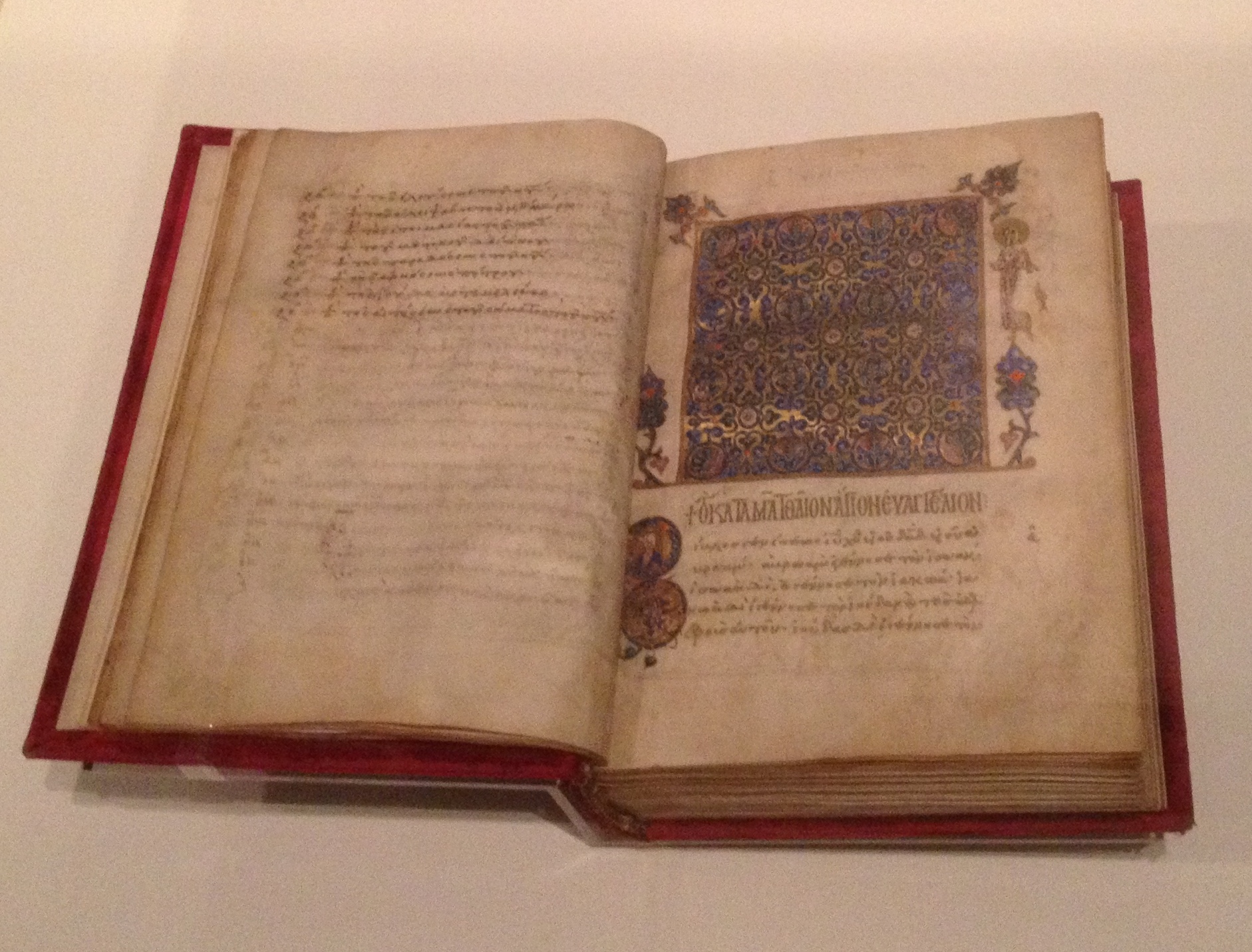
icon book

The Gospel book of Theophanes c. 1125-1150

As you can see this is not an icon, but I am passionate about illuminated manuscripts and it is part of the exhibit so I thought it was worth including. It is one of the more significant works from its time and the illumination is typical of Byzantium of this period when it was enjoying a cultural  and political revival. The page that is open is beginning of the gospel of Mathew.

I wanted to conclude with a brief discussion of how these icons were made. The majority in the exhibit are wooden panels with egg tempura and linen.

It was a specific process.

1. Have a prepared wooden panel, good quality timber of reasonable hardness. Olive or cyprus for example.

2. Apply a coat of egg tempura, which was egg yolk mixed with powered mineral and plant derived pigments which might have been thinned with some kind of alcoholic spirit.

3. Sand down the panel.

4. Apply gesso, a mixture of powered calcium carbonate and animal skin glue. Each layer of gesso was sanded back.

5. In some cases a layer of linen was then applied and covered in gesso. This created a stronger panel.

6. In some cases the panel was then braced along the back

7. In many cases gold leaf was then applied. However the surface needed to be totally smooth so a fine grained clay called bole had to be applied first. The bole influences how we see the colour of the gold leaf, but we are not aware of it.

8. Apply the pigments themselves. These were created from things like malachite, lapis lazuli and cinnabar which create vivid colours. The preparation process could be toxic and when semi precious stones, such as lapis lazuli, were used they would be very expensive.

This was the process that produced many of the icons in the exhibit. In the photo below you can see some of the layers, and you can actually see the linen. It is the bottom of the Mother of God Tikhvinskaya from the beginning of the post.

Icon see the linin

All the information for this post came from the Art Gallery of Ballarat exhibition. If you are in Australia it is well worth visiting. It’s open until the 26th of January and more details can be found here at http://artgalleryofballarat.com.au/exhibitions-and-events/exhibitions/eikon-icons-of-the-orthodox-christian-world.aspx

There is also full text of the information regarding the icons at

http://artgalleryofballarat.com.au/media/254590/eikon_labels_and_didactics.pdf.

Point Nepean

Point Nepean: the end of the Mornington Peninsula, one of the ‘heads’ of Port Phillip Bay, a national park, the site of a disappearance of an Australian Prime Minister, a series of army forts, a former army training area and the site of the first shot fired by the British Empire in WWI.

Point Nepean Aerial

Photo from http://www.visitmorningtonpeninsula.org/NewsMedia/PhotoGallery/tabid/216/AlbumID/645-1/Default.aspx

For those who haven’t been there Point Nepean is about an hour and a half’s drive from Melbourne Australia. It is is one of the few places where you can stand on a spit of land with the ocean on one side and the bay on the other. It is also the place that claimed one of Australia’s Prime Ministers. Harold Holt went swimming at Cheviot beach, see the photos below, in December 1967. He never returned. He was officially pronounced dead on the 19th of December.  There have been many theories over the years, ranging from a Japanese submarine to sharks. The last is actually a possibility. I think he just drowned. It is a very unsafe swimming beach with unpredictable currents and frequently a number of rips.

PN cheviot 2 pn cheviot 1

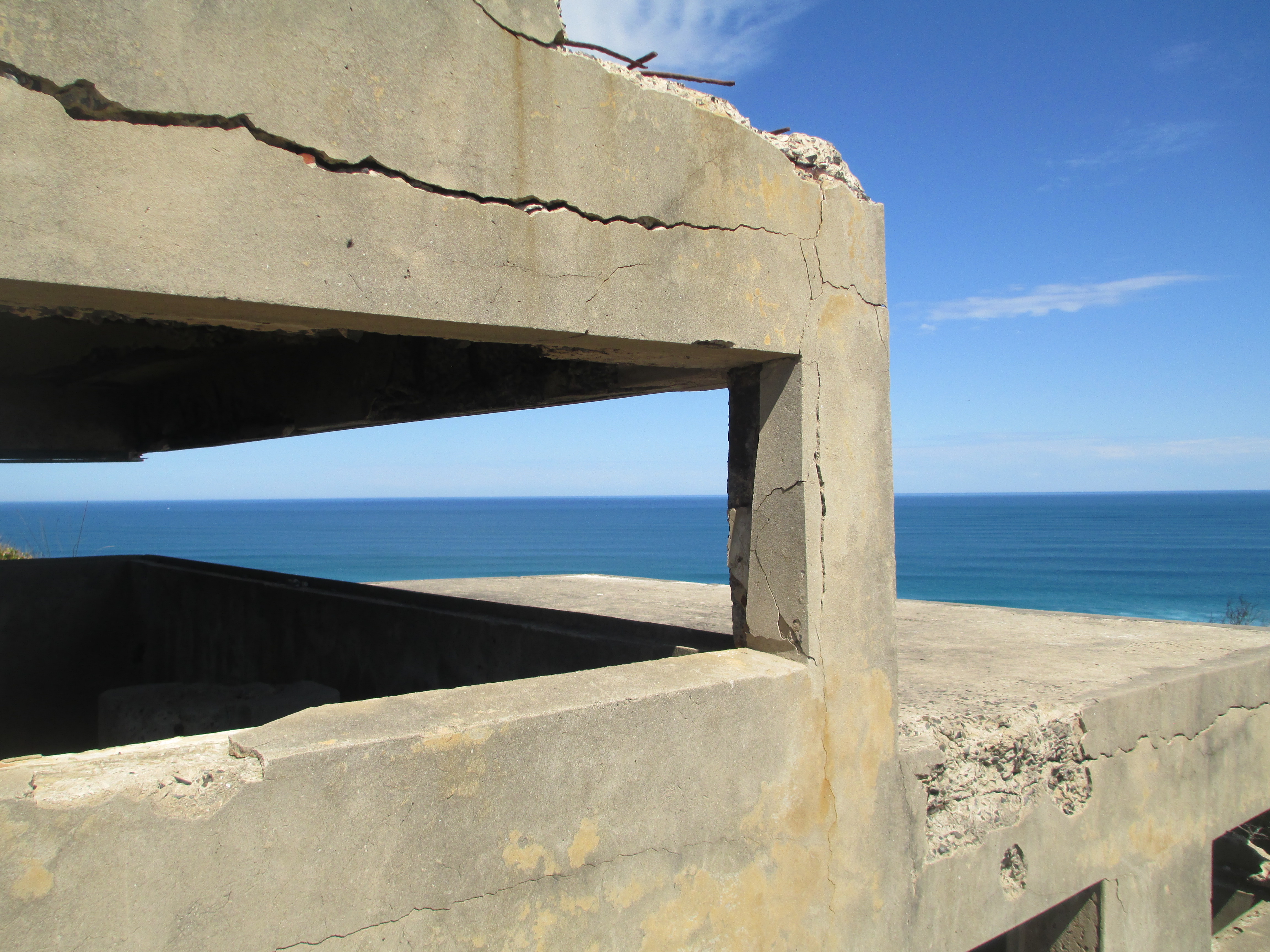
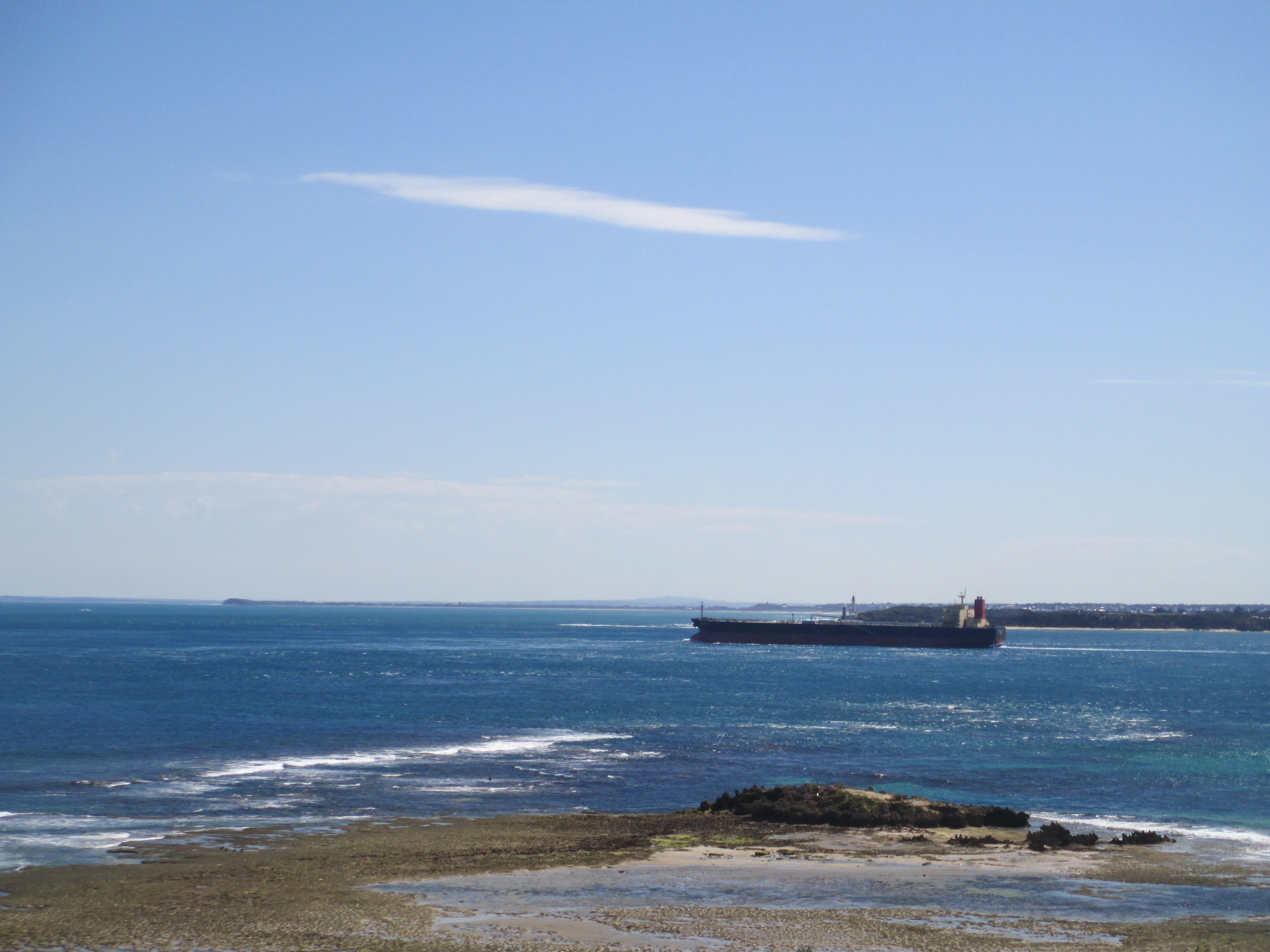
There are also several of army forts along the length of Point Nepean, from WWI and WWII, such as the Cheviot Beach fortifications, Fort Pearce and the Eagle’s Nest. All of which can be seen in the photos below.

PNEagle's nestFort PEarce
cheviot I thinkPoint Nepean is probably best known for the role it played in WWI. WWI was declared at 11pm on the 4th of August 1914 in Britain (9am of the 5th Australian time). A German cargo steamer the SS Pflaz, having anticipated a declaration of war, was trying to get clear of the heads of Port Phillip Bay and find a neutral port in South America.

Signal flags were raised at Fort Nepean, at the very end of Point Nepean, and Queenscliff ordering the SS Pflaz to stop. There was no response and a ‘heave to’ shot was fired from the gun emplacement at Fort Nepean. Eventually the SS Pflaz returned to the harbour under armed guard. This shot was the first shot fired in WWI by the British empire. This was the only shot fired in anger from Australian territory in WWI

Incidentally Fort Nepean also fired the first Australian shot from WWII on the 4th of September 1939. The SS Woiniora failed to identify itself as it came through the heads. Once the correct code was signalled the ship was allowed to continue on its way. The remains of the gun below are in the position the shot was fired from and the other photo is the view from the gun emplacement.

PN WWigun
PN head boat 2

Point Nepean also served as a quarantine station from the 1850s until 1952 when it was taken over by army cadets, with the proviso that it would be vacated if it was needed again for quarantine. Many immigrants were quarantined there from passengers, steerage and first class, from the 1850s all the way through to assisted immigrants in the early 1950s who were kept there while their belongings were fumigated against foot and mouth disease.

1912 saw the largest intake of the quarantine station with 1291 from the ship, the Irishman. They were mainly agricultural labourers. The photos below are some of the quarantine buildings. The final photo is the view along the balcony of one of the hospital buildings.

PN q buildings 2PN q buildings 1 PN qbuildings 3

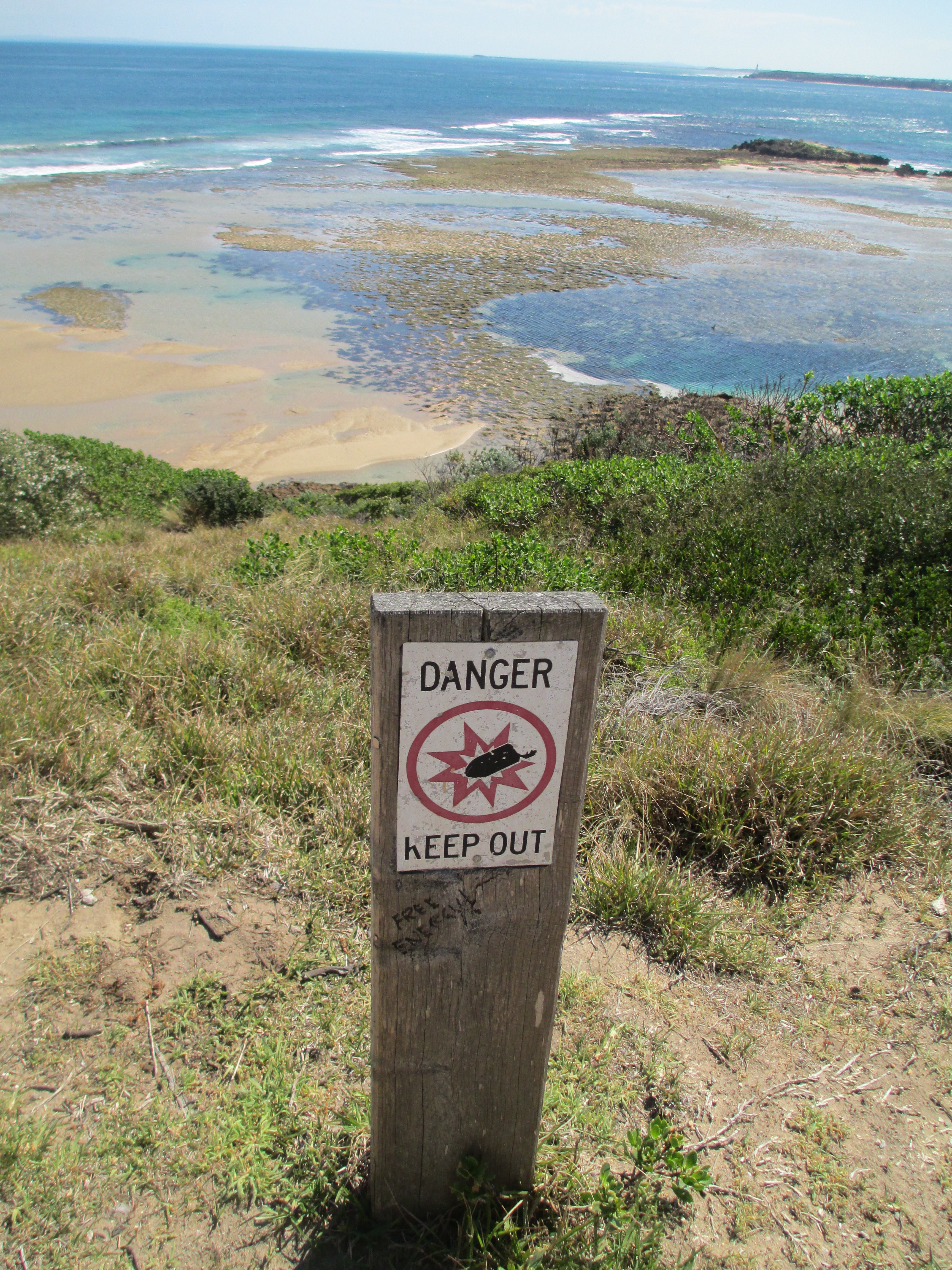
Also Point Nepean has been in use as an army base of some form for centuries and there are many of the beaches you still can’t walk on because of unexploded ordinances.

PN unexplodd

Point Nepean is a truly beautiful piece of land as well as a fascinating peace of history. If you get the chance to go there, it’s worth it. It is quite lovely and for the moment very unspoiled.

Parliament House Melbourne

IMG_0654

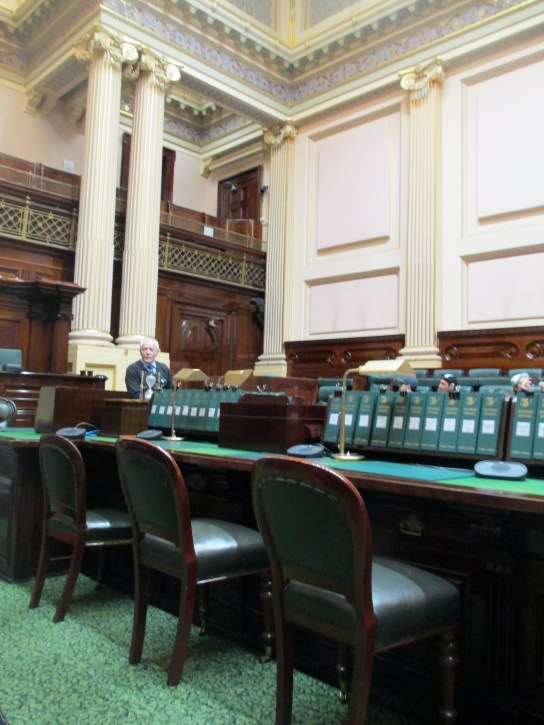
Melbourne Australia is my home city and I’ve always felt that many of its more interesting buildings are undervalued by residents. Parliament House is one of these and one of my favourites. While most Melbournians could tell you where it is and to some extent what goes on in there, very few have actually been inside. Melbourne is a gold rush town in many ways and Parliament House epitomises this. It is opulent to say the least. parl

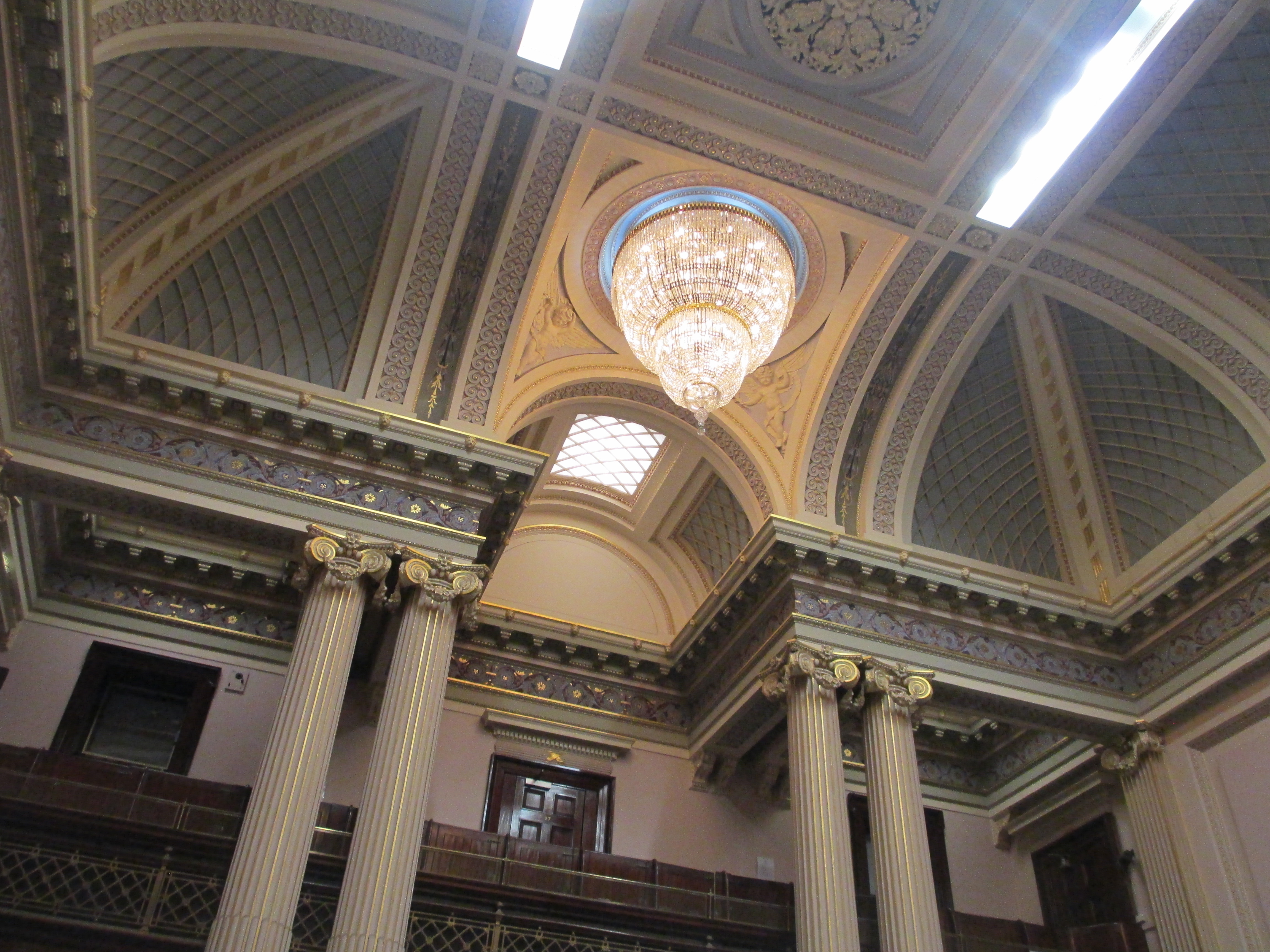
The above photo is the central light in the library. All the gold you can see is 22 carat gold leaf. In many parts it’s double layered because the only way to mend it was to apply a second coating.

Parliament House was built in stages. It began in 1856 with the Legislative Chambers. The work was completed in an astonishing ten months in time for Victoria’s first Parliament to meet there.

There are two Chambers.

1. The Lower House: The Legislative Assemblyparl leg coun

leg council

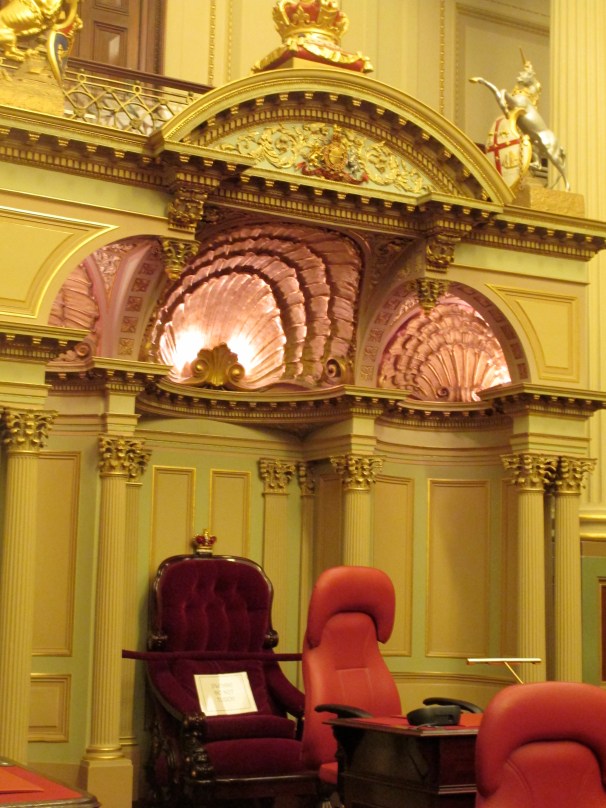
2. The Upper House: The Legislative Council.

parl leg as

parl leg cou seat

Today the carpet and the decor of the majority of Parliament House is divided into green, for the Legislative Assembly, and red, for the Legislative Council. When you pass from one half of Parliament House to the other the colour scheme immediately changes.

The next stage of the building process was the library and it was completed in 1860. It joined the two Chambers together into a u shaped building. It’s probably my favourite room.

parl lib parl fireparl libroof

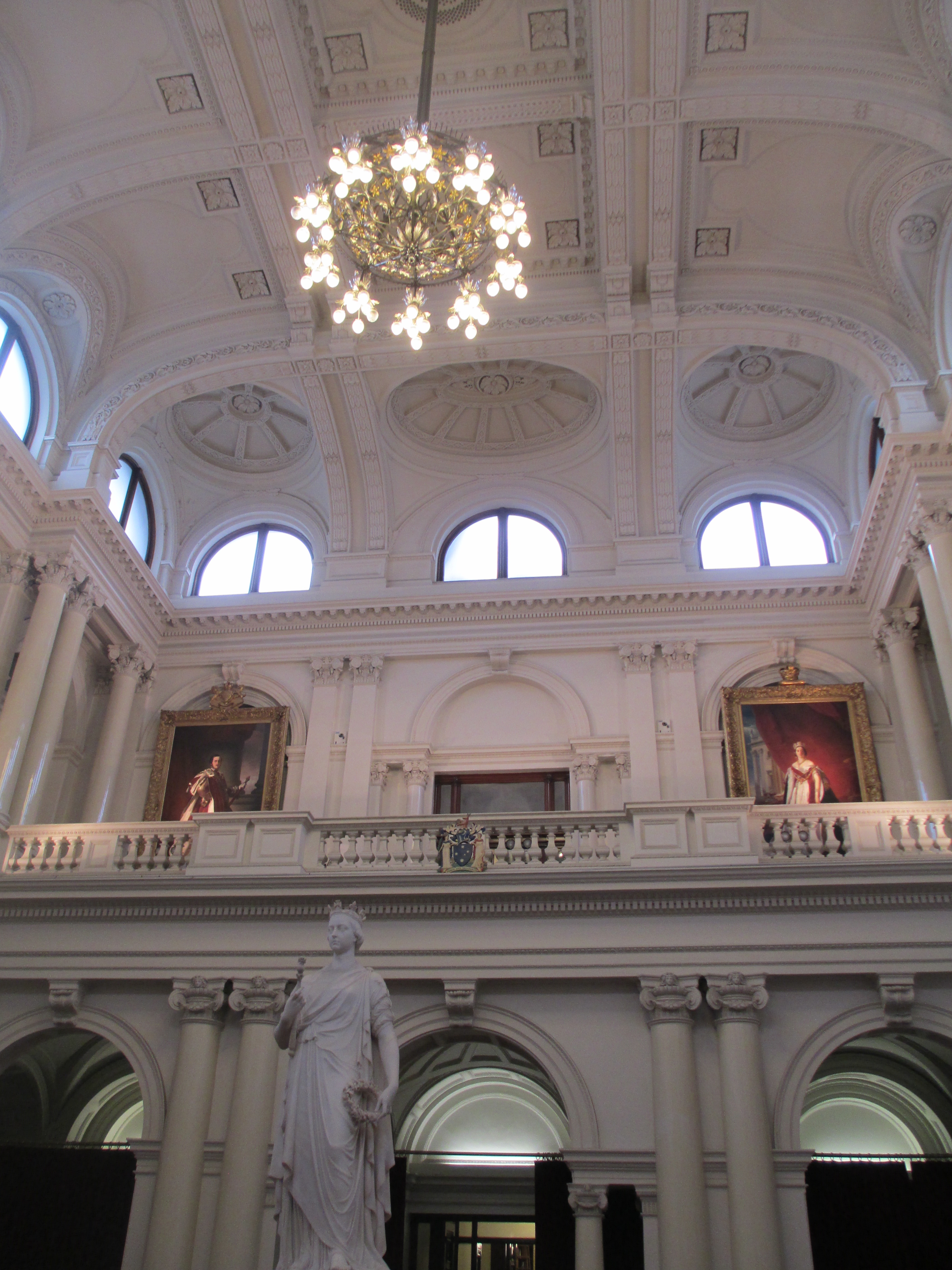
Queen’s Hall and the Vestibule were the next stages. They were finished between 1878-79. They filled in the space between the two Chambers, making the building much more like the one we are familiar with today.

Queen’s Hall was dedicated to Queen Victoria and you can see her statue there today, alongside paintings of Victoria’s Premiers.

queens hall parl

You enter Parliament House into the Vestibule and it has two noteworthy items.

1. The pressed metal roof which was intended to be temporary. Though I think it looks pretty amazing for a temporary structure.

pressed metal roof

2. The Minton floor tiles. The inscription, which you can’t actually see in the below photo, is from Proverbs 11:14 and reads `Where no Counsel is the People Fall; but in the Multitude of Counsellors there is Safety’

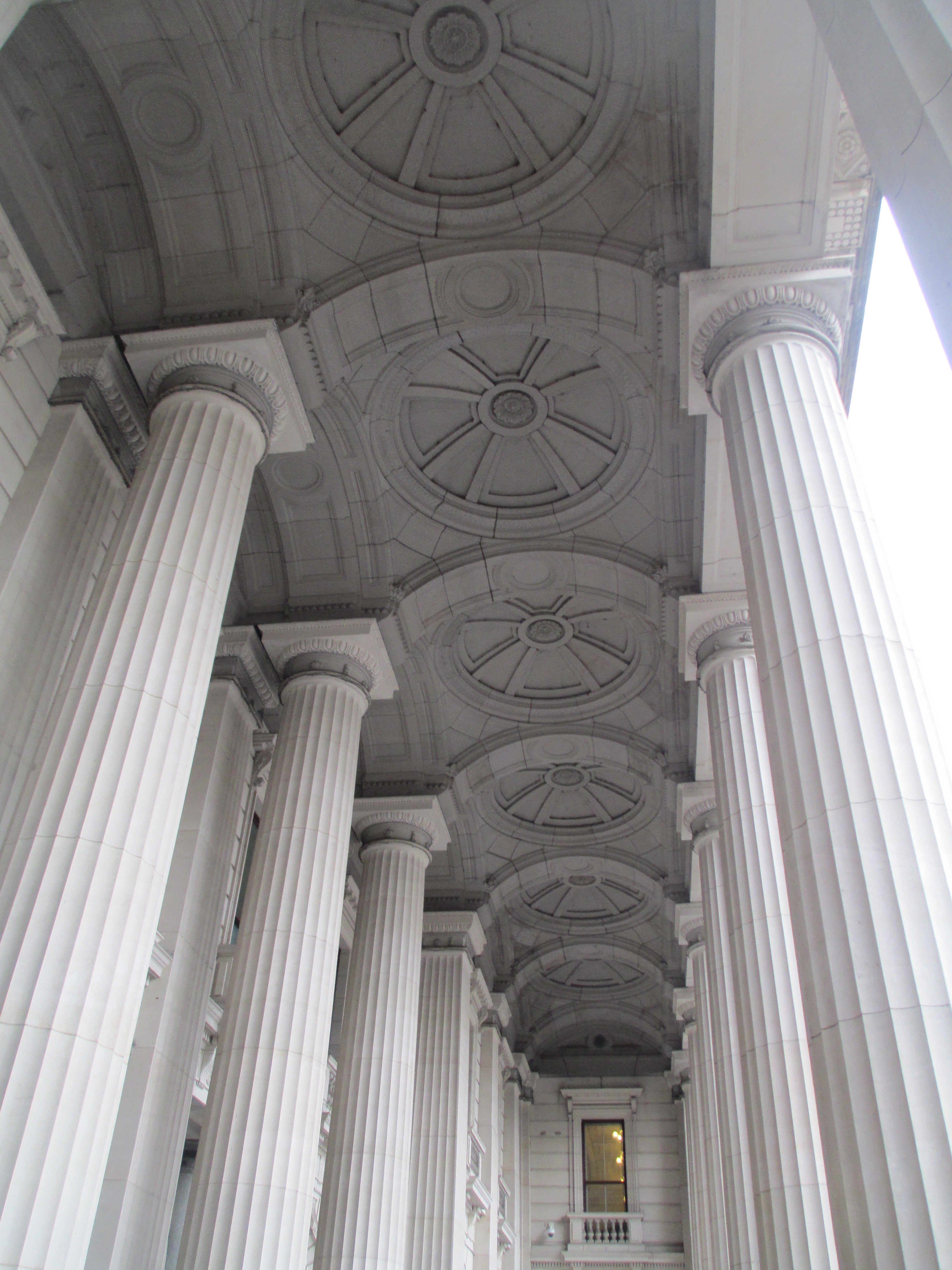
parl floorThe West Facade and the Colonnade were completed between 1881-1888. There was also supposed to be a 20 story dome, but unfortunately economic conditions had changed and there simply wasn’t the money. The photo below is the Colonnade.

coll parl

The steps and lamps were completed in 1888-1892.

parl lamp

The North Wing was finished to basement level in 1893. Former Prime-Minister Billy Hughes erected a tin hut on the top of the North Wing to have somewhere to hide where the press couldn’t find him. It was known as the Billy Hughes Hideaway.

The final work on Parliament House was completed in 1929 with the building of the refreshment hall, also known as the North East Wing.  It was financed with the 50,000 pounds stirling that the Federal Parliament gave to the Parliament of Victoria as a thank you gesture for being permitted to use Victoria’s Parliament House. The Federal Parliament sat in Parliament House in Victoria before Canberra was built.

Parliament House is still incomplete. Some of today’s MPs work from portable classroom like buildings out the back. They may not have the prestige of offices in Parliament House, but they do have decent air conditioning and heating, which have been fairly recent additions to Parliament House proper. They also have windows which some of the ministers who have offices in the Parliamentary basement are not able to enjoy. These buildings are affectionally known as the chook house.
Two final interesting Parliament House facts. Both from the Legislative Council.

This room retains a handful doors to nowhere from the days before the Vestibule and Queen’s Hall were built. You used to be able to walk though this door onto a walkway and then straight onto Bourke Street.

parl door to nowhere

There are also a number of angels that decorate the roof of the Legislative Council. Many of them have traditional titles such as justice. There is one, however, who is uniquely Victorian. This angel is holding a cornucopia in one hand to symbolise the fertile riches of Victoria. With the other hand she is scattering gold dust. This beautifully summarises how Victoria came to be, first as a colony and then a state.

parl vic angelSee http://www.parliament.vic.gov.au/about/the-parliament-building/history-of-the-building for more information. Or if you live in Melbourne go on a tour. They run pretty regularly, are free and really interesting.

Loch Ard Gorge

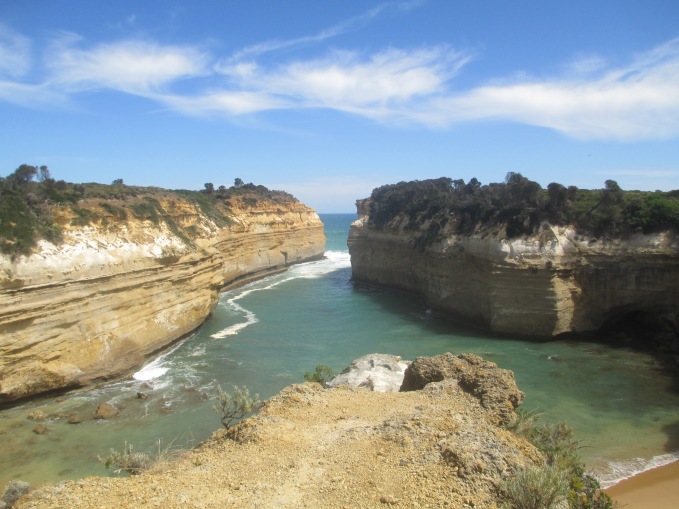
Loch Ard Gorge lies on Victoria’s Great Ocean Road, not far from Port Campbell. The Twelve Apostles are the best known of the Great Ocean Road’s natural landmarks. Loch Ard Gorge, however,  is known and named for a reason other than its natural beauty.

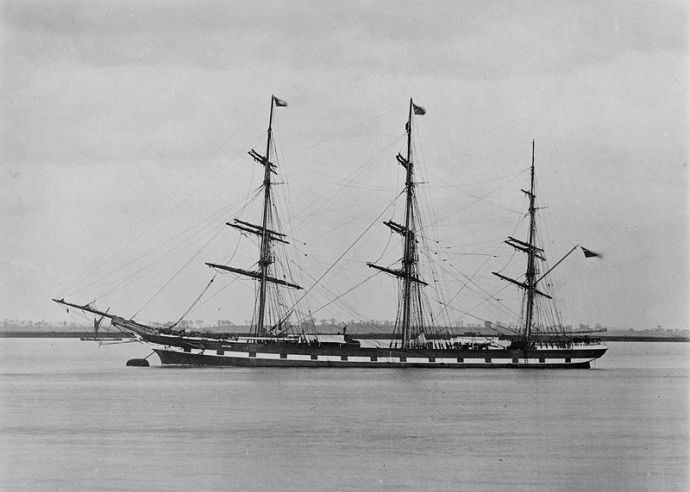
Loch Ard Gorge is the site of one of Victoria’s worst shipwrecks. The Loch Ard sailed from England on March 2nd 1878 with 54 passengers and crew aboard. It was bound for Melbourne.loch ard sunshne
lochard1At 3am on the 1st of June 1878 Captain Gibbs was expecting to see land as they should have been approaching Victoria’s coast. He was looking for the lighthouse at Cape Otway, but the ship was sailing through a heavy fog.
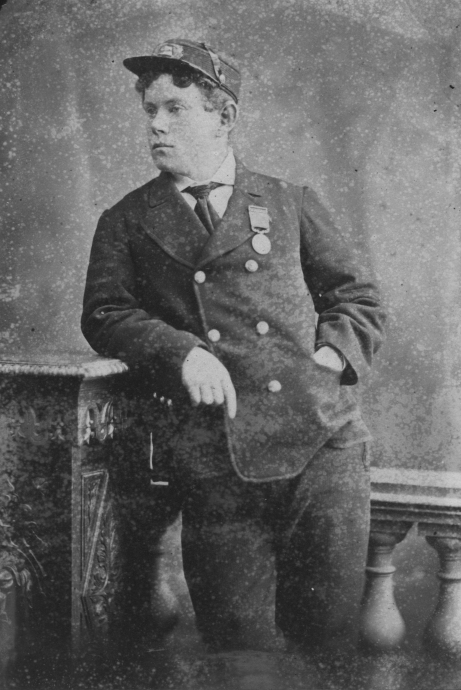
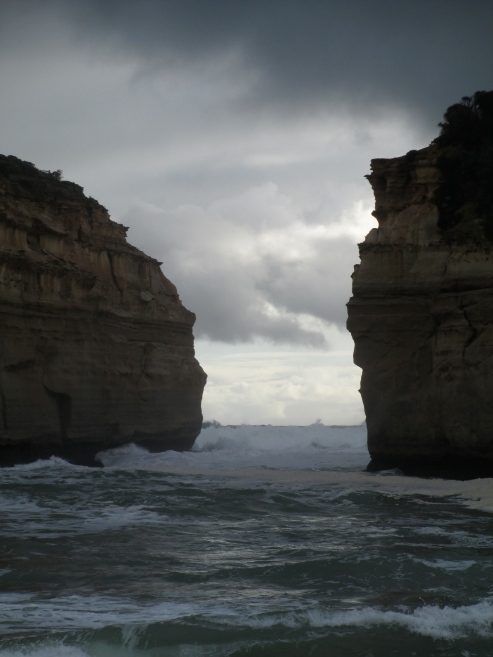
At 4 am when the fog lifted Captain Gibbs realised they were far too close Victoria’s sheer cliffs. The Captain tried everything including lowering the anchor and attempting to tack back out to sea, but the ship ran into a reef jutting out from Mutton Bird Island. Waves broke over the ship and masts and rigging came down, knocking passengers and crew overboard. They managed to launch a life boat but it crashed into the side of the Loch Ard and then capsized. Tom Pearce, the crew member who had launched the lifeboat, managed to cling on underneath it and was swept out to sea. When the  flood tide came in he drifted back to shore and into what is now known as Loch Ard Gorge.  He swam to shore and dragged himself to beach. tom

Tom Pearce

loch ard close

Loch Ard Gorge

 Tom was one of only two survivors. The other was a passenger, Eva Carmichael. Eva had been making the trip to Melbourne with her family.  She ran onto the deck to find out what was happening. In all the chaos Captain Gibbs grabbed her and said “if you are saved Eva, let my dear wife know that I died like a sailor.” She was then swept over the side by a wave. She saw Tom on the rocky beach and shouted and waved until her saw her. Tom swam out and dragged the exhausted Eva to the beach. They went back to the cave and opened a case of brandy that had washed ashore and huddled together to try and keep warm.

eva

Eva Charmichael

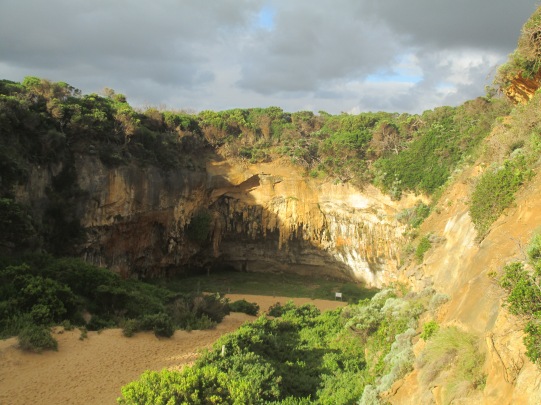
A while later Tom scaled a cliff, which was no small feat in itself, to try to find help.

cliff 2

The cliffs at Loch Ard Gorge

He followed hoof prints and came by chance upon some men from the nearby Glenample Station. By the time he led them back to Loch Ard it was cold and dark. Eva stayed at Glenample for six weeks recovering before returning to Ireland, this time by steamer. Tom went to Melbourne to receive a hero’s welcome. Many expected Tom and Eva to marry, as they’d spent the night unsupervised, but
they were to be disappointed when Tom and Eva went their separate ways.

It is a miracle that anyone survived. The seas on that piece of coast are known for their savagery. The video below was taken on a mildly stormy day, it is only too easy to imagine what it would have been like when the Loch Ard sank. Especially with the waves destroying the ship.

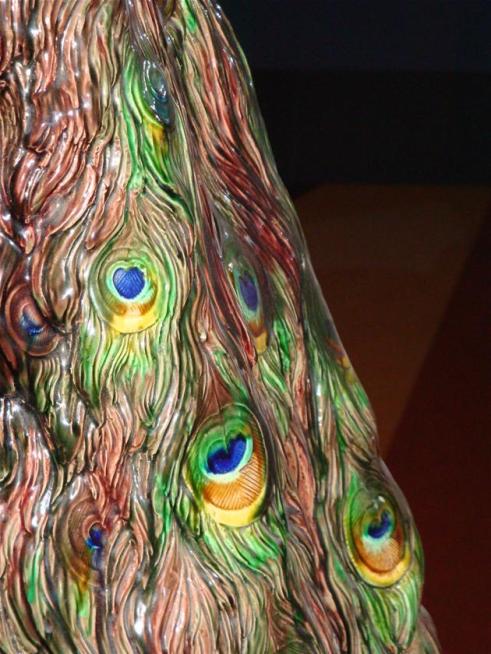
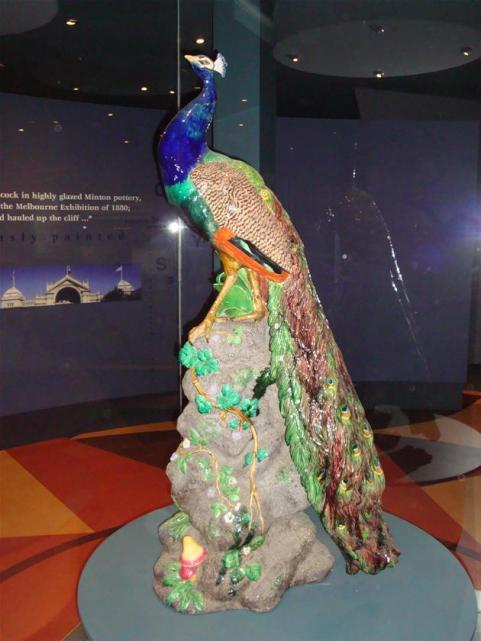
Although there were only two survivors of the Loch Ard, some of the cargo also survived, including a Minton Porcelain Peacock, one of only nine in the world, the most unlikely thing to have endured a shipwreck. It was destined for the International Exhibition in Melbourne in 1880 and must have been packed exceptionally well. It now resides in Flagstaff Hill Maritime Village in Warrnambool and was recently valued at over $4 million. It is also on the Victorian Heritage Registerr519455_2867236
peacock

The wreck of the Loch Ard remains at the base of Mutton Bird Island. It can be dived by experienced divers.

The peacock photos are from http://www.abc.net.au/local/photos/2010/02/23/2827955.htm

For more information on the Loch Ard see http://www.flagstaffhill.com/history-queries/wreck-loch-ard/