

Melbourne Australia is my home city and I’ve always felt that many of its more interesting buildings are undervalued by residents. Parliament House is one of these and one of my favourites. While most Melbournians could tell you where it is and to some extent what goes on in there, very few have actually been inside. Melbourne is a gold rush town in many ways and Parliament House epitomises this. It is opulent to say the least. 
The above photo is the central light in the library. All the gold you can see is 22 carat gold leaf. In many parts it’s double layered because the only way to mend it was to apply a second coating.
Parliament House was built in stages. It began in 1856 with the Legislative Chambers. The work was completed in an astonishing ten months in time for Victoria’s first Parliament to meet there.
There are two Chambers.
1. The Lower House: The Legislative Assembly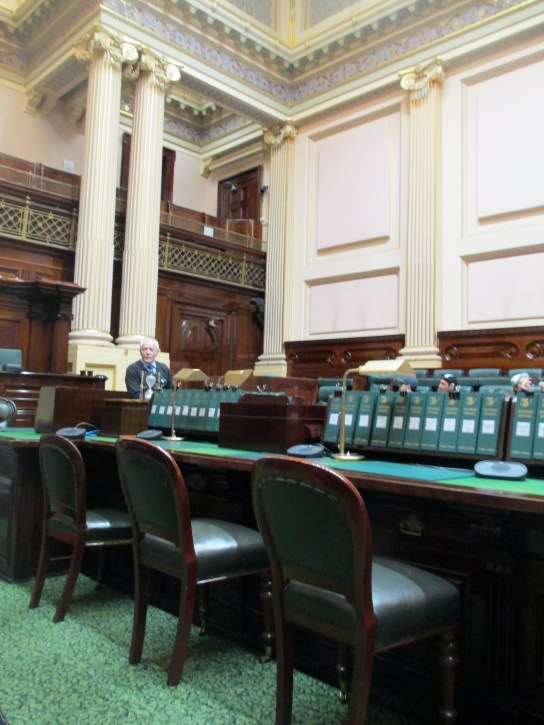
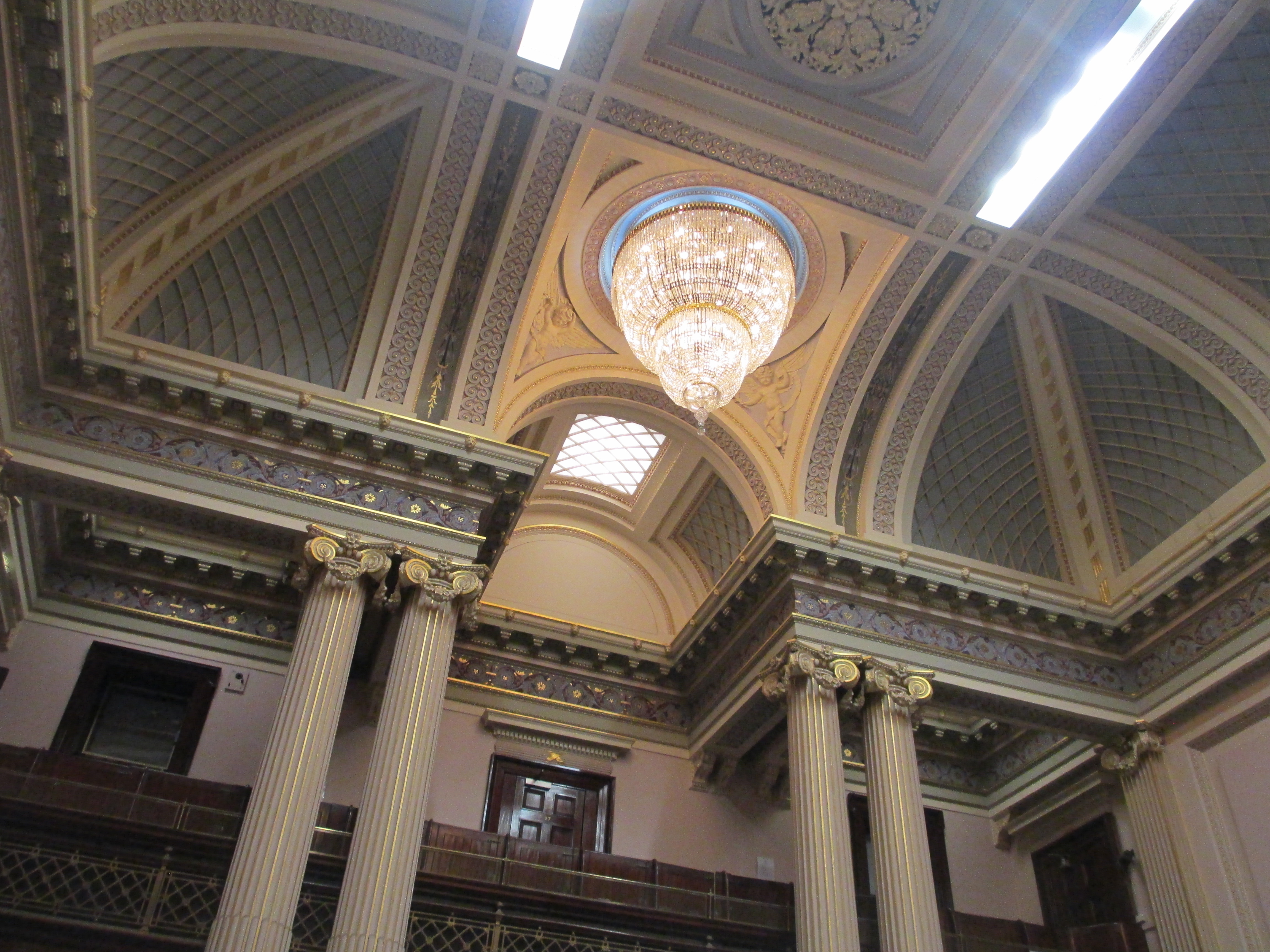
2. The Upper House: The Legislative Council.
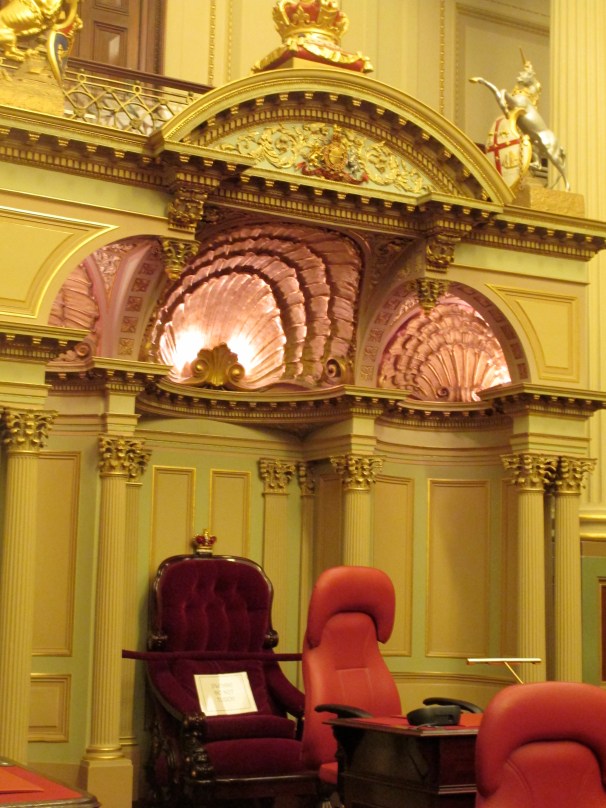

Today the carpet and the decor of the majority of Parliament House is divided into green, for the Legislative Assembly, and red, for the Legislative Council. When you pass from one half of Parliament House to the other the colour scheme immediately changes.
The next stage of the building process was the library and it was completed in 1860. It joined the two Chambers together into a u shaped building. It’s probably my favourite room.


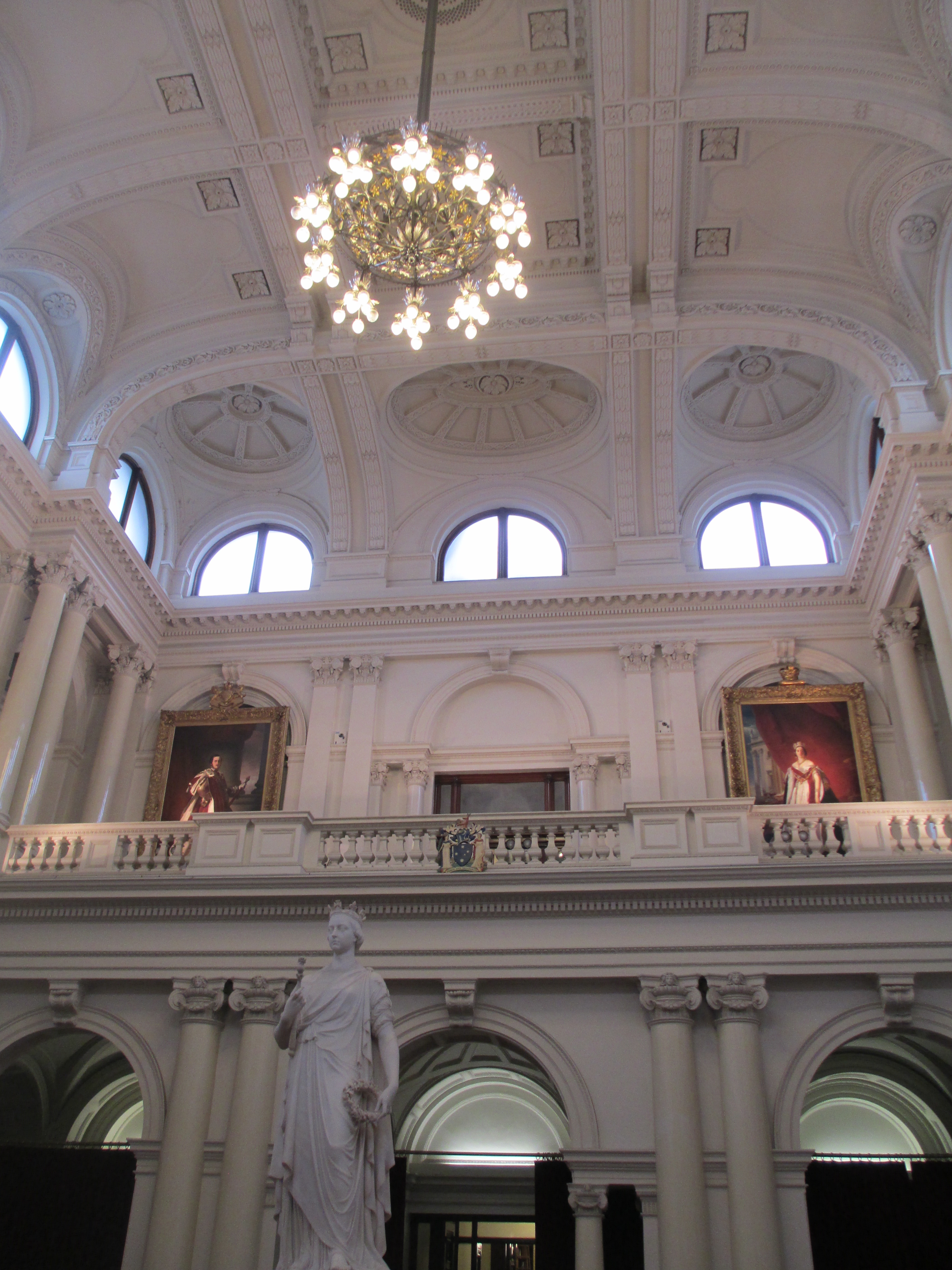
Queen’s Hall and the Vestibule were the next stages. They were finished between 1878-79. They filled in the space between the two Chambers, making the building much more like the one we are familiar with today.
Queen’s Hall was dedicated to Queen Victoria and you can see her statue there today, alongside paintings of Victoria’s Premiers.
You enter Parliament House into the Vestibule and it has two noteworthy items.
1. The pressed metal roof which was intended to be temporary. Though I think it looks pretty amazing for a temporary structure.

2. The Minton floor tiles. The inscription, which you can’t actually see in the below photo, is from Proverbs 11:14 and reads `Where no Counsel is the People Fall; but in the Multitude of Counsellors there is Safety’
 The West Facade and the Colonnade were completed between 1881-1888. There was also supposed to be a 20 story dome, but unfortunately economic conditions had changed and there simply wasn’t the money. The photo below is the Colonnade.
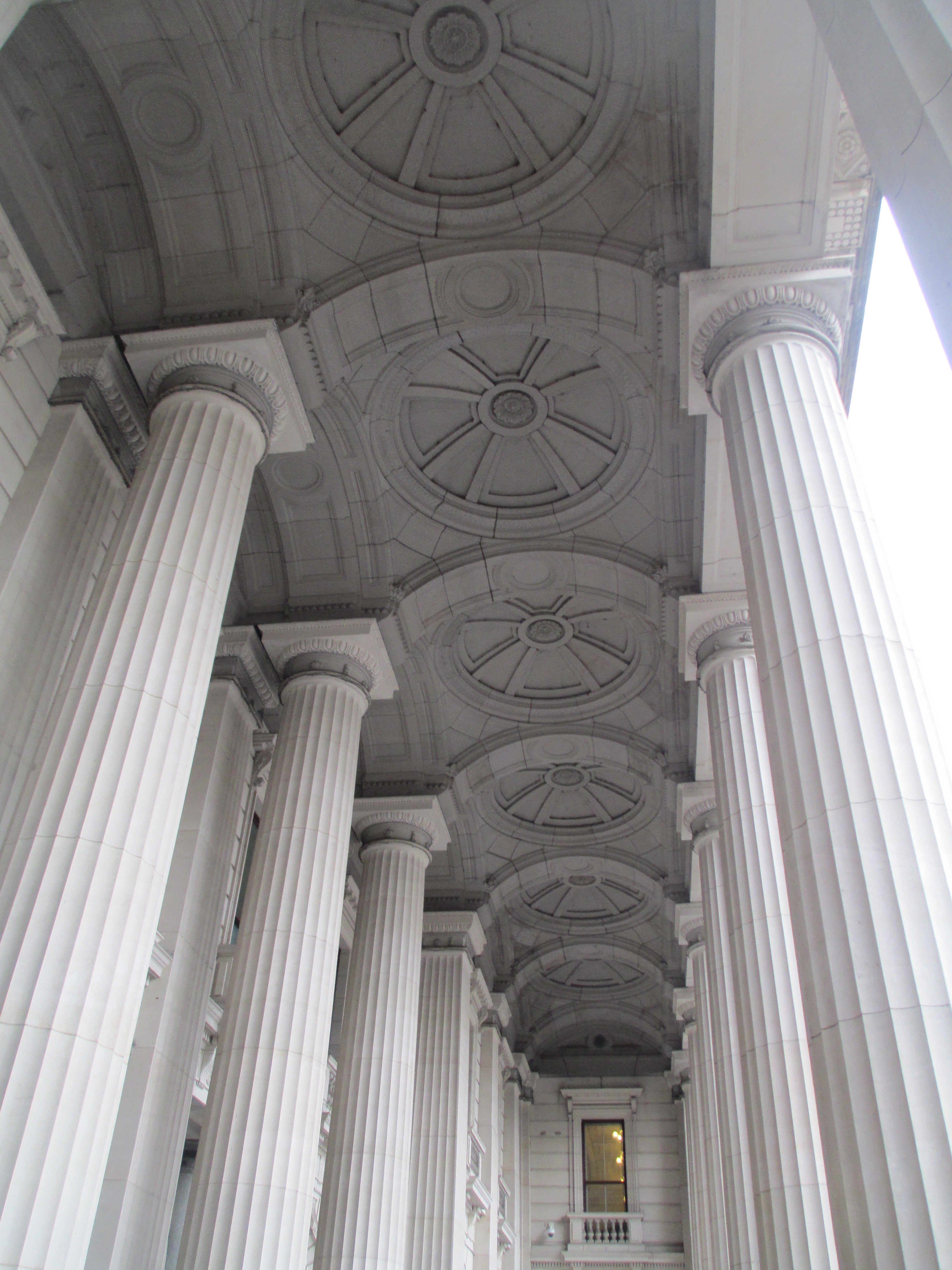
The steps and lamps were completed in 1888-1892.

The North Wing was finished to basement level in 1893. Former Prime-Minister Billy Hughes erected a tin hut on the top of the North Wing to have somewhere to hide where the press couldn’t find him. It was known as the Billy Hughes Hideaway.
The final work on Parliament House was completed in 1929 with the building of the refreshment hall, also known as the North East Wing. It was financed with the 50,000 pounds stirling that the Federal Parliament gave to the Parliament of Victoria as a thank you gesture for being permitted to use Victoria’s Parliament House. The Federal Parliament sat in Parliament House in Victoria before Canberra was built.
Parliament House is still incomplete. Some of today’s MPs work from portable classroom like buildings out the back. They may not have the prestige of offices in Parliament House, but they do have decent air conditioning and heating, which have been fairly recent additions to Parliament House proper. They also have windows which some of the ministers who have offices in the Parliamentary basement are not able to enjoy. These buildings are affectionally known as the chook house.
Two final interesting Parliament House facts. Both from the Legislative Council.
This room retains a handful doors to nowhere from the days before the Vestibule and Queen’s Hall were built. You used to be able to walk though this door onto a walkway and then straight onto Bourke Street.

There are also a number of angels that decorate the roof of the Legislative Council. Many of them have traditional titles such as justice. There is one, however, who is uniquely Victorian. This angel is holding a cornucopia in one hand to symbolise the fertile riches of Victoria. With the other hand she is scattering gold dust. This beautifully summarises how Victoria came to be, first as a colony and then a state.
 See http://www.parliament.vic.gov.au/about/the-parliament-building/history-of-the-building for more information. Or if you live in Melbourne go on a tour. They run pretty regularly, are free and really interesting.

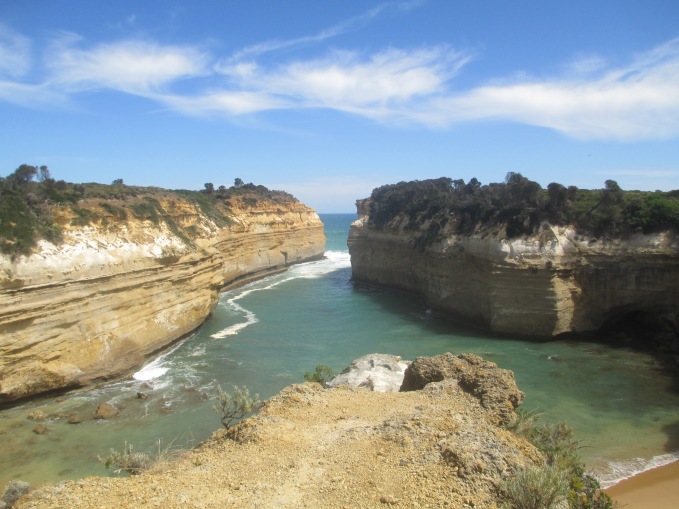
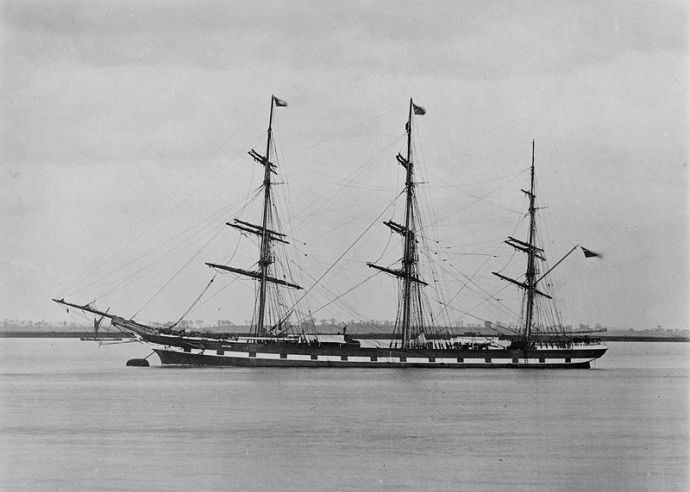 At 3am on the 1st of June 1878 Captain Gibbs was expecting to see land as they should have been approaching Victoria’s coast. He was looking for the lighthouse at Cape Otway, but the ship was sailing through a heavy fog.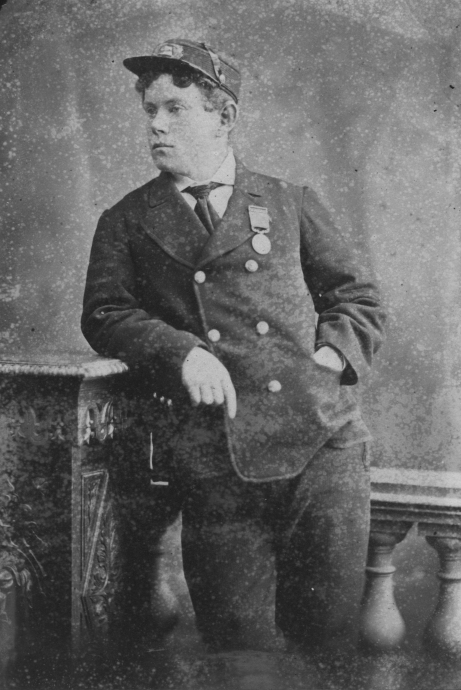

 Historical Ragbag
